Mobile app development is more complex and more business critical than ever. From AI powered user experiences to evolving security standards, missing or misunderstanding a single service can cost your project time, money, and momentum.
Today’s buyers face an overwhelming menu of mobile application development offerings. Yet few guides clearly explain what each service includes or how to compare providers with confidence. That is why understanding a complete mobile app development services list is essential for businesses planning a successful app project.
This playbook cuts through the noise. You will find clear definitions, step by step breakdowns, expert insights, and practical guidance covering everything from foundational development services to more advanced capabilities and industry specific needs. By the end, you will understand the full mobile app development services list, what to request from providers, and why each service plays an important role in delivering a successful mobile application.
What Are Mobile App Development Services? (And Why the Right List Matters)
Mobile app development services refer to the full range of professional offerings needed to plan, build, launch, and sustain a mobile application. Understanding this services list helps buyers avoid hidden costs and ensure no critical phase gets skipped.
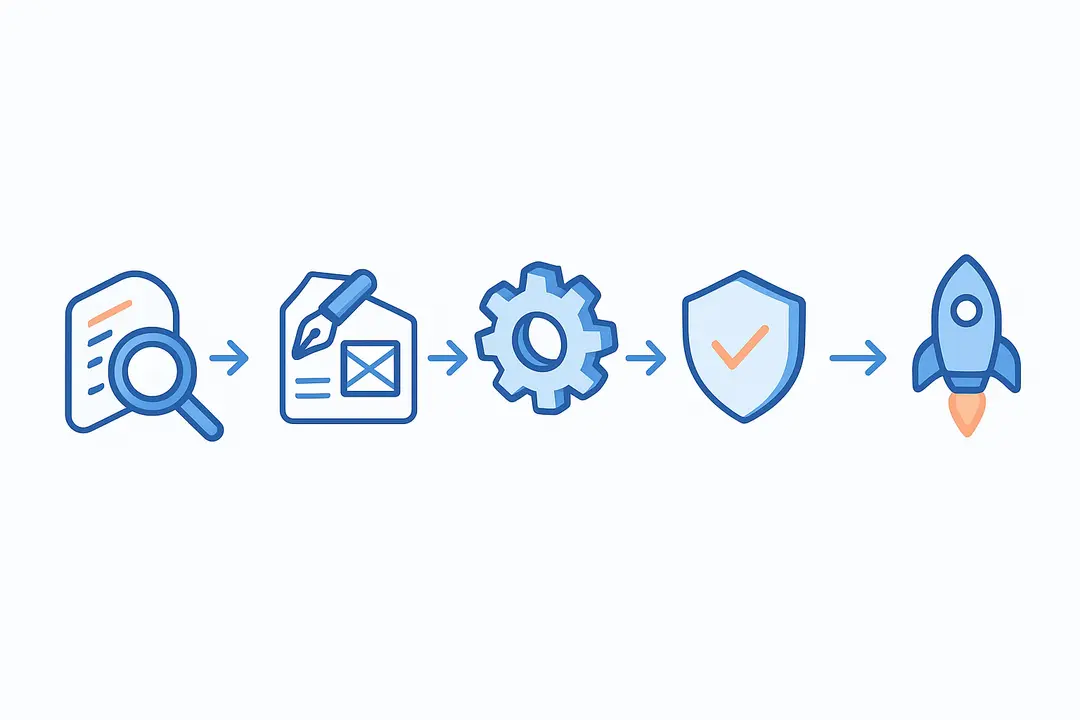
Mobile app development is not just coding—it’s an end-to-end process that includes discovery, design, building for specific platforms (like iOS and Android), quality assurance (QA), deployment, analytics, maintenance, and emerging capabilities such as AI integrations.
Key mobile app development service categories:
- Discovery & Strategy: Defining business goals, user needs, and technical requirements.
- UI/UX Design: Creating the app’s look, feel, and user flow.
- Development: Coding the app for iOS, Android, or both (cross-platform).
- Backend & APIs: Building server logic and systems integrations.
- QA & Testing: Ensuring quality through manual and automated checks.
- Deployment: Launching on the App Store and Google Play.
- Maintenance & Support: Updates, bug fixes, performance monitoring.
- Analytics & Optimization: Tracking usage and improving the app post-launch.
- Security & Compliance: Ensuring privacy, data integrity, and regulatory fit.
- Emerging Tech Integration: AI, blockchain, IoT, and more.
- Consulting: Project scoping and expert guidance.
A complete app development services list prevents missed steps such as pre-launch testing or ongoing app maintenance and support, which are frequent sources of app project failure (Clutch.co).
The Complete Mobile App Development Services List
![[2024 List] The Complete Mobile App Development Services Overview (with Definitions)](https://riseuplabs.com/wp-content/uploads/2026/03/2024-list-the-complete-mobile-app-development-services-overview-with-definitions.webp)
- Discovery & App Strategy: In-depth analysis of user needs, business goals, and competitor landscape to define app direction.
- UI/UX Design: Crafting wireframes, prototypes, and final designs for compelling, intuitive interfaces.
- Native iOS App Development: Coding robust, high-performance apps for Apple devices using Swift/Objective-C.
- Native Android App Development: Building apps optimized for Android devices using Kotlin/Java.
- Cross-Platform App Development: Developing apps on frameworks like Flutter or React Native for consistent experience across platforms.
- Backend & API Development: Setting up databases, server logic, and integrations for seamless app operation.
- QA & Testing Services: Running functional, usability, performance, and security tests—both automated and manual.
- App Deployment & Launch: Managing app submission, store listing optimization, and release on App Store/Google Play.
- App Maintenance and Support: Providing updates, bug fixes, security patches, and new feature rollouts.
- App Analytics and Optimization: Implementing tools to monitor user engagement and improve the app post-launch.
- App Store Optimization (ASO): Enhancing app visibility in app stores via keyword research, creative assets, and ratings management.
- Mobile App Security & Compliance: Protecting user data and ensuring regulatory compliance (GDPR, HIPAA, etc.).
- Emerging Technologies Integration: Adding features like AI chatbots, blockchain wallets, or IoT integrations.
- Mobile App Consulting: Offering expert advice on strategy, architecture, and ROI.
What Does Each Mobile App Development Service Actually Include?
| Service | What’s Included | Key Value |
| Discovery & App Strategy | User research, market and competitor analysis, KPI definition, roadmap creation | Aligns app with business and user needs |
| UI/UX Design for Mobile Apps | Wireframes, interactive prototypes, branding, user flow mapping | Delivers intuitive, branded experiences |
| Native iOS App Development | Swift/Objective-C development, iOS feature integration, App Store compliance | Leverages Apple capabilities and ensures approval |
| Native Android App Development | Kotlin/Java coding, Android OS feature use, Google Play policy adherence | Maximizes Android reach and device fit |
| Cross-Platform App Development | Flutter/React Native/Xamarin, shared codebase, platform optimization | Speeds launches, ensures feature parity |
| Backend & API Development | Cloud setup, database design, API development, third-party integrations | Powers secure, scalable app infrastructure |
| QA & Testing Services for Apps | Manual/automated testing, performance, security, UAT | Ensures reliability and user satisfaction |
| Mobile App Deployment & Launch | App store submission, beta/UAT phases, store listing optimization | Reduces delays, maximizes launch impact |
| App Maintenance and Support | Routine updates, bug fixes, monitoring, emergency support | Extends app lifespan, minimizes downtime |
| App Analytics and Optimization | Dashboard setup, KPI tracking, retention/acquisition analysis | Drives data-led improvements and ROI |
| App Store Optimization (ASO) | Keyword and metadata research, creative assets, review management | Improves discoverability and downloads |
| Mobile App Security & Compliance | Data encryption, secure coding, privacy, compliance audits | Safeguards reputation and legal standing |
| Emerging Technologies Integration | AI features (chatbots, ML), blockchain, IoT/AR/VR modules | Future-proofs your app, delivers innovation |
| Mobile App Consulting | Strategy sessions, tech stack advice, ROI and compliance reviews | Informs smarter investment and approach |
Let’s break down key services with greater detail and practical buyer advice.
Discovery & App Strategy
Discovery and app strategy services help clarify what your app should achieve and how it will succeed in a crowded market.
- Included: User research, competitor analysis, KPIs, product roadmap, technical feasibility assessment.
- Buyers Benefit Most: When launching in new markets or innovating.
- Expert Tip: “Skipping the discovery phase often triples the risk of project overruns.” — Source: Clutch.co
UI/UX Design for Mobile Apps
UI/UX design services focus on creating user-centric, on-brand experiences.
- Included: Wireframes, clickable prototypes, user flow mapping, final high-fidelity designs, brand guidelines.
- Tools: Figma, Adobe XD.
- Buyers Should Expect: Design system creation, accessibility checks, iterative user testing.
Native iOS App Development
Native iOS services deliver premium performance and the best use of Apple APIs.
- Included: Coding in Swift/Objective-C, custom feature development, Apple API integration, App Store guidelines adherence.
- Deliverables: Xcode project files, TestFlight builds, compliance documentation.
Native Android App Development
Android development targets the world’s largest mobile user base with device-tailored features.
- Included: Kotlin/Java coding, Android SDK tools, OS version compatibility checks, Google Play compliance.
- Value: Broader device support, integration with Google ecosystem.
Cross-Platform App Development
Cross-platform development uses frameworks like Flutter or React Native to build one codebase for both iOS and Android.
- Included: Multi-platform codebase, adaptive UI, shared components, native feature integration.
- Best For: Projects needing a fast, budget-friendly launch across platforms.
- Cons: Complex native features may require extra workarounds.
Backend & API Development for Mobile Apps
Backend and API development provides robust, scalable infrastructure to support your app.
- Included: Cloud/server setup, database design, REST/GraphQL API development, system integrations (e.g., payments).
- Buyers Should Ask: About scalability, data privacy, and ongoing support.
QA & Testing Services for Apps
QA/testing services safeguard quality and compatibility.
- Included: Manual and automated tests, functional/performance/security tests, device lab testing, user acceptance testing (UAT).
- Value: Reduces bugs at launch, improves end-user trust.
Mobile App Deployment & Launch
Deployment and launch services handle the end-to-end release process, reducing the headache for buyers.
- Included: App Store/Google Play submission, store listing creation, beta launch/UAT, store compliance updates.
- Don’t Overlook: App review support and resubmission handling.
App Maintenance and Support
App maintenance and support keep your product secure, stable, and up-to-date after launch.
- Included: Regular updates, bug fixes, performance monitoring, on-call emergency response, feature rollouts.
- Key Questions: SLA timing, coverage hours, update frequency.
App Analytics and Optimization
Analytics and optimization services reveal how users engage—and where to improve.
- Included: Dashboard and event setup, tracking KPIs, A/B testing, retention analysis, optimization reporting.
- Tools: Firebase Analytics, Mixpanel, custom reporting.
App Store Optimization (ASO)
ASO services improve your app’s discoverability and downloads in saturated app stores.
- Included: Keyword/meta research, creative asset design (icons, screenshots), review management, A/B creative tests.
- Measured By: Store search ranking, conversion rates.
Security & Compliance
Mobile app security services protect your business, users, and data from threats and legal risks.
- Included: Secure coding practices, encryption, regular audits, compliance with GDPR/HIPAA.
- Critical For: Healthcare, fintech, and data-sensitive apps.
Emerging Technologies in Mobile App Development
Top firms increasingly offer emerging tech services—future-proofing your app.
- Included: Integrating AI-driven features (chatbots, recommendations), blockchain modules (wallets), IoT/sensor support, AR/VR experiences.
- Competitive Edge: Unique, innovative experiences that stand out.
How Do I Choose the Right Mobile App Development Provider?
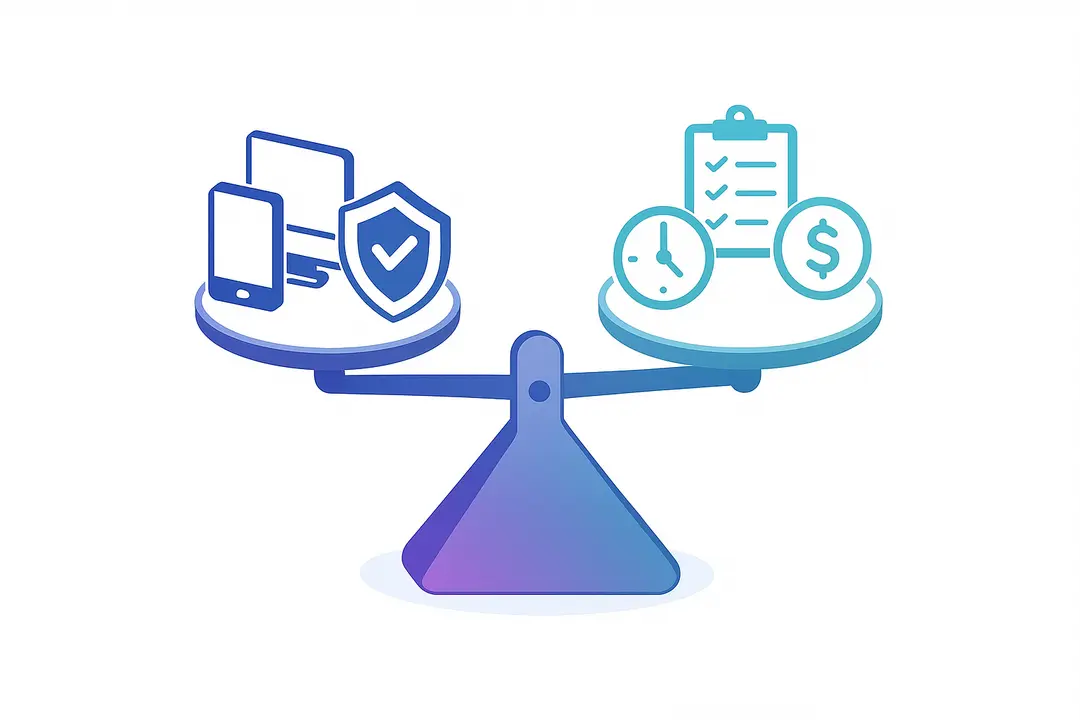
Choosing the right provider hinges on evaluating both their mobile app development services list and their proven ability to deliver.
A robust evaluation checklist reduces risk and ensures alignment with your app vision:
- Service Breadth: Do they offer a complete range—discovery, design, development, QA, deployment, maintenance, analytics?
- Technical Expertise: Platforms (iOS, Android, cross-platform), industry certifications, and technology stack proficiency.
- Experience & Portfolio: Relevant case studies, client reviews (source: Clutch.co), references, vertical expertise.
- Security & Compliance: Track record with privacy and regulatory needs.
- Process Transparency: Clear project management, communication practices, agile or waterfall methodology.
- Post-Launch Support: Maintenance, updates, rapid response capability.
- Cultural/Industry Fit: Do they understand your sector’s needs (e.g., healthcare, fintech, logistics)?
- Cost & Value: Transparent pricing, clear deliverables, flexibility.
How Are Mobile App Development Services Tailored for Your Industry?
Mobile app development services are rarely one-size-fits-all. Leading providers adapt their offerings to meet specific industry needs, compliance standards, and feature sets.
Common industry-specific adaptations:
- Healthcare: HIPAA-compliant architecture, EHR integrations, patient privacy.
- Fintech: Secure authentication, PCI DSS compliance, payment gateway integration, regulatory reporting.
- Retail & E-commerce: Omnichannel integration, personalized recommendations, loyalty/rewards systems.
- Logistics: GPS tracking, real-time dashboards, fleet-management APIs.
- Education: Interactive content modules, remote learning integrations, FERPA compliance.
Buyers in regulated industries should seek providers with proven, documented experience in meeting those sector requirements.
Mobile App Development Service Lifecycle: From Strategy to Post-Launch
| Phase | Key Services | Common Pitfalls if Skipped |
| Discovery | Strategy, research, roadmap | Misaligned goals, missed requirements |
| Design | UI/UX, prototyping, user flows | Poor engagement, usability issues |
| Development | Native/cross-platform, backend/APIs | Low performance, feature gaps |
| QA/Testing | Functional, UAT, security | Bugs, costly post-launch fixes |
| Launch | Deployment, ASO, store listing | Delays, low discoverability |
| Support | Maintenance, analytics, updates | Security risks, user churn |
Tip: Most failed app projects can be traced to cutting corners during discovery or post-launch maintenance (Gartner, 2023).
Frequently Asked Questions About Mobile App Development Services
What is included in a typical mobile app development services list?
A complete mobile app development services list usually includes discovery and strategy, UI and UX design, iOS and Android development, backend and API development, QA testing, deployment, and post launch support. These mobile application development services help businesses build, launch, and maintain high quality mobile applications.
What are the core mobile application development services offered by agencies?
Most agencies provide a range of mobile application development services such as product strategy, interface design, native or cross platform development, backend integration, security implementation, and maintenance. These services are commonly outlined in a detailed mobile app development services list to help businesses understand the full development process.
What is the difference between native and cross platform development in a mobile app development services list?
Within a typical mobile app development services list, native development refers to building separate applications for iOS and Android using platform specific technologies. Cross platform development uses a shared codebase with frameworks like Flutter or React Native. Many mobile app development service offerings include both approaches depending on the project requirements.
Do mobile app development companies provide maintenance as part of their services?
Yes, most providers include ongoing maintenance as part of their mobile application development services. Maintenance usually covers updates, bug fixes, performance monitoring, and security improvements. This stage is an important component of any comprehensive mobile app development services list.
What does QA and testing include in mobile app development service offerings?
QA and testing are essential parts of modern mobile app development service offerings. Testing services typically include functional testing, performance testing, security checks, and usability testing to ensure the application works reliably across devices and platforms.
How are UI and UX design services structured in mobile application development services?
UI and UX design is a key section of most mobile application development services. The process usually begins with research and wireframing, followed by interactive prototypes and visual design. These steps are commonly listed in a mobile app development services list to ensure a strong user experience before development begins.
Can businesses choose industry specific mobile app development service offerings?
Yes, many companies customize their mobile app development service offerings for industries such as healthcare, fintech, retail, logistics, and education. These specialized mobile application development services often include compliance features, third party integrations, and tailored functionality.
How much do services in a mobile app development services list typically cost?
The cost of services in a mobile app development services list depends on the complexity of the app, the required features, and the development timeline. Pricing usually includes discovery, design, development, testing, deployment, and maintenance, which are core mobile application development services for most projects.
What services help launch an app on app stores?
App store deployment is another important component of the mobile app development services list. These mobile app development service offerings typically include store submission, compliance checks, beta testing, and listing optimization for platforms such as the App Store and Google Play.
Do mobile application development services include analytics and performance monitoring?
Yes, many mobile application development services include analytics integration and performance monitoring tools. These services help businesses track user behavior, measure engagement, and improve app performance after launch. Analytics is often listed as a key feature within modern mobile app development service offerings.
Are emerging technologies included in modern mobile app development service offerings?
Advanced mobile app development service offerings may include integration with technologies such as artificial intelligence, blockchain, or IoT platforms. These capabilities expand the mobile app development services list and allow companies to build more innovative and scalable applications.
Conclusion
Understanding the full mobile app development services list is essential for planning and delivering a successful mobile application. When businesses clearly understand each stage of development from strategy and design to testing and ongoing support they can make better decisions, set realistic expectations, and choose the right development partner for their needs.
A well structured approach to mobile application development services helps ensure that every important aspect of the project is covered. By focusing on the right services, clear communication, and long term scalability, organizations can build mobile apps that deliver strong performance, meaningful user experiences, and lasting business value.
Key Takeaways
- Mobile app development services are multi-phase and must cover strategy, design, development, testing, launch, support, and emerging technologies.
- Understanding each service’s scope prevents critical oversights and hidden costs.
- The right provider offers both comprehensive services and demonstrated expertise in your industry.
- Tools like checklists and lifecycle maps empower confident project management and vendor selection.
- Clarity at every step leads to better outcomes, faster launches, and lower risk for your app investment.
This page was last edited on 9 July 2026, at 11:09 am

Start a conversation with our team to solve complex challenges and move forward with confidence.