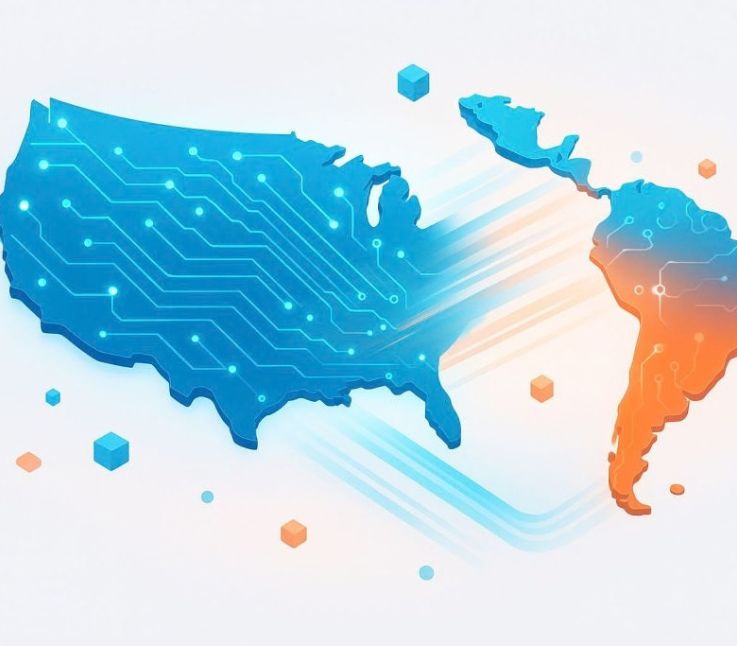
Rising competition and rapid digital transformation have made it increasingly difficult and expensive for US companies to secure skilled engineering talent locally. To stay competitive while maintaining development speed and quality, many organizations are turning to US nearshore software development by partnering with experienced teams across Latin America. Nearshoring offers access to highly skilled developers, closer time zone alignment, and more efficient collaboration compared to traditional offshore outsourcing.
However, understanding the concept of nearshoring alone is not enough. Business and technology leaders need a clear strategy for how to choose the right partners, manage distributed teams, and reduce risks while scaling development capacity.
This guide provides a practical overview of US nearshore software development, including how the model works, why it is becoming a preferred option for many companies, where to find top nearshore talent in Latin America, and what factors to consider when selecting a reliable development partner. By the end, you will have a clearer understanding of how nearshoring can support long term software delivery and team growth.
What Is US Nearshore Software Development?
US nearshore software development is a model where American companies outsource software projects to expert teams in nearby Latin American countries, allowing for real-time collaboration, cultural alignment, and significant cost efficiency.
Key characteristics of US nearshore software outsourcing include:
- Geographic proximity: Teams work from countries like Mexico, Colombia, and Argentina, typically within a 1–3 hour time zone difference from the US.
- Cultural and language compatibility: LATAM teams often demonstrate strong English proficiency and a business culture similar to the US.
- Real-time collaboration: Overlapping work hours make daily communication and agile development smoother.
- Full-service capabilities: Nearshore vendors offer custom software, mobile/web apps, QA/testing, DevOps, AI/ML, and more.
How does it differ from offshore or onshore?
- Nearshore: Outsourcing to close neighbors (LATAM for US), optimizing for time zone, travel, and communication.
- Offshore: Outsourcing to distant regions (e.g., India, Eastern Europe), often resulting in lower costs but more challenges with time zone and culture.
- Onshore: Working with vendors inside the US, highest cost but minimal coordination risk.
Nearshore vs. Offshore vs. Onshore: What’s Best for US Companies?
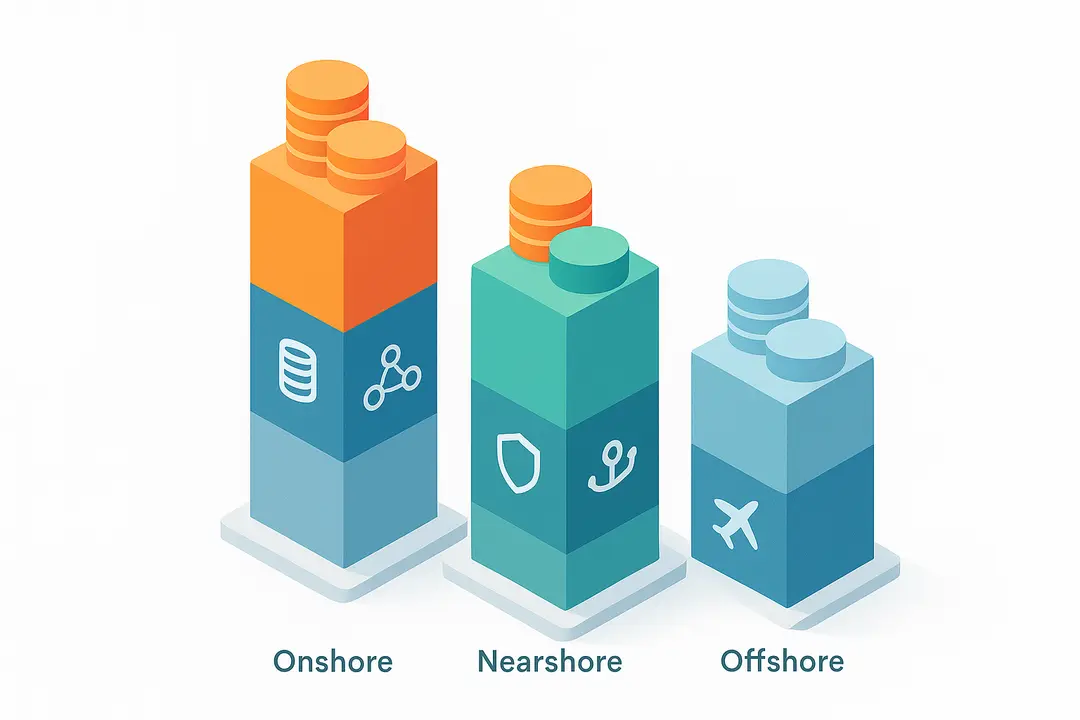
Understanding the differences between onshore, nearshore, and offshore models helps US businesses pick the approach that best fits their goals, budget, and risk tolerance.
Onshore Software Outsourcing
- Location: US-based vendors.
- Pros: Easiest collaboration, legal and cultural alignment, minimal time zone challenges.
- Cons: Highest cost, limited scalability.
Nearshore Software Outsourcing
- Location: LATAM partners (Mexico, Colombia, Argentina, Brazil, etc.).
- Pros: Strong time zone overlap, lower costs than US teams, high English proficiency, cultural compatibility, easier travel.
- Cons: Slightly different regulatory environments, still requires remote management.
Offshore Software Outsourcing
- Location: Distant regions (India, Eastern Europe, Asia).
- Pros: Lowest hourly rates, vast scalability.
- Cons: Significant time zone gaps, cultural and communication barriers, legal complexity.
Key comparison criteria:
- Cost: Offshore is typically cheapest, nearshore offers a balance, onshore is most expensive.
- Collaboration & Communication: Nearshore and onshore win on real-time teamwork.
- Risk & Compliance: Onshore and nearshore simplify US/EU legal requirements.
- Travel & Integration: Nearshore enables affordable in-person visits.
| Criteria | Onshore (US) | Nearshore (LATAM) | Offshore (Asia/Eastern Europe) |
|---|---|---|---|
| Cost (hourly, avg) | $120–$200+ | $40–$80 | $25–$55 |
| Time zone alignment | Full | 80–100% | 25–50% |
| Cultural compatibility | Full | High | Variable |
| Legal compliance | Easiest | High (but local nuances) | More complex |
| Travel time/cost | Minimal | Low-moderate | High |
| Talent availability | High, but limited supply | High, growing | High, variable |
How Does Nearshore Software Outsourcing Work for US Companies?
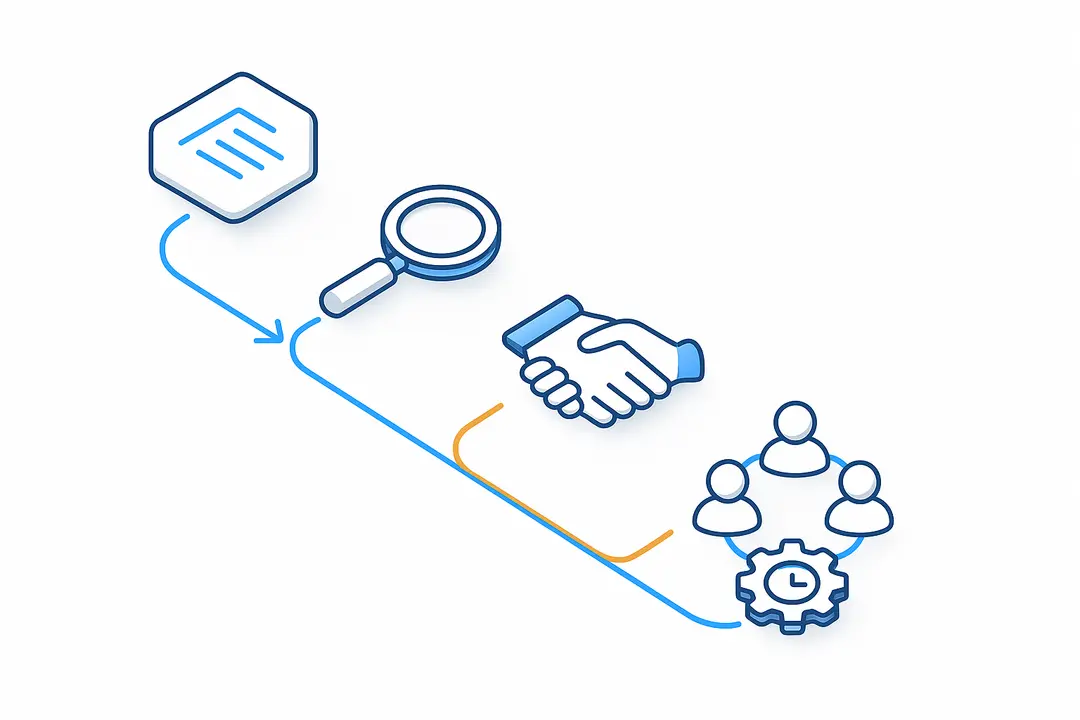
Engaging a nearshore software development partner involves a clear, step-by-step process designed for transparency and alignment with US business needs.
Typical Nearshore Engagement Process:
- Define goals and requirements.
- Identify and shortlist partner candidates.
- Issue RFP or ask for proposals.
- Vendor evaluation and technical/cultural interviews.
- Contract negotiation and onboarding.
- Kickoff and integration with your US team.
- Agile project delivery, daily standups, and milestone reviews.
- Ongoing management, feedback, and optimization.
Engagement Models Explained:
- Staff Augmentation: Nearshore developers join your existing projects as remote teammates.
- Dedicated Teams: An entire team (incl. PMs, QA, architects) embedded for your long-term needs.
- Project-Based: Teams deliver a defined scope, timeline, and deliverables.
- Outcome-Based: Payment and delivery tied to specific results or KPIs.
Engagement Model Matrix
| Model | Pros | Cons |
|---|---|---|
| Staff Augmentation | Fast ramp-up, direct oversight | Requires your management |
| Dedicated Teams | Seamless integration, predictable | May be less flexible short-term |
| Project-Based | Scope clarity, vendor accountability | Rigid for changing needs |
| Outcome-Based | Low risk, focused on results | Complex contracts, only for mature buyers |
Example Timeline:
From RFP to first delivery, the process usually spans 4–8 weeks, depending on team size, onboarding, and project complexity.
Integration with Your US Team:
Most nearshore teams use standard collaboration tools (Slack, Jira, Zoom) and align work hours with US stakeholders. Regular joint standups, sprint reviews, and documentation processes ensure delivery quality matches US standards.
What Are the Key Benefits of Nearshore Software Development for US Businesses?
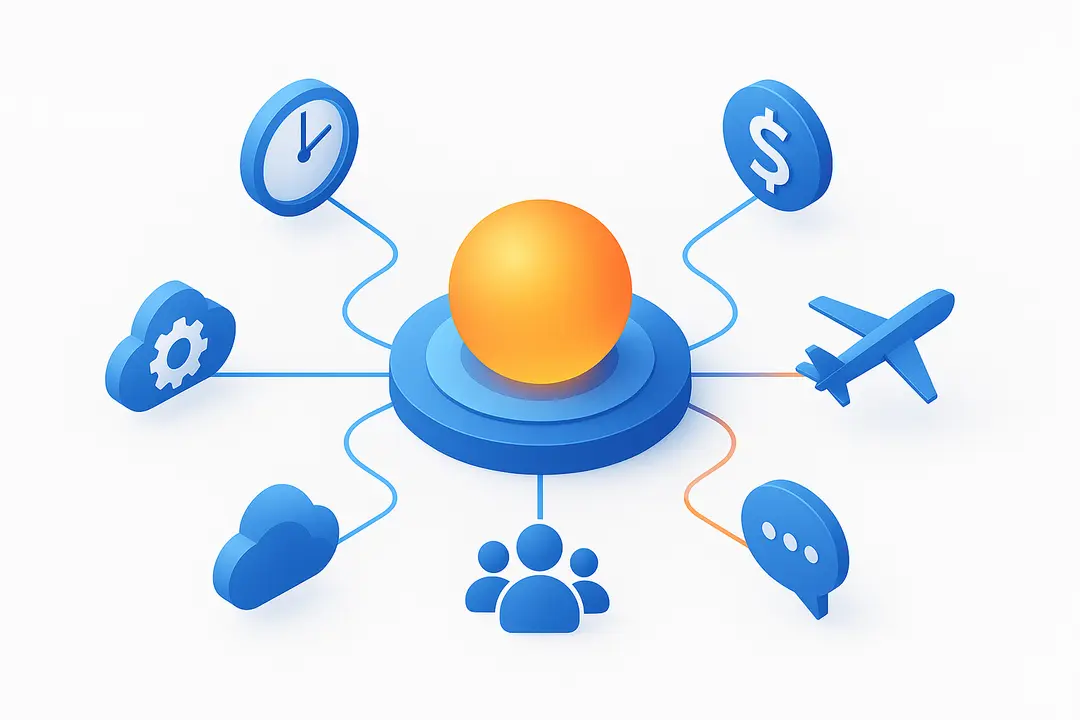
Nearshore software outsourcing offers a combination of cost efficiency, operational flexibility, and close cultural alignment. It is rapidly becoming a strategic differentiator for US companies seeking innovation and accelerated market delivery.
Top Benefits of US Nearshore Software Development:
- Time zone alignment: Enables real-time collaboration, daily meetings, and agile development cycles.
- Lower costs: Rates are 30–60% lower than US equivalents, with less risk and friction than offshoring.
- Faster ramp-up: Skilled LATAM teams are readily available, reducing lead times on critical projects.
- Easier travel: Proximity means affordable, short flights for in-person sessions when needed.
- Cultural & language compatibility: High English proficiency and US-style work culture reduce misunderstandings.
- Advanced capabilities: Many vendors now offer AI/ML, DevOps, automation, and cloud integration.
- Scalability: Rapidly scale teams up or down in response to US business needs.
What Does Nearshore Software Development Cost in 2025?
Understanding the real cost of nearshore software development empowers better budgeting and vendor evaluation. While rates are variable, most nearshore partnerships deliver high value compared to US or offshore models.
Typical Hourly Rates by Country (2025):
| Country | Developer | QA Engineer | Project Manager |
|---|---|---|---|
| United States | $120–$200 | $100–$175 | $130–$220 |
| Mexico | $45–$65 | $35–$60 | $55–$80 |
| Colombia | $40–$60 | $30–$55 | $50–$75 |
| Argentina | $40–$65 | $30–$55 | $50–$70 |
| Brazil | $45–$75 | $35–$60 | $60–$85 |
| Costa Rica | $50–$80 | $40–$65 | $65–$90 |
Rates vary by role, seniority, and specialty (e.g. AI/ML engineers may command higher rates).
Price Drivers:
- Skill level and tech stack: AI/ML, cloud, and cybersecurity roles trend higher.
- Engagement model: Dedicated teams may be discounted vs. per-hour staff augmentation.
- Country and vendor scale: Premium vendors with certifications cost more, but may reduce risk.
Common Pricing Models:
- Fixed price: Pre-defined scope (best for clear, stable requirements).
- Time and materials (T&M): Pay for actual hours/deliverables consumed (best for changing or agile projects).
- Retainer: Monthly flat fee per team or service.
Example Scenario:
A five-person nearshore team (3 developers, 1 QA, 1 PM) from Colombia at average 2025 rates may cost $13,000–$18,000/month versus $45,000+ in the US.
ROI:
Most US firms report cost savings of 35–55% over domestic hiring, factoring in lower rates, faster delivery, and upskilling capability.
What Are the Main Risks of Nearshore Outsourcing—and How Can You Manage Them?
Like any business-critical partnership, nearshore software outsourcing presents specific risks — but proven strategies can mitigate them.
Most Common Nearshore Outsourcing Risks:
- Communication gaps: Misunderstandings due to remote work or language nuances.
- Legal and regulatory differences: Variances in IP protection, contract enforcement.
- Code quality inconsistency: Diverse standards across vendors.
- Data and IP protection: Ensuring compliance with US laws (GDPR, HIPAA, SOC2, ISO 27001).
How to Manage and Mitigate These Risks:
- Set clear communication protocols: Daily or weekly standups, shared channels, robust documentation.
- Vet for regulatory compliance: Ask vendors about GDPR, HIPAA, SOC2, and ISO 27001 adherence.
- Review code samples and QA processes: Run pilot projects before large engagements.
- Use US law-governed contracts: Specify IP ownership, dispute resolution, and confidentiality in agreements.
- Regular progress reviews: Maintain transparency with milestones and demo days.
“We were worried about code quality and time zones, but daily scrum meetings with our nearshore team in Mexico completely changed our expectations.”
— US Tech Director (synthesized from real Reddit feedback)
Which Latin American Countries Are Best for US Nearshore Software Outsourcing?
Choosing the right country for nearshore outsourcing is foundational for maximizing benefits. Each major LATAM market offers unique strengths for US companies.
Primary Nearshore Destinations:
- Mexico: Closest proximity, high US cultural affinity, largest talent pool, great for broad dev and support needs.
- Colombia: Rapidly growing tech sector, strong English, competitive rates, especially strong in cloud, fintech.
- Argentina: High-caliber developers, deep engineering culture, advanced AI/ML talent, creative problem-solving.
- Brazil: Largest regional ecosystem, great for enterprise-scale projects, but with some regulatory complexity.
- Costa Rica: Premium talent, highly bilingual, strong in QA/testing and compliance-heavy projects.
- Others (Peru, Chile): Emerging hubs, focus on agility, affordable for startups.
Country Comparison Table
| Country | Time Zone | Cost Level | English Proficiency | Talent Depth | Specialties |
|---|---|---|---|---|---|
| Mexico | CST/MST | $$ | High | Broad | Web/mobile, QA |
| Colombia | EST/CST | $ | High | Growing | Cloud, fintech, DevOps |
| Argentina | CST/EST | $ | High | Advanced | AI/ML, product design |
| Brazil | BRST/EST | $$ | Moderate-High | Largest | Enterprise, DevOps |
| Costa Rica | CST | $$$ | Very High | Niche | QA, compliance, cloud |
Best-fit countries by specialty:
- AI/ML: Argentina, Brazil
- QA/Testing, Compliance: Costa Rica, Mexico
- Fintech/Cloud: Colombia, Brazil
How Do You Choose the Right US Nearshore Software Development Partner?
Choosing the right nearshore partner is the single most important step for project success. Use a systematic selection process to reduce risk and maximize value.
Key Selection Criteria:
- Technical skills: Depth in required tech stacks (AI/ML, cloud, mobile, QA).
- Regulatory compliance: Proven adherence to GDPR, HIPAA, SOC2, ISO 27001 where relevant.
- Cultural and communication fit: English fluency, collaborative mindsets.
- Past performance: Verified case studies, references, client testimonials.
- Scalability and flexibility: Ability to grow or shrink teams quickly.
Partner Evaluation Checklist
- Verify experience in your industry and technologies.
- Assess English and communication practices (meetings, updates).
- Demand proof of compliance and security certifications.
- Request code samples, portfolios, and references.
- Check for transparent, US-law-governed contracts and IP agreements.
- Pilot with a small engagement before scaling.
- Align on onboarding and collaboration workflows.
Red flags: Vague pricing, weak references, lack of transparency, slow communication.
Who Are the Leading US Nearshore Software Development Companies in 2025?
Finding the right provider starts with a shortlist of trusted, proven nearshore development companies with a history of delivering for US clients.
Representative Top Nearshore Software Development Companies (2025):
| Company | HQ / LATAM Presence | Countries Served | Specialties | Certifications/Awards |
|---|---|---|---|---|
| 10Pearls | US / LATAM | US, Mexico, LATAM | Custom, AI/ML, QA | ISO 27001, Fortune 500, Forrester Leader |
| BairesDev | US / Argentina | US, LATAM, global | Dedicated teams, QA | Great Place to Work, Clutch Leader |
| Softtek | Mexico, US | US, Mexico, LATAM | Enterprise IT, ERP | CMMI5, ISO 9001, Gartner Recognized |
| PSL Corp | Colombia, Mexico | US, LATAM | Agile, DevOps, Cloud | IAOP Leader, AWS Partner |
| Encora | US / LATAM | US, Brazil, LATAM | Digital product, AI | Everest Group Star Performer |
This table is for illustration; always validate company fit and recent reviews.
“We vetted five nearshore firms—BairesDev’s communication and technical depth stood out over offshore competitors.”
— Tech Lead, US SaaS Company (summarized from market reviews)
How to Validate Vendors:
- Use third-party review portals (Clutch, GoodFirms) for verified client feedback.
- Request references and case studies directly from vendors.
- Validate certifications relevant to your project.
What Services and Advanced Capabilities Do Nearshore Teams Offer?
Modern nearshore vendors deliver much more than basic software coding—they provide a full suite of advanced technology and industry-specific solutions.
Common Nearshore Service Offerings:
- Custom software development: Web, mobile, backend, and full-stack solutions.
- Agile team augmentation: Plug-and-play senior developers, PMs, QAs.
- Quality assurance and automated testing: Manual and automated testing frameworks.
- DevOps and cloud engineering: CI/CD pipelines, AWS/Azure/GCP integrations.
- AI/ML and data engineering: Advanced analytics, machine learning models, data migration.
- Cybersecurity and compliance: Audits, standards, penetration testing.
Industry Use Cases:
- Healthcare: HIPAA-compliant EHR/EMR systems, telemedicine apps.
- Fintech: Payment gateways, regulatory-compliant solutions, risk modeling.
- eCommerce: Omnichannel platforms, automation, UX optimization.
- SaaS: Product scaling, cloud migrations, subscription management tools.
- Logistics: IoT integration, route optimization, analytics dashboards.
Case Study Excerpt:
A US healthcare SaaS company worked with a Colombian nearshore team to launch a HIPAA-compliant mobile portal, reducing time-to-market by 40% over prior onshore efforts.
What Trends Will Shape US Nearshore Software Development in 2025 and Beyond?
The US nearshore software development sector is evolving rapidly, shaped by technology, global talent flows, and changing regulatory requirements.
Key Trends Influencing Nearshoring:
- AI/ML surge: Dramatic increase in LATAM vendors offering AI/ML skillsets for US projects (Statista, Everest Group).
- Remote work normalization: Remote/hybrid collaboration best practices now standard; distributed teams integrate seamlessly with US operators.
- Growth in cloud and DevOps: More US companies are prioritizing cloud migration, automation, and resilient DevOps pipelines via nearshore teams.
- Security and compliance focus: Vendors emphasize security certifications (e.g., SOC2, ISO 27001) as data privacy becomes a top priority.
- Regulatory adaptation: Latin American countries are aligning regulations closer to US and EU standards, making cross-border work easier.
- Expansion of industry specialization: Healthcare, fintech, and SaaS-focused teams increase in both number and expertise.
“Nearshore software development in LATAM is projected to grow at double-digit rates, with AI and cybersecurity services leading demand into 2026.”
— Citing Deloitte & Everest Group reports (paraphrased)
Key Takeaways: Should Your US Business Nearshore Software Projects?
Nearshore software development with LATAM partners delivers real-time collaboration, cost savings, and scalable expertise tailored to US business needs. It’s most impactful for projects where speed, agility, and continuous innovation directly translate into competitive advantage.
Decision Guide:
- When to nearshore: Projects demanding rapid delivery, modern tech stacks, or hard-to-hire US roles.
- Who benefits most: Mid-sized to large US companies in SaaS, fintech, healthcare, and eCommerce.
- Is nearshore right for you?
- Need flexible, expert teams?
- Require time zone and cultural alignment?
- Want 35–55% cost savings over onshore?
- Must meet US/EU regulatory standards?
If most answers are yes, nearshore could be your strategic edge.
Quick Decision Checklist:
- Urgent need for software talent
- Internal cost pressures
- Preference for real-time collaboration
- Need for advanced skills (AI/ML, cloud)
- Regulatory sensitivity
FAQs About US Nearshore Software Development
What is US nearshore software development and how does it work?
US nearshore software development refers to outsourcing software engineering tasks to teams located in nearby regions, primarily Latin America. This approach allows companies to benefit from real time collaboration, cost efficiency, and cultural compatibility. Many organizations choose nearshore software development for US companies to maintain agile workflows while accessing a broader pool of skilled engineers.
How does US nearshore software development differ from traditional offshoring?
The main difference between US nearshore software development and offshoring is geographic proximity. Nearshore partners are typically located in Latin American countries that share similar time zones with the United States. This makes communication smoother compared to traditional offshore models, which often involve distant regions with larger time differences.
Why is Latin America software development outsourcing popular among US businesses?
Latin America software development outsourcing has become popular because it offers strong technical talent, better time zone alignment, and competitive pricing. Many US companies adopt nearshore software development for US companies to improve collaboration, accelerate delivery cycles, and reduce operational costs.
What are the main benefits of US nearshore software development?
The key advantages of US nearshore software development include improved communication, reduced development costs, faster project turnaround, and easier collaboration due to overlapping working hours. These benefits make latin america software development outsourcing a strategic choice for companies seeking reliable engineering support.
What are typical hourly rates in nearshore software development for US companies?
In many Latin American markets, hourly rates for developers typically range between 40 and 80 dollars depending on experience and technology specialization. Compared to US based engineers, this makes nearshore software development for US companies significantly more cost efficient while maintaining high quality standards.
How do you choose the right partner for US nearshore software development?
Selecting the right provider for US nearshore software development involves reviewing technical expertise, communication practices, project management approach, and security standards. Companies should also request client references and consider starting with a small pilot project before committing to long term latin america software development outsourcing.
What services are commonly offered in nearshore software development for US companies?
Most vendors providing nearshore software development for US companies offer services such as custom application development, web and mobile development, QA testing, DevOps, cloud engineering, and AI solutions. Many firms specializing in latin america software development outsourcing also provide dedicated development teams and product engineering support.
Can nearshore teams collaborate effectively with US in house developers?
Yes, collaboration is one of the biggest advantages of US nearshore software development. Teams can easily integrate with in house developers through tools like Slack, Jira, and Zoom. Because of overlapping working hours, nearshore software development for US companies enables daily standups, sprint planning, and faster feedback cycles.
What risks exist in Latin America software development outsourcing?
Like any outsourcing model, latin america software development outsourcing may involve risks such as communication gaps, compliance issues, or inconsistent quality. These risks can be reduced by choosing experienced vendors, defining clear processes, and maintaining regular collaboration with the US nearshore software development team.
Which countries are leading destinations for nearshore software development for US companies?
Several Latin American countries have become major hubs for nearshore software development for US companies, including Mexico, Colombia, Argentina, Brazil, and Costa Rica. These countries offer strong engineering talent, competitive pricing, and established ecosystems for latin america software development outsourcing.
Is US nearshore software development suitable for advanced technologies like AI and cloud engineering?
Yes, many firms involved in US nearshore software development now specialize in advanced technologies such as artificial intelligence, machine learning, cybersecurity, and cloud architecture. This growth has made latin america software development outsourcing a viable option for both innovative startups and large enterprises.
Conclusion: Taking the Next Step with US Nearshore Software Development
US nearshore software development has become a practical strategy for companies that want to scale engineering capacity while maintaining strong collaboration and high quality delivery. By partnering with experienced teams in Latin America, US organizations can access skilled talent, benefit from similar time zones, and manage projects more efficiently without the challenges often associated with distant offshore models.
As technology demands continue to grow across areas such as cloud platforms, AI solutions, and modern application development, nearshoring offers a flexible way to expand development capabilities. With the right partner, clear communication practices, and well defined processes, US nearshore software development can help businesses accelerate innovation, improve product delivery, and build stronger global engineering teams.
Key Takeaways
- Nearshore software development enables US companies to access skilled LATAM talent, align with US time zones, and save 35–55% compared to onshore rates.
- Top nearshore destinations include Mexico, Colombia, and Argentina, each with unique strengths for specific tech needs.
- Effective partnerships require clear selection criteria, ongoing communication, and attention to security/regulatory alignment.
- Services span custom development, QA, DevOps, and advanced tech (AI/ML, cloud), delivering value across industries.
- 2025 trends favor nearshore for AI, remote/hybrid collaboration, and compliance-driven projects—making it a strategic play for US digital leaders.
This page was last edited on 9 July 2026, at 11:06 am

Start a conversation with our team to solve complex challenges and move forward with confidence.