
As enterprise AI adoption accelerates, organizations face both significant opportunity and growing risk. Many teams move quickly into AI initiatives, only to see their proof of concept efforts fall short, resulting in lost time, budget overruns, and reduced stakeholder confidence.
This AI PoC guide is designed to help organizations avoid those outcomes. A failed AI proof of concept often stems from unclear objectives, poor data readiness, or insufficient attention to governance and compliance. Without a structured approach, even promising AI ideas can stall before delivering value.
This guide provides a clear, step by step framework supported by best practices and expert insights to help you validate AI ideas, reduce risk, and transform PoCs into scalable, production ready solutions. By following this approach, organizations can make informed decisions and maximize the return on their AI investments.
Summary Table: The AI PoC Framework at a Glance
| Step | Key Activities | Best Practice Highlight |
|---|---|---|
| 1. Define Business Problem | Stakeholder mapping, use case selection | Crystal-clear objectives |
| 2. Feasibility & Risk Assessment | Tech scan, data/compliance audit | Early blocker detection |
| 3. Data Preparation | Data cleaning, labeling, sampling | Minimum viable dataset |
| 4. Prototype Build | Model selection, rapid prototyping | Human-in-the-loop |
| 5. Testing & KPI Measurement | Real-world data eval, dashboard reporting | Value-linked KPIs |
| 6. Evaluation | ROI analysis, success/failure review | Go/no-go framework |
| 7. Scale or Redesign | Production readiness, roadmap planning | Plan for growth or iterate |
What Is an AI Proof of Concept (PoC) and Why Does It Matter?
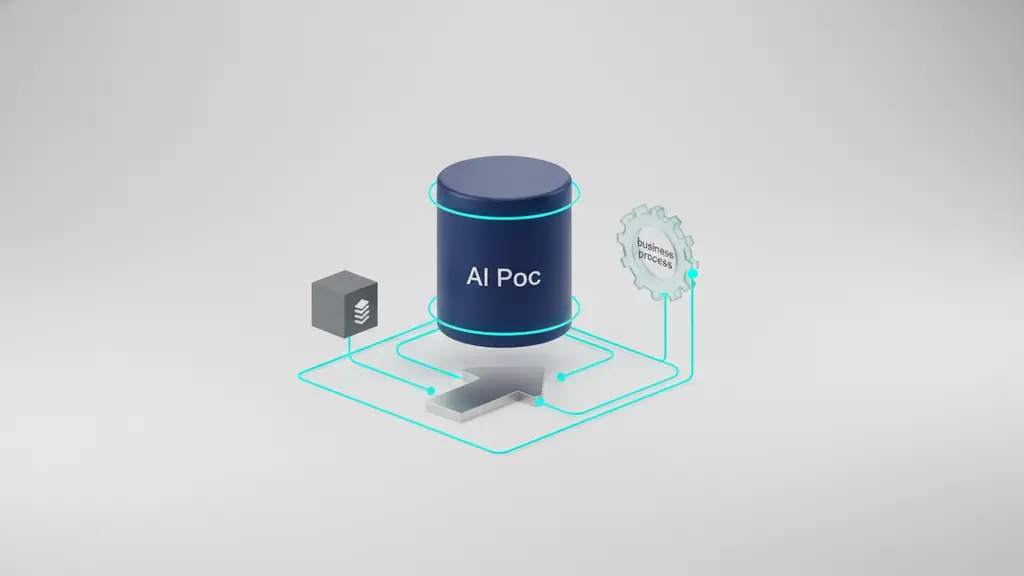
An AI Proof of Concept (PoC) is a focused, short-term experiment designed to test whether an AI solution can successfully solve a specific business problem and deliver measurable value.
AI PoC Definition and Value Proposition
- AI PoC: An experiment that validates the technical feasibility and business value of an AI solution for a real-world use case, before fully investing in production.
- Core benefits:
- Risk reduction: Identify technical or business obstacles early, saving time and budget.
- Stakeholder buy-in: Demonstrate results quickly, building confidence for larger investments.
- Cost control: Prevents wasting resources on full-scale projects that don’t deliver value.
- Faster iteration: Enables rapid learning and refinement, paving the way for successful AI adoption.
Why AI PoCs are essential:
Running a PoC lets you “test before you invest,” ensuring technology, data, and business processes align before scaling AI.
How Is an AI PoC Different from a Prototype, Pilot, or MVP?
Understanding the differences between PoC, prototype, pilot, and MVP (Minimum Viable Product) helps you choose the right approach and avoid wasted effort.
| Stage | Purpose | Scope | Success Metric | Stakeholders | When to Use |
|---|---|---|---|---|---|
| PoC | Validate technical/business feasibility | Narrow/Targeted | Proof solution works | IT + Business SMEs | Early discovery |
| Prototype | Visualize solution/interface | Visual/Usability | User feedback | Designers, Users | UI/UX exploration |
| Pilot | Test in real-world, limited scale | Partial process | Operational impact | End-to-end teams | Pre-scale validation |
| MVP | Launch minimal usable product | Market-ready | Real user adoption | Product/Market teams | Full deployment test |
Quick guide:
– PoC: Will AI work here?
– Prototype: What will it look like?
– Pilot: Does it work in my real-world environment?
– MVP: Can I launch and drive adoption?
When Should Your Organization Run an AI PoC? (Decision Criteria & Red Flags)
An AI PoC is not always needed—in fact, overusing PoCs can slow progress. The key is knowing when a PoC is the right choice.
Decision Criteria: Is a PoC Needed?
- You’re unsure about technical feasibility or data availability.
- The business value or ROI is unclear.
- Stakeholders are unconvinced or risk-averse.
- Regulatory compliance or data privacy concerns need validation.
- There is a new technology or approach that hasn’t been proven in your organization.
Red flags that signal a PoC is risky or premature:
- Data quality is unknown or poor.
- Success criteria are ambiguous.
- No clear owner or decision authority.
- Stakeholders are misaligned.
Tip:
Use a decision flowchart or checklist to assess each PoC opportunity before proceeding.
What Are The Steps To Run An AI PoC? An End To End AI PoC Guide
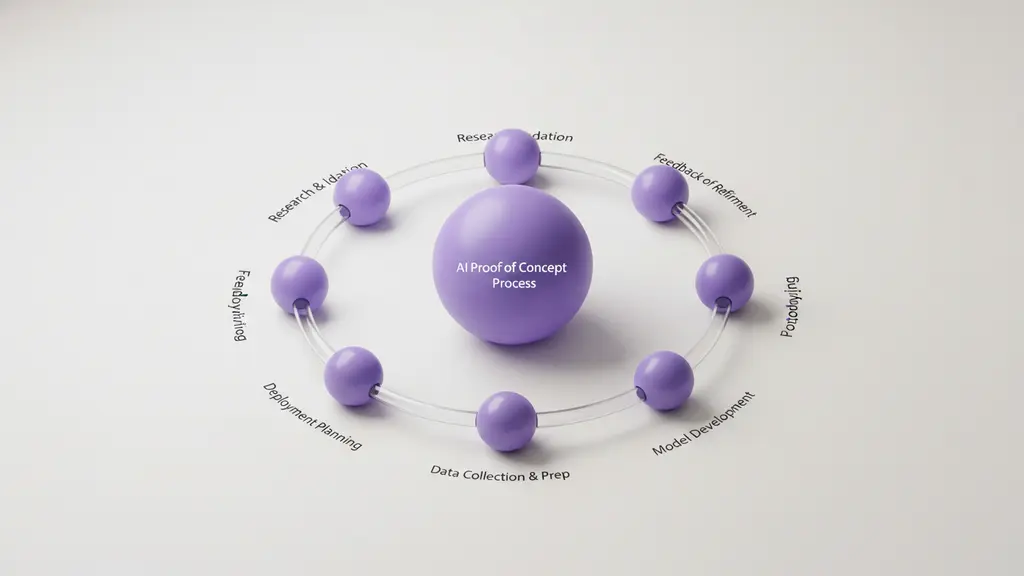
Running a successful AI proof of concept requires a structured, step-by-step approach. Below is a proven AI PoC framework adopted by leading enterprises.
The 7 Key Steps to Run an AI PoC:
- Define the business problem and objectives
- Assess feasibility (technical, data, compliance)
- Prepare and validate data
- Build a minimal AI prototype
- Test with real-world data and measure KPIs
- Evaluate results, ROI, and key learnings
- Plan for scale-up or redesign
In-Depth: Critical Stages of the AI PoC Framework
Define the Right Use Case and Align With Stakeholders
Clearly articulating the business challenge you want to solve and ensuring all critical stakeholders are aligned is the foundation of any successful AI PoC.
- Map stakeholders: Identify key business owners, IT leads, compliance reps, and end users.
- Prepare a business case: Specify the problem, success metrics, and expected value.
- Example: A financial services team aligns compliance, IT, and operations before testing AI fraud detection—reducing rework and accelerating buy-in.
Feasibility & Risk Assessment (Technical, Data, Regulatory)
Before building, assess if your idea is viable and compliant.
- Check technical feasibility: Can existing AI models or frameworks solve the problem?
- Audit data quality: Is data accessible, clean, and relevant?
- Identify regulatory hurdles: Assess GDPR, HIPAA, or sector-specific rules.
- Action: Use a readiness checklist to reduce scope creep and identify blockers upfront.
AI Data Preparation: What’s Needed for an Effective PoC?
Quality data is often the difference between PoC success and failure.
- Minimum viable data set: Collect just enough relevant, labeled data for the PoC.
- Common pitfalls: Incomplete, biased, or unstructured data can stall progress.
- Example workflow:
- Extract sample datasets from production.
- Cleanse missing/duplicate values.
- Anonymize or mask sensitive information.
- Label data and validate with subject matter experts.
- Checklist: Ensure data is representative, up-to-date, and compliant before use.
Prototyping and Testing: Building the Minimum AI Solution
Build a simple AI solution focusing on core functionality to answer the key feasibility question.
- Choose your AI approach: Selecting the right model (e.g., GPT-4, classification, or generative AI) based on use case.
- Rapid prototyping: Use frameworks like TensorFlow, PyTorch, or open-source LLMs.
- Incorporate human-in-the-loop: For tasks requiring validation or ongoing training.
- Tip: For generative AI PoCs (e.g., chatbots), pilot with a limited domain to reduce complexity.
Evaluation: Measuring Success, ROI, and Deciding Next Steps
A rigorous, business-aligned evaluation ensures your AI PoC is actionable.
- Key metrics:
- Technical: accuracy, latency, scalability, data privacy.
- Business: cost savings, revenue potential, process efficiency improvement.
- ROI calculation: Compare the cost of the PoC against projected business impact.
- Example: According to the MIT AI Pilot ROI Study (2025), PoCs that clearly tracked cost savings and user adoption achieved 30% higher approval rates for production scaling.
- Decision: Use results to scale, refine, or retire the solution.
What Are the Best Practices and Common Pitfalls for AI PoCs?
Adopting proven best practices and avoiding common mistakes dramatically increases your AI PoC success rate.
Top 7 Best Practices for AI PoCs
- Start with a clear business case and measurable objectives.
- Engage stakeholders early, from IT to compliance.
- Invest in robust data preparation and validation.
- Limit PoC scope; target one use case, not many.
- Set clear go/no-go criteria and document success metrics.
- Use agile or lean methods for rapid iteration.
- Prioritize transparency and compliance from day one.
Common Pitfalls to Avoid
- Over-engineering: Building too much before validating value.
- Data issues: Using poor quality or inaccessible datasets.
- Ignoring compliance: Overlooking data privacy slows or blocks production.
- Undefined ROI: Failing to tie success to business outcomes.
Industry Insight:
According to Gartner’s 2024 report, up to 70% of failed AI PoCs did not meet their business objectives due to poor goal definition or data issues.
How Do You Measure AI PoC Success? KPIs, ROI, and Real-World Metrics
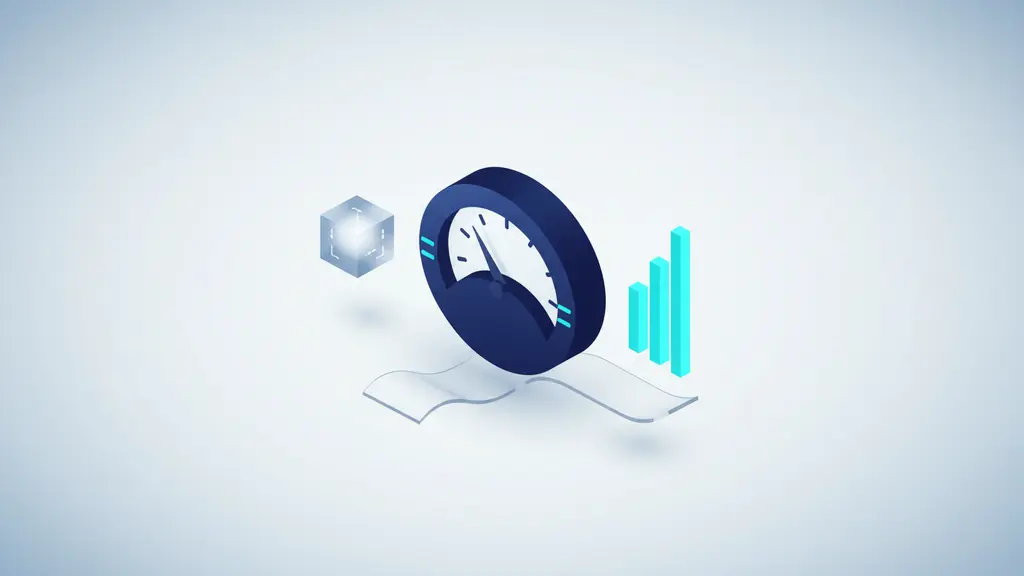
To justify investment and scale, you must measure both technical and business success.
Key AI PoC Metrics
- Technical KPIs
- Model accuracy
- Processing speed/latency
- Scalability
- Business KPIs
- Cost reduction
- Revenue uplift
- Time-to-market improvement
- User adoption rates
Calculating AI PoC ROI
- Estimate total PoC investment (cost of people, tools, data, and time).
- Project measurable benefits (e.g., process automation savings).
- ROI formula:
ROI = (Benefit – Cost) / Cost
Sample Dashboard:
| KPI | Target | Result |
| Model Accuracy | >90% | 93% |
| Time Saved Per Transaction | 30% | 27% |
| Annual Cost Reduction | $100,000 | $120,000 |
Tip:
Use industry benchmarks and templates to compare performance and make objective decisions.
What Are the Top AI PoC Use Cases by Industry? (Case Matrix & Examples)
AI PoCs have delivered value across industries—each with unique compliance, data, and business constraints.
| Industry | PoC Example | Approach | Success/ROI | Compliance Focus |
|---|---|---|---|---|
| Healthcare | Disease risk prediction | Predictive AI | 25% reduction in misdiagnosis (Source: IEEE) | HIPAA, PHI |
| Finance | Fraud detection | ML classification | $500k fraud prevented (Scotiabank PoC) | GDPR, AML |
| Retail | Personalized marketing | Generative AI | 12% sales uplift (Element451 case) | CCPA, GDPR |
| Manufacturing | Predictive maintenance | Sensor analytics | 20% downtime reduction | OSHA, ISO |
| Education | Student retention alert | NLP + ML | 18% improvement (Element451, 2025) | FERPA, GDPR |
Case Highlights:
- Healthcare: AI PoC flagged 25% more at-risk patients with no PHI leaks (IEEE, 2024).
- Finance: Scotiabank’s pilot saved $500k in 3 months, scaling after PoC success.
- Retail: AI marketing PoC drove significant conversion improvement in under eight weeks.
Should You Build Your AI PoC In-House or Work With a Vendor?
Choosing between in-house development and a vendor partner impacts speed, cost, and risk. Here’s how they compare:
| Factor | In-House | Vendor/Consultant |
|---|---|---|
| Control | Full control of IP and process | Faster ramp-up, less direct control |
| Expertise | Leverage internal knowledge | Access specialized skills and accelerators |
| Speed | May be slower without prior experience | Faster start based on templates and playbooks |
| Cost | Higher fixed/people costs | Upfront services cost, fewer hidden costs |
| Compliance | Requires internal legal checks | Vendors may handle compliance frameworks |
Decision Checklist
Do we have experienced AI talent internally?
Is time-to-market critical?
Can a vendor provide industry-specific accelerators or compliance tools?
Tip:
Select a vendor with a strong portfolio of AI PoC case studies, proven compliance processes, and transparent pricing.
How Do You Ensure AI PoC Regulatory Compliance? (Industry-Specific Checklist)
Ensuring regulatory compliance protects your organization from legal exposure and builds trust with users.
AI PoC Compliance Checklist
- Identify applicable regulations: (GDPR, HIPAA, FERPA, CCPA, sector-specific).
- Review data privacy requirements: Confirm data anonymization and consent.
- Data labeling and retention: Ensure traceability and secure storage.
- Document data sourcing and model training steps.
- Conduct a Data Protection Impact Assessment (DPIA) early.
- Case examples:
- Healthcare PoC: Apply HIPAA-compliant data masking from the outset.
- Banking PoC: Ensure GDPR-compliant model explainability and auditability.
- Education PoC: Limit personally identifiable data per FERPA.
Frequently Asked Questions About AI PoCs
What is an AI Proof of Concept (PoC)?
An AI Proof of Concept (PoC) is a focused experiment used to validate whether an AI solution can solve a specific business problem and deliver measurable value before full-scale adoption.
How is an AI PoC different from a prototype or pilot?
An AI PoC tests core technical and business feasibility; prototypes visualize UI/UX, and pilots test solutions in live, but limited, environments. Each serves a different stage of validation.
What are the steps to run a successful AI PoC?
The main steps are: define the problem, assess feasibility, prepare data, build a minimal prototype, test with real data, evaluate success using KPIs, and decide on scaling or redesign.
When should you build an AI PoC?
Organizations should consider an AI PoC when feasibility, business value, data, or compliance are uncertain and need early validation before wider investment.
What are common AI PoC pitfalls?
Frequent issues include vague objectives, poor data quality, lack of stakeholder alignment, insufficient compliance planning, and not defining success metrics upfront.
How do you measure AI PoC ROI?
Measure costs against quantifiable benefits (like process automation or reduced errors), using this formula: ROI = (Benefit – Cost) / Cost.
What data is needed for an effective AI PoC?
A PoC requires a representative, cleaned, and labeled sample that reflects real-world complexity but is small enough for fast iteration and compliance review.
Should you build or buy an AI PoC?
Build in-house if you have AI expertise, unique IP needs, and enough resources; partner with a vendor for speed, industry know-how, or advanced compliance requirements.
What are examples of AI PoC use cases by industry?
Examples include disease risk prediction in healthcare, fraud detection in finance, predictive maintenance in manufacturing, and personalized marketing in retail.
How do you ensure regulatory compliance in an AI PoC?
Identify applicable laws (GDPR, HIPAA, CCPA), assess data privacy needs, document data processes, and build compliance checks into each project phase.
Conclusion: Your Next Steps for AI PoC Success
A well planned AI PoC plays a critical role in reducing risk, building stakeholder confidence, and creating a clear path from experimentation to real business value. When approached with clear objectives, strong data foundations, and proper governance, an AI PoC becomes more than a technical test. It becomes a strategic decision making tool.
By following a structured framework grounded in best practices and real world experience, organizations can validate AI initiatives with confidence and lay the groundwork for scalable adoption. A thoughtful AI PoC sets the stage for sustainable AI success and ensures that future investments are informed, measured, and aligned with business priorities.
Key Takeaways
- An AI PoC is a risk-managed experiment to validate the feasibility and value of AI in real business settings.
- Clear objectives, stakeholder alignment, and robust data preparation are essential for PoC success.
- Use structured frameworks, defined KPIs, and compliance checklists to minimize failure.
- Measuring ROI and learning from both successes and pitfalls ensures the right path to scale.
- Industry context and regulatory requirements should shape every AI PoC from day one.
This page was last edited on 12 June 2026, at 11:39 am

Start a conversation with our team to solve complex challenges and move forward with confidence.