
Hiring AI consultants has become a critical step for businesses worldwide as artificial intelligence reshapes how organizations operate and compete. From startups to large enterprises, many companies lack the internal expertise required to design, deploy, and scale AI effectively. As a result, businesses increasingly rely on AI consulting firms to guide strategy, implementation, and execution, ensuring AI initiatives move beyond experimentation and deliver real outcomes.
The finance sector accounts for over 22% of the global AI consulting market. Over 1,000 AI consulting startups exist. The sector grows about 20% each year. Businesses hire AI consultants to use AI solutions quickly and safely.
This guide explains why hiring AI consultants is crucial for your business. It uses case studies from healthcare, finance, retail, manufacturing, and technology.
TL;DR
- AI is now a business necessity, not an experiment. Companies across industries are using AI to improve efficiency, reduce risk, and gain a competitive advantage.
- The AI consulting market is growing fast (over 20% annually), with finance leading adoption and more than 1,000 AI consulting startups worldwide.
- Hiring consultants is often more cost-effective than building large internal AI teams, especially for early or specialized initiatives.
- AI consulting benefits businesses of all sizes, from startups needing affordable expertise to large enterprises managing complex AI transformations.
- The best AI consultants bridge technology and business context, ensuring solutions are usable, scalable, and adopted.
- ROI must be measured, even when it’s difficult. AI should always be tied to tangible business outcomes.

Key Benefits of Hiring AI Consultants
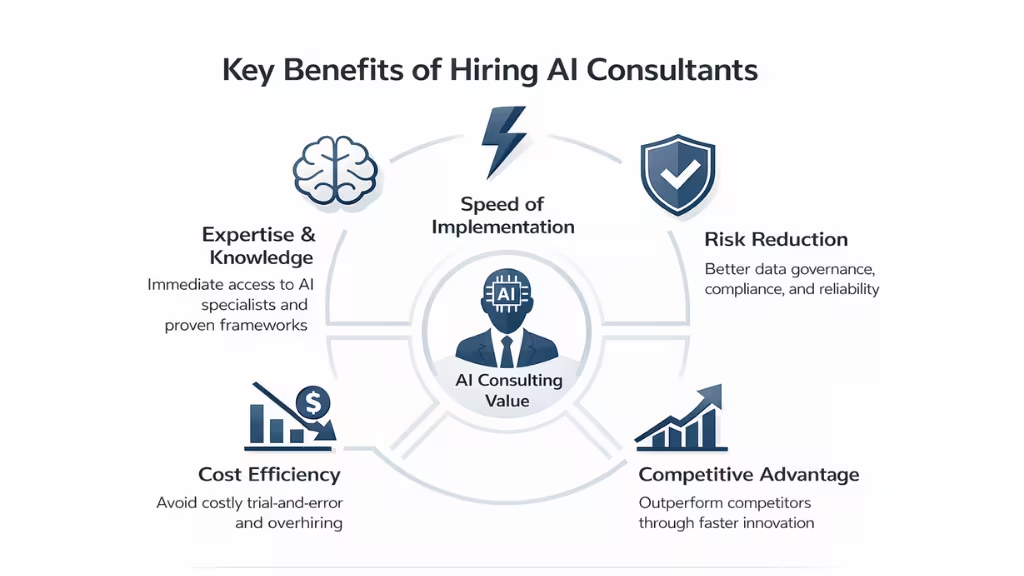
AI consultants bring a blend of technical know-how and strategic insight that can significantly accelerate and de-risk a company’s AI journey. The advantages of bringing in external AI experts include:
1. Expertise and Specialized Knowledge
AI consultants provide immediate access to machine learning engineers, data scientists, and domain specialists that companies might not have in-house. Their cross-industry experience and proven methodologies help avoid trial-and-error, ensuring AI projects are built on best practices from day one. This level of expertise is critical when internal teams lack deep AI skills or experience.
2. Speed of Implementation
With experienced consultants at the helm, businesses can implement AI solutions much faster. Consultants apply tried-and-tested techniques to shorten development cycles and rapidly deploy AI models, leading to faster time-to-value.
In practice, this means AI projects that might take years internally can often go live in a matter of months, giving companies a head start in reaping benefits.
3. Risk Reduction and Quality Assurance
AI initiatives come with pitfalls, from selecting the wrong tools to mismanaging data. Skilled consultants help mitigate these risks by guiding companies around common implementation blunders. They ensure proper governance, data quality, and validation of AI models, greatly reducing the chance of costly errors or project failures.
In regulated industries (finance, healthcare, etc.), consultants also bring frameworks to ensure compliance and ethical AI use.
4. Cost-Effectiveness and Efficiency
Engaging an AI consulting service can be more cost-effective than building an internal AI team from scratch. Businesses avoid the long-term salaries and overhead of full-time specialists, instead paying only for the expertise they need.
Many organizations see measurable savings by choosing expert support over expanding in-house headcount, reporting lower operational expenses and more efficient use of resources as a result. Consultants also identify high-ROI opportunities for automation and analytics (e.g., cutting manual work or downtime), directly improving the bottom line.
5. Competitive Advantage
In today’s fast-moving market, the ability to innovate with AI can determine industry leadership. AI consultants help companies leap ahead of competitors by quickly deploying advanced solutions and fostering AI-driven innovation. Business leaders increasingly view AI as key to gaining an edge.
For example, the COO of Manipal Hospitals (a large healthcare group) noted that partnering on new AI solutions is expected to yield “a significant competitive advantage” for their organization. By staying at the forefront of AI developments with the help of consultants, even smaller firms can punch above their weight and compete with larger players.
AI Consulting for Businesses of All Sizes
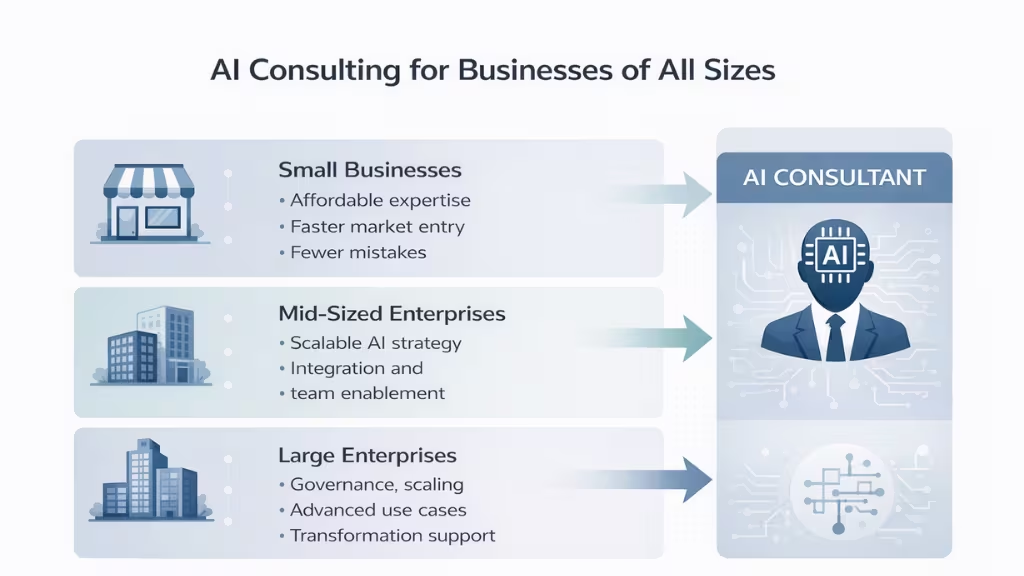
One of the strengths of AI consulting is that it’s beneficial to organizations at any scale. Whether a company is a 10-person startup or a multinational enterprise, there are clear advantages to bringing in AI experts:
1. Small Businesses
Many smaller businesses and startups find themselves in a tough spot: they need AI to stay competitive, but they don’t have the budget for a dedicated AI team or data scientists. That’s where consultants come in!
They provide a smart, affordable solution, giving you access to top-notch AI expertise and the tools you need – resources that would typically be out of reach. Think of it as having a skilled partner to help you implement AI solutions that can automate your work or sharpen your decision-making, saving you the headache of figuring it all out yourself.
This can really help level the playing field. What’s more, AI consultants are invaluable for startups, helping them avoid costly mistakes and launch their AI-powered features more quickly. For a new venture, this can be a true game-changer.
2. Mid-Sized Enterprises
Even though mid-sized companies might have some in-house tech or data skills, truly making AI work across the board usually calls for very specific expertise. That’s where consultants shine! They can step in and bridge those knowledge gaps.
Think of it like this: they can help you map out a personalized AI plan, seamlessly weave AI into your daily operations, or even teach your team how to use new AI tools effectively.
For a business that’s on the rise, bringing in an outside AI pro offers a fantastic advantage: you can easily adjust your AI expertise as your needs change. Imagine a mid-sized clothing store wanting to offer personalized product suggestions; an AI consultant could make that happen.
Or perhaps a local bank needs to beef up its defenses against fraud with AI – an expert can guide them through that too. The best part? Your company doesn’t have to go through the hassle of building a huge AI department from scratch.
This “just-in-time” expertise means mid-sized businesses can launch and grow their AI projects quickly and without breaking the bank, keeping pace with their own expansion.

3. Large Enterprises
Even huge companies, the kind that usually have their own data science teams, sometimes bring in AI consultants for a strategic boost or specialized help. Think of big businesses that might hire top consulting firms. They might do this to double-check their AI models, make sure they’re following the best methods during a major overhaul, or just to get a fresh set of eyes to spark new ideas.
For example, global banks have enlisted outside consultants to strengthen how they manage and comply with AI models, ensuring they meet all the necessary rules and regulations.
Beyond just the technical side, consultants can be a huge help with managing change within large organizations. Rolling out AI across an entire company often means rethinking how things are done and training thousands of employees. This is where outside experts, skilled in guiding AI-driven transformations, can be incredibly valuable.
Many industry leaders find a sweet spot by using a mix of both internal and external resources. They keep their own strong AI teams in-house but bring in consultants to speed up important projects or explore the very latest technologies. This blend helps large companies stay nimble and innovative, no matter their size.
By applying the right mix of internal talent and external consulting, businesses of any size can ensure they are maximizing the value from AI in a timely, efficient, and low-risk manner.
Case Studies from Key Industries
Real-world examples from a variety of sectors illustrate how hiring AI consultants translates into tangible business value. Below, we highlight success stories in healthcare, finance, retail, manufacturing, and technology, showing the problems solved and benefits gained through AI consulting engagements.
Healthcare
1. AI-Powered Medical Imaging and Faster Diagnosis
Imagine a world where getting a diagnosis is quicker and patient care is smoother, all thanks to smart technology. That’s exactly what AI consultants are helping healthcare providers achieve.
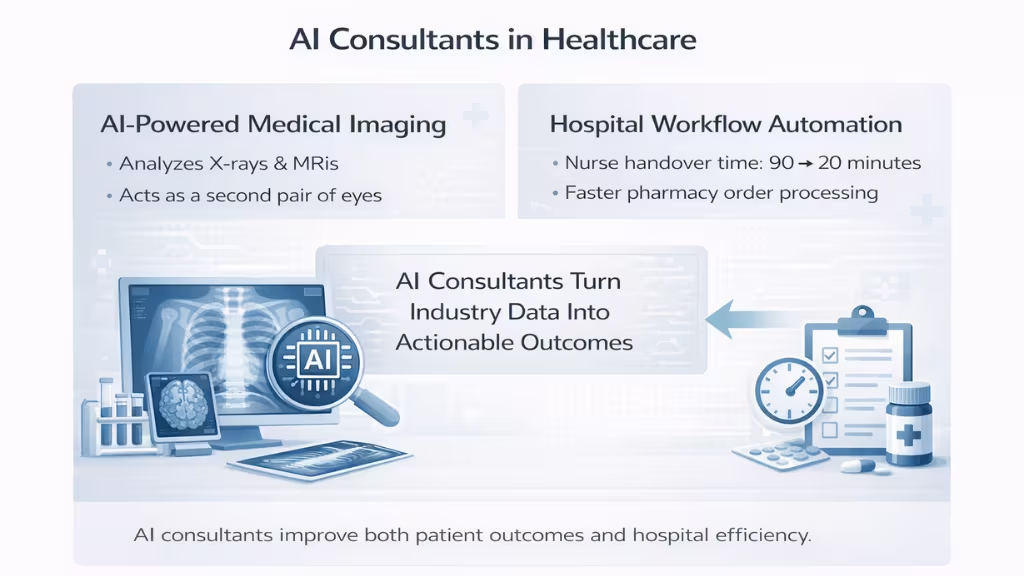
Think about a hospital that teamed up with AI experts to use a special kind of AI, called machine learning, for looking at medical images like X-rays and MRIs. This AI learned by studying thousands of scans, spotting tiny signs of illness that even the sharpest doctors might overlook. When put to work, it could quickly point out possible problems in new scans, acting like a helpful “second pair of eyes” for radiologists, almost instantly.
The result? Diagnoses that used to take days now take just hours. This means patients can start getting the treatments they need much sooner, which can be a real lifesaver.
What’s also important is that the consultants made sure this new AI tool was easy for the radiologists to use. They created a simple interface and trained the medical staff, helping them feel confident and comfortable relying on the system.
2. Workflow Automation in Hospitals
Another inspiring story comes from India. Manipal Hospitals collaborated with Google Cloud and Deloitte to bring AI into their pharmacy and nursing routines. This smart integration dramatically cut down the time nurses spent on handover reports – from about 90 minutes to just around 20 minutes. They also sped up pharmacy order processing to mere minutes.
In both these examples, the know-how of AI consultants was key. They helped bring technology to life that not only made patient care better but also made hospitals run more efficiently. It’s a beautiful example of how human expertise and cutting-edge AI can come together to make a real difference in people’s lives.
Finance
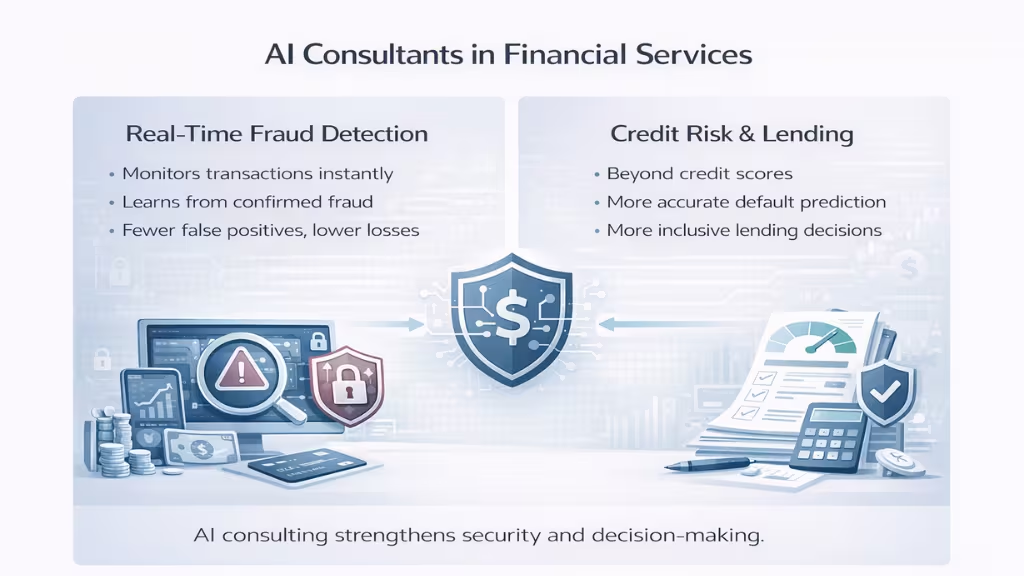
1. Real-Time Fraud Detection
The financial world was quick to see the potential of AI, especially for tackling issues like fraud, improving trading, and managing risks.
Take, for instance, a major global bank that partnered with AI experts to fight credit card fraud. These consultants worked with the bank’s vast transaction history to create a smart system. This system, using machine learning, could instantly check every transaction and flag anything suspicious in a blink.
What’s more, the consulting team kept refining the AI, making it smarter over time. It learned from every confirmed fraud, leading to fewer mistaken alarms and a much better ability to catch real fraud.
The outcome? The bank saw a big reduction in fraud losses, and honest customers enjoyed fewer annoying card blocks.
2. Smarter Credit Risk and Inclusive Lending
Another great example comes from a lending company. They brought in AI consultants to build a more comprehensive way to predict loan defaults. Instead of just relying on credit scores, they combined that with new types of data.
This AI-powered method, guided by the consultants, allowed the lender to pinpoint risky loans more accurately. It also meant they could approve loans for deserving individuals who might have been unfairly turned down before.
The result was a lower rate of defaults and a more open approach to lending. It really highlights how consultants can blend cutting-edge AI with deep financial knowledge to make smarter choices.
These stories show how financial companies are using AI consultants to become more secure against fraud, manage risks better, and ultimately keep both themselves and their customers safe.
Retail
1. Personalized Shopping Experiences
Imagine walking into your favorite store, and they just know exactly what you’re looking for. That’s the magic AI is bringing to retail today! Businesses are now teaming up with AI experts to make shopping feel more personal and to run their operations more smoothly.
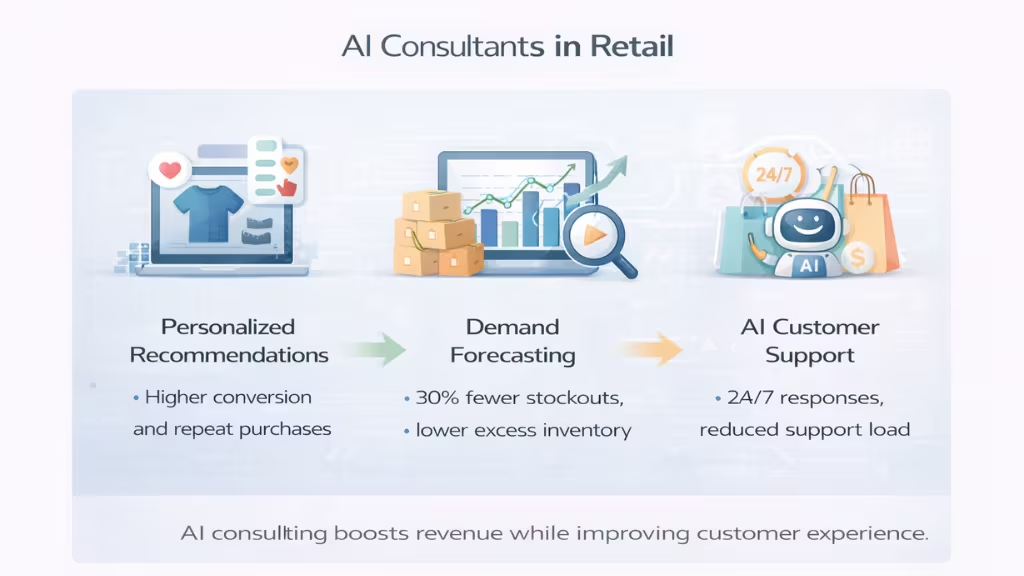
Take one online shop, for example. They brought in an AI team to build a super-smart recommendation system. Think of it like how Amazon or Netflix suggests things you might like. This AI looked at what each shopper browsed and bought, then offered up products that were just right for them.
After putting these AI-powered suggestions into action (with a little help from the consultants!), the company noticed something wonderful: customers were sticking around longer on the site and filling their virtual carts with more goodies.
The result? Online sales jumped by a significant amount, and shoppers who felt understood were more likely to come back again and again.
2. Inventory Optimization and Demand Forecasting
But AI isn’t just about making shopping fun; it’s also a lifesaver behind the scenes. A big retail chain, for instance, worked with consultants to create an AI system that could predict what products would be in demand.
By looking at past sales, seasonal shifts, and even local happenings, the AI could tell each store exactly what they’d need. This meant fewer empty shelves – they cut down on stockouts by about 30%! Plus, they weren’t stuck with too much inventory, which saved them a lot of money.
3. AI-Powered Customer Support
And who hasn’t been frustrated by waiting on hold? AI chatbots are stepping in to handle those everyday questions around the clock, freeing up real people to tackle the trickier problems.
Ultimately, what all these examples show is that bringing in AI expertise is a game-changer for retailers. It’s helping them make more money, keep their customers happier, and run their businesses more efficiently – a win-win for everyone!
Manufacturing
1. Predictive Maintenance and Reduced Downtime
Think of manufacturing companies – they’re the backbone of so many things we use every day. And guess what? Artificial Intelligence (AI) is becoming their secret weapon, and consultants are the ones helping them wield it effectively.
Let’s look at a real-world example. Imagine a company that builds heavy machinery. They were constantly battling expensive production shutdowns because their equipment would unexpectedly break down. It was a huge headache and cost them a fortune. So, they brought in AI experts, or consultants, to help.
These consultants were brilliant. They hooked up smart sensors – the kind that measure things like temperature and vibration – to all the machines. Then, they trained an AI system to watch over this data, like a vigilant guardian, looking for any tiny warning signs that a machine might be about to falter.
The results were incredible! Instead of waiting for a breakdown, they could now schedule maintenance before anything went wrong. This meant unplanned downtime plummeted by over 20%, saving them millions that would have been lost to production halts and costly repairs.
What’s truly amazing is that the AI could spot subtle issues that even the most experienced workers might miss, preventing small problems from turning into massive disasters.
2. AI-Driven Quality Control
It’s not just about keeping machines running, though. Another company, this one making everyday consumer goods, used AI consultants to supercharge their quality control. They installed a “computer vision” system on their assembly line.
Think of it as a super-powered set of eyes that could instantly spot even the tiniest flaws in products, something that manual checks often miss. This led to a dramatic drop in faulty items leaving the factory, meaning less waste and fewer expensive warranty claims.
3. Supply Chain Optimization
And the benefits don’t stop there. Consultants have also been instrumental in streamlining supply chains. One manufacturing firm, for instance, started saving about a million dollars every year after consultants used AI to figure out smarter ways to manage their inventory and get products where they needed to go.
These stories really highlight how valuable AI consultants are to the manufacturing world. They’re helping keep the gears turning smoothly, ensuring the products we rely on are top-notch, and ultimately making factories more efficient and productive. It’s a win-win for everyone involved!
Technology (Software & IT)
1. AI-Assisted Software Development
Even tech companies, with their brilliant minds, can find immense value in bringing in outside AI experts.
Take, for instance, a software development company with over 1,500 engineers. They wanted to start using an AI coding assistant called GitHub Copilot to help their teams write code faster. This company, supported by private equity and operating across the Middle East and North Africa (MENA) region, didn’t have much experience implementing these kinds of AI tools for their developers on a large scale.
So, they decided to hire an AI consultant. This expert guided them through a trial run of Copilot with a smaller group of about 20 to 30 engineers. The consultant set up a clear plan, defined what success would look like, and shared the best ways to use the tool.
After just one month, the trial was a big success! The developers involved were really happy with it. They saw real improvements: they were coding more efficiently, saving time on tasks, producing more consistent code, and generally felt better about their day-to-day work.

2. Scalable AI Adoption and Knowledge Transfer
Crucially, the consultant didn’t just leave it at that. They provided a clear plan for rolling out Copilot to everyone and offered training. This gave the company the confidence to expand the AI assistant to all its engineering teams, knowing it was a valuable addition.
This story highlights something important: even in the fast-paced tech world, specialized AI consultants can significantly speed up the adoption of new AI tools. They help ensure these tools actually support the company’s objectives and, just as importantly, they transfer their knowledge so the company can manage these tools effectively on its own.
It’s a similar situation for many tech startups. They often team up with AI consultants to quickly add AI features to their products or to get expert advice on how to make their existing machine learning models work even better.
In a nutshell, consultants are like a secret weapon for tech companies. They help them stay ahead of the curve with the latest AI innovations without pulling their core teams away from the crucial work of building and improving their main products.
Things to Get Right When Hiring an AI Consultant
Hiring an AI consultant can unlock enormous value, but only if the engagement is structured correctly from the start. Many AI initiatives fail not because the technology is weak, but because foundational decisions were rushed or misaligned. The following principles are critical to getting it right.
1. Anchor the Engagement in a Clear Business Objective
AI should never be the starting point. The starting point must always be a clearly defined business problem. Whether the goal is to reduce operational costs, improve customer experience, increase revenue, or manage risk, the problem must be articulated in business terms before any technical discussion begins.
Strong AI consultants will push back if a client begins with “we want AI” instead of “we want to solve X.” They help translate strategic objectives into AI-appropriate use cases and ensure that the solution addresses a real constraint or opportunity, not a vague innovation goal.
2. Assess Organizational Readiness Without Optimism Bias
Not every organization is ready for AI at the same level. Data quality, data accessibility, internal skills, leadership alignment, and change management maturity all play a major role in whether AI initiatives succeed.
A credible AI consultant will conduct an honest readiness assessment rather than promising immediate results. This may reveal uncomfortable truths such as fragmented data, unclear ownership, or lack of operational buy-in, but surfacing these issues early prevents costly failures later. Readiness work is not a delay; it is a risk-reduction step.
3. Prioritize Consultants Who Bridge Technology and Business Context
Technical excellence alone is not enough. An effective AI consultant must understand how AI systems operate in real business environments. This includes knowledge of industry-specific workflows, regulatory constraints, operational realities, and user behavior.
Consultants who combine deep technical expertise with hands-on use-case experience are better equipped to design solutions that actually get adopted. They know how to balance model sophistication with usability, integration effort, and long-term maintainability. This dual expertise is often what separates pilot projects from production systems.
4. Treat ROI Measurement as a Core Requirement, Not an Afterthought
AI initiatives must be accountable to business outcomes. While not all benefits are immediately measurable, every serious AI project should have a clear hypothesis for value creation and a plan to track impact over time.
Good consultants help define success metrics early cost reduction, time savings, revenue lift, risk reduction, or quality improvement, and revisit them throughout the engagement. Even when ROI is difficult to quantify precisely, establishing benchmarks and directional indicators ensures that AI remains a value-generating investment rather than a perpetual experiment.
Conclusion
Across industries and business sizes, hiring AI consultants has proven to be a crucial strategy for companies aiming to thrive in the AI-driven era. AI consultants offer the expertise, speed, and strategic guidance needed to implement complex AI solutions effectively, whether it’s a small retailer boosting sales with personalized marketing or a global bank safeguarding finances with real-time fraud detection.
By reducing risks and avoidable costs, consultants ensure AI projects deliver positive ROI rather than expensive lessons learned. Perhaps most importantly, they enable organizations to achieve in months what might otherwise take years, positioning businesses to gain a competitive edge through innovation.
FAQs: Why Hiring AI Consultants Is Crucial for Your Business
Is hiring an AI consultant worth the investment for my business?
Yes, when done correctly. AI consultants reduce the risk of failed projects, accelerate deployment, and help ensure your AI investment delivers measurable business value. In most cases, the cost of consulting is significantly lower than the cost of mistakes, delays, or abandoned pilots.
When should we hire an AI consultant instead of building internally?
You should hire an AI consultant if you lack production AI experience, need faster results, have already failed with AI pilots, or want to scale AI without expanding headcount. Consultants are especially valuable in the early and scaling phases.
What outcomes should we expect from an AI consulting engagement?
A strong engagement delivers clearly defined use cases, a production-ready AI solution, integration into your operations, and measurable impact, such as cost reduction, revenue growth, time savings, or risk reduction.
How do we evaluate whether an AI consultant is credible?
Credible AI consultants focus on business problems, challenge vague ideas, assess data readiness early, define ROI metrics upfront, and have real deployment experience not just theoretical or research backgrounds.
How long does it take to see real results from AI consulting?
Most organizations see clarity and direction within weeks, working solutions within months, and measurable business impact within 6–12 months. Consultants significantly shorten this timeline compared to internal-only efforts.
Will an AI consultant work with our existing teams or replace them?
AI consultants work alongside internal teams. Their role is to accelerate progress, transfer knowledge, and help your organization become self-sufficient, not to replace your staff.
What are the biggest risks of hiring the wrong AI consultant?
The main risks include overpromising, lack of real-world deployment experience, weak ROI focus, and technology-first thinking. Choosing a consultant without proven execution capability often leads to stalled or failed projects.
How should ROI be defined before starting an AI project?
ROI should be tied to specific business outcomes such as reduced costs, improved efficiency, revenue lift, or risk mitigation. Even when precise measurement is difficult, clear benchmarks and success criteria must be established from the start.
Is AI consulting suitable for small or mid-sized businesses?
Yes. Smaller and mid-sized businesses often benefit the most because consultants provide access to expertise without the cost of building a full internal AI team, enabling faster and more focused execution.
Should we choose a large consulting firm or a specialized AI consultancy?
Choose large firms for enterprise-wide transformation and governance-heavy programs. Choose specialized AI consultancies for faster execution, deeper technical involvement, and hands-on delivery.
This page was last edited on 8 January 2026, at 11:38 am
Contact Us Now

Contact Us Now
Start a conversation with our team to solve complex challenges and move forward with confidence.


