
- What Are US AI Development Costs?
- What Are Offshore AI Development Costs?
- Direct Cost Comparison: US vs Offshore AI Development
- Why Does US AI Development Cost More Than Offshore?
- Pros and Cons of US vs Offshore AI Development
- Hidden and Long-Term Costs to Consider
- How to Choose Between US and Offshore AI Development
- Final Thoughts
- Frequently Asked Questions
Most AI projects don’t begin with a detailed budget. They start with a problem to solve, an idea to test, and a growing urgency to build something that works. It’s usually at this point that the question of US vs offshore AI development costs comes into focus.
Some teams are drawn to offshore development because the lower rates look appealing at first glance. Others lean toward US-based teams, where communication feels easier and risks seem more manageable. Both approaches are common, and neither is automatically right or wrong.
What often gets missed is that AI development costs are shaped by more than geography alone. How teams collaborate, how feedback flows, how data is prepared, and how often models need to be adjusted all influence the real cost of a project over time.
In this guide, we look beyond surface-level pricing to explain how US vs offshore AI development costs compare in practice, and what those differences mean for real AI projects.
What Are US AI Development Costs?
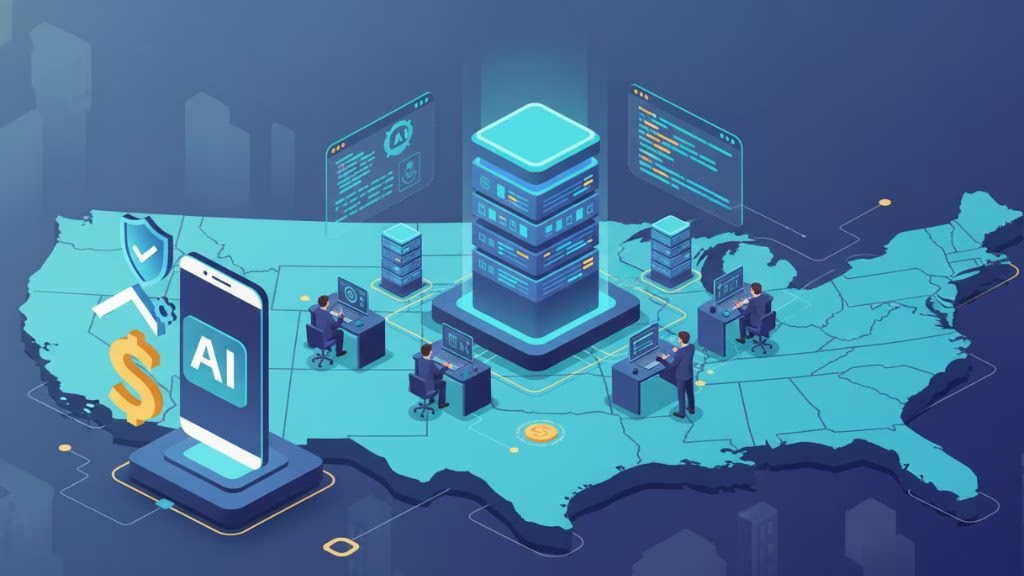
AI development costs in the US are typically higher, largely due to the level of expertise involved. US-based teams often include experienced AI engineers, data scientists, and product specialists, which is reflected in their pricing.
On average, US AI developers charge between $80 and $200+ per hour, depending on experience and specialization. Senior roles and advanced AI work usually sit at the higher end of this range. For full projects, this often results in a higher overall cost compared to offshore alternatives.
These costs also reflect broader factors such as higher salaries, infrastructure expenses, and stricter compliance standards. For projects involving sensitive data or regulated industries, this added structure can reduce risk and improve reliability.
US-based AI development is commonly chosen when close collaboration, faster feedback, and clear accountability matter more than minimizing upfront costs.
What Are Offshore AI Development Costs?
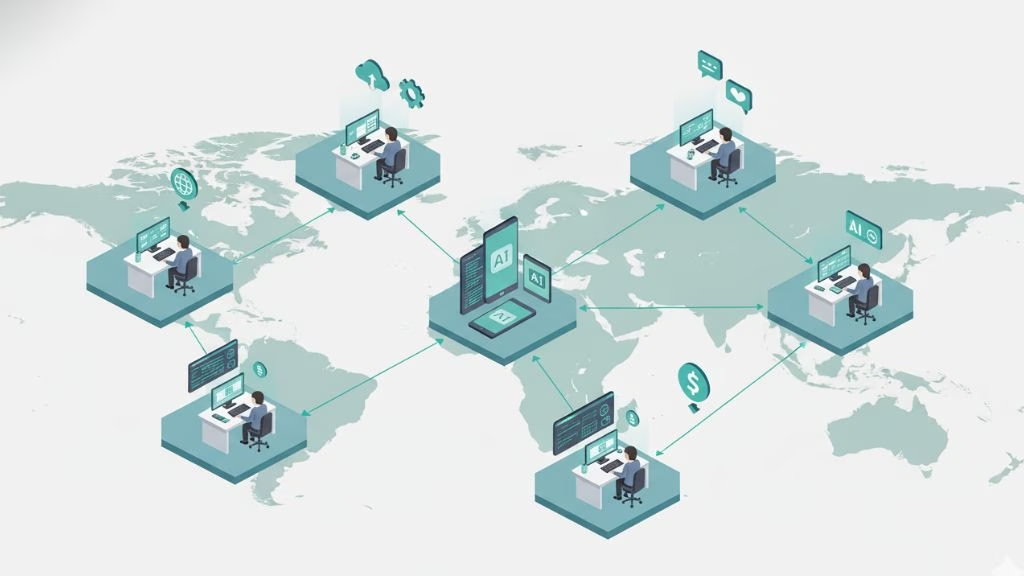
Offshore AI development is typically more affordable than hiring teams in the US, thanks to lower living costs and labor markets in many countries. According to industry data, offshore software and AI developer rates often fall significantly below US rates, with typical senior developer rates in regions like Latin America and Eastern Europe ranging from $45 to $90 per hour and even lower in parts of Asia.
For example, in South and Southeast Asia, experienced developers may charge $25–$60 per hour, while Eastern Europe and Latin America often fall between $45 and $90 per hour for senior expertise. Some sources also report mid-range offshore rates averaging $25–$55 per hour, depending on experience and country.
These lower rates do not automatically mean lower quality. Many offshore regions have highly skilled professionals. However, managing time zones, communication, and project coordination often requires more planning. When expectations and collaboration workflows are clearly established early, offshore teams can deliver cost-effective results without compromising outcomes.
Direct Cost Comparison: US vs Offshore AI Development
Looking at US and offshore AI development side by side makes the cost difference easier to understand. While exact numbers vary by project and team, the ranges below reflect commonly reported market rates.
| Location | Average Hourly Rate | Typical Cost Profile |
| United States | $80–$200+ | Highest overall cost, strong predictability |
| Eastern Europe | $45–$90 | Mid-range cost with solid technical depth |
| Latin America | $40–$85 | Balanced cost and time zone alignment |
| South & Southeast Asia | $25–$60 | Lowest hourly rates, larger talent pool |
At a glance, offshore AI development can cost significantly less on an hourly basis. However, hourly rates alone do not tell the full story. Total project cost is influenced by factors such as communication efficiency, rework, oversight, and long-term maintenance.
For smaller or well-defined projects, offshore cost savings are often straightforward. For complex AI systems that require frequent iteration or close collaboration, the gap between US and offshore costs can narrow over time.
Why Does US AI Development Cost More Than Offshore?
The higher cost of AI development in the US is not just about hourly rates. It reflects a combination of structural and operational factors that shape how projects are delivered.
One major reason is talent cost. AI engineers, data scientists, and machine learning specialists in the US command higher salaries due to demand, competition, and cost of living. These salaries are built into hourly and project pricing.
Another factor is overhead and infrastructure. US-based teams often operate with higher expenses related to office space, cloud infrastructure, security practices, and compliance requirements. For AI projects involving sensitive data, these safeguards add cost but also reduce risk.
Communication and collaboration also play a role. Working in the same time zone with similar business practices allows faster feedback and fewer misunderstandings. While this does not show up directly on an invoice, it often shortens iteration cycles and reduces rework.
Finally, accountability and long-term support tend to be priced into US engagements. Teams are often responsible not just for building the AI system, but also for documentation, monitoring, and ongoing improvements.
These factors help explain why US AI development costs more upfront, even though some teams find that the added structure and predictability balance the investment over time.
Pros and Cons of US vs Offshore AI Development
Choosing between US and offshore AI development comes down to balancing cost, control, and collaboration. Looking at the advantages and limitations separately helps clarify which option aligns better with your project needs.
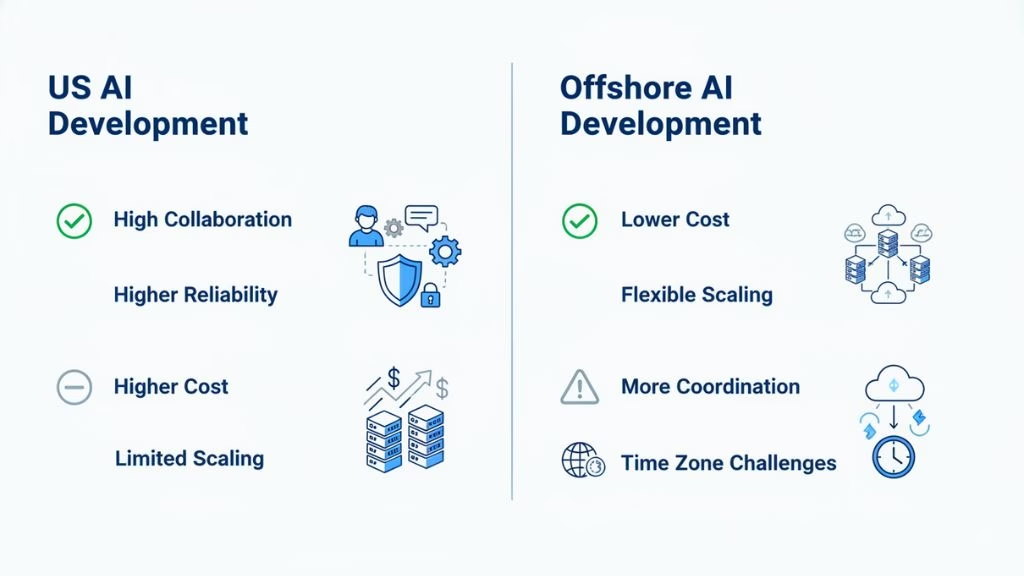
US AI Development
Pros
- Clear and efficient communication due to shared language, time zones, and work culture
- Faster feedback and iteration, which is especially valuable for complex or evolving AI models
- Strong alignment with data security, privacy, and regulatory requirements
- Clear accountability, documentation, and long-term ownership of the solution
Cons
- Higher hourly rates and overall development costs
- More limited talent pool compared to global markets
- Scaling teams can take longer and requires a higher budget
Offshore AI Development
Pros
- Lower hourly rates, making AI development more cost-effective
- Access to a broad global talent pool with a wide range of technical skills
- Greater flexibility to scale teams up or down based on project needs
Cons
- Time zone differences can slow collaboration and decision-making
- Requires stronger planning, documentation, and project coordination
- Quality and delivery consistency depend heavily on partner selection
- Additional effort may be needed to manage data security and compliance
In practice, US teams tend to work best when close collaboration and control matter, while offshore teams make more sense when cost and flexibility are bigger priorities. The right option depends on how involved the project needs to be and how much risk you are comfortable managing.
Hidden and Long-Term Costs to Consider
When comparing US vs offshore AI development costs, it’s easy to focus on hourly rates. However, many of the real costs appear over time, especially in longer or more complex AI projects.
One common factor is project coordination. Offshore teams often need clearer documentation, more frequent check-ins, and stronger project management, which can add effort beyond the initial estimate.
Rework and iteration also affect total cost. AI projects rarely get everything right on the first attempt, and communication gaps can lead to repeated revisions that reduce early savings.
Ongoing maintenance and support matter as well. AI systems need monitoring, updates, and retraining as data evolves, and delays in these areas can slow progress.
Finally, risk and compliance requirements may introduce additional oversight or safeguards, particularly for sensitive or regulated data.
These considerations don’t rule out offshore development, but they highlight why total cost should be evaluated across the full lifecycle of an AI solution, not just the starting price.
How to Choose Between US and Offshore AI Development
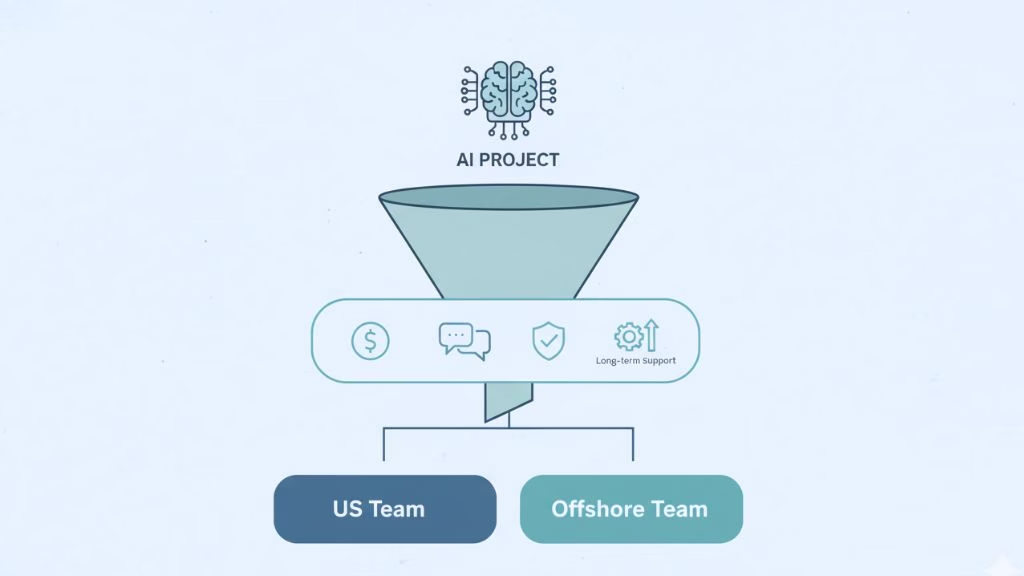
Choosing between US and offshore AI development is less about finding the cheaper option and more about matching the development model to your project’s needs. The right choice depends on how complex the work is, how closely teams need to collaborate, and how much risk you are willing to manage.
If your AI project involves frequent iteration, unclear requirements, or heavy collaboration, US-based development is often the safer option. Being in the same time zone and business environment makes it easier to adjust direction quickly and resolve issues as they come up.
For projects that are well-defined and cost-sensitive, offshore development can be a strong fit. When requirements are clear and workflows are documented early, offshore teams can deliver high-quality results while keeping costs under control.
Data sensitivity is another important factor. Projects that handle regulated or proprietary data may benefit from US-based teams due to simpler compliance and governance. Offshore development can still work in these cases, but it often requires additional oversight and safeguards.
Finally, consider the long-term plan. If the AI system will need ongoing updates, close integration with business processes, or long-term ownership, investing in a development model that supports continuity and accountability can save time and cost later.
The best choice is rarely universal. It comes from understanding your priorities, constraints, and how the AI solution will evolve over time.
Final Thoughts
Comparing US vs offshore AI development costs is ultimately about more than choosing the lowest rate. While offshore development can offer meaningful cost savings, those savings only hold when projects are well-defined and carefully managed. US-based development, on the other hand, often brings higher upfront costs but fewer coordination challenges and lower operational risk.
The right choice depends on what your AI project needs to succeed. Factors like collaboration intensity, data sensitivity, long-term ownership, and tolerance for risk should guide the decision just as much as budget.
By looking beyond hourly rates and considering the full lifecycle of an AI solution, teams can choose a development approach that delivers real value rather than short-term savings alone.
Frequently Asked Questions
1. What is the cost difference between US and offshore AI development?
US AI development typically costs $80–$200+ per hour, while offshore AI development usually ranges from $25–$90 per hour, depending on the region and expertise.
2. Why is AI development more expensive in the US?
US AI development costs are higher due to higher salaries, infrastructure expenses, compliance standards, and closer collaboration that reduces risk and rework.
3. Is offshore AI development cheaper than US-based development?
Yes, offshore AI development is generally cheaper in terms of hourly rates. However, total cost can increase due to coordination, rework, and long-term support needs.
4. Which countries are popular for offshore AI development?
Common offshore AI development regions include India, Eastern Europe, and Latin America, known for lower costs and access to skilled AI talent.
5. Are offshore AI developers less skilled than US developers?
No. Many offshore developers are highly skilled. The main difference lies in communication, coordination, and consistency rather than technical ability.
6. When should a company choose US-based AI development?
US-based AI development is better suited for projects requiring close collaboration, frequent iteration, strict compliance, or handling sensitive data.
7. When does offshore AI development make more sense?
Offshore AI development works best for well-defined projects with clear requirements and tighter budgets, where cost efficiency is a priority.
8. Do offshore AI projects take longer to complete?
They can, especially if time zone differences or communication gaps slow feedback cycles. Proper planning and management help reduce these delays.
9. What hidden costs should be considered in offshore AI development?
Hidden costs may include additional project management, rework, compliance oversight, and ongoing maintenance that are not always reflected in hourly rates.
10. Is a hybrid US and offshore AI development model possible?
Yes. Many teams use a hybrid model, combining US-based strategy and oversight with offshore execution to balance cost and control.
This page was last edited on 8 January 2026, at 2:31 pm
Contact Us Now

Contact Us Now
Start a conversation with our team to solve complex challenges and move forward with confidence.


