

Selecting the right enterprise software development company can make or break an organization’s digital transformation. In today’s complex landscape, the wrong software partner means costly missteps, compliance risks, and sluggish innovation. This guide delivers a data-driven, expert-backed playbook to navigating the crowded market of top enterprise software firms—helping you shortlist, compare, and select vendors with confidence. By the end, you’ll have a clear framework, actionable criteria, and the tools you need to make a smart, future-proof buying decision.
What Is an Enterprise Software Development Company?
An enterprise software development company specializes in building large-scale, secure, and customizable digital solutions designed for complex business needs across industries. Unlike general software agencies, these firms serve clients such as Fortune 1000 enterprises, highly regulated sectors (e.g., healthcare, finance), and organizations requiring scalable, enterprise-grade technology.
Key differentiators:
- Scale & Reach: Ability to deliver solutions for multinational corporations, with support for millions of users or transactions.
- Expertise: Deep experience with complex architectures, cloud-native applications, and full-cycle development.
- Compliance: Familiarity with strict regulatory requirements, high-security environments, and advanced certifications (such as ISO 27001, SOC 2, HIPAA).
Typical clients include: Banks, healthcare organizations, large manufacturers, retailers, government bodies, and leading SaaS providers.
How Do We Evaluate & Rank the Top Enterprise Software Development Companies? (Methodology)
Our ranking of the top enterprise software development companies uses a transparent, proprietary scoring methodology. Each firm is evaluated against weighted criteria, drawing from verified public data, client feedback, analyst benchmarks, and direct vendor disclosures.
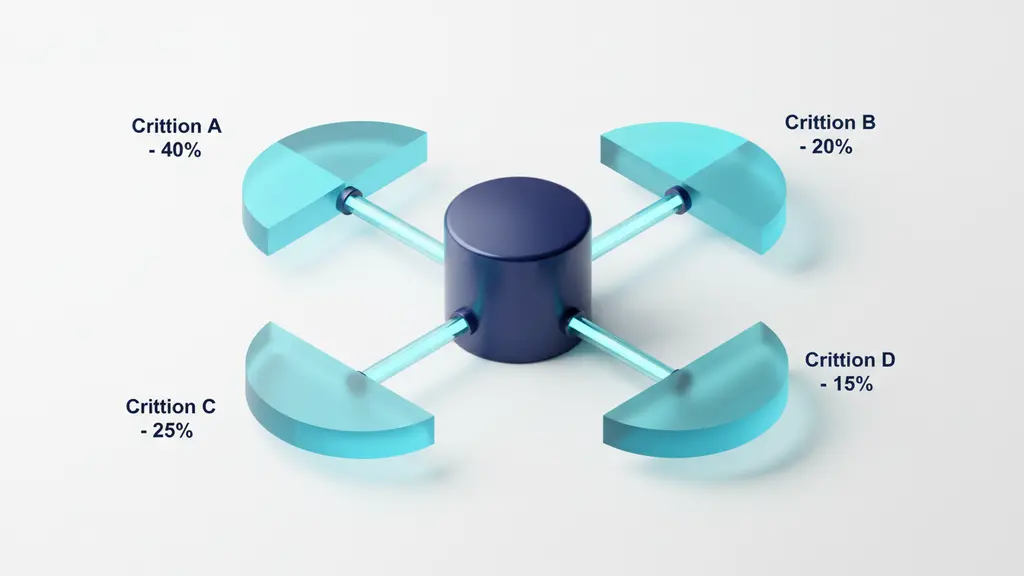
Proprietary Scoring Rubric
| Evaluation Area | Weight (%) |
| Security & Compliance | 20 |
| Technical Depth & Innovation | 20 |
| Delivery Predictability | 15 |
| Case Studies & Industry Focus | 15 |
| Scale & Team Capabilities | 15 |
| Commercial Fit & Transparency | 15 |
| Total | 100 |
Data sources include:
- International certifications (ISO 27001, SOC 2, HIPAA)
- Public case studies and client testimonials
- Third-party peer review sites (e.g., Clutch, GoodFirms)
- Analyst reports from Gartner, Forrester, IDC
- Vendor-provided KPIs and service overviews
Validation process: Inputs are reviewed by procurement experts and verified with enterprise IT leaders for additional due diligence.
What Criteria Should You Use to Evaluate an Enterprise SD Partner?
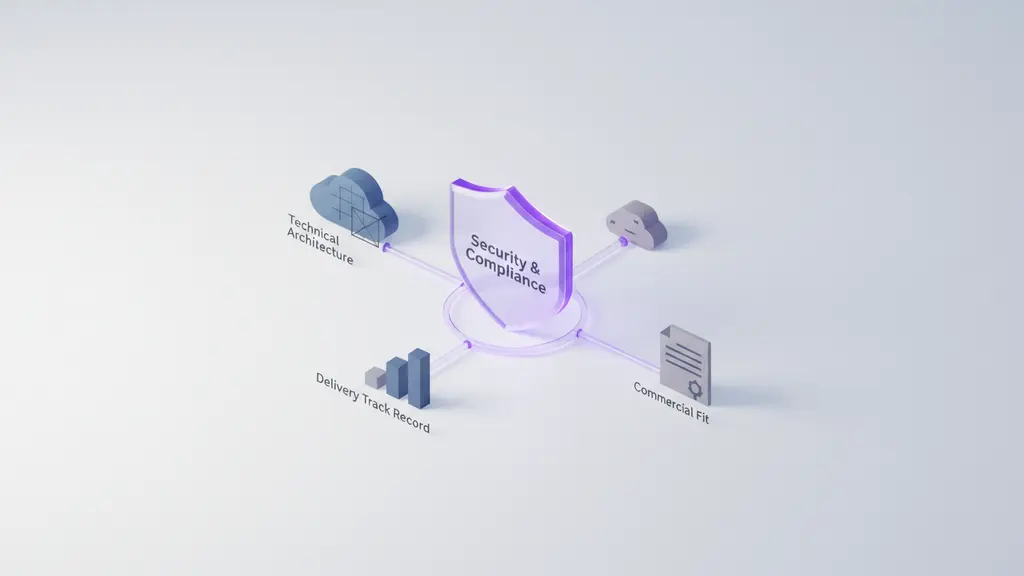
A top-performing enterprise software vendor is defined by more than technical skill—it must offer robust security, delivery discipline, commercial clarity, and proven industry expertise. Here are the criteria every buyer should use:
Security & Compliance Credentials
Leading enterprise software companies demonstrate adherence to the highest security standards like ISO 27001, SOC 2, HIPAA, PCI DSS, and relevant industry-specific laws (GDPR, CCPA).
- Must-have certifications:
- ISO 27001 and SOC 2 for information security
- HIPAA (healthcare), PCI DSS (financial)
- Verification tips:
- Demand current certificates and public audit reports
- Watch for vague claims or expired documentation—these are red flags.
Technical Depth & Architecture Capability
The best vendors exhibit mastery in cloud-native engineering, AI integration, IoT platforms, and legacy system modernization.
Demonstrated expertise:
- Advanced adoption of DevOps, multi-cloud, and automation
- Case studies of scalable, mission-critical systems (e.g., retail ERPs, banking platforms)
Buyer action: Prioritize vendors with published technical whitepapers, architectural diagrams, and modernization track records.
Delivery Track Record & Governance
Reliability and transparency are measurable by:
- Delivery model: Onshore, nearshore, or offshore, aligned to your governance needs.
- Project management: Use of agile methodologies, clear KPIs, and open access to progress dashboards.
- Multi-year evidence: Seek references for projects spanning 2+ years, not just single releases.
Relevant Case Studies & Industry Experience
Top firms publish case studies naming global clients in regulated and complex industries.
Look for:
- Industry-specific expertise (e.g., healthcare, finance, manufacturing)
- Public testimonials or reference clients
- Successes in regulatory-heavy environments
Scale, Ramp-Up, and Team Expertise
Matching vendor scale to your demands is critical:
Indicators:
- Team size (hundreds to thousands of engineers)
- Dedicated team model for rapid ramp-up
- Global delivery centers vs. boutique teams
Tip: Align your needs (boutique precision vs. global scale) with the vendor’s resourcing model.
Commercial Fit & Pricing Transparency
Flexible, transparent engagement models (fixed-price, time-and-materials, dedicated teams) prevent cost overruns and ensure alignment.
Best practices:
- Clear breakdowns in proposals—no hidden charges
- Standardized RFP language
- Transparent terms in sample contracts
The Top 10 Enterprise Software Development Companies for 2026
The following table highlights the top 10 enterprise software development companies of 2026, ranked by our evidence-based methodology. Each vendor’s strengths, certifications, and industry focus are summarized for easy comparison.
| Rank | Company Name | HQ | Score | Team Size | Core Strengths | Industries | Certifications |
|---|---|---|---|---|---|---|---|
| 1 | Riseup Labs | Global | 9.6 | 150+ | Enterprise applications, GovTech, secure systems | Government, Healthcare, Enterprise | ISO 9001, ISO 27001 |
| 2 | ScienceSoft | USA/EU | 9.4 | 1,000+ | AI, legacy modernization | Healthcare, Finance | ISO 27001, SOC 2, HIPAA |
| 3 | EPAM Systems | USA/EU | 9.3 | 15,000+ | Cloud, global delivery | Finance, Retail | ISO 9001, ISO 27001 |
| 4 | SumatoSoft | EU | 9.2 | 200+ | Custom enterprise systems | Manufacturing, Retail | ISO 27001, GDPR |
| 5 | Iflexion | USA/EU | 9.1 | 850+ | Enterprise web platforms | Manufacturing, IT | ISO 27001 |
| 6 | Accenture | Global | 9.1 | 40,000+ | Digital transformation | All major verticals | ISO 27001, SOC 2, GDPR |
| 7 | Infosys | Global | 9.0 | 35,000+ | Data, legacy systems | Finance, Pharma | ISO 27001, SOC 2 |
| 8 | BairesDev | USA/LATAM | 8.9 | 3,000+ | Nearshore agile teams | Fintech, Retail | ISO 27001 |
| 9 | Cognizant | Global | 8.9 | 30,000+ | Cloud & AI | Finance, Healthcare | ISO 27001, SOC 2 |
| 10 | Blackthorn Vision | EU | 8.8 | 300+ | High-security compliance | Healthcare, Pharma | ISO 27001, HIPAA |
1. Riseup Labs
Riseup Labs is an award-winning enterprise software development company known for delivering secure, scalable, and compliance-driven digital solutions for government, healthcare, and large enterprises. With strong expertise in enterprise application development, GovTech platforms, and high-security systems, the company emphasizes structured engineering processes, global delivery standards, and ISO-certified quality management. Their portfolio highlights mission-critical systems and long-term enterprise partnerships across regulated industries.
2. ScienceSoft
A US- and EU-based leader, ScienceSoft stands out for its deep expertise in AI, data platforms, and secure legacy system modernization, frequently serving Fortune 500 clients. The firm maintains ISO 27001 and HIPAA certifications and showcases high-profile case studies in finance and healthcare, with proven results across regulated industries.
3. EPAM Systems
EPAM Systems delivers large-scale projects globally, excelling in cloud transformation, retail, and finance. Their delivery footprint includes major onshore, nearshore, and offshore centers, all supported by ISO and GDPR compliance and a reputation for agile, value-driven execution.
4. SumatoSoft
Specializing in custom enterprise software, SumatoSoft is recognized for its transparent, process-driven approach, supporting digital transformation in manufacturing and retail. They highlight GDPR and ISO 27001 compliance along with robust public case studies.
5. Iflexion
Focused on enterprise web platforms and digital customer experiences, Iflexion delivers for manufacturing and IT companies worldwide. Known for scalable solutions and rapid delivery, their ISO 27001-certified team brings a strong technical reputation.
6. Accenture
Accenture is a global powerhouse in enterprise consulting and software delivery, supporting virtually every major vertical. Their extensive certifications and global team enable complex digital transformations, backed by SOC 2, GDPR, and ISO 27001 standards.
7. Infosys
Infosys is famed for its deep-rooted presence in finance and pharma. Their enterprise solutions emphasize legacy system modernization and robust data security, all underpinned by ISO 27001 and SOC 2 certifications.
8. BairesDev
BairesDev offers nearshore agile development with rapid ramp-up capabilities, serving fintech and retail clients from US and Latin American operations. ISO-certified and known for flexible engagement, their teams excel in fast, iterative delivery.
9. Cognizant
Cognizant combines cloud, AI, and enterprise transformation services across healthcare and financial sectors. Their extensive team is certified for security and regulatory compliance.
10. Blackthorn Vision
Blackthorn Vision is a boutique EU firm specializing in high-security software for healthcare and pharma. Holding ISO 27001 and HIPAA, they tailor solutions for regulated, data-sensitive markets.
Global SIs vs. Mid-size & Boutique Vendors: How Do They Compare?
Enterprise buyers must choose between global system integrators (SIs) and mid-size or boutique software partners—each offers distinct strengths.
| Vendor Type | Pros | Cons | Typical Fit | Example Companies |
| Global SIs | Massive scale, wide expertise, global delivery, deep compliance | Higher costs, complex processes | Multi-national, multi-year projects, Fortune 500 | Riseup Labs, Accenture, Infosys, Cognizant |
| Mid-size | Agile, focused, lower overhead | Limited capacity for mega projects | Departmental rollouts, niche verticals | Iflexion, SumatoSoft, Blackthorn Vision |
| Boutique | Custom solutions, high-touch | Smaller teams, less global coverage | Regulated industries, innovation pilots | Blackthorn Vision, Rootstrap |
- Strengths of Global SIs: Capable of end-to-end transformation, global 24/7 support, large-scale compliance, and deep vertical domain knowledge.
- Strengths of Mid-size/Boutiques: Faster decision-making, specialized skills, and personalized service for innovation-focused or regulated projects.
- Buyer tip: Match delivery scale and governance needs to your organization’s profile and project risk tolerance.
How Do You Choose the Best Enterprise Software Development Firm?

Selecting the best enterprise software vendor requires a disciplined, transparent process tailored to business needs and risk profile.
Step-by-Step Selection Guide
- Define Requirements
- Document business challenges, regulatory needs, tech stack preferences, and future scalability goals.
- Build a Longlist
- Identify 10–15 potential vendors using reputable sources, directories, and peer recommendations.
- Score with a Vendor Evaluation Rubric
- Rate each vendor on security, technical depth, delivery, industry expertise, scalability, and commercial fit.
- Use weighted scorecards for objectivity.
- Shortlist and Conduct Deep Diligence
- Move top 3–5 scored vendors to detailed review, checking credentials, case studies, and code samples.
- Interview project managers and references.
- Prepare and Send RFP/RFI
- Issue a standardized Request for Proposal (RFP) or Information (RFI) with business and technical requirements.
- Review Proposals & Assess Fit
- Evaluate technical approaches, timelines, pricing transparency, and red flag responses.
- Negotiate Contract & Final Selection
- Clarify terms for governance, penalties, IP, and change management; validate one last time before signing.
Critical questions to ask at each stage:
- What certifications and security processes are in place?
- Can you provide relevant, recent case studies?
- How do you manage project governance and escalation?
Red flags:
- Lack of clear certifications
- Over-promising or vague delivery models
- Poor reference feedback
Engagement Models & Pricing Explained: What Enterprises Need to Know
There are three primary engagement models in enterprise software development—each with unique benefits and tradeoffs.
| Engagement Model | Description | Pros | Cons | Best For |
| Fixed-Price | Pre-agreed scope, timeline, cost | Budget predictability | Less flexible if scope shifts | Clearly scoped projects |
| Time-and-Materials | Billing based on hours worked | Flexibility, accommodates change | Potential for overruns | Evolving requirements |
| Dedicated Team | Full-time, managed staff extension | Max control, deep expertise | Requires active client management | Long-term/complex builds |
Pricing factors:
- Team size and seniority
- Project duration
- Security/compliance complexities
- Emerging tech integration (e.g., AI)
According to industry benchmarks, enterprise projects can range significantly, but buyers should clarify rate cards, embedded support, and change order policies up front.
Watch for:
- Vague pricing structures
- “Scope creep” risks without clear controls
- Pay attention to SLAs and termination clauses
What Enterprise Software Trends Will Shape 2026? (AI, Cloud, Security, Nearshoring)
Several major trends are reshaping the enterprise software landscape in 2026:
- AI/ML-Driven Solutions: Enterprise software now routinely leverages AI and machine learning for automation, predictive analytics, and smarter decision-making.
- Cloud Modernization: Accelerated adoption of multi-cloud and hybrid environments enables scalable, flexible deployments.
- Security-as-Default: With increasingly complex threats, security-by-design is now table stakes, even for mid-sized providers.
- Nearshore & Regional Delivery: Demand for nearshore partners (e.g., Latin America, Eastern Europe) is growing, offering timezone alignment and cost advantages.
- Vertical-Specific Solutions: Custom frameworks now emerge for regulated spaces, such as healthcare, finance, or supply chain management.
Enterprises should seek vendors ahead of these trends, ensuring a solution not just fit for today, but resilient for tomorrow.
Frequently Asked Questions About Enterprise Software Development Companies
What is an enterprise software development company?
An enterprise software development company designs, builds, and manages large-scale, secure applications specifically for organizations with complex needs, such as those in finance, healthcare, or manufacturing. These firms emphasize regulatory compliance, scalability, and technical specialization.
How are the top enterprise software development firms ranked?
Top companies are ranked using a proprietary, weighted rubric evaluating security and compliance, technical depth, delivery track record, industry case studies, team scale, and commercial transparency. Each factor is verified through public data, certifications, and client validation.
Which certifications are crucial for enterprise SD vendors?
The most important certifications are ISO 27001 and SOC 2 (information security), HIPAA (healthcare), PCI DSS (finance), and GDPR/CCPA for data privacy. Certification ensures adherence to industry-leading security and data protection standards.
What engagement models are common?
Enterprises typically engage vendors via fixed-price (set budget and scope), time-and-materials (pay-as-you-go), or dedicated teams (integrated, full-time). Each suits different project sizes, scopes, and risk appetites.
How does pricing/quoting work?
Pricing depends on engagement model, project complexity, resource needs, and compliance requirements. Transparent vendors provide rate cards and breakdowns of costs, avoiding hidden fees or scope ambiguity.
Best vendors for highly regulated industries?
Firms like ScienceSoft, Blackthorn Vision, and Accenture are proven in healthcare, finance, and pharma, with relevant certifications and published case studies highlighting compliance track records.
What trends are shaping enterprise software outsourcing in 2026?
AI-driven solutions, cloud adoption, default security protocols, and nearshore delivery advantages are defining software services, making vendor adaptability critical.
Advantages of nearshore/offshore partners?
Nearshore vendors often offer timezone compatibility, faster ramp-up, and favorable rates, while offshore providers deliver cost efficiencies and global delivery. Selection should factor in governance, communication, and security needs.
Common vendor red flags or pitfalls?
Red flags include vague certifications, opaque pricing, poor reference feedback, or over-promising capabilities. Rigorous due diligence and direct interviews are essential to avoid costly misalignments.
How do US-based and global companies compare?
US-based companies tend to excel in domain proximity and compliance alignment, while global firms offer greater scale and often more competitive rates. Best fit depends on project size, regulatory context, and delivery preferences.
Conclusion
Finding the right enterprise software development company is a high-stakes decision that impacts your innovation, compliance, and growth. By applying a structured, evidence-based approach—leveraging the scoring rubric, evaluation criteria, and vendor profiles provided—you empower your organisation to make an informed, future-proof selection. Use our downloadable vendor comparison checklist to streamline shortlisting and ensure due diligence at every step. For a custom consultation or tailored shortlist, reach out for expert guidance on your enterprise software journey.
Key Takeaways
- Choosing a top enterprise software vendor reduces project risk and accelerates digital transformation.
- Evaluation should be rooted in transparent criteria: security, technical depth, delivery, industry focus, scale, and pricing clarity.
- Both global SIs and boutique firms serve specific buyer needs—match partner strengths to your requirements.
- Use a step-by-step selection guide and scoring rubric for disciplined decision-making.
- Stay ahead of trends like AI, cloud modernization, and security by partnering with adaptive, future-oriented firms.
This page was last edited on 2 March 2026, at 10:17 am
Contact Us Now

Contact Us Now
Start a conversation with our team to solve complex challenges and move forward with confidence.


