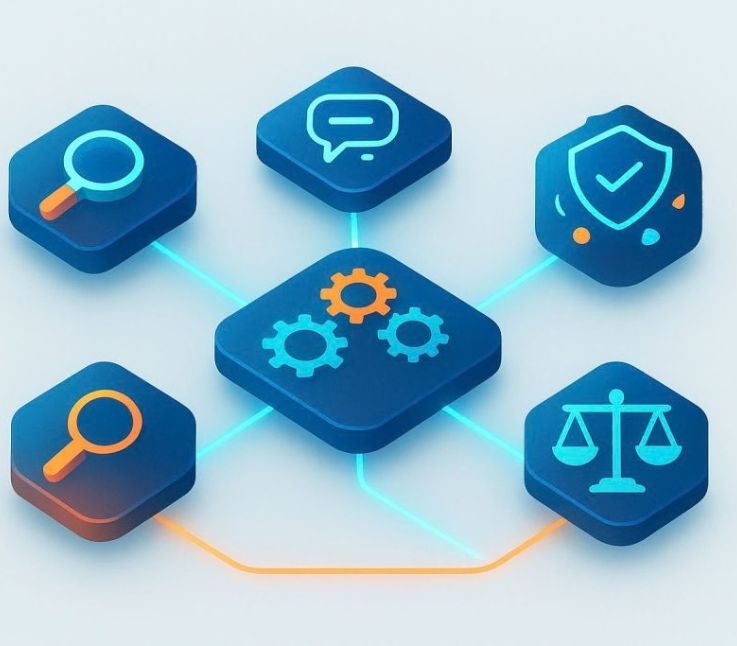
Building an effective software team is harder than ever in today’s fast-paced, remote-ready world. Leaders face a mix of technical hurdles, communication breakdowns, and people-driven challenges that can stall or sink projects.
The problem isn’t just about finding great developers—it’s about creating a balanced environment that enables productivity, cohesion, and innovation. With hybrid work, global hiring, and rapid change, even experienced managers struggle to align people, process, and business goals.
This article gives you a practical playbook to tackle the top 5 challenges of building an effective software team. You’ll get real-world insights, data-backed frameworks, and ready-to-use resources for overcoming hiring pitfalls, communication barriers, workflow snags, inclusion gaps, and business alignment issues.
What you’ll find in this guide:
- The most critical challenges facing software teams today
- A side-by-side table summarizing problems and solutions
- Deep dives with examples, metrics, and actionable steps
- Downloadable toolkit (PDF checklist, self-assessment)
- Insights from industry experts and leaders
What Are the Top 5 Challenges of Building an Effective Software Team?
![What Are the Top 5 Challenges of Building an Effective Software Team? [Summary Table]](https://riseuplabs.com/wp-content/uploads/2026/03/what-are-the-top-5-challenges-of-building-an-effective-software-team-summary-table.webp)
The top 5 challenges of building an effective software team are hiring the right people, facilitating clear communication, optimizing processes, retaining and motivating talent, and aligning company goals with team health.
Here’s a quick-glance table to compare each challenge:
| # | Challenge | One-Line Summary |
| 1 | Hiring & Team Composition | Finding, vetting, and assembling a balanced, skilled team |
| 2 | Communication | Ensuring clear, timely, and effective team collaboration |
| 3 | Process & Workflow Optimization | Adapting workflows to avoid bottlenecks and misalignment |
| 4 | Motivation, Inclusion & Retention | Keeping the team engaged, diverse, and resilient |
| 5 | Balancing Company and Team Goals | Aligning business priorities with team capacity and health |
Deep Dive—What Makes Each Challenge Critical?
Each challenge threatens a team’s ability to deliver, scale, and innovate. Understanding the root causes and impacts is crucial for effective leadership.
1. Hiring & Team Composition:
Bringing in the right mix of skills and personalities drives performance and innovation. Poor hiring leads to skill gaps and high turnover, costing companies time and morale.
2. Communication:
Communication failures are a leading cause of project delays and misunderstandings. According to the Accelerate State of DevOps Report, high-performing teams stress open communication to improve delivery.
3. Process & Workflow Optimization:
Inefficient or mismatched processes, like misapplied Agile or tool overload, reduce productivity. McKinsey notes workflow misalignment can cut output by up to 30%.
4. Motivation, Inclusion & Retention:
Lower engagement and inclusion increase the risk of burnout and attrition. Stack Overflow’s Developer Survey reports that culture and inclusion now rank among the top reasons developers switch jobs.
5. Balancing Company and Team Goals:
Pressuring teams to meet business demands without considering long-term health leads to compromised quality and burnout. The cost of failed alignment can mean missed deadlines or even project failure.
5 Biggest Software Team Challenges (Explained With Real-World Examples)
Challenge 1 – Hiring and Building the Right Team Composition
Hiring the right people—and blending diverse skills and backgrounds—lays the foundation for software team effectiveness.
Why It Matters
A mismatched team results in skill silos, culture clashes, and frequent re-hiring, derailing delivery and morale.
What Goes Wrong
- Overemphasis on technical skills, neglecting problem-solving or collaboration ability
- Poor culture fit due to rushed vetting or unclear needs
- Remote hiring adds layers (timezone, communication, legal) that can amplify mismatches
- Monoculture reduces cognitive diversity, impacting innovation
Real-World Example
A fintech startup saw 25% developer turnover in one year after hiring mainly for “code chops,” ignoring values fit. After introducing structured behavioral interviews and diversity hiring templates, turnover halved and output increased.
Stepwise Approach to Better Hiring
- Clarify roles: Use skills matrices to define needs beyond code.
- Structured interviews: Assess technical and cultural fit with set questions.
- Broaden search: Use platforms and networks that reach underrepresented talent.
- Test with paid trials/projects: Gauge teamwork in real conditions.
Challenge 2 – Facilitating Clear and Effective Communication
Effective software teams maintain clarity and feedback across roles, locations, and tools.
Why It Matters
Communication breakdowns cause confusion, stalled projects, and low morale—especially in remote or hybrid teams.
What Goes Wrong
- Tools mismatch (e.g., Slack overload, email delays)
- Hidden silos (devs, QA, product working in isolation)
- Remote/distributed teams struggle with time zones, async delays
- Non-technical and technical roles miss shared vocabulary
Real-World Example
A SaaS company with distributed engineers on 3 continents reduced missed handoffs by 40% after introducing “Async Standups” via Loom videos, paired with centralized Slack channels.
Table: Common Communication Issues & Solutions
| Communication Issue | Solution |
| Overlapping or missed messages | Set “core hours” + async updates |
| Tool chaos/conflicts | Standardize on 2–3 platforms, with usage norms |
| No feedback or unclear decisions | Use documented decision logs and feedback templates |
| Language/cultural barriers | Train on inclusive communication, provide style guides |
Challenge 3 – Implementing Adaptable Processes & Workflows
Choosing and evolving the right process is mission-critical for scaling and performance.
Why It Matters
Rigid or ill-fitting workflows, like “Scrum theater” or over-customized Jira boards, slow delivery and frustrate teams.
What Goes Wrong
- Copy-pasting agile or scrum with no customization
- Tool overload: when teams juggle Jira, Asana, Trello, and more
- Process doesn’t scale when team size or composition changes
- Lack of workflow transparency (no shared dashboards)
Real-World Example
A healthtech firm saw sprints dragging from 2 to 4 weeks due to workflow confusion. After mapping their process with Miro and refining Jira boards to reflect actual flows, they restored cadence and halved cycle time.
Chart: Common Process Mistakes vs. Best Fit Practices
| Process Mistake | Best Fit Practice |
| “Agile” in name only | Tailor agile to team/project needs |
| Too many tools, unclear flows | Use a single source of truth for tasks/work status |
| No process reviews | Schedule regular retros for process improvement |
| Size mismatch | Adjust workflow for remote/hybrid/scale transitions |
Challenge 4 – Maintaining Motivation, Inclusion, and Team Retention
Motivation and inclusion are key to software team health, reducing attrition and driving outcomes.
Why It Matters
Disengaged or excluded team members are more likely to leave, costing time, knowledge, and productivity.
What Goes Wrong
- Diversity and inclusion sidelined, reducing creativity and engagement
- No feedback or recognition culture, leading to burnout
- Unequal access to learning and advancement (especially remote/international staff)
- Lack of work-life “guardrails” pushes talent to competitors
Data Point
A 2023 Stack Overflow survey found that nearly one-third of developers would leave a job due to cultural/exclusionary issues—even over salary offers.
Matrix: Retention and Inclusion Actions
| Action | Impact |
| Regular 1:1s & feedback | Early burnout detection |
| DEI scorecards and bias training | Sustains performance |
| Team health self-assessments | Preempts attrition |
| Peer recognition programs | Boosts morale and loyalty |
Challenge 5 – Aligning Company Goals With Team Health & Delivery
Sustainable delivery happens when business needs and team well-being are in sync—not at odds.
Why It Matters
Teams stretched to meet shifting business priorities may burn out or cut corners, risking project failure and turnover.
What Goes Wrong
- Executive push for speed ignores team capacity
- Developers receive conflicting signals (quality vs. velocity)
- Lack of visibility into team limits leads to overcommitment
- No mechanism for voicing concerns upward
Example Decision Matrix
| Company Goal | Team Need | Risk If Mismatched |
| Faster time to market | Realistic scope, breaks | Quality drops, increased burnout |
| More features | Technical debt mgmt | Defects, slower future releases |
| Innovation | Time for experimentation | Stagnation, missed market shifts |
Mini-Case
A payment app’s dev team quadrupled releases, but code quality and satisfaction tanked. After introducing “innovation sprints” and transparent workload balancing, defect rates fell and retention improved.
Comparison Table – Challenges, Pitfalls & High-Impact Solutions
Quickly compare the five software team challenges and proven responses:
| Challenge | Typical Pitfalls | High-Impact Solution | Recommended Tools | Success Metric |
| Hiring & Team Composition | Skill gaps, culture mismatch | Structured, inclusive hiring & onboarding | Greenhouse, Codility | Retention rate, ramp-up time |
| Communication | Silos, tool chaos, missed cues | Norms for tools, async rituals, shared glossaries | Slack, Loom, Notion | Reduced blockers, cycle time |
| Process & Workflow Optimization | Rigid or chaotic processes | Fit-for-purpose agile, regular retrospectives | Jira, Asana, Miro | Sprint/cycle completion rates |
| Motivation, Inclusion & Retention | Burnout, exclusion, attrition | DEI frameworks, 1:1s, recognition loops | Officevibe, CultureAmp | Engagement/attrition scores |
| Aligning Company & Team Goals | Overcommitment, burnout | OKR alignment, open feedback, capacity planning | 15Five, Range, Confluence | Delivery vs. target, team survey |
How Do You Overcome Each Challenge?
![How Do You Overcome Each Challenge? [Actionable Solutions Framework]](https://riseuplabs.com/wp-content/uploads/2026/03/how-do-you-overcome-each-challenge-actionable-solutions-framework.webp)
For each challenge, here’s a mini playbook with steps, tools, and tips to achieve high-performing software teams.
1. Hiring & Team Composition
How to Overcome:
- Define must-have and stretch skills with a transparent matrix.
- Standardize interviews (technical + behavioral questions).
- Use diverse panels and structured scoring to reduce bias.
- Pilot with real-world projects to assess fit.
- Onboard with clear role and culture briefings.
Tools & Templates:
- Greenhouse (structured ATS)
- Codility/HackerRank for coding assessments
- Google Sheets skills matrix (downloadable)
Mini-Case:
A fintech firm cut hiring cycle time by 30% after setting up template-based, panel interviews and using a shared skills rubric.
Pitfalls to Avoid:
- Relying on “gut feel”
- Skipping team-driven onboarding
2. Communication
How to Overcome:
- Audit channels—consolidate messaging and clarify “when to use what.”
- Set layered norms: e.g., core hours, async-first updates, and “no-meeting” blocks.
- Maintain shared documentation—central “decision logs” and project artifacts.
- Run regular retros to spot blockers early.
Tools & Templates:
- Slack (for chat)
- Loom/Zoom (async/sync standups)
- Notion/Confluence (docs, wikis)
Mini-Case:
After switching to weekly async updates and shared release notes, a distributed SaaS team cut their cycle time by 25%.
Pitfalls to Avoid:
- All-to-all meetings
- Ignoring non-native English communication needs
3. Process & Workflow Optimization
How to Overcome:
- Map your actual process with a visual tool (e.g., Miro).
- Select a main platform for workflow tracking (Jira, Asana).
- Start with frameworks—adapt, don’t adopt.
- Hold monthly process retrospectives.
- Automate or streamline repetitive steps.
Tools & Templates:
- Jira (task management)
- Miro (workflow mapping)
- Asana (lightweight projects)
“Teams that regularly revisit their workflows see stronger delivery and lower friction, especially as they scale.” – Senior Product Manager, SaaS
Pitfalls to Avoid:
- Over-customizing tools
- Avoiding change due to “the way it’s always been”
4. Motivation, Inclusion & Retention
How to Overcome:
- Pulse-survey team health using DEI and well-being checklists.
- Invest in DEI and psychological safety training.
- Set up peer mentorship and recognition channels.
- Share transparent paths for learning and promotion.
- Encourage regular unplugged breaks and boundaries.
Tools & Templates:
- Officevibe (engagement surveys)
- CultureAmp (DEI tracking)
- Custom self-assessment (downloadable)
Mini-Case:
A remote-first team cut attrition in half by implementing monthly “wellness reviews” and peer recognition.
Pitfalls to Avoid:
- Treating DEI as an afterthought
- Neglecting remote inclusion for global staff
5. Aligning Company and Team Goals
How to Overcome:
- Run OKR (Objectives & Key Results) alignment workshops.
- Involve developers early in project scoping.
- Balance stretch goals with team capacity—review regularly.
- Create feedback channels (anonymous or direct) up the org chart.
- Recognize and reward sustainable delivery, not just speed.
Tools & Templates:
- 15Five (OKR tracking and feedback)
- Range (check-ins)
- Confluence/Notion (visible goal docs)
“The healthiest teams have a two-way dialogue about trade-offs—not just a top-down mandate.” – CTO, SaaS Platform
Pitfalls to Avoid:
- Focusing solely on metrics
- Ignoring signals of overload or unrest
Expert Insights – How Leading Companies Build Effective Software Teams
Industry leaders excel at blending people, process, and purpose. Their secret? Intentional frameworks and open culture.
Technical Leadership Insight:
“Process flexibility is as important as technical skill. High-performing teams constantly review and adapt their workflows to changing business needs.”
— Senior Engineering Manager, Global SaaS Provider
People & Culture Insight:
“Diversity isn’t just a metric—it’s a driver of creativity and engagement. Teams that feel included consistently outperform their peers.”
— Head of HR, Fintech Scaleup
Mini-Case Studies:
- Remote Innovation: A US-UK hybrid team implemented cross-timezone “Innovation Days,” leading to record sprint completion and patent submissions.
- Inclusion-Driven Performance: After adding DEI feedback to retros, a mid-size consultancy boosted project satisfaction and halved new-hire ramp-up.
Best Practices from the Field:
- Build multidisciplinary hiring panels
- Budget for ongoing learning and DEI programs
- Foster transparent communication, at every level
Frequently Asked Questions About Software Team Challenges
What are the top 5 challenges of building an effective software team?
The top 5 challenges of building an effective software team usually include hiring the right talent, ensuring clear communication, managing workflows efficiently, maintaining motivation and inclusion, and aligning company objectives with delivery timelines. These are among the most common software team management challenges faced by growing tech companies.
What are the most common problems in software development teams during team building?
Some of the common problems in software development teams include skill gaps, poor collaboration, unclear roles, and weak documentation. When these issues are not addressed early, they can quickly become major software team management challenges that affect productivity and product quality.
How can leaders handle software team management challenges in remote teams?
Managing remote teams requires structured communication and transparency. Use tools like Slack, Jira, or Notion, establish clear async communication guidelines, and maintain shared documentation. Addressing these practices early helps overcome many software team management challenges that arise when building distributed teams.
What skills help leaders overcome the top 5 challenges of building an effective software team?
Leaders must combine technical understanding with people skills. Essential capabilities include strong communication, decision-making, emotional intelligence, and strategic thinking. These skills help managers navigate the top 5 challenges of building an effective software team and reduce common coordination issues.
How can companies motivate developers while dealing with software team management challenges?
Motivation improves when developers feel valued and supported. Regular feedback, peer recognition, flexible work policies, and clear career development paths help reduce burnout and solve many software team management challenges associated with retention and engagement.
What best practices help prevent common problems in software development teams?
To prevent common problems in software development teams, organizations should define clear requirements, maintain strong communication channels, adopt flexible development processes like Agile, and regularly review workload balance. These practices help teams stay productive and aligned.
How do company goals influence the top 5 challenges of building an effective software team?
Business goals determine priorities, deadlines, and resource allocation. If these goals are not aligned with team capacity, they can intensify the top 5 challenges of building an effective software team, leading to overwork, burnout, and decreased product quality.
What risks arise from poor team structure in software development?
A poorly structured team often creates skill gaps, duplicated effort, communication silos, and higher turnover. These issues are among the most serious common problems in software development teams and can slow down product development significantly.
How can Agile practices reduce software team management challenges?
Agile methods encourage iterative development, regular feedback, and cross-functional collaboration. These practices help teams adapt quickly, minimize misunderstandings, and address many software team management challenges that arise during complex projects.
What tools help solve common problems in software development teams?
Tools such as Jira for task management, Slack for communication, Notion or Confluence for documentation, and engagement platforms like Officevibe help teams collaborate effectively and avoid many common problems in software development teams.
How do you balance technical expertise and culture when building a software team?
Balancing technical ability with team culture is essential to overcoming the top 5 challenges of building an effective software team. Organizations should combine structured hiring processes with a strong focus on collaboration, diversity, feedback, and long-term team well-being.
Conclusion
Building an effective software development team requires more than technical expertise. It involves thoughtful hiring, clear communication, structured processes, and a culture that supports collaboration and growth. While organizations often face several software team management challenges, addressing them with the right leadership approach and team practices can significantly improve productivity and project outcomes.
By recognizing the common problems in software development teams and focusing on both technical performance and team well being, companies can build resilient, motivated teams that adapt to change and deliver consistent results. Strong team foundations not only improve development efficiency but also help organizations scale their products and innovation with confidence.
Key Takeaways
- The top 5 software team challenges are hiring, communication, process, motivation/inclusion, and goal alignment.
- Solutions require both technical tools and intentional leadership frameworks.
- Diversity, feedback, and flexible workflows drive higher performance and retention.
- Combining structured processes with open culture helps teams adapt and thrive.
- Downloadable resources and expert insights accelerate team effectiveness now.
This page was last edited on 24 March 2026, at 10:49 am
Contact Us Now

Contact Us Now
Start a conversation with our team to solve complex challenges and move forward with confidence.


