
Companies worldwide face a severe shortage of skilled developers and growing competition for technical talent. As a result, many organizations are expanding their hiring strategies and sourcing your software talents from around the world to access a broader and more diverse pool of engineers. Instead of relying only on local markets, businesses are building international teams that bring specialized skills, different perspectives, and greater flexibility to software development projects.
Sourcing software talent globally helps companies overcome hiring limitations, scale teams faster, and remain competitive in a rapidly evolving technology landscape. This guide explains the strategy behind sourcing your software talents from around the world, outlining the benefits, common challenges, and practical steps involved in building successful international development teams. Whether you are growing a startup or strengthening an enterprise engineering workforce, understanding global talent sourcing can help you make smarter hiring decisions.
How Do You Source Software Developers from Around the World?
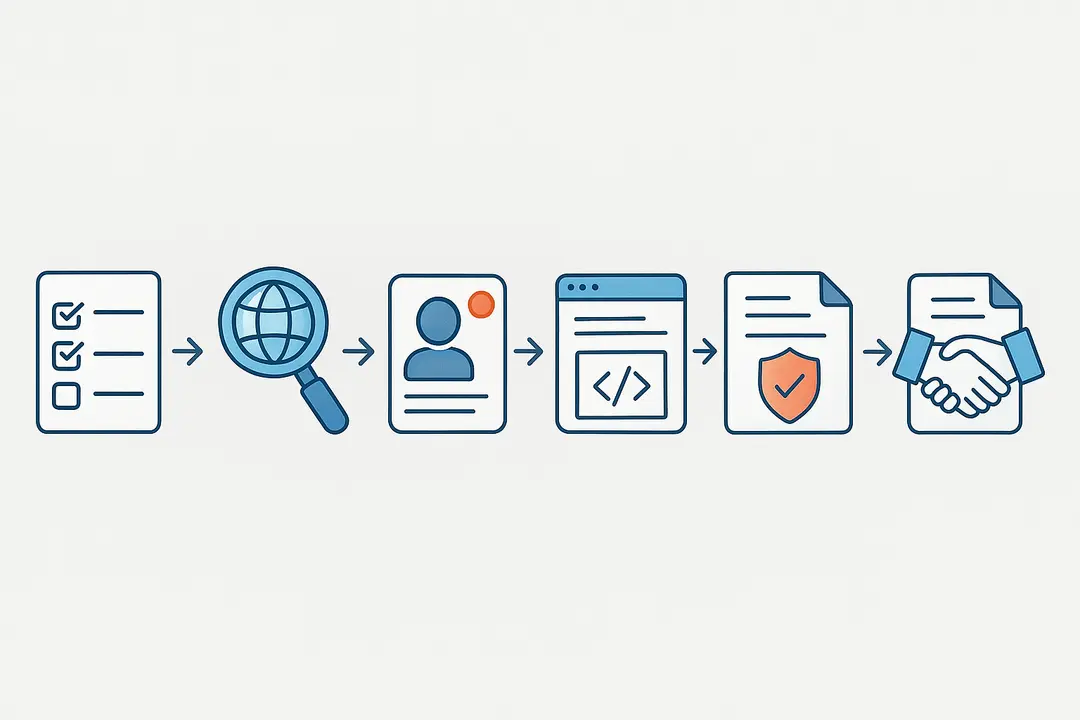
To successfully source global software talent, follow a structured end-to-end process from defining needs to onboarding.
Global talent sourcing involves clarifying requirements, identifying the right channels, thoroughly vetting candidates, and addressing compliance before hiring.
Step-by-step guide to international software hiring:
- Define Requirements
- List required skills, roles, and project goals.
- Decide on engagement model (offshore, nearshore, freelance, staff augmentation).
- Select Sourcing Channels
- Specialized agencies
- Online talent marketplaces (e.g., Toptal, Upwork)
- Employee or professional referrals
- Direct outreach via LinkedIn and tech communities
- Shortlist and Screen Candidates
- Evaluate resumes and technical portfolios.
- Pre-screen for language, communication, and remote readiness.
- Technical & Soft Skills Vetting
- Conduct coding assessments (live or automated tests).
- Structure technical interviews (pair programming, problem-solving exercises).
- Legal and Compliance Setup
- Draft and review contracts (employment/contractor agreements).
- Confirm IP protection, local labor laws, and data privacy compliance.
- Onboard and Integrate
- Use onboarding checklists and documentation tools.
- Assign mentors and integrate remote hires into distributed team culture.
Pro Tip:
Document your workflow to streamline future hires and build organizational knowledge.
What Are the Main Models for Sourcing Global Software Talent?
Choosing the right engagement model—offshore, nearshore, staff augmentation, or hybrid—is key to aligning talent strategy with business needs.
Offshore, nearshore, staff augmentation, project-based, and hybrid models each offer unique advantages and trade-offs for global tech hiring.
| Model | Pros | Cons | Common Destinations |
| Offshore | Lowest cost, vast talent pool | Time zone, language, culture differences | India, Ukraine, Philippines |
| Nearshore | Time zone/cultural alignment, lower rates | Smaller market, slightly higher cost | Poland, Mexico, Argentina |
| Staff Augmentation | Flexibility, control, scalable teams | Management overhead, variable quality | Global (depends on vendor) |
| Project-Based | Defined costs/deliverables, less oversight | Less flexibility, scope creep risk | Anywhere with relevant expertise |
| Hybrid/Dedicated Teams | Balance of control and savings | Higher setup, requires strong integration | Mix of global hubs |
Key decision factors:
- Offshore: Optimal for major cost-savings and when around-the-clock development is needed. Ideal destinations include India and Eastern Europe.
- Nearshore: Offers cultural/language similarities and real-time collaboration; best for North American and European businesses targeting LATAM or Central/Eastern Europe.
- Staff Augmentation: Suited for organizations scaling rapidly or wanting to retain day-to-day team management.
- Project-Based: Effective for short-term, well-scoped needs.
What Criteria Should You Use to Evaluate Global Software Talent Sources?
Reliable global hiring requires evaluating skills, cost, communication, time zones, and legal frameworks before making a choice.
Assess technical depth, true costs, communication ability, time zone fit, and legal safeguards to avoid hiring pitfalls.
Global Talent Evaluation Checklist:
- Technical Skills & Specialties by Region
- Asia: high volume, full-stack and enterprise development.
- Eastern Europe: complex engineering, cybersecurity, fintech.
- LATAM: mobile, web startups, AI/ML specialties emerging.
- Cost/Value Equation
- Compare actual developer rates, noting potential for hidden fees (e.g., overtime, benefits, infrastructure).
- Calculate total cost of ownership (TCO), including onboarding, management, and currency fluctuation buffers.
- Communication & Language
- Assess English proficiency and clarity (especially for client-facing roles).
- Consider time zone overlaps for real-time collaboration.
- Project Velocity/Time Zone Alignment
- Determine workable overlap hours for agile/scrum and stakeholder interaction.
- Evaluate ability to run follow-the-sun development cycles if appropriate.
- Legal & IP Compliance
- Confirm all contracts cover local employment law, IP transfer, and data security regulations (GDPR compliance for EU partners).
Tip:
Create a side-by-side comparison table to rate countries or vendors on these factors before committing.
Which Are the Best Countries to Source Software Developers Worldwide?
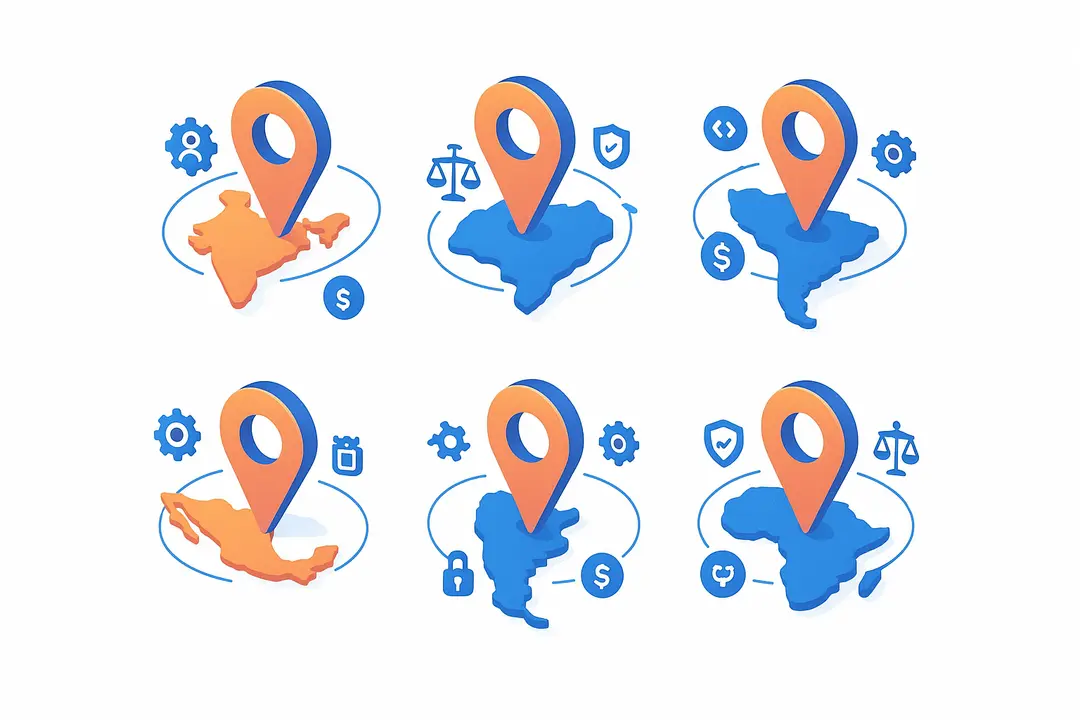
The top countries for sourcing software developers combine cost-efficiency, proven skill pools, and solid legal environments.
India, Poland, Ukraine, the Philippines, and major LATAM markets (Mexico, Argentina, Brazil) stand out for their distinctive mix of cost, skills, and reliability.
Below is a region-by-region snapshot of leading destinations:
| Country/Region | Key Strengths | Skill Focus | Typical Rates (USD/hr)* | Legal/Compliance Notes |
| India | Scale, affordability, strong English skills | Full-stack, enterprise | $18–$40 | Mature, but IP vigilance needed |
| Poland | High quality, EU law, cultural fit | Backend, fintech, QA | $35–$60 | EU compliance, strong IP rules |
| Ukraine | Deep skills, value, international experience | AI, web, mobile apps | $25–$50 | Navigable legal, geopolitical watch |
| Philippines | BPO history, communication, value | Support, web, QA | $20–$40 | IP/data protection for BPO sector |
| Mexico | Time zone for US, growing skills | Web, mobile, e-comm | $30–$55 | NAFTA/USMCA protections |
| Argentina | Cost value, advanced developers, overlaps US hours | AI, startup tech | $25–$50 | Stable legal, inflation volatility |
| Romania | EU security, Western language culture | Enterprise, embedded | $30–$50 | EU GDPR, increasing demand |
| Egypt, Nigeria (Africa) | Emerging, cost, French/English talent, time zone | Web dev, mobile | $15–$35 | Variable legal, rising investment |
*Rates are approximate, based on recent industry studies and major platforms as of 2024.
The best countries to source software talent worldwide are India, Poland, Ukraine, the Philippines, and Latin American markets like Mexico and Argentina, combining robust skills with cost and legal advantages.
Selection tip:
Consider both the current skill supply and long-term partner stability in each region.
What Are the Costs of Sourcing Software Talent Internationally?
Knowing international developer rates and full project costs is crucial to building a sustainable global team.
Summary:
Salaries and total costs vary sharply by country, hiring model, and contract terms, with hidden fees influencing TCO more than headline rates.
Global Developer Rate Benchmarks (2024):
| Region/Country | Average Hourly Rate (USD) |
| India | $18–$40 |
| Eastern Europe | $25–$60 |
| Latin America | $25–$55 |
| Philippines, Vietnam | $20–$40 |
| Africa | $15–$35 |
| North America | $60–$150 |
| Western Europe | $55–$120 |
Model Comparison:
- Freelance platforms: Hourly or project-based; fast, but rates often higher per hour.
- Agencies/Development firms: Blended rates, typically include project management, but add 15–30% markup for oversight and delivery.
- Direct Hires/Contractors: Lower cost, more organizational overhead for HR, onboarding, legal.
Hidden/Additional Costs:
- Onboarding/training and integration tools
- Project management (time zones, communication effort)
- Legal, compliance, and cross-border tax handling
- Potential slower ramp-up with distributed teams
ROI Consideration:
Balance rate savings with project quality, speed, and retention—cheaper isn’t always better if churn or rework increases overall spend.
How Do You Vet and Select High-Quality Global Software Talent?
Effective vetting protects your company from bad hires, project delays, and reputational risks.
A multi-stage vetting process—technical and soft skills tests, references, trial periods, and compliance checks—ensures only the best international talent join your team.
Global Vetting Checklist:
- Technical Evaluations
- Use standardized coding platforms (HackerRank, Codility, LeetCode)
- Structure live coding or pair-programming interviews
- Soft Skills & Communication
- Assess English or relevant language skills
- Probe for remote work readiness: async work, documentation habits, conflict resolution
- Background & Reference Checks
- Use international background screening services suited to the candidate’s country
- Call past clients or employers for feedback
- Trial Projects or Periods
- Assign a small paid project or probation phase before long-term commitment
- Monitor reliability, quality, team fit in real scenarios
- Red Flags
- Unverifiable work history, over-promising, poor references
- Inability to communicate during tests or feedback loops
Expert Tip:
“Align your selection criteria with both technical and cultural fit for smoother integration.” — Global Talent Acquisition Expert
What Are the Legal & Compliance Risks in Global Tech Hiring?
International hiring brings significant legal implications around contracts, data security, IP, and tax.
Solid international agreements, GDPR compliance, and IP protection are non-negotiable for de-risking global tech hiring.
Legal and Compliance Checklist:
- Contracts & Agreements
- Include clear role, compensation, deliverables, and termination clauses
- Specify ownership of source code and deliverables (IP assignment)
- Require NDAs and non-compete provisions as needed
- Data Privacy & Cross-Border Transfers
- Understand GDPR (Europe), CCPA (California), and analogous regulations if handling customer data
- Define protocols for cloud storage or distributed data handling
- Taxes and Local Employment Laws
- Determine correct worker classification (employee vs. contractor)
- Clarify who handles payroll taxes, benefits, and social contributions in each jurisdiction
- Regulatory & Export Compliance
- Check for embargoed regions or tech export restrictions (especially if working with sensitive industries)
Tip:
“Strong contracts and local legal compliance are non-negotiable for global hiring.” — International Employment Law Specialist
What Are the Best Tools and Platforms for Global Software Talent Sourcing?
Choosing the right platform—agency, freelance marketplace, or SaaS hiring tool—amplifies your global recruitment reach and speed.
Trusted platforms like Upwork, Toptal, Lemon.io, LinkedIn, Workable, and RemoteOK specialize in vetting, matching, or managing global developer talent.
| Platform | Type | Vetting | Main Strengths | Fees/Model | Suitable For |
| Upwork | Freelance Market | Basic | Scale, breadth, rapid hiring | 5–20% | Projects, freelancers |
| Toptal | Elite Marketplace | Extensive | Top 3% talent, pre-vetted | 20–25% markup | Quality-focused, critical roles |
| Lemon.io | Vetted Freelance | Strong | Fast matching, curated talent | 15–25% | Startups, short/med projects |
| Social/ATS | Variable | Massive global reach, referrals | Subscription | Direct outreach, employer brand | |
| Workable | Recruitment SaaS | N/A | End-to-end hiring management | Per job/user | SMBs scaling hiring process |
| RemoteOK | Job Board | N/A | Remote-focused, global | Listing fee | Remote developer job posts |
Selection tips:
- For rapid, short-term needs, use Upwork or Lemon.io.
- For hard-to-fill roles, Toptal’s deep pre-vetting pays off.
- LinkedIn remains essential for direct sourcing and employer branding.
Maximize value:
Leverage trial projects and platform escrow features to mitigate risk, especially on freelance or gig platforms.
How Do You Manage Global and Distributed Software Teams Effectively?

Success with a distributed team depends on onboarding, clear communication, cultural inclusion, and effective performance management.
Structured onboarding, well-chosen communication tools, cultural sensitivity, and robust tracking drive global team performance.
Best Practices:
- Onboarding & Integration
- Create standardized onboarding plans with defined milestones
- Assign buddies or mentors in primary time zones
- Communication
- Combine asynchronous (Slack, email, Loom) and synchronous (Zoom, Teams) channels
- Define overlap hours for daily/weekly standups
- Culture & Inclusion
- Promote open feedback, celebrate global holidays, ensure inclusive leadership
- Offer cultural awareness training if scaling fast
- Performance & Retention
- Use clear KPIs, regular check-ins, and remote-friendly recognition (virtual kudos, bonuses)
- Provide online learning/training, career growth paths
Pro Tip:
Invest in team-building tools and quarterly in-person meetups if budgets allow to boost long-term cohesion.
How Can Employer Branding Help Attract Global Software Talent?
Your employer brand is your global calling card—it can help you win top talent in crowded local and international markets.
A strong, authentic employer brand—showcasing tech stack, remote culture, and growth—attracts more and better software candidates from around the world.
Branding Tips for Global Developer Roles:
- Craft a Global Value Proposition
- Highlight remote-first flexibility, career advancement, and innovation
- Share stories/user testimonials from current global employees (“Life at [Company]”)
- Localize Employer Marketing
- Tailor career pages and job ads to include local languages, currencies, and cultural priorities
- Feature location benefits—coworking budgets, meetups, “work from anywhere” options
- Showcase Project Impact & Tech Stack
- Emphasize challenging projects, modern technologies, and mentorship programs
- Publish open-source contributions or high-profile product launches
- Champion Diversity & Inclusion
- Explicitly value multi-cultural participation
- Celebrate global holidays and build inclusive policies
Mini Case Example:
A fast-growing SaaS company increased candidate response rates by 33% after highlighting distributed team photos and remote work perks on its tech jobs site.
FAQ: Top Questions About Sourcing Software Talents from Around the World
What are the best countries to source software developers from?
India, Poland, Ukraine, the Philippines, and Latin American nations like Mexico and Argentina are widely recognized for strong skills, good value, and established outsourcing ecosystems.
How do you evaluate and select an offshore development team?
Start with technical and soft skills assessments, use remote coding tests, conduct reference checks, assess English proficiency, and require a paid trial project or probation period before long-term engagement.
What are the costs associated with hiring software talent globally?
Hourly rates range from $18–$60 depending on country and hiring model, with total cost influenced by onboarding, management, legal, and compliance fees.
How do you mitigate legal risks in international tech hiring?
Use comprehensive contracts specifying IP ownership, comply with regional data privacy laws (like GDPR), clarify worker status, and seek legal review before formal agreements.
Which platforms are best for hiring remote and global developers?
Leading platforms include Upwork, Toptal, Lemon.io, LinkedIn, Workable, and RemoteOK. Choice depends on speed, budget, and vetting standards.
What is the difference between offshore, nearshore, and staff augmentation?
Offshore means hiring from distant countries (often for cost), nearshore is from nearby time zones/cultures, staff augmentation means adding external workers to an internal team to scale up capacity flexibly.
How do you ensure effective communication in distributed teams?
Mix asynchronous and synchronous tools, define communication norms, set overlap hours, and encourage feedback while championing documentation for clarity.
What are the cultural challenges of working with global software talent?
Challenges include differences in work style, holidays, feedback expectations, and approach to problem-solving. Address them proactively through training, policies, and open dialogue.
How often should you review contracts with an outsourcing partner?
Contracts and workflows should be reviewed at least annually or when business, regulatory, or scope changes occur to ensure ongoing compliance and value.
What should be included in a software outsourcing checklist?
Key items: technical requirements, vetting process, legal and IP considerations, communication plans, onboarding workflow, cultural fit evaluation, and a review cadence.
Conclusion: How to Launch Your Global Software Hiring Journey
Sourcing your software talents from around the world can provide organizations with access to specialized expertise, greater flexibility, and the ability to scale development teams more efficiently. By exploring global hiring opportunities and building distributed teams, companies can overcome local talent shortages and strengthen their capacity to deliver innovative software solutions.
When approached strategically, sourcing your software talents from around the world allows businesses to benefit from diverse skills, broader perspectives, and adaptable team structures. With careful planning, clear communication, and effective team management, organizations can build strong international development teams that support long term growth and technological advancement.
Key Takeaways
- Global software talent sourcing enables access to diverse skills, cost savings, and swift team scaling.
- Top sourcing destinations include India, Eastern Europe, the Philippines, and Latin America.
- Use a structured, multi-step process for defining needs, sourcing, vetting, and onboarding.
- Carefully compare countries and partners on skills, cost, ROI, legal, and communication factors.
- Strong employer branding and remote-ready management practices ensure successful, lasting global teams.
This page was last edited on 15 March 2026, at 11:25 am
Contact Us Now

Contact Us Now
Start a conversation with our team to solve complex challenges and move forward with confidence.


