Choosing the right software development methodology has never been more critical. In 2026, project success rates, time-to-market, and team satisfaction often hinge on this decision. With rapid tech evolution and rising stakeholder expectations, the stakes for making the right choice are high.
Many software projects miss deadlines, go over budget, or fail outright—not just because of technical challenges, but due to a mismatch between team process and project needs. The recent explosion of Agile, DevOps, and hybrid models has introduced both clarity and complexity.
This guide offers an authoritative, up-to-date comparison of leading software development methodologies—backed by 2026 trends, expert frameworks, and real-world selection tools. Whether you’re new to software development or need to justify a methodology shift, you’ll find actionable frameworks to help your team deliver with confidence.
What Are Software Development Methodologies?
Software development methodologies are structured approaches or frameworks guiding the processes, roles, and tasks involved in building software.
Choosing an effective methodology aligns teams, reduces risk, and helps projects meet goals by standardizing how work gets done.
Definition in One Sentence
A software development methodology is a structured framework that defines how teams plan, build, test, and deliver software projects.
Why Methodologies Matter
- Productivity: Sets clear expectations, workflows, and timelines.
- Risk Management: Identifies and addresses issues early.
- Team Alignment: Defines roles and communication protocols.
- Compliance: Supports industry or regulatory requirements (e.g., healthcare, finance).
- Quality and Flexibility: Ensures software meets evolving user and business needs.
Without an intentional approach, projects often suffer from miscommunication, rework, and uncontrolled scope creep.
Historical Evolution of Methodologies
- 1970s–1980s: Sequential Models Traditional, linear approaches like Waterfall prioritized upfront planning and rigid phases.
- 1990s: Iterative and Incremental Models such as Spiral and Incremental addressed flexibility and risk by introducing cycles.
- 2001: Rise of Agile The Agile Manifesto signaled a shift to adaptive, team-centered, and iterative development.
- 2010s–2020s: Modern & Hybrid Approaches DevOps, DevSecOps, Lean, and Shape Up blend development, operations, and organizational needs for faster, continuous delivery and innovation.
What Types of Software Development Methodologies Exist?

There are three main families of software development methodologies: sequential (plan-driven), iterative/agile, and hybrid or modern frameworks.
Understanding each helps teams identify best-fit approaches for their unique needs.
Sequential Models (Traditional/Plan-Driven)
Sequential models follow a linear, structured order—ideally suited for projects with fixed requirements and high regulatory demands.
- Waterfall:
How it works: Progresses through requirements, design, implementation, testing, and deployment in sequence.
Strengths: Clear documentation, predictable milestones.
Weaknesses: Inflexible to change; late discovery of defects.
Best for: Projects with stable requirements (e.g., compliance-heavy systems). - V-Model:
How it works: Enhances Waterfall by pairing each development stage with a corresponding testing phase.
Strengths: Early validation/verification.
Weaknesses: Same rigidity as Waterfall; high cost of late changes. - Spiral:
How it works: Combines iterative development with systematic risk assessment at every cycle.
Strengths: Excellent for large, high-risk projects; risk managed per iteration.
Weaknesses: Complex management; resource-intensive. - Incremental:
How it works: Divides the system into modules, building and integrating each incrementally.
Strengths: Delivers early value; modular testing.
Weaknesses: Integration challenges; possible inconsistency.
Agile and Iterative Models
Agile methodologies focus on incremental delivery, adaptability, and strong collaboration to quickly respond to changing needs.
- Agile (Manifesto-based):
Core principles: Individuals/interactions, working software, customer collaboration, responsiveness to change.
Best for: Uncertain/changing requirements; collaborative teams. - Scrum:
How it works: Defines clear roles (Product Owner, Scrum Master, Developers) and delivers software in short, repeatable sprints (typically 2–4 weeks).
Use case: Product-focused teams prioritizing rapid feedback and iterative releases. - Kanban:
How it works: Visualizes workflow in columns (e.g., To Do, In Progress, Done); emphasizes ongoing delivery and limiting work in progress.
Use case: Maintenance, support, and teams preferring continuous improvement. - Lean:
How it works: Adapts manufacturing principles to software—emphasizes eliminating waste and maximizing value.
Best for: Teams focused on speed and efficiency. - Extreme Programming (XP):
How it works: Emphasizes engineering practices (test-driven development, pair programming) for high-quality code and adaptability.
Strength: Suits fast-paced, rapidly changing environments. - Feature Driven Development (FDD):
How it works: Breaks work into client-valued features; strong modeling upfront, best for larger teams. - Scrumban:
How it works: Hybrid of Scrum’s sprint structure and Kanban’s flow, balancing planning and flexibility. - Scaling Agile (SAFe, LeSS):
Goal: Adapt Agile practices for enterprise-scale development.
SAFe (Scaled Agile Framework): Prescribes roles/events for large organizations.
LeSS (Large Scale Scrum): Focuses on simplifying Scrum for many teams.
Hybrid & Modern Frameworks
Contemporary needs have driven the rise of hybrid and modern methodologies that blend DevOps, security, and flexibility.
- DevOps:
Focus: Integrates development and operations to enable continuous integration, delivery, and deployment.
Benefit: Faster releases, greater reliability, enhanced collaboration. - DevSecOps:
How it differs: Embeds security throughout the DevOps pipeline.
Best for: Regulated industries, security-critical products. - Shape Up:
How it works: Developed by Basecamp—six-week “cycles,” no backlog, empowers teams to shape work, reduce meetings and churn.
Best for: Mature product teams, innovation cycles. - Rational Unified Process (RUP):
How it works: Iterative model with four phases—Inception, Elaboration, Construction, Transition.
Best for: Complex, enterprise projects needing rigor and adaptability. - DSDM (Dynamic Systems Development Method):
Focus: Rapid delivery via prototyping and iterative development.
Best for: Projects needing speed, clarity, and flexibility. - Joint Application Development (JAD):
How it works: Prioritizes structured stakeholder workshops for quick consensus on requirements and design.
Best for: Collaborative environments with involved stakeholders.
Comparison Table: Pros, Cons, and Best Use Cases

| Methodology | Summary | Pros | Cons | Best For | Example Projects |
| Waterfall | Sequential, phase-based, plan-driven | Predictable, easy documentation | Inflexible, late defect discovery | Regulated, stable projects | Aerospace, banking software |
| Agile | Iterative, adaptive, team-centric | High adaptability, fast feedback | Needs engaged users, less doc upfront | Dynamic, collaborative teams | SaaS, mobile apps |
| Scrum | Sprints, roles, regular review cycles | Frequent releases, clear accountability | Can be rigid, needs strong leadership | Product development, teams 5–9 | E-commerce platforms |
| Kanban | Flow-based, visual workflow | Simple adoption, ongoing delivery | Less planning, scope creep risk | Support, ongoing operations | IT helpdesks, DevOps |
| Lean | Value-focused, waste elimination | Efficiency, cost-effective | Needs process discipline, less prescriptive | Small teams, process improvement | Startups, MVP building |
| DevOps | Dev + Ops integration, CI/CD automation | Fastest time-to-market, automation | Requires cultural shift, tool investment | Continuous deployment/delivery | Web services, cloud products |
| Spiral | Risk-driven, iterative cycles | Mitigates risk, flexible to change | Complex, expensive | High-risk, large projects | Defense, medical systems |
| Shape Up | Six-week cycles, no backlog, shaped projects | Fewer meetings, empowers teams | Needs maturity, less prescriptive | Mature product teams, innovation | SaaS platforms, internal tools |
How Do You Choose the Right Software Development Methodology?
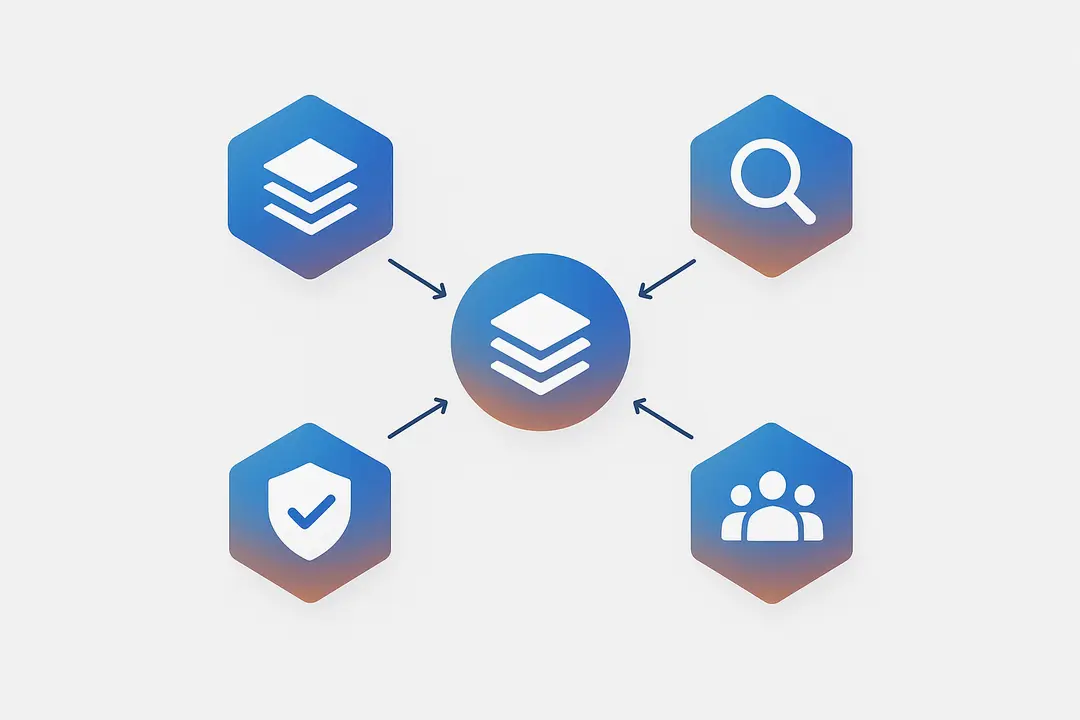
Selecting a software development methodology should be guided by your project’s size, requirements, team skills, and unique business challenges.
Follow these decision steps to identify the best-fit approach:
Key Factors in Methodology Selection
- Project Size & Complexity
Large, complex: Spiral, RUP, SAFe
Small to medium: Agile, Scrum, Kanban, Lean - Requirements Clarity
Well-defined: Waterfall, V-Model, Incremental
Evolving/uncertain: Agile, DevOps, Shape Up - Industry & Compliance
Regulated: Waterfall, V-Model, DevSecOps
Fast-paced/competitive: Agile, Lean, Scrum - Team Experience & Structure
Experienced with Agile: Scrum, Kanban, SAFe
Classic project/PMO environment: Waterfall, Spiral - Risk Tolerance & Time-to-Market
High risk: Spiral, Incremental
Need for rapid delivery: Lean, DevOps, Shape Up
Industry Example:
A healthcare application with compliance requirements may benefit from V-Model or DevSecOps, while a startup MVP is often best served by Scrum or Lean.
Decision Flowchart and Matrix
Sample Flowchart—How to Choose (Text Walkthrough):
- Are your requirements clear and unlikely to change?
Yes → Consider Waterfall, V-Model, or Incremental.
No → Move to next step. - Is fast feedback and adaptability essential?
Yes → Agile (Scrum, Kanban), Lean, Shape Up. - Do you need enterprise-scale coordination?
Yes → Explore SAFe, LeSS, RUP. - Is security/regulatory compliance a top concern?
Yes → Include DevSecOps. - Seeking continuous delivery or rapid deployment?
Yes → DevOps, Lean, Kanban.
Can You Combine Methodologies?
Many organizations blend multiple methodologies to fit their unique context—known as hybrid approaches.
- Example:
Scrum structure for sprints, with DevOps practices for deployment, plus Lean principles for process improvement. - When to blend:
Complex portfolios, regulated industries, or distributed teams.
Tip: Start with a dominant model, then adapt as your organization matures.
What Are the Latest Trends in Software Development Methodologies? (2026 Update)
In 2026, software development methodologies continue to evolve to address digital transformation, speed, and resilience.
Agile & DevOps Adoption Rates
According to the Digital.ai 17th State of Agile Report, Agile adoption is at a historic high, with over 86% of organizations applying Agile to some or all projects.
DevOps and DevSecOps adoption is increasing, driven by the need for faster, more secure software delivery.
Industry-Specific Methodology Evolutions
Heavily regulated sectors (e.g., finance, healthcare) are adopting hybrid methodologies like DevSecOps to balance compliance with quick releases.
Startups and product-led organizations are moving toward faster innovation cycles, embracing models like Shape Up.
New & Emerging Methodologies
- Shape Up (created by Basecamp) offers a fresh alternative—no sprints or backlogs, six-week delivery cycles, and empowered teams.
- Disciplined Agile Delivery (DAD) and human-centric frameworks are gaining attention for adaptability and focus on people/process.
- AI influence: Emerging models are leveraging AI for tasks such as automated testing, backlog grooming, and predictive analytics, further accelerating delivery and accuracy.
Summary Table: Key Takeaways
| Methodology | Ideal Use Cases | Unique Traits |
| Waterfall | Stable, regulated projects | Rigid sequence, strong documentation |
| Agile/Scrum | Rapid change, user-driven | Iterative, feedback-driven |
| Kanban | Ongoing support, ops | Visual boards, continuous delivery |
| DevOps | Automation, fast deployment | Dev-ops collaboration, CI/CD |
| Lean | Startup, MVP build | Waste reduction, speed focus |
| Shape Up | Mature product teams, innovation | No backlog, six-week cycles |
| Spiral | Large, high-risk environments | Risk-based iterations |
| SAFe/LeSS | Enterprise-scale | Multiple teams, Agile at scale |
Frequently Asked Questions About Software Development Methodologies
What are software development methodologies?
Software development methodologies are structured frameworks or processes that define how teams plan, build, test, and deliver software, ensuring consistency and quality.
How do I choose the right methodology?
Evaluate your project size, team experience, requirements clarity, regulatory needs, and desired speed. Use a decision matrix or flowchart to identify the best match.
What’s the difference between Agile and Waterfall?
Agile is iterative, adaptive, and welcomes change throughout the project, delivering in increments. Waterfall is linear and sequential, with strictly defined phases and less flexibility after kickoff.
What are the pros and cons of Agile development?
Pros: Flexibility, rapid feedback, continuous improvement. Cons: Requires engaged stakeholders, less up-front documentation, can be challenging to scale.
Which methodology is best for large projects?
Hybrid models like Spiral, SAFe, RUP, or a scaled Agile approach (LeSS) often suit large or complex projects, offering structure and adaptability for big teams.
Can you combine multiple methodologies in one project?
Yes. Many organizations blend elements (e.g., Scrum + DevOps) for tailored processes that fit their environment.
What is the role of DevOps in methodology selection?
DevOps focuses on bridging development and operations, enhancing collaboration, automation, and delivery speed; it’s often layered with other models.
How have software development methodologies evolved over time?
They have shifted from rigid, linear models (Waterfall) to more iterative, collaborative, and hybrid approaches to meet fast-shifting business needs and technologies.
What are new or emerging methodologies in 2026?
Shape Up, DAD, and AI-enhanced development models represent the latest in process innovation, focusing on team empowerment, flexibility, and automation.
What industry trends are shaping methodology adoption in 2026?
Agile and DevOps are dominating; organizations are increasingly adopting hybrid and AI-integrated methodologies to stay competitive and compliant.
Conclusion
Choosing the right software development methodology is foundational for project success in 2026. The right fit powers productivity, reduces risk, and builds lasting value—while the wrong match can frustrate teams and stakeholders alike.
Prioritize selection by understanding your project’s demands, team dynamics, and industry expectations. Use the comparison tables, decision guides, and expert resources provided here to spark internal discussions, pilot improvements, and drive better outcomes.
Key Takeaways
- Software development methodologies provide structure and clarity for successful software projects.
- Agile, DevOps, and hybrid models dominate 2026 trends, with new frameworks emerging.
- The best methodology depends on project size, requirements, risk, and team maturity.
- Use decision matrices and comparison tables for objective, scenario-driven choices.
- Regularly review and evolve your team’s approach to stay aligned with business and technology shifts.
This page was last edited on 11 March 2026, at 10:06 am
Contact Us Now

Contact Us Now
Start a conversation with our team to solve complex challenges and move forward with confidence.


