
Legacy applications can become a costly bottleneck that stifles innovation and growth. Businesses relying on outdated systems face rising costs, security vulnerabilities, and an inability to move quickly in the digital marketplace. This article delivers a step-by-step, expert-led playbook for application re-engineering—a proven pathway to business transformation and higher ROI.
You’ll understand why now is the critical moment to act and get clear guidance, real-world examples, and actionable tools to drive your own modernization journey.
What Is Application Re-Engineering?
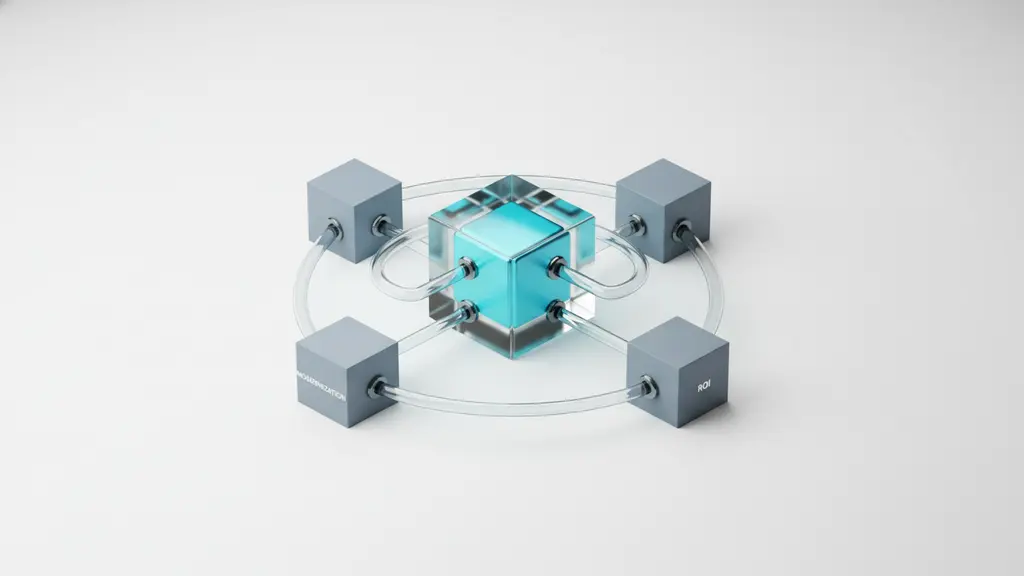
Application re-engineering is the systematic process of redesigning, refactoring, or migrating legacy business applications to align with modern business goals, boost digital agility, and maximize operational ROI. It enables organizations to modernize their technology stack, improve scalability, and optimize costs while preserving essential business logic and data. By transforming how applications work and integrate, companies reduce risk, accelerate innovation, and achieve measurable business outcomes.
Key objectives:
- Modernize outdated software to meet current and future business needs.
- Enhance flexibility, scalability, and performance.
- Directly improve ROI by reducing maintenance costs and increasing business responsiveness.
How Does Application Re-Engineering Drive Business Transformation?
Application re-engineering directly fuels business transformation by eliminating the drag of legacy technologies and empowering organizations to pivot faster in the digital era. Companies that modernize their core systems achieve increased operational agility, lower costs, improved compliance, and stronger competitiveness.
- Competitive Risks of Legacy Tech: Outdated applications can result in high maintenance expenses, skill shortages, and security risks. They can’t adapt fast enough to market shifts or regulatory changes, putting organizations at a disadvantage.
- Direct Business Outcomes:
- Enhanced agility: Faster time-to-market for new digital products.
- Greater scalability: Easily manage growing data volumes and user loads.
- Cost savings: Streamlined operations, lower support needs, and reduced technical debt.
- Improved compliance: More robust audits, automated reporting, and stronger data controls.
According to a 2024 Deloitte survey, organizations that invest in application re-engineering report on average a 30% reduction in IT operating costs and significantly faster response to business change.
| Business Impact | Legacy Systems | Re-engineered Applications |
|---|---|---|
| Agility | Slow | High |
| Scalability | Limited | Elastic |
| Maintenance Cost | High | Lower |
| Security & Compliance | Risky | Strong |
| Innovation Capacity | Constrained | Accelerated |
Application Re-Engineering vs. Modernization vs. Maintenance: What’s the Difference?
Application re-engineering goes beyond routine maintenance or basic modernization—it is about fundamentally transforming applications to align with strategic business objectives.
- Application Maintenance: Routine updates to existing systems for bug fixes and minor improvements. Lowest scope and impact.
- Application Modernization: Updating legacy applications (e.g., moving to the cloud or upgrading frameworks) to leverage new platforms. Moderate scope and business benefit.
- Application Re-Engineering: Redesigning, refactoring, or rebuilding applications to enable new capabilities, integrations, and innovation. Highest scope, complexity, and transformative business impact.
| Strategy | Scope | Typical Cost | Business Outcome | When to Choose |
|---|---|---|---|---|
| Maintenance | Fixes | Low | Stability, minimal change | Small updates, no new requirements |
| Modernization | Upgrade | Medium | Improved performance, some new features | Moderate change, improve support |
| Re-Engineering | Transform | High | Strategic agility, innovation | Large business shifts, digital transformation |
Choose maintenance for quick fixes, modernization for incremental improvements, and re-engineering when strategic transformation or digital agility is essential.
Approaches to Application Re-Engineering: Replatform, Refactor, Rebuild, Re-architect
There are four primary approaches to application re-engineering, each aligned to specific business needs and technical realities:
| Approach | Definition | Pros | Cons | Best For |
|---|---|---|---|---|
| Replatforming | Move existing applications to a new platform (e.g., cloud) | Fast, minimal code changes | Limited innovation | Rapid cloud migration |
| Refactoring | Rework internal code without changing its external behavior | Improves maintainability | Can be time-consuming | Reducing technical debt |
| Rebuilding | Rewrite the application from scratch | Maximum modernization | High cost and effort | Obsolete or unsalvageable systems |
| Re-Architecting | Change app structure/architecture (e.g., to microservices) | Enables new capabilities | High complexity | Scalability, modern integrations |
Real-World Examples:
- Replatforming: A retailer moves its order system from a local data center to AWS, gaining elasticity with minimal code changes.
- Refactoring: A bank cleans and modularizes its core loan processing software, reducing incidents and future development costs.
- Rebuilding: A healthcare provider replaces a legacy patient records system to support new digital experiences and analytics.
- Re-Architecting: A logistics firm splits a monolithic tracking system into microservices to enable real-time tracking and integration with partners.
What Are the Benefits and Risks of Application Re-Engineering for Your Business?
Properly executed application re-engineering offers quantifiable business benefits—but it also presents risks that must be managed.
Key Benefits:
- Cost savings: Reduced maintenance, infrastructure, and operations spend.
- Agility and flexibility: Faster adaptation to market changes or regulatory requirements.
- Enhanced security and compliance: Modern platforms support up-to-date standards and audit trails.
- User experience improvement: Modern UI/UX leads to higher customer satisfaction and productivity.
- Scalability: Efficiently handle growth in users, data, and business processes.
Typical Risks:
- Project overruns: Scope creep or underestimating complexity can result in missed deadlines or budgets.
- Data integrity: Migration errors can lead to data loss or inconsistencies.
- Change fatigue: Employees can experience resistance if change is not managed well.
- Security gaps: Transitional periods may introduce vulnerabilities if not properly secured.
How to Maximize Value and Mitigate Risks:
- Clear business goals and stakeholder support
- Detailed planning and phased execution
- Rigorous data migration and security protocols
- Proactive change management practices
Step-by-Step Guide: How to Revamp Your Business with Application Re-Engineering

Follow this proven framework to transform your legacy applications into business growth engines:
- Assess Your Current Application Landscape
- Inventory all systems, technologies, and dependencies.
- Identify pain points, high costs, and security gaps.
- Define Transformation Goals and Success Criteria
- Align IT and business strategy.
- Set measurable KPIs (cost reduction, faster delivery, improved UX).
- Choose the Optimal Re-Engineering Approach
- Select from replatforming, refactoring, rebuilding, or re-architecting based on complexity, risk, and desired outcomes.
- Plan and Execute Data Migration
- Map data flows, plan for secure, consistent migration.
- Test for completeness and accuracy.
- Implement Security and Compliance Safeguards
- Update protocols, access controls, and audit processes for new environments.
- Upgrade User Experience (UI/UX)
- Redesign interfaces with user input for higher engagement and productivity.
- Adopt Modern Architectures
- Move to cloud, microservices, and introduce automation/AI where relevant.
- Test, Iterate, and Go-Live
- Conduct thorough testing (functional, performance, security).
- Perform soft launch, monitor closely, resolve issues.
- Monitor Performance and Drive Continuous Improvement
- Establish observability tools and analytics.
- Optimize based on user feedback and business goals.
Overcoming Challenges: Best Practices for Successful Application Re-Engineering
To ensure success, organizations must anticipate common barriers and apply enterprise modernization best practices.
Common Pitfalls to Avoid:
- Scope creep or under-scoping: Begin with a clear project charter and phased milestones.
- Stakeholder resistance: Engage early, communicate clearly, and map “what’s in it for me” for each group.
- Data migration risks: Plan thoroughly and validate with test migrations before going live.
- Loss of knowledge: Document all processes and leverage cross-functional teams.
Change Management Strategies:
- Appoint strong project leaders and change champions.
- Offer training and ongoing support.
- Celebrate quick wins to build momentum.
Agile and DevOps Practices:
- Use iterative development cycles for rapid feedback.
- Automate testing and deployment for reliability.
Communication and Stakeholder Alignment:
- Maintain regular updates for business and IT leaders.
- Make KPIs and progress visible to all involved.
Real-World Examples: Case Studies of Effective Application Re-Engineering
Case Study 1: Financial Services—Re-Architecting for Growth
A global bank faced increasing costs and security risks with its monolithic core banking system. By re-architecting to a microservices architecture and migrating to the cloud, they reduced outages by 60% and cut operational expenses by 35%. Employees reported faster processing times and customers enjoyed improved digital channels.
Case Study 2: Manufacturing—Replatforming Legacy ERP
A manufacturer struggling with an out-of-support ERP platform replatformed to a modern cloud solution. The result: reporting cycles decreased from weeks to hours and support costs were halved. The company could now integrate new automation tools quickly, enabling further efficiency.
| Before (Legacy) | After (Re-Engineered) |
|---|---|
| High downtime | 99.95% uptime (cloud-based) |
| Slow batch reporting | Real-time analytics |
| Manual processes | Automation and integration |
| Security audits failed | Passed compliance audits |
Next-Gen Technologies Powering Application Re-Engineering
Emerging technologies are redefining what’s possible in application re-engineering.
- Artificial Intelligence (AI): AI-powered tools accelerate code analysis, conversion, and test automation, making legacy modernization faster and more reliable.
- Cloud Migration: Cloud platforms provide on-demand scalability, global reach, and built-in resilience.
- Microservices Architecture: Moving from monoliths to microservices enables independent scaling, rapid feature delivery, and robust integrations.
- Observability and Automation: Advanced monitoring, real-time analytics, and automated deployments (DevOps) help sustain high performance and minimize risk.
According to the Gartner IT Modernization Trends 2025 report, companies using cloud-native and AI-driven approaches realize up to 50% faster modernization project completion times compared to traditional methods.
Is Your Business Ready for Application Re-Engineering?
Use this readiness checklist to assess your organization’s current state and next steps for legacy modernization:
- Do we have a comprehensive inventory of legacy applications and dependencies?
- Are there recurring issues—cost, downtime, regulatory risk—with existing systems?
- Has IT and business leadership aligned on transformation priorities and KPIs?
- Are end users dissatisfied with application performance, functionality, or UX?
- Do we have the necessary budget and executive sponsorship?
- Is security or compliance driving the need for change?
- Are cloud, microservices, automation, or AI part of our future-state vision?
Key Takeaways: Quick Reference Table
| Approach | Best For | Main Benefits | Primary Risk | Action Step |
|---|---|---|---|---|
| Replatform | Quick migration to new platform | Fast, lower cost | Limited improvement | Inventory applications |
| Refactor | Reducing technical debt | Improved maintainability | Time-consuming | Analyze codebase |
| Rebuild | Obsolete/unsalvageable applications | Feature innovation | High effort/cost | Business case assessment |
| Re-Architect | Scalability, integration, agility | Modern capabilities | Complexity | Map desired architecture |
Frequently Asked Questions: Application Re-Engineering
What is application re-engineering, and how does it differ from application modernization?
Application re-engineering is the thorough transformation of applications—redesigning, rebuilding, or changing architecture—while modernization often refers to upgrading parts of a system or moving to new platforms without major code changes.
What business challenges does application re-engineering solve?
It addresses high operational costs, slow innovation, poor scalability, security/compliance gaps, and user dissatisfaction caused by outdated systems.
What are the main approaches to application re-engineering?
The four main approaches are replatforming, refactoring, rebuilding, and re-architecting—each with its own scope, benefits, and ideal use cases.
How does application re-engineering support digital business transformation?
By aligning core systems with modern strategies and technologies, it enables agility, introduces new capabilities, and accelerates product delivery.
What are the typical project steps for application re-engineering?
Assess current systems, define goals, select an approach, plan data migration, ensure security, upgrade UX, implement modern architecture, test, launch, and monitor improvements.
What are the main risks or challenges?
Common risks include scope creep, data migration errors, resistance to change, cost overruns, and security issues during transitions.
How can organizations measure the ROI of application re-engineering?
Track KPIs such as cost reduction, process efficiency, customer satisfaction, uptime, and speed to deliver new features.
When should a business choose re-engineering versus replacing an application?
Choose re-engineering for valuable legacy systems embodying unique business logic; consider replacement when core requirements have fundamentally changed or maintenance is no longer viable.
How do cloud and microservices architectures fit in?
They enable flexibility, scaling, and integrations central to re-engineering’s business value, supporting future-proof, modular applications.
What change management practices are important?
Engage all stakeholders early, communicate benefits, provide training, and structure implementations in phases for smoother adoption.
Conclusion
Application re-engineering is no longer optional for organizations determined to thrive in today’s competitive, fast-moving digital environment. With a methodical, expert-backed approach, you can unlock the full potential of your applications—driving business agility, lowering operational risk, and delivering meaningful ROI.
This page was last edited on 11 February 2026, at 5:26 pm
Contact Us Now

Contact Us Now
Start a conversation with our team to solve complex challenges and move forward with confidence.


