
Identifying red flags when hiring AI development companies is critical to the success of any AI initiative. Choosing the wrong partner can quickly turn a promising project into a costly failure, leading to budget overruns, security risks, and solutions that never deliver real business value.
This guide serves as a practical playbook to help decision makers evaluate AI vendors with confidence. By understanding the most common red flags when hiring AI development companies, you can avoid hidden risks, ask the right questions, and make informed choices before committing resources. Inside, you will find clear warning signs, expert insights, and proven evaluation steps to help you select an AI partner that aligns with your goals and ensures long term success.
Why Is Vendor Selection Critical for AI Projects?
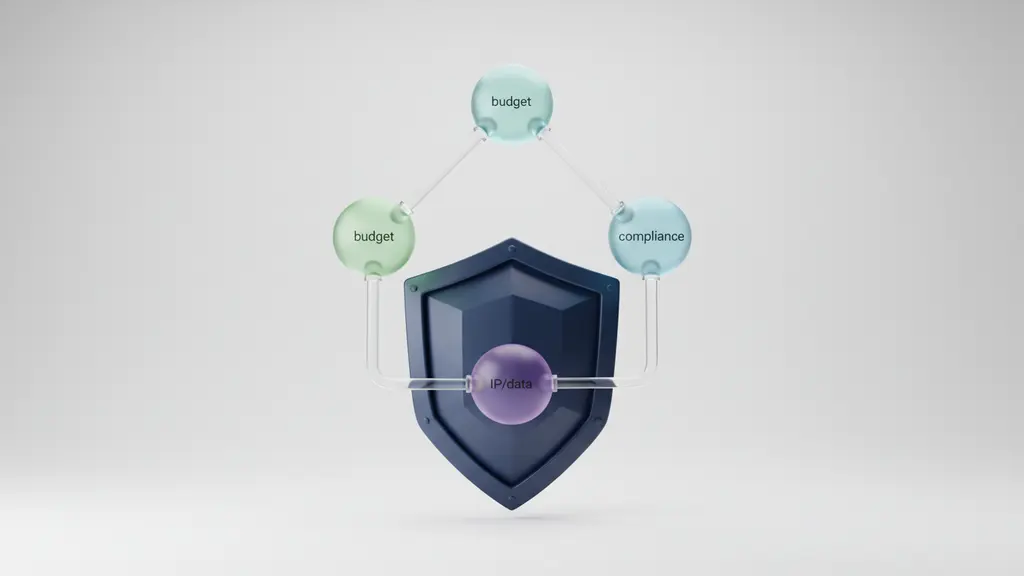
Vendor selection for AI projects directly influences your risk, costs, and results—wrong choices often lead to overspending, IP exposure, or compliance failures.
Outsourcing AI is uniquely complex: technical gaps or weak process controls quickly escalate into project failure.
- Industry Evidence:
- According to McKinsey, around 70% of AI projects fail to meet their business objectives.
- Forrester reports that failed projects often cite vendor selection issues, ambiguous contracts, and lack of domain expertise as root causes.
| Outcome | Impact of Poor Vendor Selection |
| Budget Overruns | Projects exceed estimates due to unclear scope or hidden fees |
| Compliance Failures | Lack of certifications leads to regulatory penalties |
| IP/Data Loss | Weak contracts/open access risks confidential info |
| Project Delays/Failure | Unskilled teams or poor communication derail delivery |
Why Generic IT Checklists Aren’t Enough:
AI projects require evaluation across technical expertise, security, legal contracts, and ongoing support—not just vendor reputation. A flexible, AI-focused evaluation method is essential.
What Are the Top Red Flags When Hiring AI Development Companies?

Spotting red flags early helps prevent wasted investments, security breaches, or disappointing results.
Here are the most common warning signs to watch for during AI vendor evaluation:
- Vague or overstated “AI” capabilities
- No proven technical track record
- Lack of transparency in team or approach
- No data security or privacy credentials
- “Too good to be true” pricing
- No clear onboarding/support structure
- Resells generic, off-the-shelf solutions
- Weak or missing contracts/NDAs
Each flag below is detailed with practical detection and mitigation tips.
Vague or Overstated “AI” Capabilities
Beware vendors who use AI buzzwords but lack evidence of real-world expertise.
“AI-washing”—marketing inflated or empty AI claims—wastes both time and budget.
How to Spot This Red Flag:
- No Demos or References: The company cannot show product demos or live case studies.
- Generic Value Statements: They promise “game-changing intelligence” without specifics.
- No Technical Explanation: Teams cannot explain the models, frameworks, or data used.
- Expert Insight: The FTC cautions against companies making unsubstantiated AI promises (2024).
Tip:
Ask for detailed, domain-specific examples and request a technical walkthrough before committing.
Lack of Relevant Technical Expertise
If a vendor’s team lacks seasoned data scientists or engineers, your AI solution is at risk of underperforming.
Real technical competence—measurable through team CVs and portfolio depth—is essential.
Checklist for Verifying Technical AI Expertise:
- Are there named data scientists, ML engineers, and solution architects?
- Does the team have certified experience (e.g., in NLP, computer vision, or your industry)?
- Can they answer domain-specific technical questions in detail?
- Are recent, similar client names or logos provided?
- Do their case studies address outcomes and learnings?
Warning Signs:
– Evasive or shallow technical answers
– No evidence of prior relevant project success
– Absence of open-source contributions or technical community involvement
Poor Transparency in Team & Approach
Opaque operations signal significant delivery risk—always demand clarity about who is doing the work, how, and when.
Watch for These Transparency Gaps:
- No named project managers or technical leads
- “Black box” development where you’re excluded from tracking progress
- Missing or inadequate project documentation
- Unclear timeline and milestone communication
- No direct channel to the delivery team
Best Practice:
Require a documented delivery plan, and insist on periodic updates with access to key contacts.
Limited Support, Onboarding, & Post-Launch Services
An AI vendor’s commitment shouldn’t end at deployment.
Ongoing support, training, and maintenance are vital for maximizing ROI and minimizing business disruption.
| Support Feature | Minimum Expectation |
| Onboarding/Training | Documentation, live workshops, user manuals |
| Post-launch Support | SLA-backed helpdesk, bug fixes, tuning |
| Knowledge Transfer | Final hand-off meeting, code/process handbooks |
| Maintenance/Updates | Roadmap for model/data/feature improvements |
Red Flag:
Vendors who disappear after deployment or refuse to include explicit support terms.
Data Security & Compliance Gaps
Failure to vet security and compliance can expose sensitive data, breach laws, and endanger your reputation.
Security & Compliance Checklist by Industry:
| Industry | Must-Have Certifications | Why It Matters |
| Healthcare | HIPAA, SOC 2 | Patient data, regulatory fines |
| Financial | SOC 2, ISO/IEC 27001, PCI DSS | Account access, monetary penalty |
| E-commerce | GDPR, SOC 2, ISO/IEC 27001 | Customer privacy, fines |
| General SaaS | SOC 2, ISO/IEC 27001 | Trust, risk management |
Red Flags:
– Expired or missing certificates
– Vague or generic answers on compliance
– No formal NDAs or data protection appendices
Mitigation:
Demand up-to-date documentation and check the validity with relevant certification bodies.
Hidden Fees & Inflated Prices
Beware contracts with unclear deliverables, surprise charges, or hard-to-compare pricing.
| Pricing Model | Pros | Typical Risks/Red Flags |
| Fixed Price | Budget predictability | Rigid scope, extra charges for any out-of-scope work |
| Time & Materials | Flexibility, pay for actual work | Potential runaway costs, unclear estimates |
| Milestone-Based | Clarity around goals and checkpoints | Delays leading to cost increases, vague milestones |
| “Too Good to Be True” | Unsustainably low up-front cost | Bait-and-switch, hidden future charges |
Best Practice:
Always request a detailed proposal outlining milestones, deliverables, and what is (and isn’t) included in the quoted price.
Unrealistic Promises or Timelines
Vendors guaranteeing magical outcomes or lightning-fast delivery rarely deliver quality AI solutions.
Warning Signs:
- Promises of “100% accuracy” or “instant AI transformation”
- Out-of-sync delivery commitments compared to industry benchmarks
- No explanation of data needs, process dependencies, or change management
Remedy:
Push for realistic timelines, and ensure all claims are supported by references to similar, completed projects.
Generic or Resold (White-Label) vs. Custom Solutions
AI should be built to solve your unique business problems.
Vendors pushing generic or white-label solutions often miss your goals—and may pass security or IP risks onto you.
| Solution Type | Signs It’s Generic/Resold | Risks/Inadequacies |
| White-label | No code/architecture customization, no IP | Security, misfit, unseen costs |
| Custom | Bespoke workflows, detailed domain examples | Better fit, but higher cost |
Red Flags:
– Little to no customization offered
– “Universal” product promises, regardless of use case
– Vague on data sources or your business process integration
Action:
Request architecture diagrams and references to tailored use cases in your industry.
Missing or Weak Contract Safeguards
A robust contract protects your data, intellectual property, and investment.
Weak or missing contract terms leave your organization vulnerable to costly disputes or loss of control.
Must-Have Contract Clauses:
- Non-Disclosure Agreement (NDA) covering all sensitive information
- Clear ownership of IP and deliverables
- SLA (Service Level Agreement) defining support/maintenance duties
- Data security and compliance obligations (e.g., GDPR, HIPAA, SOC 2)
- Termination and exit provisions (including data/data return)
- Liability limits and insurance coverage
Red Flag:
Vendors unwilling to negotiate or sign robust legal agreements.
How Do You Effectively Vet an AI Development Company?

Vetting AI vendors requires a structured, step-by-step method—relying on intuition alone exposes you to risk.
Follow this professional process to make confident, repeatable decisions.
How To Vet an AI Development Firm
- Define your project scope and key outcomes:
Determine business goals and success metrics. - Shortlist potential vendors:
Use public reviews, referrals, or RFPs. Check for relevant industry/domain expertise. - Conduct detailed discovery calls:
Ask targeted questions about technical skills, security, onboarding, and support. - Request documentation:
Confirm certifications, sample contracts, and case studies. - Score vendors against a red-flag checklist:
Compare using structured side-by-side tables (see below). - Negotiate contract terms and SLAs:
Ensure all red flag areas are addressed in writing. - Request a pilot or proof-of-concept:
Test technical approach and team fit with a limited, low-risk project.
Key Questions to Ask AI Vendors During Discovery
Ask targeted questions upfront to uncover hidden risks and clarify vendor capabilities.
| Area | Sample Question | What to Listen For |
| Technical Expertise | Can you show similar AI projects and outcomes? | Concrete examples, real metrics, named clients |
| Security & Compliance | What certifications & data protections are in place? | Specific certificates, valid dates, access control details |
| Team & Process | Who will work on my project, and how will we interact? | Named leads, clear communication plan |
| Support & Onboarding | How do you provide support post-launch? | SLA, documentation, dedicated contacts |
| Cost & Scope | What’s included/excluded in the pricing? | Transparent deliverables, milestone clarity |
| Customization | How is your solution tailored for my business/domain? | Clear adaptation plan, industry references |
Contract Clauses That Protect You
Strong legal safeguards prevent misaligned expectations, future disputes, and data/IP loss.
Essential Clauses:
- NDA: Confidentiality for all shared materials.
- IP Ownership: Your business owns vs. licenses custom deliverables.
- SLA: Detailed support and uptime commitments.
- Data Security & Compliance: Explicit requirements for certifications and audits.
- Termination/Exit: Process for disengagement or transition, including data hand-back.
Why Contracts Matter:
They define accountability, clarify IP, and protect both parties if plans change.
Certifications & Documentation to Require
Only shortlist vendors with up-to-date, industry-recognized technical and compliance credentials.
| Certification | Recognized By | Relevance to AI Projects |
| SOC 2 Type II | SaaS, Financial, General | Data handling, security controls |
| ISO/IEC 27001 | All industries | Info security management system |
| HIPAA | Healthcare | Patient data protection |
| GDPR | Businesses with EU users | Consumer privacy/law compliance |
Red Flags:
– Self-attestation only (“we say we’re secure”)
– Expired or unverifiable certificates
How to Validate:
Check online registries or request original documents.
Vendor Evaluation Checklist: Red Flags and Questions at a Glance
Use this quick-reference table as you evaluate each AI development partner under consideration.
| Red Flag Area | What to Look For | Questions to Ask | Risk if Ignored |
| AI Claims | Concrete demos, real use cases | “Show similar deployments?” | Project not using real AI |
| Technical Team | Named experts, deep skillset | “Who will do the work?” | Ineffective solutions |
| Security/Compliance | Valid certifications, clear NDAs | “Certifications held?” | Data breach, legal penalty |
| Support/Onboarding | SLA, support plan, docs | “Who supports us post-launch?” | Failure post-implementation |
| Pricing | Transparent, itemized quote | “What’s included/excluded?” | Budget overrun |
| Contracts/NDA | Strong, signed clauses | “Who owns the IP?” | Loss of ownership, weak recourse |
| Customization | Tailored architecture, domain fit | “How’s this unique to us?” | Misfit solution |
Real-World Scenarios: What Happens When Red Flags Are Missed?
Learning from true stories helps you anticipate and avoid major pitfalls.
Scenario 1: Budget Overrun Due to Vague Pricing
A mid-sized financial firm chose a vendor offering a low up-front cost. The contract lacked milestone definitions and detail. As the project progressed, “unforeseen” work and change requests doubled the final cost.
Missed Red Flag: Unclear deliverables, “too good to be true” price.
Mitigation: Insist on a fixed-scope proposal with line-item breakdowns.
Scenario 2: Data Breach from Missing Security Credentials
A healthcare startup overlooked the need for HIPAA compliance in their AI vendor. Six months post-launch, a data breach resulted in severe regulatory penalties and customer loss.
Missed Red Flag: Lack of HIPAA/SOC 2 certification.
Mitigation: Always require valid certificates; confirm with industry bodies.
Scenario 3: “Canned” Solution Fails to Deliver ROI
A retailer bought a “custom” recommendation engine, only to discover it was a resold product with little configuration. The mismatch led to poor results and negative feedback from customers.
Missed Red Flag: Resold, not custom, solution.
Mitigation: Request architecture diagrams and demand custom demos.
Frequently Asked Questions About Hiring AI Development Companies
What Are The Most Common Red Flags When Hiring AI Development Companies?
The most common red flags when hiring AI development companies include vague or exaggerated AI claims, lack of a proven technical track record, missing security certifications, opaque delivery processes, weak contracts, and unclear pricing. These AI development company red flags often point to deeper issues that can jeopardize project success.
How Do You Verify The Technical Skills Of An AI Vendor?
To avoid mistakes when hiring AI developers, ask for detailed case studies, technical leadership profiles, and direct client references. Reputable vendors are transparent about their team structure, tools, and past implementations.
Which Certifications Indicate A Secure And Compliant AI Provider?
Strong providers addressing red flags when hiring AI development companies typically hold certifications such as SOC 2 Type II, ISO IEC 27001, HIPAA for healthcare projects, and GDPR compliance for EU data handling. Always verify certifications to avoid compliance related risks.
What Contract Terms Protect You When Outsourcing AI Development?
To reduce mistakes when hiring AI developers, contracts should include clear IP ownership, NDAs, data protection clauses, SLA backed support, and well defined milestones. Weak or vague contracts are major AI development company red flags.
How Do You Spot A Vendor Reselling Generic AI Solutions?
One of the clearest red flags when hiring AI development companies is a one size fits all approach. Vendors that cannot demonstrate customization, industry context, or project specific architecture often resell generic solutions with limited value.
What Questions Should You Ask Before Hiring An AI Development Company?
Key questions help uncover AI development company red flags, such as asking who will work on your project, what similar solutions they have delivered, how compliance is handled, and how their AI models are tailored to your business needs.
How Can You Compare Pricing Models For AI Outsourcing?
To avoid mistakes when hiring AI developers, compare pricing structures carefully. Look beyond total cost and examine inclusions, change order policies, and long term support fees, as hidden costs are common warning signs.
Why Is Post Launch Support Crucial In AI Projects?
Lack of post launch support is a major red flag when hiring AI development companies. AI systems require ongoing monitoring, retraining, and optimization, and vendors without support plans can leave you with unstable or outdated solutions.
How Do You Assess If An AI Solution Fits Your Industry Needs?
Vendors should demonstrate industry specific experience, regulatory understanding, and real use cases. Failure to do so is one of the most overlooked AI development company red flags and often leads to poor adoption.
What Hidden Costs Should You Watch Out For With AI Development Partners?
Hidden costs often stem from unclear scope definitions, licensing fees, integration charges, or support add ons. Identifying these early helps prevent costly mistakes when hiring AI developers and ensures transparency before signing contracts.
Conclusion: How to Choose Wisely—Next Steps & Resources
Choosing the right AI development company requires careful attention to technical capability, security practices, and long term alignment with your business goals. By proactively identifying potential risks and understanding common warning signs, organizations can avoid costly missteps and protect their AI investments.
A thoughtful evaluation process, clear communication, and well defined expectations are essential to building a successful partnership. When decision makers take the time to assess vendors thoroughly, they increase the likelihood of delivering AI solutions that are reliable, compliant, and capable of generating real business value.
Key Takeaways
- Project risk is highest when vendor selection is rushed or red flags ignored.
- Check technical, legal, and support criteria using a structured, scenario-driven checklist.
- Always demand proof of security, compliance, and customization.
- Transparent contracts and SLAs protect your investment and data.
- Learn from case studies—mistakes are costly and preventable with due diligence.
This page was last edited on 12 February 2026, at 11:23 am
Contact Us Now

Contact Us Now
Start a conversation with our team to solve complex challenges and move forward with confidence.


