

Python development outsourcing is transforming the way businesses build, scale, and future-proof their tech projects. The competition for qualified Python talent has never been fiercer, while the demand for AI-driven, web, and data applications continues to surge.
The challenge? Finding specialized Python expertise quickly—without the burdens of costly, slow in-house hiring or the risk of project delays. Python software outsourcing offers access to global talent, streamlined project delivery, and reduced costs, but only if you understand the landscape and process.
This expert playbook delivers a step-by-step guide to Python development outsourcing: from defining the concept and weighing benefits, to comparing top companies, costs by region, critical risks, and vendor selection frameworks. By the end, you’ll confidently navigate outsourcing for Python projects and maximize your ROI.
What Is Python Development Outsourcing?
Python development outsourcing means hiring external Python specialists or agencies to design, build, test, or maintain software solutions instead of relying exclusively on in-house teams. This model is widely used by companies aiming to accelerate innovation, reduce costs, or fill internal skill gaps.
Typical Python development outsourcing covers:
- Custom web or mobile applications
- AI, machine learning & data science solutions
- API/legacy system integration
- Ongoing maintenance, DevOps, and QA
Key benefits of Python software outsourcing:
- Access to rare or advanced Python expertise
- Cost efficiency and budget flexibility
- Faster project launches and scaling capability
- Ability to focus in-house teams on core business strategy
Why Do Companies Outsource Python Development?
Businesses choose Python outsourcing to speed up innovation, control costs, and leverage global talent without compromising on quality.
Major benefits of Python development outsourcing:
- Access to specialized Python skills: Quickly tap into developers experienced in Django, Flask, FastAPI, AI/ML, and more—often unavailable locally.
- Cost savings: Lower labor rates, reduced hiring overhead, and eliminated training costs.
- Faster project delivery: Round-the-clock progress with distributed teams, leading to shorter time-to-market.
- Scalability and flexibility: Easily ramp teams up or down to match project needs and deadlines.
- Focus on core business: Free up in-house resources to concentrate on growth and strategy, not tech staffing.
“We use Python outsourcing to access expertise in AI and new frameworks that would take months to recruit for internally.”
– CTO, Mid-size SaaS company
When Should You Consider Outsourcing Python Development?
Companies typically outsource Python development when internal resources are stretched or time-to-market is critical. Outsourcing is ideal for projects demanding specialized expertise and for businesses wanting predictable, scalable delivery.
Common scenarios for Python application outsourcing:
- Building MVPs or rapid prototypes for startups or new lines of business
- AI/ML, big data, or advanced analytics projects where niche expertise is needed
- Modernizing legacy systems (e.g., moving from PHP/.NET to Python)
- Tight project deadlines or production spikes beyond in-house capacity
- Web or API integration projects demanding deep Python framework knowledge
| Scenario | When Outsourcing Is Ideal |
| MVP/Prototype Development | Need to launch quickly |
| AI/ML/Data Science | Require specialized Python skill |
| Legacy System Modernization | Lacking internal migration talent |
| Short-term Capacity Boost | In-house team overstretched |
| Integration Projects | Multi-framework or complex stack |
Case in point:
A fintech company modernized its platform by outsourcing Python microservices development, cutting time-to-market by 40% compared to in-house estimates.
How Does the Python Development Outsourcing Process Work?

Outsourcing Python projects is most successful when companies follow a structured, transparent process. Here’s a proven framework to guide you:
- Needs Assessment: Define your project scope, technical requirements (e.g., Django, Flask), timeline, and budget.
- RFP & Vendor Research: Craft a request for proposal (RFP) and review candidates via Clutch, LinkedIn, or referrals.
- Screening and Due Diligence: Evaluate portfolios, technical depth, references, and cultural fit through interviews and code samples.
- Pilot Project or Technical Test: Assign a small paid test or pilot to assess communication, delivery, and code quality.
- Contract Negotiation: Formalize terms around deliverables, IP rights, SLAs, rates, and data security.
- Project Kick-Off & Onboarding: Align on workflows, set up project management tools (e.g., Jira, Slack), and establish communication protocols.
- Ongoing Collaboration: Maintain regular reviews, transparent reporting, and feedback loops to drive success.
What Are the Main Outsourcing Models for Python Development?
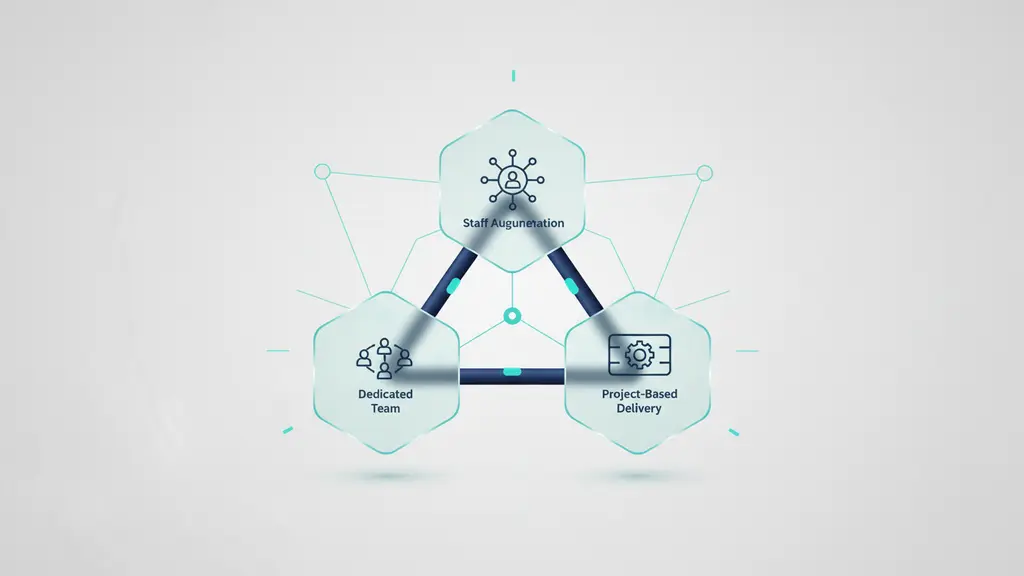
Python outsourcing companies typically offer three main engagement models: dedicated teams, staff augmentation, and project-based delivery. Choosing the right fit depends on your project complexity, management preference, and scaling needs.
| Model | Description | Pros | Cons | Best For |
| Dedicated Team | Exclusive external team for you | Full control, deep expertise | Requires steady workload | Long-term, complex projects |
| Staff Augmentation | Add 1+ outsourced devs to in-house team | Flexibility, easy scaling | Can cause process misalignment | Temporary skill/capacity gaps |
| Project-Based | Fixed-scope, finite project | Lower management overhead | Less flexibility, less direct oversight | MVPs, well-defined deliverables |
Key tip:
Dedicated teams are optimal for sustained, evolving workloads. Staff augmentation fills short-term gaps. Project-based models work best for clear, limited-scope builds.
How Much Does It Cost to Outsource Python Development?
Python development outsourcing costs vary widely based on team skills, location, complexity, and engagement model. Clear cost expectations help you plan budgets and avoid surprises.
Key pricing models:
- Hourly rates: Pay for actual time (best for iterative or changing scopes)
- Fixed-price: Pre-agreed project cost (ideal for well-defined deliverables)
- Dedicated team/monthly: Flat fee for full-time team members
Regional cost comparison:
(Based on industry salary aggregators and research)
| Region | Typical Hourly Rate ($ USD) | Key Pros | Key Cons |
| Eastern Europe | $35–$70 | Balance of cost/quality, large talent pool | Time zone challenges |
| Latin America | $30–$60 | Overlapping US hours | Smaller Python community |
| South/Southeast Asia | $20–$50 | Lowest rates, quick scaling | Varying QA, communication |
| US/Canada/UK | $75–$150+ | Proximity, cultural alignment | Highest costs |
Cost factors include:
- Seniority and skillset (AI/data/DevOps premium)
- Team size and duration
- Project scope and complexity
According to recent industry benchmarks, MVP app projects (3–5 months, 3–5 devs) may cost $30,000–$120,000+ depending on region and complexity.
How to Choose the Right Python Outsourcing Partner?
Selecting the right Python outsourcing company is critical for project success. A methodical approach ensures alignment, trust, and technical fit.
Vendor vetting checklist:
- Technical depth in Python frameworks and relevant domains (Django, Flask, AI/ML, DevOps)
- Reputation and reviews, with evidence of successful similar projects
- Transparent processes for project management and communication
- Legal & IP safeguards including robust contracts and clear data security protocols
- Cultural fit and language proficiency
Practical steps:
- Review company portfolios and client case studies.
- Check independent ratings (e.g., Clutch, GoodFirms).
- Request references from relevant industries.
- Assess communication and transparency during calls.
- Clarify contractor status, legal compliance, and data protection policies.
What Are Best Practices for Managing Outsourced Python Teams?
Effective management is the key to successful, high-performing outsourced Python teams. Adopting clear collaboration and project management practices minimizes friction and maximizes output.
Best practices for remote Python team management:
- Agile methodology: Use Agile or Scrum to ensure iterative progress, clarity, and adaptability.
- Tooling: Leverage tools like Jira/Trello (tasks), Slack/Teams (chat), and GitHub/GitLab (code collaboration).
- Regular check-ins: Schedule weekly sprints, demo sessions, and retrospectives.
- Transparent documentation: Share requirements, standards, and key decision records.
- Frequent code reviews and automated QA to ensure maintainability and code quality.
- Build culture: Encourage knowledge sharing, team bonding, and celebrate milestones—even remotely.
“Real-time feedback loops and Agile ceremonies are non-negotiable for remote Python projects” – Senior Python Consultant
What Are the Risks in Python Development Outsourcing—And How Can You Mitigate Them?

While Python development outsourcing offers significant advantages, it comes with risks that need careful management.
Primary risks in Python outsourcing:
- Intellectual property (IP) leakage: Potential exposure of proprietary code or concepts.
- Data security and compliance issues: GDPR or sector-specific regulations may be at stake.
- Quality assurance (QA) gaps: Inconsistent coding standards or delivery processes.
- Communication breakdowns: Time zone, language, or cultural barriers hampering alignment.
Risk mitigation strategies:
- Use clear, enforceable contracts including NDAs, SLAs, and robust IP protections.
- Require compliance with applicable regulations (GDPR, HIPAA, etc.).
- Mandate rigorous QA processes and regular audits.
- Establish clear escalation paths and defined points of contact.
What Happens After Delivery?
Outsourcing doesn’t end at project delivery. Strong post-launch partnerships set the stage for product longevity and business agility.
Post-launch considerations:
- Maintenance and bug fixes: Ongoing support, patching, and updates are typically offered via retainer or ticket-based models.
- Scaling capacity: Retain flexibility to ramp up or down as your needs change.
- Transition planning: Procedures for handing over code, documentation, or bringing work in-house if desired.
How to negotiate maintenance:
- Address post-launch support in initial contracts.
- Define SLAs for response times, issue severity, and turnaround.
- Document clear processes for onboarding new developers or transitioning to an in-house team.
Who Are the Top Python Outsourcing Companies in 2026?
Choosing a vendor is easier with reliable, up-to-date comparisons. Here’s a brief overview of notable Python outsourcing firms active in 2024 (data from public sources and verified company profiles):
| Company | HQ/Region | Team Size | Tech/Project Focus | Notable Projects/Clients | Review Highlight |
| DevsData | US/Poland | 100+ | AI/ML, Django, finance, SaaS | Fortune 500, scale-ups | High engineering bar |
| N-iX | Ukraine/EU | 2,000+ | Team extension, enterprise, cloud | Lebara, Gogo, AVL | Robust delivery |
| STX Next | Poland | 500+ | End-to-end Python, fintech, devops | Decathlon, Mastercard | Python specialists |
| Toptal | Global | 1,000+ | On-demand, curated freelancers | Airbnb, Bridgestone | Stringent vetting |
| Belitsoft | Belarus/UK | 250+ | Web, custom Python, healthcare | US, EU enterprises | Strong QA process |
Pro Tip:
Shortlist vendors based on alignment with your technical, industry, and scaling requirements.
Frequently Asked Questions about Python Development Outsourcing
What is Python development outsourcing?
Python development outsourcing refers to hiring external Python developers or teams—often from specialized agencies or offshore regions—to handle part or all of your Python-based software project needs.
How much does it cost to outsource Python development?
Costs range widely. Hourly rates can vary from $20–$150+ depending on region and expertise. For a typical MVP, budgets of $30,000–$120,000+ are common, driven by scope and talent source.
What are the benefits of outsourcing Python projects?
Outsourcing enables faster project delivery, access to global talent, lower costs compared to in-house hiring, and the ability to scale resources on demand.
How do you choose the right Python outsourcing partner?
Evaluate vendors based on technical expertise, proven success in similar projects, reputation, transparent processes, and legal/data security safeguards. Use a structured checklist to compare partners.
What are the main risks in Python development outsourcing?
Key risks include loss of IP, inconsistent code quality, communication lags, and regulatory compliance gaps. Contracts, code reviews, and compliance audits help reduce these risks.
Which Python frameworks should outsourced teams know?
Teams should be proficient in frameworks relevant to the project, such as Django, Flask, FastAPI, and Pyramid for web, or libraries like NumPy and TensorFlow for data and AI.
How do you ensure code quality with an outsourced Python team?
Mandate regular code reviews, automated testing, and clear adherence to best practices. Favor agencies with mature QA processes and transparent reporting.
Can Python outsourcing companies handle AI or data science projects?
Yes, many leading Python outsourcing firms have specialized teams for AI, ML, and big data, leveraging libraries like Scikit-learn, TensorFlow, and PyTorch.
What are the common outsourcing models for Python development?
Common models include dedicated teams (long-term, exclusive), staff augmentation (flexible resource boost), and project-based engagements (fixed scope, price).
How is post-launch support handled when outsourcing Python projects?
Most agencies offer ongoing maintenance and support, typically defined in contracts. This includes bug fixes, updates, and scaling services as needed.
Conclusion
Python development outsourcing unlocks access to specialized expertise, faster project timelines, and significant cost savings. With global demand for Python skills showing no sign of slowing, strategic outsourcing is now a cornerstone for startups through to enterprises seeking innovation and agility.
The most successful outsourcing journeys start with a clear process: define your needs, select the right model and partner, manage collaboration actively, and ensure legal/procedural protections are in place. Don’t forget the value of post-launch support in driving long-term ROI.
Key Takeaways
- Python development outsourcing provides rapid access to global, specialized talent at lower costs.
- Choose your engagement model carefully: dedicated teams excel for long-term, project-based for clear deliverables.
- Successful outsourcing hinges on rigorous due diligence, transparent processes, and proactive risk management.
- Maintenance and support should be planned from the outset for long-term value.
- Use checklists and comparison tables to streamline vendor selection and minimize risk.
This page was last edited on 26 February 2026, at 11:03 am
Contact Us Now

Contact Us Now
Start a conversation with our team to solve complex challenges and move forward with confidence.


