

Deciding between PHP and Python in 2026 is one of the most important technical choices for developers, startups, and IT leaders. Both languages shape the web’s backbone, but each presents unique strengths, job opportunities, and project advantages.
When evaluating “PHP vs Python” for web development, performance, and career growth, the stakes are higher than ever. Modern web apps demand speed, scalability, robust security, and future-proof skills. Choosing the right language can influence your team’s productivity, hiring flexibility, and long-term project costs.
This comprehensive guide provides a side-by-side PHP vs Python analysis for 2026, covering code syntax, performance, frameworks, deployment, job market, security, and real-world use cases. Use our expert-backed decision framework to confidently select the best fit for your next web project or career move.
At-a-Glance: PHP vs Python Quick Comparison Table
Gain instant clarity with this feature-by-feature comparison:
| Feature | PHP | Python |
|---|---|---|
| Performance | Fast for classic web; optimized in PHP 8 | Fast, especially with frameworks (Django); strong for APIs, less tuned for raw HTML |
| Syntax | C-like, more symbols, historically verbose | Clean, readable, beginner-friendly |
| Frameworks | Laravel, Symfony, WordPress (CMS) | Django, Flask, FastAPI, Pyramid |
| Best Use Cases | Content sites, eCommerce, CMS | APIs, AI/ML, data science, custom apps |
| Learning Curve | Moderate (web focus, more legacy quirks) | Easy (clear syntax, broad resources) |
| Security | Mature, requires best practices | Strong defaults in major frameworks |
| Job Market | Stable, high demand for CMS roles | Growing, especially in AI/data/web |
| Hosting | Wide support (shared, cloud, PaaS) | Broad but sometimes requires extra setup |
What Is PHP? Key Features & Ecosystem Overview
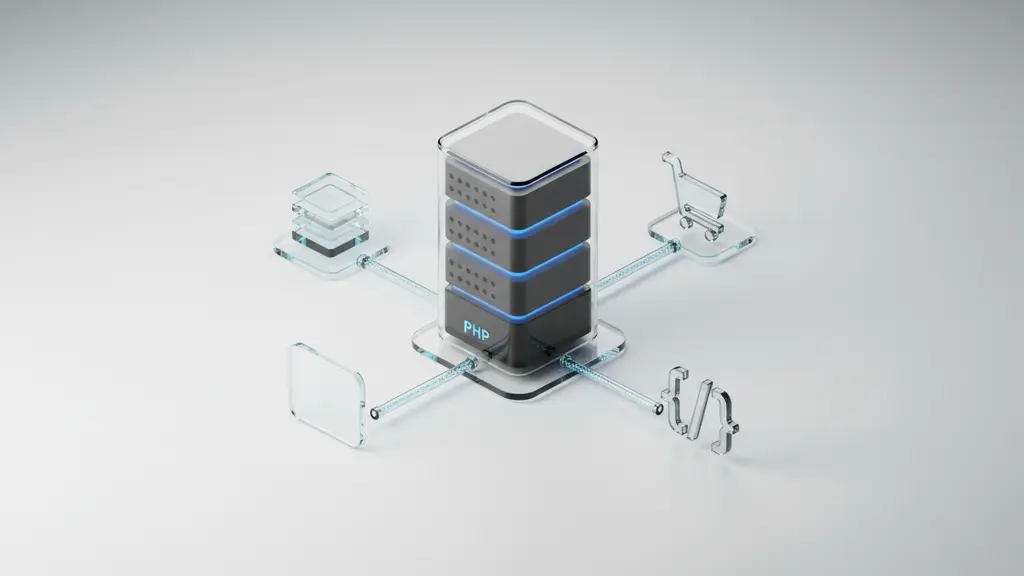
PHP is a popular, open-source server-side scripting language designed primarily for web development. Created by Rasmus Lerdorf in 1994, PHP powers nearly 77% of the world’s websites, including platforms like WordPress, Facebook (originally), and many major CMSs. Its purpose is to generate dynamic web pages efficiently, making it a backbone for blogs, eCommerce, and custom web apps.
Key PHP features and ecosystem highlights:
- History & Purpose: Tailored for rendering web pages, database interactions, and server-side logic.
- Popular Use Cases: Content management (WordPress), eCommerce (Magento), forums, and large-scale sites.
- Major Frameworks:
- Laravel: Modern, elegant MVC framework with expressive syntax.
- Symfony: Scalable, modular toolkit for complex web apps.
- WordPress: The world’s dominant CMS, built on PHP.
- Ecosystem & Community: One of the most active programming communities, extensive documentation, and vast package libraries via Composer.
- Ongoing Relevance: PHP 8+ brings modern features (JIT, strong typing, performance boosts), maintaining its leadership in web hosting compatibility and CMS support.
What Is Python? Key Features & Ecosystem Overview
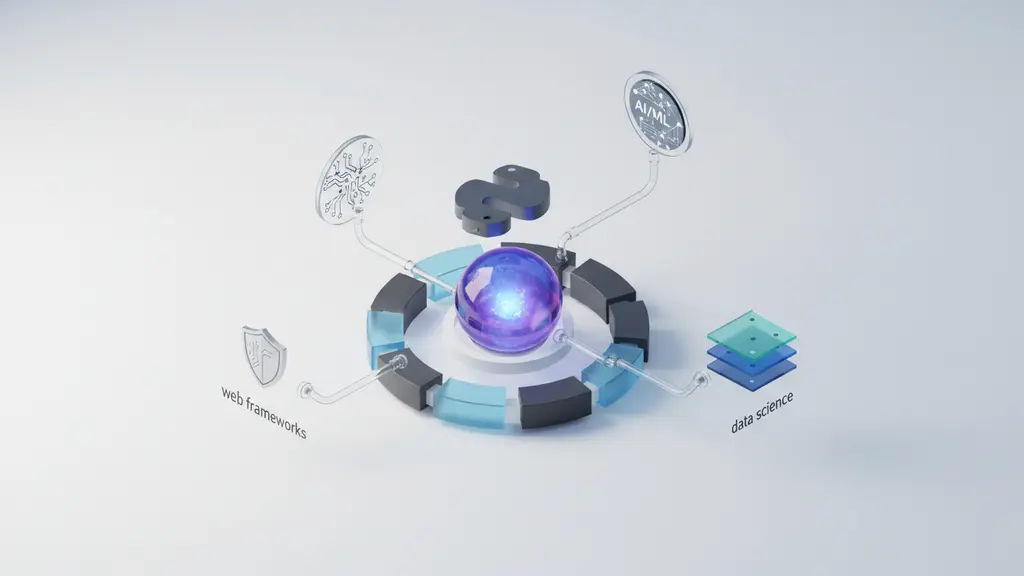
Python is a high-level, general-purpose programming language known for its readability and versatility. Introduced by Guido van Rossum in 1991, Python is used far beyond web development—powering AI, machine learning, data science, APIs, and automation.
Key Python features and ecosystem strengths:
- Design Goals: Emphasizes clean, readable syntax (PEP 8), supporting large-scale and rapid prototyping.
- Primary Domains:
- Web Development: Django, Flask, FastAPI
- Data Science/AI/ML: Pandas, NumPy, TensorFlow, PyTorch
- Automation/Scripting: System tools, cloud tasks
- Popular Frameworks & Tools:
- Django: High-level, batteries-included, secure for enterprise apps.
- Flask: Lightweight flexibility for APIs and microservices.
- FastAPI: Modern for async APIs and high performance.
- pip/virtualenv: Industry-standard package management and environment tools.
- Community Size: One of the most beloved and rapidly growing global developer bases; consistently top 3 ranking in the TIOBE Index and Stack Overflow surveys.
- Modern Versions: Python 3.12+ includes async, type hints, and speed improvements, further cementing Python’s role outside of web, especially in the AI boom.
PHP vs Python: Head-to-Head Feature Comparison
How Do PHP and Python Perform in Real-World Web Projects?
Both PHP and Python offer strong web performance, but their optimization and workloads differ. PHP is traditionally faster for serving standard web pages, while Python delivers high performance for APIs and data-heavy applications.
- Raw Performance:
- PHP 8 introduced JIT compilation, delivering significant speedups (notably in computation-heavy tasks).
- Python (especially via Django/FastAPI) is almost as fast for API-centric apps, but may lag in raw HTML page serving compared to PHP on a typical LAMP setup.
- Scalability:
- Both languages scale well; high-traffic sites run on either.
- PHP: Exemplified by Facebook’s historic PHP backend, major CMSs, and content platforms.
- Python: Powering Instagram, Reddit, and Pinterest—sites managing massive user bases with robust frameworks and cloud-native scaling.
- Framework Optimization:
- Both communities bake in response-time improvements, caching, and async support in leading frameworks.
Summary Table:
| Metric | PHP 8+ | Python (Django/FastAPI) |
|---|---|---|
| Page Rendering | Very fast (LAMP stack) | Fast, especially for APIs |
| API Performance | Good (with latest PHP) | Excellent (async support) |
| Scalability | Strong | Strong |
| Resource Usage | Low | Moderate (Python processes) |
PHP vs Python Syntax and Code Examples: Which Is Easier to Read and Write?
Python is famous for clean, readable syntax, while PHP is more symbolic, with a steeper learning curve for those new to server-side scripting.
Side-by-Side Code Sample: Connecting to a Database
PHP:
<?php
$mysqli = new mysqli("localhost", "user", "password", "database");
if ($mysqli->connect_error) {
    die("Connection failed: " . $mysqli->connect_error);
}
echo "Connected successfully";
?>
Python (with sqlite3):
import sqlite3

conn = sqlite3.connect('database.db')
print("Connected successfully")
Key Differences:
- PHP: Requires more boilerplate, ends each statement with semicolons, has legacy quirks but is well-documented.
- Python: Consistent indentation, minimal syntax, readable for beginners.
Syntax & Style:
- PHP: C-inspired, uses
$for variables, curly braces, and explicit end statements. - Python: Whitespace and indentation define structure, no special variable prefix, focus on readability (PEP8).
Conventions:
- PHP: PHP Standard Recommendation (PSR) guides style.
- Python: Python Enhancement Proposal 8 (PEP8) standardizes formatting.
Learning Curve:
Python is generally easier for beginners due to its readability and large selection of beginner tutorials, while PHP’s broader legacy ecosystem can result in inconsistent codebases.
Frameworks and Tools: Strengths of Laravel, Django, Flask & More
PHP and Python both offer robust frameworks, tailored to different project needs. PHP leads in CMS and rapid content sites (Laravel, WordPress), while Python shines in scalable APIs and modern apps (Django, Flask).
| Framework | Language | Best For | Community & Updates |
|---|---|---|---|
| Laravel | PHP | Modern web apps, APIs | Very active, innovative |
| Symfony | PHP | Large, complex apps | Stable, enterprise use |
| WordPress | PHP | Content management, blogs | Massive support |
| Django | Python | Secure, scalable web apps | Top choice, well-maintained |
| Flask | Python | Lightweight apps, APIs | Simple, flexible |
| FastAPI | Python | Async APIs, high performance | Fast-growing |
PHP: Laravel and Symfony dominate for new custom apps, while WordPress remains essential for publishing.
Python: Django’s “batteries included” approach means built-in security, admin, and ORM; Flask and FastAPI offer greater control for microservices and async apps.
Security: Is PHP or Python Safer for Modern Websites and Applications?
Both PHP and Python offer strong security capabilities, but best practices and framework defaults play a major role in real-world safety.
- PHP:
- Security has greatly improved, but legacy codebases remain at risk if not updated.
- Major frameworks (Laravel, Symfony) enforce secure defaults (input validation, CSRF protection).
- Active vulnerability response and long-term support for current versions.
- Python:
- Frameworks like Django prioritize security out-of-the-box with built-in protections against SQL injection, XSS, and CSRF.
- Security issues are less common in modern Python projects, thanks in part to a consistent update culture.
- Key Factors:
- Both languages rely on ecosystem maturity and a responsive community to patch vulnerabilities quickly.
- Official documentation and security teams regularly publish guidance for fixing issues.
Security Checklist:
- Use supported versions (PHP 8+, Python 3.x).
- Prefer well-maintained frameworks.
- Regularly patch dependencies.
Hosting and Deployment: Which Is Easier to Host and Scale?
PHP remains unmatched for easy, low-cost hosting, but Python is gaining traction with modern cloud infrastructure.
- PHP Hosting:
- Universal support on shared and managed hosting (LAMP stack).
- One-click deploy for platforms like WordPress and Drupal.
- Affordable, accessible for small businesses and content sites.
- Python Hosting:
- Widely supported on PaaS/cloud (Heroku, AWS, Google Cloud), but less so on budget shared hosts.
- Containers (Docker) and serverless frameworks (Zappa, AWS Lambda) make advanced deployments easy.
- Often requires more setup for production scaling.
Hosting Comparison:
PHP: Best choice for shared, low-cost, or traditional web hosting.
Python: Ideal for cloud-native, scalable, or AI/data-driven apps.
Community, Support, and Package Management: Resources for Developers
Both languages offer massive, welcoming communities and excellent package management tools.
- PHP Community:
- Long-established forums, huge Stack Overflow and GitHub presence.
- Composer gives access to over 300,000 packages.
- Vast documentation and Q&A archives for quick solutions.
- Python Community:
- Continually ranks as one of the most popular and loved languages in developer surveys.
- pip provides a massive repository of packages (PyPI: 400,000+).
- Stellar documentation, active forums, and fast support for new domains (AI/ML/Data).
- Learning Resources: PHP and Python both offer comprehensive guides, video tutorials, and open-source codebases.
Summary Table:
| Aspect | PHP | Python |
|---|---|---|
| Package Manager | Composer | pip |
| Packages | ~300,000 | ~400,000 |
| Stack Overflow | 1.6M+ questions tagged | 2.1M+ questions tagged |
| Documentation | Extensive | Extensive, beginner-friendly |
Job Market Trends and Salary: PHP vs Python in 2026
Python’s popularity continues to surge, but PHP offers stable demand in content-focused roles. Salary differences reflect domain focus and regional factors.
- Demand:
- Python: Ranked in the top 3 most wanted, used, and loved languages on the Stack Overflow Developer Survey 2025–2026.
- PHP: Consistently in the top 10 for web jobs, especially CMS, eCommerce, and maintenance roles.
- Salary:
- According to Glassdoor & Indeed (2025–2026):
- Python Developer (US average): $110,000–$130,000/year
- PHP Developer (US average): $85,000–$105,000/year
- Regional variation is significant, with both roles available globally.
- Future Outlook:
- Python is strong for web, AI, data science, and automation, increasing cross-functional opportunities.
- PHP shows stable but slower growth, remaining vital for existing content sites and agencies.
- Market Trends:
- More startups, fintech, and data companies prefer Python for new builds.
- PHP dominates legacy CMS and agencies.
Real-World Use Cases: Where Each Language Excels
PHP shines for fast deployment of traditional websites, content management systems, and eCommerce.
Python excels for APIs, rapid prototyping, AI/ML, and data-driven platforms.
| Use Case | PHP Advantage | Python Advantage |
|---|---|---|
| CMS/Content Site | WordPress, Drupal, Joomla | Less common |
| eCommerce | Magento, WooCommerce | Custom apps with Django |
| APIs & Microservices | Efficient with Laravel/Slim | FastAPI, Django REST |
| AI/ML/Data | Limited (external bindings) | Native ecosystem (Pandas, NumPy, TensorFlow) |
| Startups/Prototyping | Laravel, rapid CRUD | Django, Flask, FastAPI |
| Enterprise Platforms | Laravel/Symfony (backend) | Django, full-stack |
Real Examples:
- PHP Sites: WordPress.com, MailChimp (legacy), Wikipedia.
- Python Sites: Instagram (Django), Reddit (originally Python), Spotify (data pipelines, backend services).
How Should You Decide Between PHP and Python? (Actionable Decision Guide)
Assessing the Learning Curve and Beginner Friendliness
If you’re new to coding or managing an inexperienced team, Python is largely considered the easier entry point. PHP’s web focus is helpful, but sometimes less intuitive for total beginners.
- Python:
- Readable, almost “English-like” syntax.
- Abundance of beginner-friendly resources, tutorials, and community support.
- Fewer legacy quirks than PHP.
- PHP:
- Designed for embedding in HTML and rapid web scripting.
- Large pool of CMS-specific tutorials (WordPress, Drupal).
- Some legacy inconsistencies, but modern PHP (8.x) is streamlined.
For most learning journeys, Python offers the lowest barrier, while PHP is excellent if your focus is exclusively on the web (especially content sites).
Project-Based Decision Factors: What to Consider for Your Next Build
Match your application type, hosting needs, and growth plans to the right language:
Checklist:
- Type of Site/App:
- CMS, blog, or content site → PHP (WordPress, Drupal)
- Custom web app, API, data-driven service → Python (Django, Flask, FastAPI)
- AI/ML, data analytics integration → Python
- Hosting and Deployment:
- Need low-cost, easy hosting → PHP
- Cloud deployment, scaling containers, serverless options → Python
- Team Expertise:
- Existing PHP codebase/agency support → PHP
- Modern SDLC practices, cross-disciplinary projects → Python
- Framework/library requirements:
- Rich CMS plugins/themes (e.g., eCommerce modules) → PHP
- Cutting-edge packages for data/API (e.g., TensorFlow, pandas) → Python
Career Growth: Which Language Future-Proofs Your Resume?
Python offers broader, fast-growing career paths, especially in AI, data science, and modern web development. PHP remains a safe choice for web specialists focusing on CMS and legacy modernization.
- Python:
- Transfers across web, AI, automation, cloud infrastructure, and scripting.
- Expands opportunities to high-paying sectors.
- Evergreen in most Stack Overflow “most wanted” and “most loved” developer lists.
- PHP:
- High demand in agencies, CMS-based website shops, and eCommerce.
- Valuable for freelance, small business, and agency roles.
- Fewer inroads into AI, ML, or cloud than Python.
Case Studies: Real Outcomes from Teams/Companies Choosing PHP or Python
Case 1: Modernizing a News Portal (PHP → Python)
A European digital publisher migrated from a custom PHP CMS to a Python-Django backend to improve scalability, facilitate data-driven features, and recruit AI/ML talent. Results included a 40% increase in performance on dynamic APIs and shorter development cycles for analytics features.
Case 2: Scaling an E-Commerce Startup (Stick with PHP)
An online retailer scaled to millions of daily users while maintaining their PHP/Laravel stack. Leveraging PHP 8 and managed services, they reduced server costs and onboarding time for new developers, with plugins enabling rapid feature rollout.
Takeaway:
Choose the language that matches your current stack, future goals, and talent pipeline.
FAQs: Direct Answers to the Most Searched Questions
Which is better for backend development: PHP or Python?
Both languages are widely used for backend web development. PHP dominates in CMS, content, and eCommerce sites, while Python is popular for APIs, scalable apps, and data-driven services. The best choice depends on project needs and existing expertise.
Is PHP faster than Python for web applications?
PHP 8 demonstrates fast performance for traditional HTTP requests and HTML rendering, often outpacing Python on standard web hosts. For API-heavy, async, or compute-intensive backends, modern Python frameworks perform equally well.
What are the main differences between PHP and Python?
PHP is optimized for generating dynamic web pages, with a syntax closely mirroring C/Perl, and is deeply woven into web hosting ecosystems. Python is a general-purpose language known for its readable syntax, and it powers applications in AI, data science, scripting, and web.
Is PHP easier to deploy than Python?
PHP is easier for shared and managed hosting due to built-in support and one-click installers. Python deployment is straightforward on modern PaaS, cloud or container platforms, and often chosen for scalable or microservice-based architectures.
Which language is more secure: PHP or Python?
Both offer strong security, but frameworks and update habits matter most. Modern PHP (with Laravel/Symfony) and Python (with Django) feature secure-by-default settings and active response to vulnerabilities.
Which has better career prospects: PHP or Python?
Python offers broader, growing career options in web, AI, data, and scripting domains. PHP careers are steady for CMS, web agencies, and legacy support, but may be less future-proof than Python roles.
Can Python replace PHP for web development?
Python can replace PHP for many custom web use cases, especially where APIs, machine learning, or modern web features are required. However, PHP remains the best fit for WordPress and traditional CMS projects.
What frameworks are available in PHP and Python?
Major PHP frameworks: Laravel, Symfony, WordPress (CMS), Slim.
Major Python frameworks: Django, Flask, FastAPI, Pyramid.
Is PHP still used in 2024?
Yes, PHP remains widely used, powering most of the internet’s CMS-driven sites, and is maintained with ongoing version updates and new features.
Should I learn PHP or Python first as a beginner?
Python is typically easier for beginners due to its clear syntax and wide-ranging applications. Learn PHP first if your primary goal is to build or maintain content-heavy websites (WordPress, Drupal).
Conclusion
Selecting between PHP and Python in 2024 should be based on your specific project, team capabilities, and long-term goals. Python excels in versatility, fast prototyping, and market trends, while PHP remains the king of content-driven and CMS-heavy sites.
Key Takeaways
- PHP is ideal for content sites, CMS, and budget hosting—stable, reliable, and widely used in 2024.
- Python offers broad opportunities beyond web—AI, data, APIs—and is beginner-friendly.
- Both languages are highly secure and supported with excellent frameworks.
- Market demand for Python is growing fastest, but PHP remains strong for legacy and content-heavy applications.
- Choose based on use case, future goals, and available expertise.
This page was last edited on 25 February 2026, at 2:45 pm
Contact Us Now

Contact Us Now
Start a conversation with our team to solve complex challenges and move forward with confidence.


