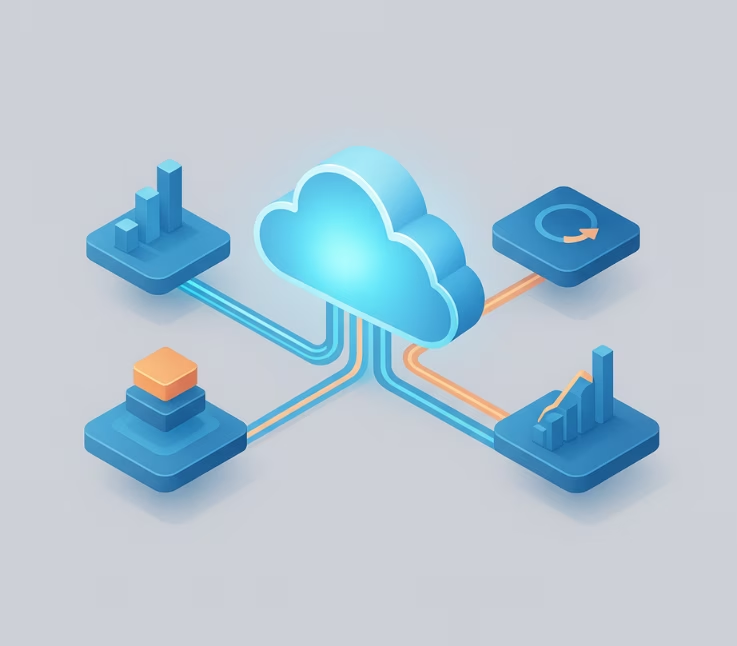

Understanding the phases of cloud migration is essential for any organization aiming to move applications, data, and infrastructure to the cloud successfully. While cloud migration unlocks scalability and efficiency, poorly structured migrations often result in disruption, cost overruns, or failed projects.
This guide delivers a unified, actionable playbook for the cloud migration process—combining industry-leading frameworks from AWS, Google Cloud, and vendor-agnostic approaches. You’ll find comparison tables and real-world context to equip your team for every stage of cloud transformation.
The phases of cloud migration are the step-by-step stages enterprises follow to plan, execute, and optimize their journey from on-premises systems to cloud platforms (IaaS, PaaS, SaaS). Structured phases—such as assessment, planning, execution, and optimization—help organizations reduce risk, control costs, and drive transformation outcomes.
In this guide, you’ll get:
- A direct answer on “What are the phases of cloud migration?”
- Full side-by-side comparisons of AWS, GCP, and generic migration phase frameworks
- Checklists and key activities for each phase
- Real-world examples and lessons learned
What Are the Main Phases of Cloud Migration?
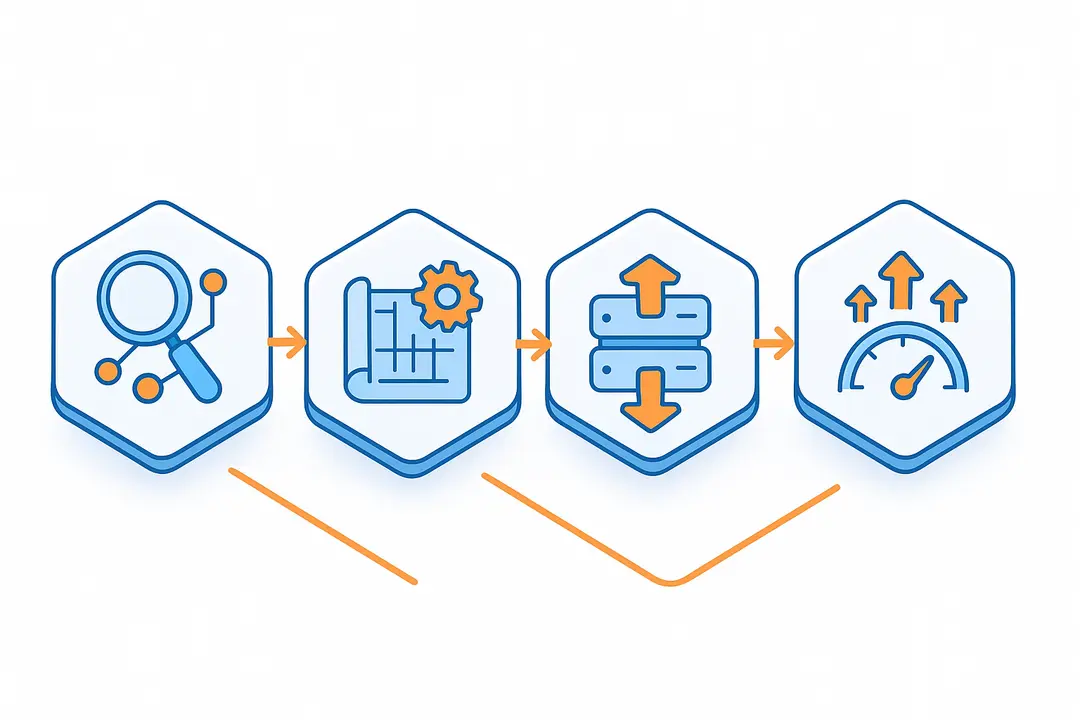
The main phases of cloud migration provide a structured approach for moving to the cloud smoothly and securely. While model names vary, most frameworks align across four key stages:
| Phase | Description |
| 1. Assessment & Preparation | Evaluate environment, readiness, set goals, and build the case |
| 2. Planning & Mobilization | Design migration strategy, assemble teams, select tools |
| 3. Migration/Execution | Move applications/data to the cloud with minimal disruption |
| 4. Optimization & Modernization | Improve, secure, and modernize workloads post-migration |
Most organizations follow this general path, with minor variations based on cloud provider and project specifics.
How Do Leading Frameworks Compare?
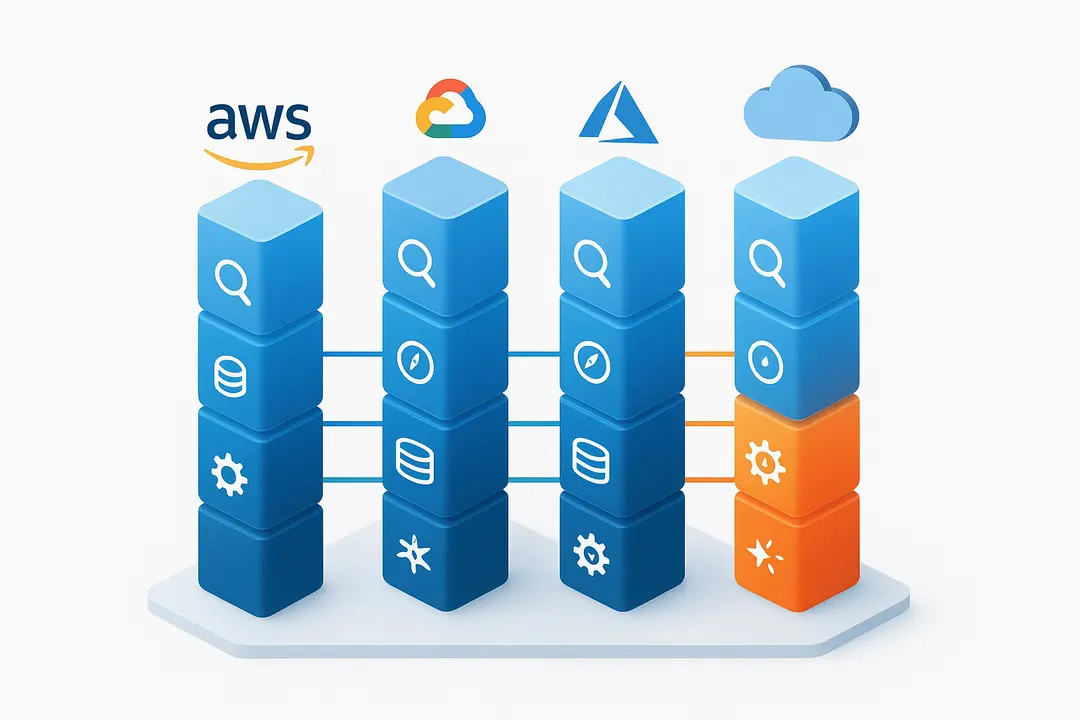
Cloud migration frameworks from AWS, Google Cloud, and independent sources differ in terminology and phase count, but they share a similar migration lifecycle. The table below maps the phases side-by-side for rapid comparison:
| Provider/Model | Phase 1 | Phase 2 | Phase 3 | Phase 4 |
| AWS | Assess | Mobilize | Migrate & Modernize | Optimize (Continuous) |
| Google Cloud | Assess/Discover | Plan | Deploy/Execute | Optimize |
| Generic/Vendor | Assessment & Preparation | Planning | Migration/Execution | Post-Migration Optimization |
| Azure | Discover & Assess | Plan & Prepare | Migrate | Optimize |
AWS focuses on readiness assessment, building foundational capability (Mobilize), then migration, and continuous optimization.
Google Cloud places emphasis on discovery and defining a plan before execution.
Generic/vendor models are broader but typically follow the same four-stage journey.
Phase 1: Assessment & Preparation – How Do You Lay the Groundwork?
A thorough assessment & preparation phase ensures your cloud migration is aligned with business goals, security, and technical readiness. Skipping this step increases risks and hidden costs later.
Key activities include:
- Defining migration scope and success criteria with stakeholders
- Inventorying infrastructure, applications, and data
- Identifying risks (compliance, security, dependencies)
- Building the technical and business case
Common deliverables: Cloud readiness assessment reports, risk registers, and a prioritized migration wave plan.
What Activities and Best Practices Define the Assessment Phase?
The assessment phase defines scope, quantifies potential benefits, and uncovers early issues. Success relies on diligent discovery:
- Infrastructure and Application Inventory
- Catalog all workloads, dependencies, licensing, and connectivity.
- TCO/ROI Evaluation
- Quantify cost savings, investment, and expected returns. Use provider tools or spreadsheets.
- Business Case Development
- Align goals with business drivers: agility, cost, innovation.
- Early Risk and Disruption Analysis
- Map out compliance, latency, legacy system challenges, and business continuity threats.
Best practices:
- Engage technical and business stakeholders from the start.
- Use cloud provider assessment tools (e.g., AWS Migration Evaluator, Azure Migrate).
- Document findings in a cloud readiness assessment and share transparently.
Phase 2: Planning & Mobilization – How Do You Create a Migration Blueprint?
In the planning & mobilization phase, you turn discovery into an executable roadmap. This phase reduces mid-project confusion and aligns all teams toward a common target.
Key activities:
- Assemble a migration/project team, clearly assigning roles and responsibilities.
- Develop migration runbooks and detailed timelines (sample: phased migration waves).
- Select migration strategies (rehost, refactor, replatform) for each workload.
- Choose providers, tools, and architecture patterns.
Typical deliverables: Project Gantt charts, team RACI matrices, tool selections, and migration wave schedules.
How Should You Align with Cloud Providers (AWS, GCP, Azure)?
- AWS:
- Tools: AWS Migration Hub, AWS Application Discovery Service
- Templates: Prescriptive Guidance playbooks
- Notes: Stresses readiness and foundational technical preparation.
- Google Cloud:
- Tools: Google Migrate for Compute Engine, Google Cloud Adoption Framework
- Templates: Discovery/assessment worksheets
- Notes: Emphasizes a discovery-driven plan and iterative execution.
- Azure:
- Tools: Azure Migrate, Application Insights
- Templates: Azure Cloud Adoption Framework
- Notes: Focuses on hybrid scenarios, pre-migration dependency mapping.
Key differences:
AWS and Azure offer comprehensive ecosystems, while Google focuses on structured cloud adoption and automated risk recommendations.
Checklist tip: Validate provider support for hybrid/multi-cloud integrations during this phase.
Phase 3: Migration/Execution – What Happens During the Move?
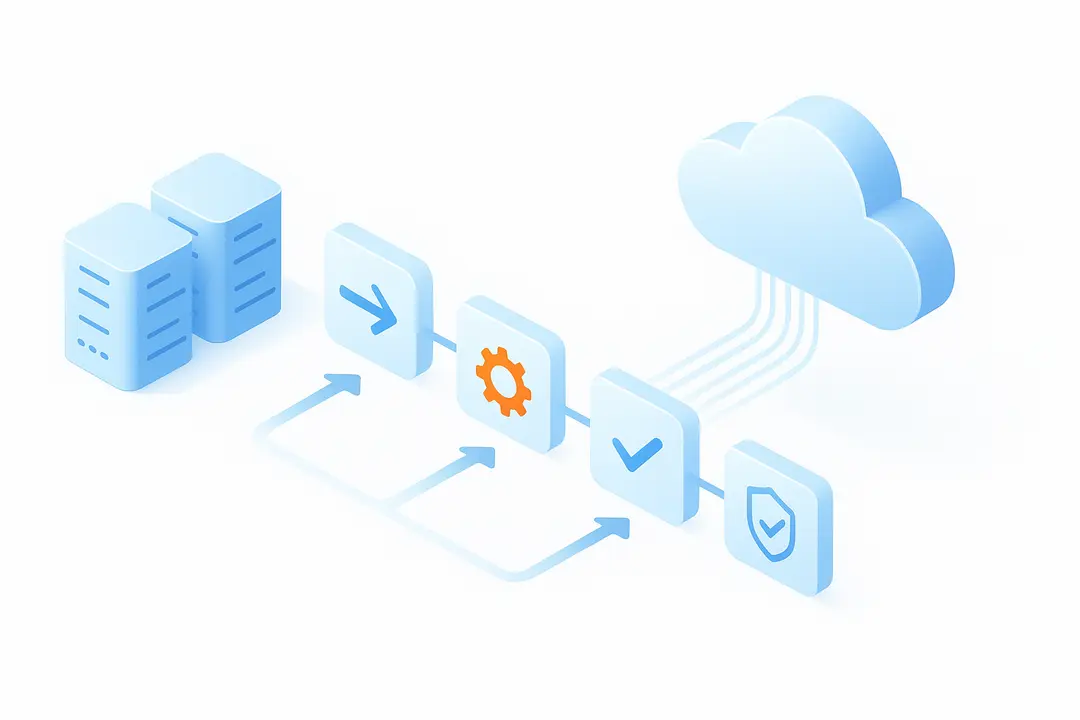
The migration or execution phase is where plans become reality. The goal: securely and efficiently move workloads to the cloud while minimizing business disruption.
Core steps:
- Migrate Data and Applications
- Choose the right migration strategy for each asset:
Rehost (lift-and-shift),
Refactor (code changes),
Replatform (minor platform changes).
- Choose the right migration strategy for each asset:
- Leverage Automation and Toolkits
- Use migration tools (provider-native or third-party) to automate repeatable steps.
- Conduct Pilots and Testing
- Run pilot migrations, validate results, and iterate before wider rollout.
- Manage Rollback and Cutover
- Prepare for quick rollback in case of failures; orchestrate final cutover carefully.
Migration success depends on strong coordination and robust monitoring.
Which Tools and Automation Options Enable a Smooth Migration?
- AWS: AWS Server Migration Service, AWS Database Migration Service
- Google Cloud: Migrate for VMs, Transfer Service, Velostrata
- Azure: Azure Migrate, Database Migration Service
Across providers:
- Use CI/CD pipelines (e.g., Jenkins, GitLab) for migration steps.
- Monitor with dashboard tools (e.g., CloudWatch, Stackdriver, Azure Monitor).
- Choose distributed SQL or replication tools for large data migrations.
Tip: Start with small pilot migrations to validate your toolchain before moving critical systems.
How Are Risks Managed and Common Issues Resolved?
Effective risk management is non-negotiable during migration.
- Downtime or Performance Degradation: Address through phased cutovers, load testing, and fallback planning.
- Configuration Drift: Automate configuration management, validate deployments post-migration.
- Data Loss or Corruption: Use robust backup and migration verification; test restores.
Proactive steps:
- Set up live monitoring for latency and errors.
- Prepare documented rollback procedures.
- Have a rapid-response support team on standby.
Example: If a pilot migration hits a compatibility issue, you can quickly revert to on-premises while troubleshooting.
Phase 4: Post-Migration Optimization & Modernization – What’s Next After the Move?
Migration doesn’t end once workloads reach the cloud. The optimization & modernization phase is where true business value is realized by improving costs, performance, and agility.
Key post-migration activities:
- Cost optimization: Rightsize resources, implement autoscaling, use reserved instances or sustained-use discounts.
- Performance and security tuning: Monitor workloads, address latency, harden security posture.
- Modernization: Transition legacy workloads to cloud-native services, refactor as needed.
- Ongoing operations automation: Integrate with cloud-based DevOps, implement automated patching and backups.
What Are the Keys to Successful Modernization in the Cloud?
Modernization is about adapting workloads and processes to realize full cloud benefits.
- Modernization strategies:
- Refactor for cloud-native architectures (e.g., microservices, serverless)
- Replatform to leverage managed services with minimal code changes
- Repurchase by adopting SaaS alternatives
- Integration with DevOps and AI: Push continuous improvement pipelines, automate deployments, and leverage analytics or AI for optimization.
- Example: A retail company migrates its e-commerce platform, then modernizes by moving to managed databases and integrating AI-driven recommendations—improving both performance and customer experience.
Best practice: Modernization is iterative; review performance and cost regularly to drive further innovation.
What Are the Biggest Challenges in Each Cloud Migration Phase?
| Phase | Common Challenges | Mitigation Strategies |
| Assessment | Incomplete inventory, unclear goals | Stakeholder engagement, standardized discovery |
| Planning & Mobilization | Underestimating effort, resource gaps | Detailed plans, skills gap analysis |
| Migration/Execution | Downtime, data loss, config drift | Testing, rollback planning, use of automation |
| Optimization | Cost overruns, missed modernization opportunities | Rightsizing, regular reviews, invest in training |
Trend: Security, cost management, and hybrid complexity are top concerns in 2025–2026. Ongoing governance and visibility are critical for sustained success.
Cloud Migration Checklist: What Should Be on Your To-Do List?
A clear migration checklist accelerates execution and ensures accountability at every phase.
Phase-wise Checklist:
| Phase | Key Tasks | Owner/Role | Sample Deliverable |
| Assessment | Inventory assets, define goals, assess risk | Architect/PM | Readiness Report, Risk Register |
| Planning | Build team, blueprint, select tools, plan waves | PM/Cloud Lead | Migration Runbook, Wave Plan |
| Migration | Execute pilots, migrate data/apps, monitor, rollback ready | Migration Factory | Cutover Plan, Test Results |
| Optimization | Optimize cost/perf, refactor, automate ops | Cloud Ops/IT | Optimization Log, Dashboard |
Real-World Examples and Lessons Learned
- Assessment Example:
A global manufacturer uncovered outdated application dependencies during inventory, averting a costly failure by extending the assessment phase. - Planning Example:
A financial services firm used detailed wave planning to prioritize critical apps, minimizing disruption and aligning resources. - Migration Execution Example:
A retailer’s pilot migration surfaced performance bottlenecks, allowing issues to be fixed ahead of full-scale cutover. - Optimization Example:
A logistics company realized 25% cost savings post-migration by aggressively rightsizing cloud resources.
Practitioner insight:
“Early engagement with business owners and iterative pilots made the transition both faster and safer for our teams.” — Enterprise Architect, Fortune 500 (2023)
Frequently Asked Questions About Cloud Migration Phases
What are the main phases of cloud migration?
The main phases are Assessment & Preparation, Planning & Mobilization, Migration/Execution, and Optimization & Modernization.
What is the purpose of each migration phase?
Each phase reduces risk and ensures project success: Assessment defines scope and readiness; Planning builds the roadmap and team; Migration executes the transition; Optimization unlocks ongoing value.
How do AWS and Google Cloud define migration phases differently?
AWS typically uses Assess, Mobilize, and Migrate & Modernize, emphasizing foundational readiness and continuous optimization. Google Cloud uses Assess, Plan, Deploy, and Optimize, focusing on discovery-driven planning and iterative execution.
How long does each phase of cloud migration typically take?
Timelines vary by organization size and complexity. Assessment and planning can take weeks to months; migration execution ranges from days for small workloads to several months for large enterprises; optimization is ongoing.
What tools or checklists help in each migration phase?
Tools include AWS Migration Hub, Azure Migrate, Google Migrate, and project management templates. Checklists cover inventory, planning, migration steps, and post-migration reviews.
What challenges can occur during the migration phase?
Common challenges include downtime, data loss, configuration drift, and underestimating dependencies. Risk mitigation, testing, and rollback plans help address these issues.
How does modernization fit into the migration lifecycle?
Modernization happens after initial migration, upgrading workloads to use cloud-native services or rearchitecting applications for improved value.
How can organizations prepare for cloud migration?
Start with a readiness assessment, engage stakeholders, inventory assets, and set clear migration goals aligned to business outcomes.
What steps should be included in post-migration optimization?
Monitor performance, manage costs, refactor workloads as needed, secure environments, and audit for compliance.
How do different cloud providers’ migration frameworks compare?
All major providers structure migration into similar phases but offer distinct tools, templates, and terminology. A unified approach leverages best practices from each framework.
Conclusion
A structured, phase-driven approach is key to a successful cloud migration—no matter your provider or project size. By following a unified framework and leveraging leading tools, checklists, and lessons learned, you can minimize risks and accelerate transformation.
Key Takeaways
- Cloud migration comprises four core phases: Assessment, Planning, Migration, and Optimization.
- Provider frameworks (AWS, GCP, Azure) share core principles but differ in tools and emphasis.
- Actionable, phase-specific checklists and tools improve migration success rates.
- Modernization and continuous optimization are essential for realizing cloud value.
- Real-world insights and structured processes help avoid costly migration pitfalls.
This page was last edited on 9 March 2026, at 3:45 pm
Contact Us Now

Contact Us Now
Start a conversation with our team to solve complex challenges and move forward with confidence.


