
Outsource web development continues to accelerate as companies face talent shortages and digital competition in 2026. Keeping a web project in-house often means higher costs, longer timelines, and resource constraints, making it difficult for businesses to stay agile and competitive. This guide delivers a step-by-step, practical framework for web development outsourcing—from picking the right engagement model to mastering costs, contracts, and quality control. By following this playbook, founders and managers can reduce risk, maximize ROI, and launch high-quality web projects with confidence—no technical expertise required.
What Is Outsource Web Development—and How Does It Work?
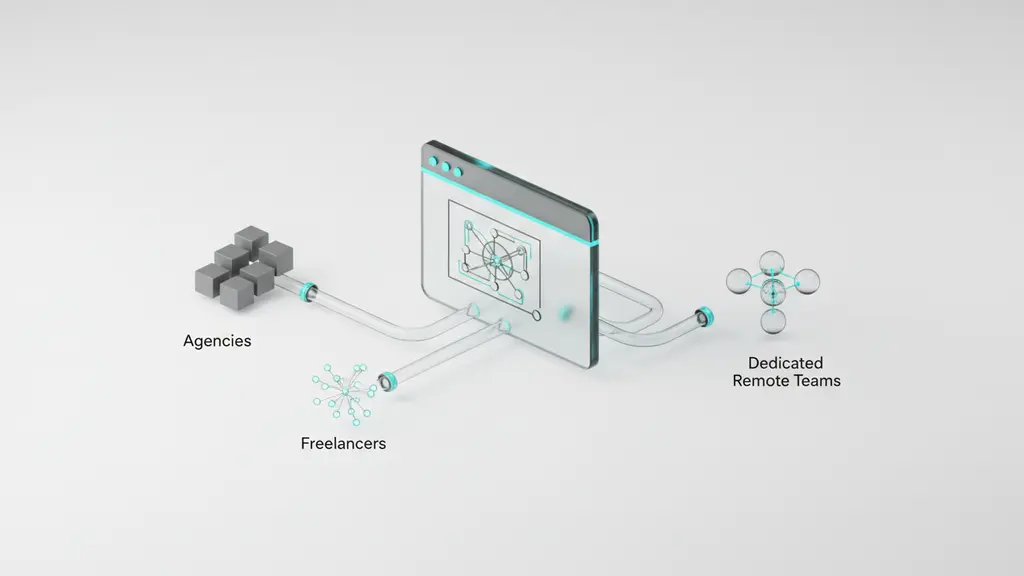
Outsource web development is the process of partnering with external specialists or firms to build, enhance, or maintain web projects instead of relying solely on internal teams.
This approach covers diverse project types—including web apps, SaaS platforms, eCommerce stores, progressive web apps (PWAs), and MVPs—and is delivered through models like agencies, freelancers, and dedicated remote teams.
Common Project Types:
- Custom web applications (customer portals, platforms)
- eCommerce sites with integrated payments and inventory
- SaaS product MVPs requiring rapid iteration
- PWAs for mobile-like web experiences
- Website redesigns and migrations
Delivery Modes:
- Agencies: End-to-end planning, design, development, and support
- Freelancers: Single-specialty experts for smaller or niche projects
- Remote/Dedicated Teams: Cohesive units acting as a business’s extended development arm
Web Development Outsourcing Workflow
- Define requirements and goals
- Choose the preferred outsourcing model
- Vet and select your provider
- Sign contracts and IP/NDA agreements
- Onboard and kick off project collaboration
- Iterate via sprints and quality reviews
- Launch, then support and evolve the product
“Outsourcing allows our startup clients to build and iterate faster, without spending months on hiring,” notes Anna H., CTO at a leading web outsourcing firm.
Why Do Businesses Outsource Web Development?
Businesses outsource web development to save costs, accelerate timelines, and access specialized talent that’s hard to recruit in-house.
Top 5 Reasons to Outsource Web Development
- Cost-Effectiveness: Reduce labor and overhead expenses; tap into global talent at more flexible rates.
- Faster Time-to-Market: Ramp up development instantly without lengthy hiring cycles.
- Access to Niche Expertise: Secure skills (e.g., React, Node.js, AI/ML, QA automation) often unavailable internally.
- Scalability & Flexibility: Expand or shrink teams per project needs, without HR complexity.
- Focus on Core Business: Free up leadership and staff from managing complex dev tasks to prioritize strategy.
According to Gartner, over 60% of digital businesses now leverage some form of IT outsourcing to increase agility and control operational costs.
What Are the Main Models of Web Development Outsourcing?
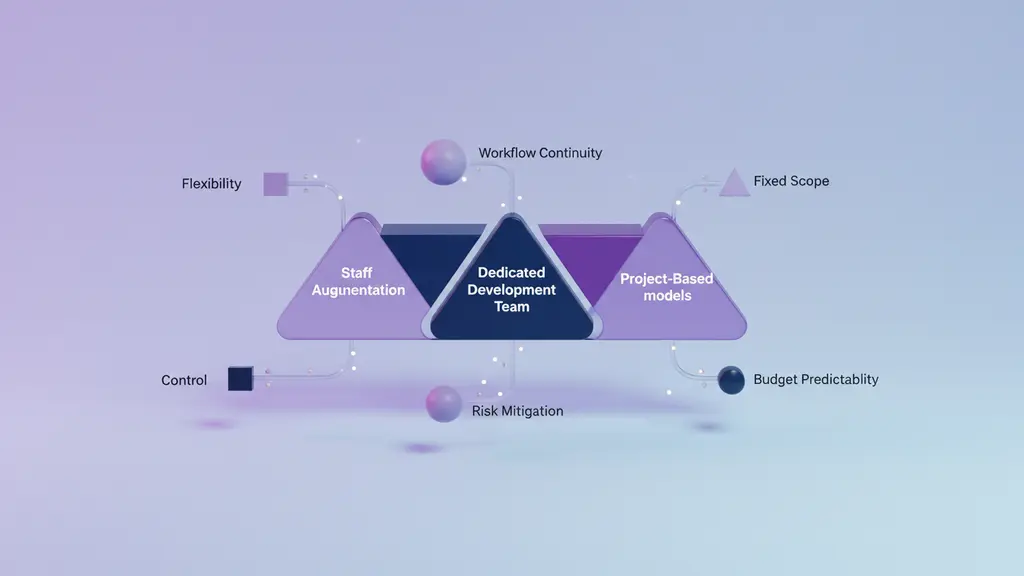
Web development outsourcing offers diverse engagement models to match varying project scopes, budgets, and leadership preferences.
Key Outsourcing Engagement Models
| Model | Overview | Ideal Use Cases | Risk/Control |
| Staff Augmentation | Add external devs/skills to in-house team | Expand capacity; fill skill gaps | High control, moderate risk |
| Dedicated Development Team | A remote team works exclusively for your project | Ongoing complex builds, scaling SaaS | Balanced control, shared risk |
| Project-Based | Vendor delivers entire project (end-to-end) | Fixed-scope, one-off web builds | Low control, vendor-managed risk |
Geographic Engagement Models
- Onshore: Same country (cultural and legal alignment; highest costs)
- Nearshore: Neighboring or nearby regions (overlap time zones, cultural proximity)
- Offshore: Distant regions (lower cost, broader talent pool; possible time zone challenges)
Example: A US-based SaaS startup might use a dedicated team model in Eastern Europe for ongoing product evolution, while outsourcing a single website redesign to a nearshore project-based agency.
Staff Augmentation vs. Dedicated Team vs. Project-Based Outsourcing
Understanding these models is crucial for choosing the best outsourcing fit for your business needs, budget, and risk profile.
Model Comparison Matrix
| Model | Definition | Pros | Cons | Best For | Budget/Control |
| Staff Augmentation | Supplement in-house with externals | Flexibility, control, knowledge retention | Onboarding overhead, reliance on in-house management | Growing teams, technical staff gaps | Moderate/High |
| Dedicated Team | External team works only for you | Deep alignment, scalability, strong expertise continuity | More vendor management needed | Ongoing products, evolving SaaS | Medium |
| Project-Based | Fixed-scope, vendor-owned delivery | Minimal management, predictable budget | Less flexibility, possible misalignment | One-time projects, clear specs | Fixed/Low |
Decision Tip: Use staff augmentation for rapid skill addition, dedicated teams for ongoing product work, and project-based for one-off launches.
How Much Does It Cost to Outsource Web Development?
Outsourcing costs vary by engagement model, region, project complexity, and technology stack—but transparency is vital for accurate budgeting.
Typical Price Drivers:
- Project type and feature scope (e.g., eCommerce vs. landing page)
- Complexity (custom integrations, third-party APIs, device support)
- Team composition (designer, frontend, backend, QA, PM)
- Chosen model (staff augmentation, dedicated team, project-based)
- Vendor region (Asia, Eastern Europe, Latin America, US/UK)
Web Development Outsourcing: Regional Pricing Table
| Region | Hourly Rate (USD) | Typical Project Ranges (USD) |
| Asia (e.g., India, Vietnam) | $25–$50 | $15,000–$50,000+ |
| Eastern Europe (e.g., Poland, Ukraine) | $40–$75 | $25,000–$100,000+ |
| Latin America | $35–$70 | $20,000–$90,000+ |
| US / UK / Canada | $80–$200+ | $60,000–$250,000+ |
Estimates reflect recent industry benchmarks for projects such as SaaS MVPs, eCommerce sites, and B2B platforms.
Model-Based Outsourcing Pricing
- Staff Augmentation: Pay per developer hour/month ($3,500–$10,000+ per developer/month)
- Dedicated Team: Monthly retainer based on team size and seniority
- Project-Based: Fixed price, typically tied to deliverables and timeline
Cost-Saving Tips:
- Start with detailed requirements for more accurate quotes
- Use nearshore or offshore models for routine development
- Build MVPs to validate ideas before full-scale investment
Step-by-Step: How to Successfully Outsource Web Development
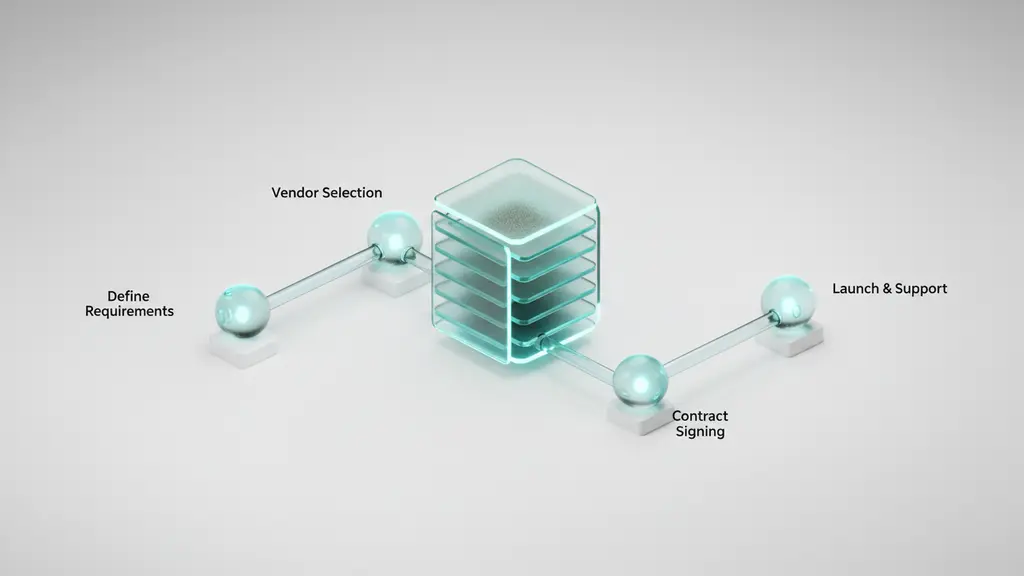
Following a defined process reduces risk and sets projects up for success. Below is a proven eight-step playbook:
1. Define Requirements and Business Goals
Describe your product vision, functional needs, tech stack preferences, and KPIs. Prioritize must-haves versus nice-to-haves.
2. Select the Right Outsourcing Model
Evaluate staff augmentation, dedicated team, or project-based approaches based on timeline, complexity, and internal capacity.
3. Vendor Research, Vetting, and Due Diligence
Assess portfolios, team qualifications, technology fit, and client reviews (platforms like Clutch and LinkedIn help).
4. Draft and Sign Contracts/NDAs/IP Clauses
Engage legal review for clear agreements, NDAs, and explicit intellectual property rights.
5. Onboarding, Project Kickoff, and Management Tools
Introduce teams, agree on sprint cycles, set up collaboration (Slack, Jira, GitHub), and align project management protocols.
6. Communication Best Practices
Schedule routines for stand-ups, sprint reviews, and instant messaging to maintain transparency.
7. Quality Assurance and Testing
Implement continuous integration/deployment (CI/CD), code reviews, and regular QA/testing cycles.
8. Post-Launch Support and Aftercare
Plan for bug fixes, feature updates, and performance monitoring post-launch.
“Well-structured onboarding and communication plans directly reduce misunderstandings and project delays.” — David L., Senior Project Manager
How Do You Choose the Right Web Development Outsourcing Partner?
Selecting the right outsourcing provider can make or break a project’s success.
Key Vendor Selection Criteria
- Proven track record: Evaluate portfolios, case studies, and references
- Technical expertise: Match vendor skills to project requirements
- Quality standards: Ask for certifications (ISO 27001, QA processes)
- Transparent communication: Gauge responsiveness and English proficiency
- Security and compliance: Ensure they address data protection and IP
Red Flags and Vetting Checklist
Red Flags to Watch:
- Overpromising delivery times or budgets
- Vague or unverifiable portfolios
- Poor communication or lack of transparency
- Limited aftercare or support commitment
Vetting Checklist:
- Interview team leads, developers, and QA
- Review sample code or pilot project
- Ask for client testimonials and third-party reviews (Clutch, GoodFirms)
- Verify legal compliance and data handling policies
Where to Find Top Providers:
- Clutch.co
- LinkedIn recommendations
- B2B tech networks and referrals
“Transparency and technical interviews are non-negotiable—don’t skip due diligence,” advises Sophia V., Head of Product at a SaaS company.
What Legal, Security, and IP Risks Should You Watch Out For?
Outsourcing web development introduces legal, security, and intellectual property (IP) risks that must be proactively managed for project safety and success.
Legal & Contractual Must-Haves
- Clear ownership and IP rights: Contracts must specify client ownership of code and deliverables
- NDAs (Non-Disclosure Agreements): Protect confidential information from public or competitor exposure
- Warranties and service-level agreements: Commit vendor to quality and support standards
Data Privacy & Compliance
- GDPR Compliance: Especially critical for projects handling EU user data
- ISO 27001 Certification: Signals vendor commitment to information security
- Data handling protocols: Clarify storage, access, and backup processes
Security & Quality Practices
- Regular code/security audits
- Role-based access control for all systems
- Secure code repositories (e.g., private GitHub/Bitbucket)
- Dedicated QA and DevOps for release integrity
“Working with data-sensitive projects? Insist on GDPR-compliant processes and choose ISO-certified vendors.” — Maria K., Outsourcing Legal Consultant
Best Practices for Managing Outsourced Development Projects
Effective management of outsourced web development projects relies on clear goals, good communication, and well-defined processes.
Management Success Checklist
- Set clear milestones and KPIs: Establish measurable goals and review them at each sprint or milestone
- Invest in communication: Use Slack, Teams, or similar tools for daily syncs and status updates
- Embrace agile or sprint-based workflows: Short iterations allow for feedback and quick course correction
- Bridge time zones proactively: Overlap work hours and clarify expectations for response times
- Formalize issue escalation: Create a process for logging, tracking, and resolving problems
Regular demos and progress reports help keep everyone accountable—and highlight issues early, before they become costly.
Case Studies: Success Stories & Lessons from Outsourced Projects
Exploring real-world examples highlights both the benefits and challenges of web development outsourcing.
Case Study 1: Scaling an eCommerce Platform
Challenge: A mid-sized US retailer lacked the internal bandwidth to build a mobile-friendly eCommerce platform by Black Friday.
Solution: They partnered with an Eastern European dedicated development team, launching the site in just 10 weeks. The result was a 25% boost in holiday revenue.
Success Factors:
- Clear requirements
- Weekly progress demos
- Post-launch support for peak traffic
Case Study 2: SaaS MVP with Staff Augmentation
Challenge: A SaaS startup needed specific AI/ML talent quickly.
Solution: They used staff augmentation to embed two senior AI engineers from a vetted offshore provider. The team delivered an MVP in three months, staying within budget.
Lesson: Proactive daily stand-ups bridged the communication gap and ensured product vision alignment.
“We chose to augment our team for speed. Transparent reporting and shared planning made the difference.” — Client Testimonial (anonymized)
Lessons from Failure
A fintech firm attempted a fixed-price, offshore project but skipped due diligence. Misaligned expectations led to delays and rewrites.
Takeaway: Always invest time in selection and milestone-driven contracts.
Frequently Asked Questions (FAQ) About Outsourcing Web Development
1. What is web development outsourcing?
Web development outsourcing means hiring external professionals or firms to design, build, or maintain web-based projects instead of relying solely on internal staff.
2. How much does it cost to outsource web development?
Costs depend on region, complexity, and engagement model. Projects may range from $15,000 (Asia) to over $100,000 (Western Europe/US) for complex builds.
3. What are the benefits of outsourcing web development?
Key benefits are faster delivery, reduced costs, access to expert skills, scalability, and allowing in-house teams to focus on core business.
4. What are the risks of outsourcing and how can I mitigate them?
Common risks include poor quality, communication issues, and IP leaks. Mitigate by using clear contracts, NDAs, quality checkpoints, and choosing reputable providers.
5. Which outsourcing model is best for my project?
Staff augmentation is flexible for skill gaps, dedicated teams work well for ongoing products, and project-based models suit one-off, well-defined builds.
6. How do I choose a reliable web development partner?
Shortlist vendors with proven portfolios, relevant experience, strong references, certifications, and transparent communication style.
7. What should be included in a web development outsourcing contract?
Key elements are IP ownership, NDA clauses, delivery timelines, quality standards, warranties, and a clear support/maintenance plan.
8. How do I ensure quality and security in outsourced projects?
Prioritize vendors with ISO certifications, run regular QA/testing, and define processes for code review, deployment, and security audits.
9. What’s the difference between onshore, nearshore, and offshore outsourcing?
Onshore means same country; nearshore is nearby, similar time zones; offshore is distant countries—often cheaper but with more timezone/cultural challenges.
10. How do I manage communication with outsourced teams?
Adopt daily or weekly check-ins, use tools like Slack or Jira, set clear expectations, and regularly review progress via demos or reports.
- Evaluate your needs using our outsourcing model selector checklist (or request a personalized quote).
- Connect with top-rated, pre-vetted providers—start your web development project risk-free.
- Read our in-depth provider comparison guides for more region-specific insights.
Conclusion
Outsourcing web development is a strategic way to reduce costs, access global talent, and accelerate product launches. By choosing the right engagement model, setting clear goals, and partnering with a reliable provider, businesses can minimize risk and maximize ROI.
With proper planning, strong contracts, and proactive communication, outsourcing becomes more than a cost-saving move—it becomes a powerful driver of growth and innovation.
Key Takeaways
- Outsource web development to save costs, access skills, and accelerate product launches.
- Choose the right engagement model—staff augmentation, dedicated team, or project-based—to match goals.
- Regional pricing and expertise vary; research vendors thoroughly and prioritize fit and transparency.
- Legal protection, security, and quality assurance are crucial—never skip contracts or due diligence.
- Strong communication, agile methods, and proactive project management drive outsourcing success.
This page was last edited on 24 February 2026, at 12:52 pm
Contact Us Now

Contact Us Now
Start a conversation with our team to solve complex challenges and move forward with confidence.


