- What is a Multi-Agent System (MAS)?
- Differences between Single-Agent and Multi-Agent Systems
- Components of a Multi-Agent System (MAS)
- Benefits of Using Multi-Agent Systems (MAS)
- Challenges in MAS Adoption
- Real-world Examples and Use Cases
- Best Practices for MAS Implementation
- Future Directions in Multi-Agent AI
In an increasingly complex world, the need for systems that can tackle large-scale, dynamic challenges is more important than ever. Multi-Agent Systems (MAS) are at the forefront of this evolution, offering a powerful solution to problems that require decentralized decision-making, collaboration, and adaptability. Whether it’s managing autonomous vehicles navigating through busy cities, coordinating robots for search-and-rescue missions, or optimizing energy usage in smart grids, MAS are making a significant impact across industries.
What sets MAS apart is its ability to bring together multiple autonomous entities, each with its own capabilities, to solve tasks that would be too complex for any single agent to handle. This collaboration between agents leads to a more efficient, resilient, and flexible system. As technology advances, MAS are evolving alongside developments in AI, edge computing, and robotics, opening up new possibilities for intelligent systems that can scale, adapt, and function in real time.
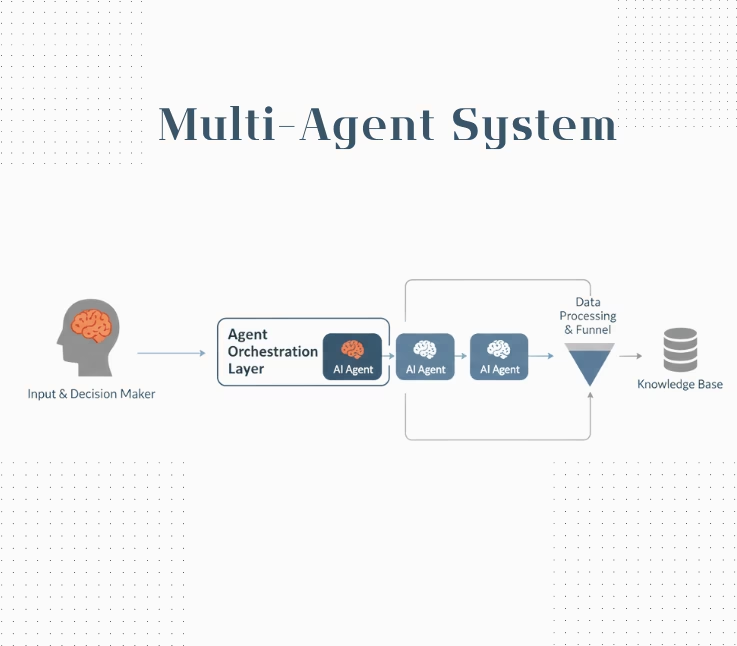
What is a Multi-Agent System (MAS)?
A multi-agent system (MAS) refers to a computational system made up of multiple autonomous agents that interact with each other and their environment in a shared space. Each agent within the system has its own goals, capabilities, and knowledge. These agents can either work together to achieve a common objective or pursue individual goals, leading to a variety of coordination strategies.
- Agent: An agent is a self-contained entity that can perceive its environment, make decisions, and act upon it autonomously. Agents can be software programs, robots, sensors, or even humans interacting with the system.
- Environment: The shared space in which these agents operate and interact, which can be virtual (digital) or physical (real-world). The environment can affect agent decisions and vice versa.
- Autonomy and Interaction: Agents in a MAS operate based on their own reasoning and perception of the environment, but often need to interact with other agents, either to cooperate or compete. This collaboration or competition can lead to complex system behaviors.
The interaction between agents enables MAS to solve problems that might be too complex for any single agent to handle, offering scalable and flexible solutions for diverse tasks.
Differences between Single-Agent and Multi-Agent Systems
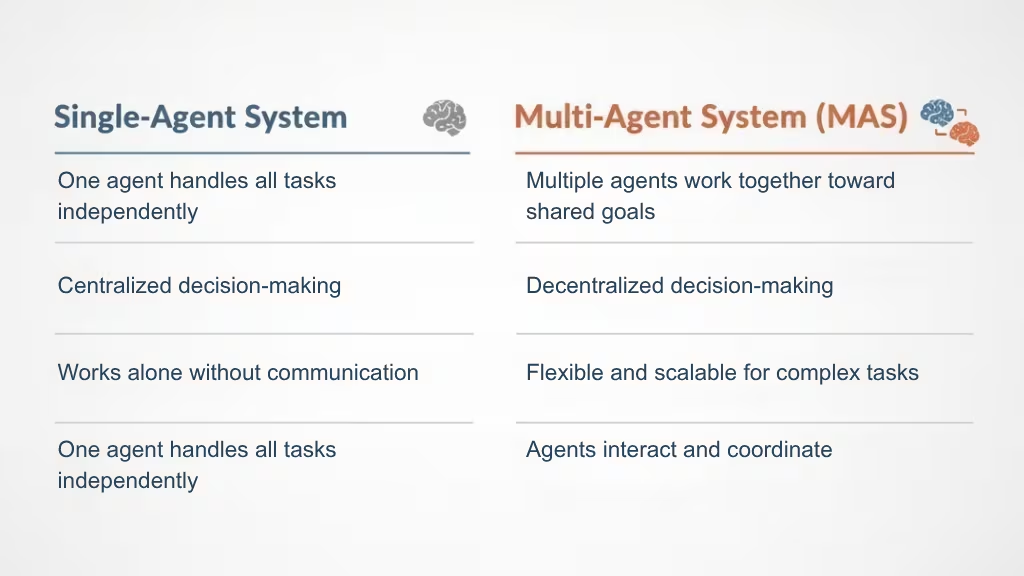
The primary distinction between single-agent systems and multi-agent systems (MAS) lies in the number of decision-making entities and how they interact within the system.
Single-Agent Systems
- Definition: In a single-agent system, one autonomous agent performs all tasks and makes decisions independently based on its perception of the environment.
- Characteristics:
- Centralized decision-making: The agent operates as an isolated entity, taking actions in response to environmental stimuli.
- Simplicity: Often suitable for tasks that can be managed by a single agent, such as data analysis or simple automation.
- Limited scalability: Since all tasks are handled by a single agent, scaling the system often requires adding more agents manually.
- Centralized decision-making: The agent operates as an isolated entity, taking actions in response to environmental stimuli.
Multi-Agent Systems (MAS)
- Definition: A multi-agent system consists of multiple autonomous agents, each of which may have different objectives or capabilities. These agents interact with each other and the shared environment to achieve complex, often decentralized, goals.
- Characteristics:
- Decentralized decision-making: No single agent has control over the entire system; each agent contributes to the overall task.
- Interaction and coordination: Agents communicate and coordinate with each other to solve problems that cannot be easily handled by one agent alone.
- Scalability and flexibility: MAS can scale effectively, with the addition of more agents to improve performance or handle more complex scenarios.
- Decentralized decision-making: No single agent has control over the entire system; each agent contributes to the overall task.
In essence, while a single-agent system focuses on one autonomous decision-maker, a multi-agent system leverages the strengths of multiple agents collaborating, competing, or coordinating to achieve larger and more dynamic goals.
Components of a Multi-Agent System (MAS)
A Multi-Agent System (MAS) is built on several key components that allow the agents to function autonomously, interact with each other, and achieve complex objectives. These components work together to ensure that the system operates cohesively and efficiently.
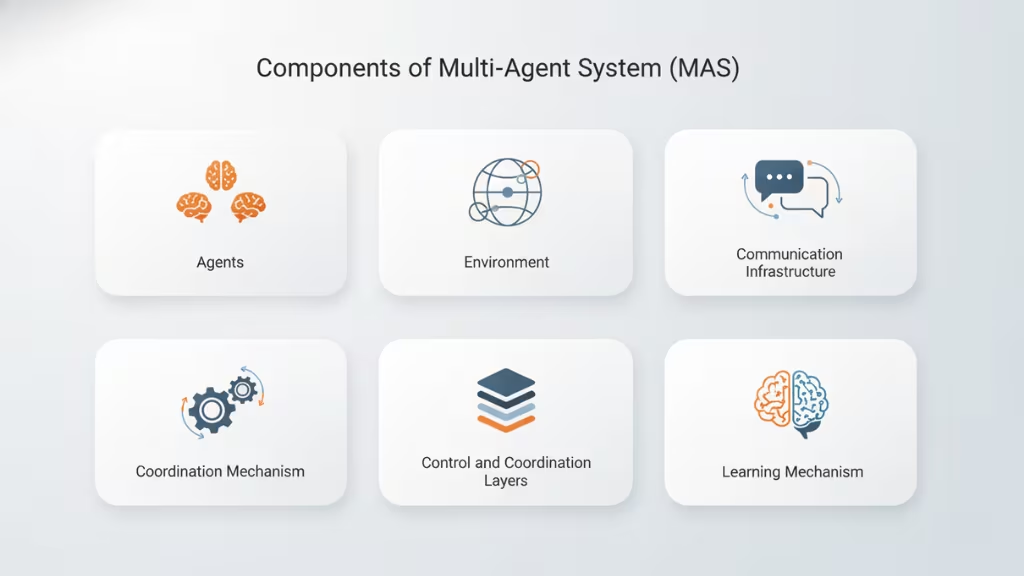
1. Agents
- Definition: The core building blocks of an MAS. Each agent is an independent entity with its own goals, knowledge, and decision-making abilities.
- Characteristics:
- Autonomy: Agents can make decisions based on their own perceptions without direct human intervention.
- Communication: Agents can exchange information with other agents within the system.
- Learning: Some agents can learn from their environment and adapt their behavior based on past experiences.
- Autonomy: Agents can make decisions based on their own perceptions without direct human intervention.
2. Environment
- Definition: The shared space where agents operate. It includes both the physical or virtual space and any elements or objects that the agents can perceive and act upon.
- Characteristics:
- Dynamic: The environment can change based on the actions of agents and external factors.
- Observability: Agents perceive the environment through sensors, which may be partial or complete.
- Dynamic: The environment can change based on the actions of agents and external factors.
3. Communication Infrastructure
- Definition: The communication channels and protocols that enable agents to interact with each other.
- Characteristics:
- Direct Communication: Agents can send messages or signals to one another.
- Indirect Communication: Agents may communicate through shared resources or environments (e.g., a public memory or a collaborative task list).
- Direct Communication: Agents can send messages or signals to one another.
4. Coordination Mechanism
- Definition: The strategies or protocols used to manage how agents work together. Coordination mechanisms help agents to collaborate and share resources effectively.
- Characteristics:
- Task Allocation: Mechanisms for assigning tasks to agents based on their capabilities.
- Conflict Resolution: Systems to resolve competition between agents when they pursue conflicting goals.
- Task Allocation: Mechanisms for assigning tasks to agents based on their capabilities.
5. Control and Coordination Layers
- Definition: Layers responsible for overseeing the behavior of individual agents and ensuring proper coordination.
- Characteristics:
- Global Coordination: Ensures that the system works toward a unified goal, even if agents are pursuing different individual objectives.
- Local Control: Each agent operates based on its own decision-making process and local perceptions.
- Global Coordination: Ensures that the system works toward a unified goal, even if agents are pursuing different individual objectives.
6. Learning Mechanism
- Definition: Some MAS incorporate learning agents that can adapt over time.
- Characteristics:
- Reinforcement Learning: Agents adjust their behavior based on rewards or penalties from their interactions within the environment.
- Collaborative Learning: Agents may share learning experiences or strategies to improve the collective system.
- Reinforcement Learning: Agents adjust their behavior based on rewards or penalties from their interactions within the environment.
With these components working together, a Multi-Agent System can achieve complex goals that require cooperation, competition, or even negotiation between agents.
Benefits of Using Multi-Agent Systems (MAS)
Multi-Agent Systems (MAS) offer a wide range of advantages that make them highly effective in solving complex problems, especially in dynamic or distributed environments. Here are the key benefits of using MAS:
1. Scalability
- Efficient Handling of Large-Scale Problems: MAS are inherently scalable, meaning that as the complexity of the task or system grows, more agents can be added to distribute the workload effectively. This ability to scale makes MAS ideal for handling large datasets, complex simulations, and expansive systems like supply chains or large-scale robotics operations.
- Adaptability: New agents can be introduced to handle emerging tasks or new requirements without significantly disrupting the system’s operations.
2. Flexibility
- Distributed Problem-Solving: MAS allows for flexible problem-solving where agents can be customized to focus on specific tasks or goals. Each agent can specialize, making it easier to address different aspects of a problem simultaneously.
- Autonomy of Agents: Since each agent operates autonomously, the system can adapt to new challenges without requiring constant human intervention. Agents can adjust to changes in their environment and adapt their strategies in real-time.
3. Robustness
- Fault Tolerance: In a multi-agent environment, the failure of one agent doesn’t necessarily cause the entire system to collapse. Other agents can continue functioning and adapt to the failure, which enhances system reliability.
- Distributed Risk: The decentralized nature of MAS ensures that the risk is distributed across agents. If one agent encounters an issue, other agents can often mitigate the impact, ensuring the continuity of the system.
4. Parallelism
- Simultaneous Task Execution: MAS enable multiple agents to work on tasks simultaneously, allowing for parallel processing of large and complex problems. This increases efficiency by reducing the overall time needed to complete tasks.
- Speed and Efficiency: Parallel task execution is particularly beneficial in real-time applications, such as autonomous vehicles or multi-robot systems, where fast decision-making and execution are critical.
5. Improved Decision-Making
- Decentralized Control: The decentralized decision-making process in MAS ensures that decisions are made closer to the problem, based on local knowledge and conditions. This reduces bottlenecks that may arise in a centralized system and enables faster, more informed decisions.
- Emergent Behavior: MAS can exhibit emergent behavior, where the interactions of agents lead to unexpected yet desirable outcomes. This can often result in more innovative solutions to problems than would be achievable by a single agent or a centralized system.
6. Cost-Effectiveness
- Resource Optimization: MAS are often more cost-effective than centralized systems because they make use of local resources and capabilities, avoiding the need for expensive centralized infrastructure.
- Task Division: By distributing tasks across multiple agents, organizations can utilize resources more efficiently, cutting down on operational costs.
These benefits highlight why MAS are becoming increasingly popular in various industries, from robotics and autonomous systems to supply chain management and complex simulations.
Challenges in MAS Adoption
While Multi-Agent Systems (MAS) offer numerous benefits, there are several challenges that organizations must consider when adopting and implementing these systems. Addressing these challenges is crucial to ensuring the successful deployment and operation of MAS.
1. Complexity of Design and Implementation
- Coordinating Multiple Agents: Designing and managing the interactions between multiple autonomous agents is inherently complex. Coordinating their activities, ensuring they don’t conflict, and synchronizing their actions to achieve a common goal can be difficult.
- System Architecture: Developing a robust architecture that allows agents to communicate and coordinate effectively requires careful planning. In many cases, MAS must support diverse agent types, communication protocols, and coordination strategies, which can increase design complexity.
2. Inter-Agent Communication and Coordination
- Communication Overhead: In MAS, agents need to exchange information to cooperate effectively. This requires robust communication protocols, which may introduce overhead and affect system performance. Additionally, agents must be able to interpret and act on shared information accurately.
- Synchronization Issues: Ensuring that all agents are properly synchronized in real-time can be challenging, especially in dynamic or unpredictable environments. Miscommunication or delays in information exchange between agents can result in inefficient operations or failure to achieve goals.
3. Scalability Issues
- Handling Growth: While MAS are inherently scalable, managing a large number of agents, especially in a system where agents are distributed geographically or operate in real-time, can become difficult. The complexity of managing these agents and ensuring they all operate efficiently can escalate as the system scales.
- Resource Management: As the number of agents increases, the system must efficiently allocate resources (such as computing power, memory, and bandwidth). Ensuring that resources are shared and used effectively across all agents is a significant challenge.
4. Lack of Standardization
- Interoperability Between Systems: MAS may involve agents from different platforms, technologies, or vendors. Without established standards for agent communication, coordination, and task execution, ensuring seamless interoperability between agents and systems can be difficult.
- Fragmentation of Tools: There is no universal toolkit for building MAS, and many proprietary solutions may limit integration with other systems or restrict flexibility. This lack of standardization can lead to difficulties in creating a cohesive MAS ecosystem.
5. Security and Privacy Concerns
- Vulnerability to Attacks: MAS involves multiple interacting agents, which may open new avenues for cyberattacks or system vulnerabilities. Malicious agents or faulty communication between agents can compromise the integrity of the system.
- Data Privacy: In systems where agents handle sensitive data, there is a risk that personal or confidential information may be exposed through insecure communication channels. Ensuring data privacy and security across all agents is critical for compliance and user trust.
6. Emergent Behavior and Unpredictability
- Unforeseen Outcomes: MAS can exhibit emergent behavior, where the collective actions of agents lead to results that were not explicitly programmed or anticipated. While emergent behavior can sometimes be beneficial, it can also lead to unpredictable or undesirable outcomes.
- Difficult to Model and Control: The decentralized nature of MAS means that controlling and predicting the exact behavior of the system can be challenging. Ensuring the system behaves in a controlled and predictable manner may require ongoing monitoring and adjustments.
Despite these challenges, many organizations are successfully adopting MAS by addressing these issues through careful design, robust protocols, and continuous monitoring. With the right approach, the benefits of MAS far outweigh the complexities.
Real-world Examples and Use Cases
Multi-Agent Systems (MAS) are being widely adopted across various industries due to their ability to handle complex, dynamic, and distributed problems. Below are some notable real-world examples and use cases of MAS in different domains:
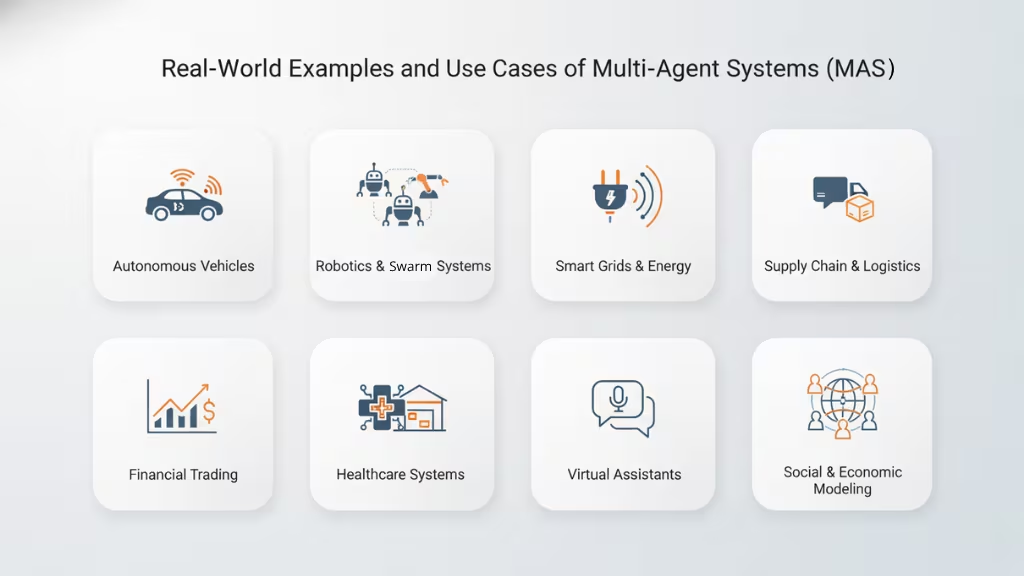
1. Autonomous Vehicles
- Example: Autonomous cars use MAS to interact with other vehicles, pedestrians, and traffic signals in real-time. Each vehicle in the system is an agent with its own sensors and decision-making algorithms. The vehicles coordinate with each other to avoid accidents, optimize routes, and follow traffic rules.
- Use Case: In a fleet of self-driving cars, the agents communicate with each other to ensure that traffic flows smoothly, prevent collisions, and improve road safety through coordinated actions, such as merging lanes or adjusting speeds.
2. Robotics and Swarm Robotics
- Example: In swarm robotics, groups of simple robots work together to perform tasks like search-and-rescue, environmental monitoring, or warehouse automation. Each robot is an autonomous agent, and they interact with each other to collectively achieve a goal.
- Use Case: In disaster recovery operations, a swarm of robots could be deployed to search through debris, coordinate their movements, and deliver information back to a central command. This collaboration ensures faster and more efficient coverage of the affected area.
3. Smart Grids and Energy Distribution
- Example: A smart grid uses MAS to manage the distribution of electricity across a network of devices and sensors. Each agent represents a smart meter or energy device that collects and exchanges information on energy usage, enabling optimal energy distribution and demand forecasting.
- Use Case: In a smart grid, MAS allows for real-time monitoring and adjustment of energy distribution, ensuring that supply and demand are balanced. Agents communicate to prevent overloads, reroute power in case of outages, and promote energy efficiency across the system.
4. Supply Chain and Logistics Management
- Example: MAS is used to optimize logistics and supply chain operations by allowing agents to autonomously manage inventory, track shipments, and allocate resources based on demand forecasts. Each agent represents a node in the supply chain, such as suppliers, warehouses, or delivery vehicles.
- Use Case: In a large retail supply chain, agents can track products from warehouse to store shelves, dynamically adjusting orders and shipments based on real-time sales data and inventory levels. This reduces delays and ensures that stores have the right products at the right time.
5. Financial Trading and Market Systems
- Example: In algorithmic trading, MAS can be used to make decisions in the stock market. Each agent represents a trading entity (such as a hedge fund, market maker, or individual trader) that autonomously buys or sells assets based on market conditions and other agents’ actions.
- Use Case: In high-frequency trading, agents can react to market changes in milliseconds, executing trades based on predefined strategies and real-time data. This allows firms to capitalize on market opportunities that may not be visible to human traders.
6. Healthcare Systems
- Example: MAS can be used in healthcare for personalized treatment planning, patient monitoring, and resource allocation. Agents in this system may represent doctors, nurses, patients, or medical devices, each playing a role in the delivery of healthcare services.
- Use Case: In a hospital, agents could be responsible for patient scheduling, treatment allocation, and even monitoring patient vital signs. The system dynamically adjusts based on patient needs, available medical staff, and emergency conditions, ensuring efficient resource use and improved patient outcomes.
7. Virtual Assistants and Chatbots
- Example: MAS can be implemented in customer service environments where multiple agents (chatbots or virtual assistants) interact to resolve customer inquiries. Each agent may specialize in different aspects of a customer’s request, such as product information, billing issues, or troubleshooting.
- Use Case: In a large online retail platform, different agents might handle inquiries about product availability, process returns, or provide recommendations. By working together, the agents ensure a seamless customer experience across various touchpoints.
8. Social and Economic Modeling
- Example: MAS is widely used in simulations of social, economic, and environmental systems, where agents represent individuals, organizations, or entities in the system. These agents interact based on certain rules or behaviors to simulate the effects of policies, market trends, or environmental changes.
- Use Case: In urban planning, MAS can simulate the interactions of citizens, traffic, businesses, and government policies to predict outcomes like traffic congestion, air pollution, or the impact of new public policies.
These examples demonstrate how MAS can solve a broad array of problems by distributing tasks, enhancing coordination, and enabling decentralized decision-making. As industries become more complex and interconnected, MAS will continue to play a vital role in driving innovation and efficiency.
Best Practices for MAS Implementation
Implementing a Multi-Agent System (MAS) successfully requires careful planning, strategic design, and a focus on ensuring that the system operates efficiently and meets the desired goals. Here are some best practices for MAS implementation:
1. Clearly Define Agent Roles and Responsibilities
- Task Specialization: Each agent in the system should have a clear and specialized role. By dividing tasks according to the capabilities of different agents, MAS can operate more efficiently and effectively. For example, in a supply chain, one agent could handle inventory management, while another manages delivery schedules.
- Clear Objectives: Agents should have well-defined goals that align with both their individual capabilities and the system’s overall objectives. This helps ensure that their actions contribute to the system’s success without unnecessary conflicts.
2. Use Robust Communication Protocols
- Efficient Communication: Effective communication between agents is key to the success of MAS. Adopt standardized communication protocols (e.g., FIPA, KQML) that allow agents to exchange information seamlessly. This ensures that all agents are up-to-date with the latest information.
- Handling Delays and Faults: In dynamic environments, agents may experience delays or faults. Implement fallback mechanisms, such as timeouts or retries, to handle communication breakdowns without disrupting the entire system.
3. Design for Scalability
- Modular Architecture: Design the MAS with scalability in mind. As new tasks arise or the system grows, more agents should be able to join the system without major modifications. Use modular components so agents can be added, removed, or upgraded as needed.
- Resource Management: Consider how resources such as computational power, memory, and bandwidth will be allocated across agents. Implement resource management strategies to prevent bottlenecks and ensure that resources are used effectively.
4. Ensure Robust Coordination Mechanisms
- Cooperative Algorithms: Develop coordination algorithms to handle task distribution, decision-making, and resource allocation. These algorithms ensure that agents can work together smoothly, whether they are collaborating on a shared task or resolving conflicts.
- Conflict Resolution: Design mechanisms to resolve conflicts when agents have competing goals or need to share resources. Solutions such as auctions, voting systems, or consensus protocols can help manage conflicts efficiently.
5. Implement Continuous Monitoring and Evaluation
- Real-time Monitoring: Continuously monitor the performance of individual agents and the entire system. This helps identify potential issues early on, such as communication failures, agent malfunctions, or inefficiencies in task execution.
- Performance Metrics: Define and track key performance indicators (KPIs) to measure the system’s success. These could include metrics like response times, task completion rates, or resource utilization. Regularly evaluate the performance of agents and the overall system.
6. Focus on Security and Privacy
- Secure Communication: Implement encryption and other security measures to protect communication between agents and between agents and external systems. This prevents unauthorized access and ensures data integrity.
- Data Privacy: In systems that handle sensitive data, ensure that agents follow data privacy regulations. Use anonymization techniques, access control, and secure data storage to protect user information.
7. Test and Simulate the System
- Simulation: Before deploying a MAS in a live environment, simulate various scenarios to test how agents interact with each other and respond to changes in the environment. This helps identify potential flaws or inefficiencies in the system design.
- Iterative Testing: Continuously test and refine the system. As new agents or capabilities are added, conduct tests to ensure that the system as a whole remains stable and performs optimally.
8. Foster Agent Learning and Adaptability
- Learning Capabilities: If applicable, allow agents to learn from experience, adapt their behavior, and improve over time. For instance, reinforcement learning can be employed to help agents optimize their actions based on rewards and penalties.
- Adapt to Changes: Ensure that the MAS is capable of adapting to environmental changes, such as fluctuating market conditions or unexpected disruptions. Agents should be able to adjust their strategies accordingly to maintain system stability.
By following these best practices, organizations can maximize the potential of MAS and ensure that the system operates effectively, remains adaptable to change, and delivers the desired outcomes.
Future Directions in Multi-Agent AI
As technology continues to evolve, so too does the potential for Multi-Agent Systems (MAS). The future of MAS in AI is promising, with advancements in several areas paving the way for more intelligent, scalable, and adaptive systems. Here are some key future directions for MAS:
1. Integration with Edge Computing
- Edge-AI Synergy: As edge computing becomes more prevalent, there will be increased opportunities to deploy MAS at the edge of networks. This will enable agents to process data locally on devices (e.g., IoT devices, autonomous vehicles) and make real-time decisions without relying on cloud servers.
- Decentralized Intelligence: By integrating MAS with edge computing, more intelligent and responsive systems can be created. Edge-based MAS will reduce latency and improve the reliability of mission-critical systems, such as industrial automation, autonomous driving, and smart cities.
2. Advancements in Autonomous Decision-Making
- Increased Autonomy: Future MAS will see even more advanced decision-making capabilities, with agents able to autonomously adjust their strategies in highly dynamic and uncertain environments. This includes the ability to predict changes, adapt to unexpected situations, and even collaborate with humans in decision-making processes.
- Improved Coordination: Advanced coordination mechanisms will allow agents to work together in more complex environments, solving problems faster and more efficiently. Research in fields like swarm intelligence and decentralized algorithms will contribute to more effective agent collaboration.
3. Enhanced Communication and Collaboration
- Natural Language Processing (NLP): MAS will increasingly leverage NLP to allow agents to communicate in more human-like ways. This will make the interaction between agents and humans more intuitive and also allow agents to better communicate with one another in a collaborative manner.
- Inter-Agent Negotiation: As agents become more sophisticated, the need for advanced negotiation protocols will grow. This will enable agents to resolve conflicts more effectively, allocate resources, and make collective decisions that benefit the entire system.
4. MAS for Complex, Real-World Applications
- Smart Cities: In the context of smart cities, MAS will play a critical role in managing infrastructure, traffic systems, utilities, and public services. For instance, agents could monitor and control energy usage, adjust traffic flow, and optimize waste management, all while coordinating with each other to maintain city-wide efficiency.
- Healthcare Systems: MAS will continue to evolve in healthcare, where agents can collaborate on personalized patient care, resource management, and treatment planning. Future systems may enable real-time collaboration among medical professionals, patients, and IoT-enabled devices to deliver better outcomes.
5. Cross-Domain Collaboration
- Multi-Domain Systems: The future of MAS lies in creating systems that span multiple domains (e.g., finance, healthcare, supply chains) and allow agents in one domain to collaborate with agents in another. For example, a financial agent could interact with a healthcare agent to optimize billing processes for medical institutions, combining the strengths of both systems to improve efficiency.
- Interoperability: Ensuring that agents from different domains or systems can interact seamlessly will be critical. Open standards and protocols for agent communication will enable broader integration across industries and applications.
6. Ethical and Regulatory Challenges
- Ethical Decision-Making: As MAS become more autonomous, ethical considerations will play a key role. Ensuring that agents make decisions aligned with human values, privacy rights, and fairness will be crucial. Future MAS will need to have transparent and explainable decision-making processes to maintain trust.
- Regulation and Accountability: The growing deployment of MAS, especially in critical sectors like healthcare, finance, and autonomous vehicles, will require regulatory frameworks to ensure safety, compliance, and accountability. This will involve developing standards for agent behavior, data security, and liability.
7. Autonomous Swarm Systems
- Advanced Swarm Robotics: The future of MAS will see more advanced swarm robotics, where large groups of robots or drones collaborate to perform tasks autonomously. These systems will be used in applications such as agriculture (e.g., crop monitoring), logistics (e.g., warehouse automation), and disaster response (e.g., search and rescue missions).
- Self-Organizing Systems: Future swarm systems will be able to self-organize, enabling them to adapt to new environments without human intervention. These systems will become more scalable and efficient in handling tasks like exploration, surveillance, and environmental monitoring.
8. Integration with Artificial General Intelligence (AGI)
- Collaborative AGI: As Artificial General Intelligence (AGI) develops, it is likely that MAS will be integrated with AGI agents. These agents will possess higher cognitive abilities, enabling them to solve complex, abstract problems and work collaboratively in ways that today’s specialized AI systems cannot.
- Human-AI Collaboration: The integration of AGI and MAS will also lead to more effective human-AI collaboration, where humans can work alongside autonomous agents in decision-making processes, with the system providing insights and suggestions based on real-time data.
The future of Multi-Agent Systems is bright, with advancements in autonomy, collaboration, and scalability opening up new possibilities across industries. As MAS evolves, its impact will expand, leading to more intelligent, decentralized systems that can solve increasingly complex challenges.
Conclusion
Multi-Agent Systems (MAS) are reshaping the way we solve complex problems in a variety of fields, offering scalability, flexibility, and robustness that traditional single-agent systems cannot match. By enabling decentralized decision-making, agent collaboration, and real-time interaction with their environments, MAS provide effective solutions for problems ranging from logistics to autonomous systems. While challenges such as communication overhead, scalability issues, and security concerns persist, advancements in MAS technologies and best practices are paving the way for broader adoption and more efficient systems.
As MAS continue to evolve, their integration with emerging technologies like edge computing, AGI, and swarm robotics will open up new possibilities for intelligent systems that can adapt to changing environments and scale to meet global demands. The future of MAS is bright, and organizations that embrace these systems will have the tools to solve some of the most pressing challenges of the modern world.
Frequently Asked Questions (FAQ)
What is a Multi-Agent System (MAS)?
A Multi-Agent System (MAS) is a system composed of multiple autonomous agents that interact with each other and their environment to achieve individual or collective goals.
What are the key differences between single-agent and multi-agent systems?
The primary difference is the number of decision-making entities. In a single-agent system, one agent handles all tasks and makes decisions independently, whereas in a multi-agent system, multiple agents interact with each other to achieve goals.
What are the main components of a Multi-Agent System?
The main components of an MAS include agents, the environment, communication infrastructure, coordination mechanisms, and learning systems.
What are some common real-world applications of MAS?
MAS are used in a wide range of applications, such as autonomous vehicles, where self-driving cars coordinate to avoid collisions and optimize routes. In robotics, swarm robotics uses MAS for tasks like search-and-rescue and environmental monitoring.
What are the benefits of using Multi-Agent Systems?
The main benefits of MAS include scalability, flexibility, robustness, and parallelism. MAS can handle large and complex tasks by adding more agents, and agents can operate autonomously while adapting to environmental changes.
What are the challenges in adopting Multi-Agent Systems?
Some challenges include the complexity of design, communication overhead, scalability issues, and security risks. Coordinating multiple agents and ensuring efficient communication can be difficult, while high levels of interaction may create bottlenecks. MAS are also vulnerable to cyberattacks, especially if agents are compromised, and managing a large number of agents can be resource-intensive.
How will Multi-Agent Systems evolve in the future?
The future of MAS will likely see increased integration with emerging technologies such as edge computing, Artificial General Intelligence (AGI), and swarm robotics. These advancements will lead to more intelligent and adaptable systems capable of handling even more complex tasks.
This page was last edited on 2 December 2025, at 5:17 pm
Contact Us Now

Contact Us Now
Start a conversation with our team to solve complex challenges and move forward with confidence.


