
Outsourcing software development can boost innovation and efficiency—but a weak contract can turn opportunity into disaster.
When software outsourcing contracts contain loopholes, businesses are exposed to unforeseen legal battles, financial surprises, loss of intellectual property, and even reputational damage. Picture this: after months of development, your provider refuses to hand over source code—citing a vague contract clause. Unfortunately, such scenarios happen more often than they should.
This article is a practical playbook for decision-makers. You’ll learn how to avoid contract loopholes in software development outsourcing by using actionable clause templates, red flag checklists, and step-by-step review processes. By following these strategies, you’ll secure your investment, protect your IP, and build resilient, loophole-free agreements that withstand global business realities.
Why Do Contract Loopholes Happen in Software Outsourcing Agreements?
Contract loopholes occur in software outsourcing when critical terms are unclear, missing, or outdated, putting businesses at risk. Understanding the root causes helps you prevent issues before they arise.
Common reasons for contract loopholes:
- Vague or Generic Language: Ambiguous wording can create open interpretations or conflicting responsibilities.
- Missing or Incomplete Clauses: Overlooking essential sections like IP ownership or termination terms leaves gaps for disputes.
- Cultural/Jurisdictional Misalignment: Cross-border deals may fail to bridge legal norms or languages, causing confusion.
- Technical and Operational Ambiguity: Failing to precisely define “deliverables,” “quality,” or “ownership” leads to misunderstandings.
- Evolving Regulatory Landscape: Technology and privacy regulations are constantly changing; outdated clauses may not be enforceable.
Practical takeaway:
Effective contracts are specific, comprehensive, and aligned with operational as well as legal risks.
What Clauses Prevent Loopholes?
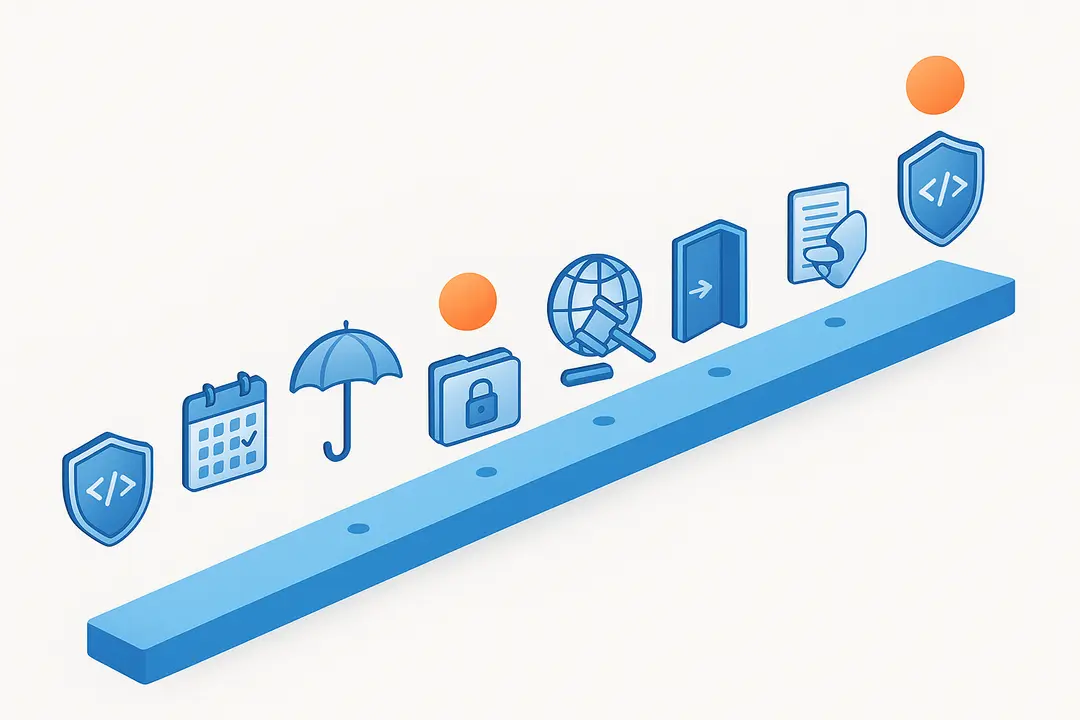
The strongest software development outsourcing contracts feature explicit, well-defined clauses tailored to your needs. Use the following table to benchmark your agreement, then see expanded explanations below.
| Clause | Why It’s Critical | Sample Clause Language | Must-Have? |
|---|---|---|---|
| IP Ownership | Ensures your exclusive rights to software/code | “All intellectual property developed under this agreement is the sole property of [Client] upon payment.” | ✓ |
| Payment Milestones | Links payment to results, deters non-delivery | “Payment due within 10 days of milestone acceptance as per attached schedule.” | ✓ |
| Liability & Indemnity | Limits your legal and financial exposure | “Supplier will indemnify and hold Client harmless against claims of IP infringement, up to $X.” | ✓ |
| Confidentiality/NDA | Protects your data and business secrets | “Vendor and employees shall not disclose confidential information for 3 years post-contract.” | ✓ |
| Jurisdiction/Dispute Resolution | Dictates how and where conflicts are settled | “All disputes to be settled under [chosen country] law and venue.” | ✓ |
| Termination | Defines safe, fair exit routes | “Either party may terminate for convenience with 30 days’ written notice.” | ✓ |
| Maintenance & Support | Prevents post-delivery gaps | “Vendor will correct defects for 90 days post-acceptance under specified SLAs.” | ✓ |
| Knowledge Transfer | Ensures business continuity at project end | “On termination, Vendor will deliver all source code, documentation, and transfer credentials.” | ✓ |
| Code Quality & Security | Sets enforceable, clear technical standards | “Code must conform to agreed coding standards, and pass static analysis before milestone approval.” | ✓ |
Practical takeaway:
Use this table as your contract’s baseline. Don’t sign until each “must-have” is addressed in specific, non-generic language.
IP Ownership and Code Rights: How Do You Protect What You Pay For?
Ensuring you own the software you fund is non-negotiable; unclear IP clauses are a leading cause of outsourcing disputes.
- Ownership Transfer: The contract should state that all deliverables—code, documentation, designs—become your property upon payment.
- Code Reuse Restrictions: Specify whether the vendor can reuse non-unique or generic code in other projects, or if exclusivity applies.
- Joint vs. Exclusive Rights: Clarify if you receive exclusive rights or if the vendor retains any interest.
Sample clause:
“All intellectual property developed in the course of this agreement shall be assigned to [Client] upon full payment. Vendor shall not reuse unique code or deliverables without prior written consent.”
Practical takeaway:
IP ownership clauses must be explicit, covering current and future rights to avoid hidden ownership disputes.
Payment Terms & Milestone Structures: Securing Fair Billing and Results
Linking payments to clearly defined milestones protects both parties and ensures delivery matches your expectations.
- Detailed Milestones: List milestones with objective acceptance criteria and deliverables.
- Penalties and Holdbacks: Include late delivery penalties and the right to withhold final payment until all defects are resolved.
- Advance or Retainer Terms: Clearly state how much, if any, advance payment is made, and under what conditions it’s refundable.
Sample payment structure:
- 20% upon project kickoff
- 30% upon completion of [Feature Set A] (acceptance criteria attached)
- 30% on delivery of final tested product
- 20% after 30-day warranty period
Practical takeaway:
Always tie payments to tangible, testable milestones with clear pass/fail criteria.
Liability & Indemnity Protections: Limiting Your Exposure
Limiting liability is essential to prevent disproportionate risk or unexpected damages from vendor actions.
- Liability Cap: Set a maximum amount the vendor could owe if things go wrong, e.g., “not to exceed total contract value.”
- Indemnity Coverage: Require the vendor to cover you for losses related to IP infringement, data breaches, or legal violations.
- Carve-Outs: Watch for exclusions that could nullify your protection (e.g., “except in cases of gross negligence”).
Sample clause:
“Vendor’s aggregate liability for damages shall not exceed the total fees paid under this agreement, except for damages arising from willful misconduct or gross negligence.”
Practical takeaway:
Negotiate clear caps and indemnities to avoid open-ended or one-sided risk.
Confidentiality & NDA: Keeping Your Data Safe
Strong confidentiality and NDA terms ensure your business information and project specs don’t leak.
- Term and Duration: Standard periods range from 2 to 5 years post-contract, but adjust based on sensitivity.
- Scope: Cover all employees, subcontractors, and affiliates of the vendor.
- Exceptions: Define what information is not covered (e.g., public knowledge, independently developed).
Q&A:
Q: Should NDA cover subcontractors?
A: Yes, explicitly require all vendor personnel to be bound by your NDA.
Practical takeaway:
Specify duration, scope, and survival of confidentiality obligations to keep your data protected long-term.
Jurisdiction and Dispute Resolution: Handling Conflict Across Borders
Cross-border outsourcing requires clear rules for how and where contract disputes are resolved.
- Choice of Law/Jurisdiction: Name the country/state and legal venue; choose a neutral or familiar jurisdiction if possible.
- Arbitration vs. Litigation: Arbitration is often faster and more confidential, especially internationally.
- Contract Language: Specify the official contract language to avoid interpretation issues.
Sample clause:
| Aspect | Example Language |
| Governing Law | “This Agreement is governed by the laws of [Country/State].” |
| Dispute Method | “All disputes subject to binding arbitration in [City].” |
| Language | “The official contract language is English.” |
Practical takeaway:
Pre-select jurisdiction, dispute process, and language to avoid surprises if disagreement arises.
Notice Periods & Termination Clauses: Exiting Safely
A robust termination clause prevents “vendor hostage” scenarios and enables smooth transitions.
- Termination for Cause and Convenience: Allow both parties to end the contract for specific reasons (breach, insolvency) or at will.
- Notice Periods: Typically 30–60 days, but adjust for project size.
- Obligations at Termination: State procedures for final deliverables, handover, and data return.
HowTo:
- Define notice period (e.g., “30 days’ written notice”).
- List post-termination actions: unfinished deliverables, data deletion/return, code delivery.
- Specify payment for work completed up to date of termination.
Practical takeaway:
A clear, fair exit process is essential for flexibility and risk management.
Maintenance & Support Terms: Who Owns Ongoing Issues?
Clearly define who is responsible for fixing bugs, delivering updates, and supporting the software after delivery.
- Warranty Period: Set a fixed timeframe (e.g., 90 days) for error correction post-acceptance.
- Service Level Agreements (SLAs): Require defined response and fix times (e.g., critical bugs fixed within 48 hours).
- Out-of-Scope Exclusions: List tasks not covered to avoid unexpected costs.
Sample support inclusions:
- Post-delivery bug fixes for X days.
- Limited new feature development (optional, with new SOW).
- Out-of-scope: third-party system errors, user training.
Practical takeaway:
SLAs and maintenance timelines clarify support expectations and prevent post-launch disputes.
Knowledge Transfer & Exit Strategies: How to Avoid Knowledge Lock-in
Protect against losing vital build and operation knowledge by requiring structured handover and transition support.
- Documentation Delivery: Demand all technical/user manuals, code comments, and configuration documents.
- Credential Transfer: Confirm transfer of admin logins, repository and cloud keys, passwords.
- Staff Training/Transition Support: Include onboarding for your internal team or next vendor as needed.
Handover Checklist:
- Source code in original, working state
- Deployment/playbook documentation
- Access credentials (repos, servers, APIs)
- Process maps and architecture diagrams
- Training/Q&A session scheduling
Practical takeaway:
Mandate detailed knowledge transfer and documentation to maintain business continuity.
Code Quality & Security Requirements (Incl. CI/CD and Access Control)
Technical requirements protect software quality and prevent future security or maintenance nightmares.
- CI/CD Pipeline Ownership: Specify control of build/deployment pipelines and ensure credentials are transferred.
- Access Controls: Restrict vendor access to only required systems and enforce revocation at project end.
- Security Standards: Require adherence to ISO/IEC 27001, GDPR, or other relevant frameworks.
- Automated Testing: Mandate code passes static analysis and automated tests before acceptance.
Code Quality Checklist:
- Source code reviewed and approved
- Security vulnerabilities scanned and fixed
- Access to production environments tightly controlled
Practical takeaway:
Write precise, enforceable technical standards into your contract to eliminate ambiguity and loopholes.
How Should You Review or Negotiate a Software Outsourcing Contract?
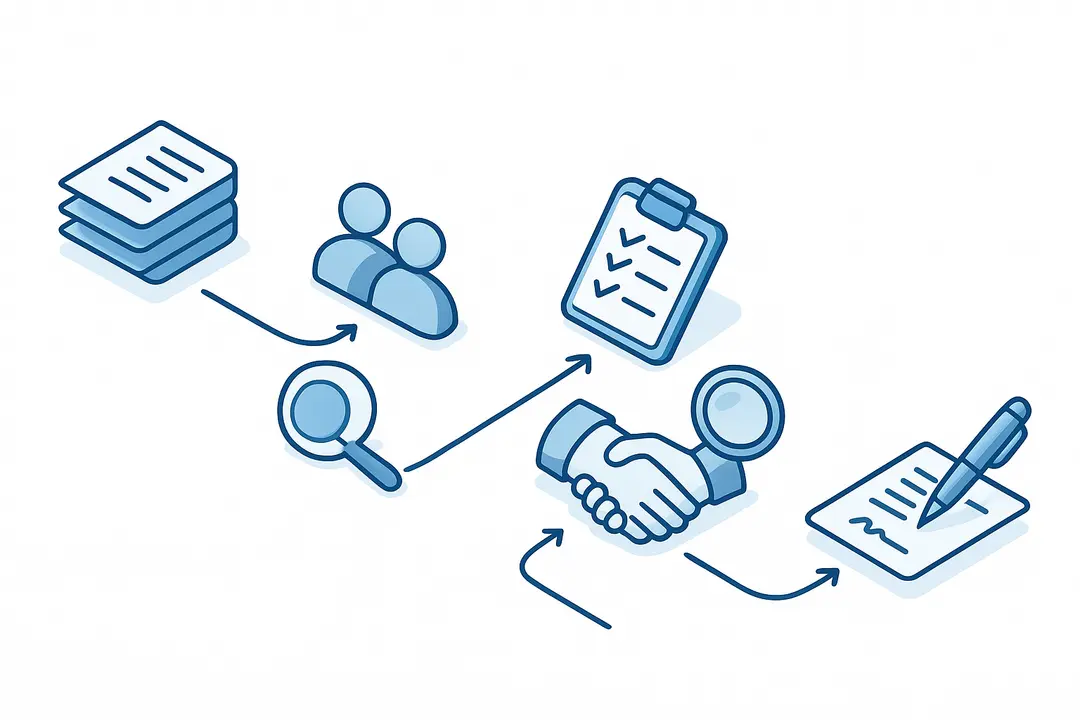
A structured, repeatable contract review process reduces risks and ensures loopholes are caught before signing.
Step-by-step contract review framework:
- Document Inventory: Gather contract drafts, appendices, and referenced policies.
- Stakeholder Involvement: Involve legal counsel, technical leads, and procurement to cover all bases.
- Systematic Review: Use a contract checklist (see template below) to audit each clause.
- Risk Assessment: Identify vague areas, missing sections, or one-sided terms.
- Negotiation: Discuss revisions, request clarifications, and escalate critical gaps.
- Approval and Signing: Only sign once all concerns are resolved in writing.
Pro Tip:
Always document discussions and confirmed changes; verbal agreements are not enforceable.
Practical takeaway:
A multi-expert review using a checklist is your safest route to a loophole-free agreement.
What Red Flags Signal Contract Loopholes or Pitfalls?
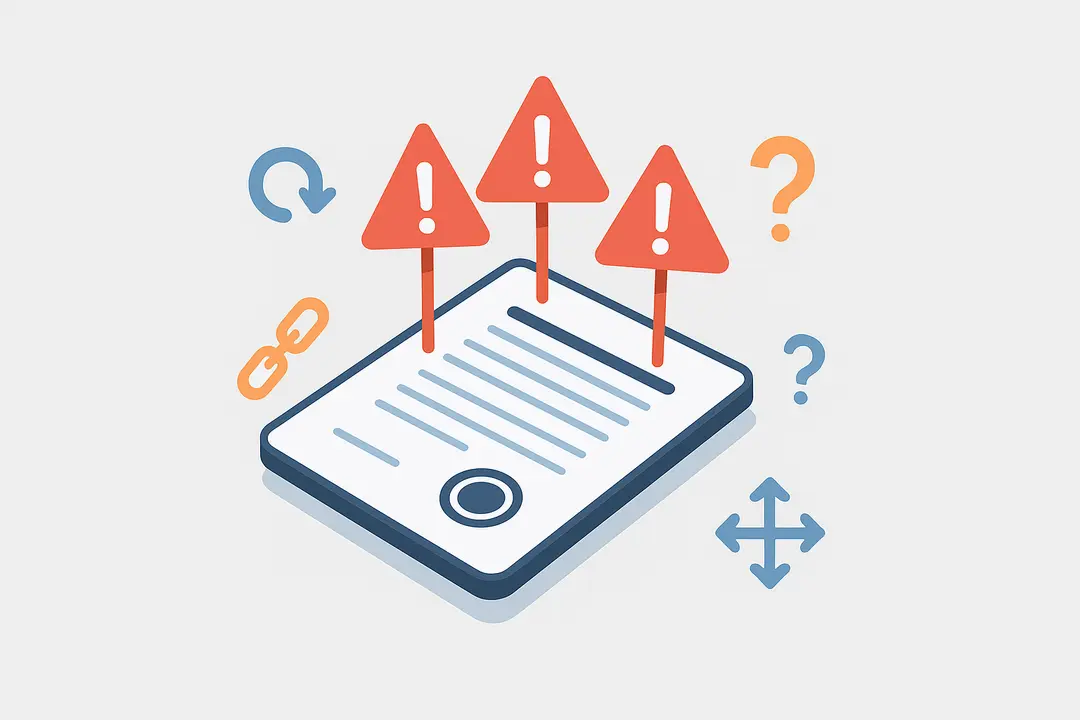
Spotting red flags early prevents bad deals and minimizes regret after the fact.
Red flag checklist:
- Ambiguous ownership or IP language (“if applicable,” “as needed”)
- Missing or boilerplate clauses (undetailed termination, vague maintenance)
- One-sided rights or remedies (vendor-only terminations, unlimited liability)
- Generic “reasonable efforts” without objective benchmarks
- No mention of jurisdiction, dispute process, or knowledge transfer
- Logical inconsistencies or contradictions between sections
Practical takeaway:
When you see vague, missing, or overly generic terms—pause and seek legal advice before proceeding.
What Technical Controls Should Be Required Beyond Legal Language?
Legal agreements are stronger when paired with enforceable technical processes and controls.
- Code Escrow: Secure a third-party code deposit for business continuity if the vendor disappears or the relationship ends.
- Access Management: Limit vendor access to only required systems/repositories, with audit trails and expiration.
- CI/CD Security: Retain ultimate control over build pipelines, deployment environments, and credentials.
- Security Certification Evidence: Request proof of certifications like ISO/IEC 27001 or compliance with GDPR where applicable.
Best practice:
Blend legal clauses with operational safeguards to close all potential gaps.
Practical takeaway:
Technical controls make contract obligations enforceable—don’t rely on legal language alone.
What Questions Should You Ask Vendors or Legal Teams?
Asking the right questions during negotiation surfaces hidden risks and aligns expectations.
Vendor/Legal Due Diligence Question List:
| Question | Purpose |
|---|---|
| Who will own copyright and IP in all deliverables? | Confirm ownership rights |
| How is sensitive data protected and stored? | Data protection compliance |
| Are all third-party libraries licensed and documented? | IP risk and software auditing |
| What is the process for knowledge transfer at project end? | Ensure business continuity |
| What are your support and maintenance terms? | Understand ongoing obligations |
| Which jurisdictions apply to this contract? | Plan for legal enforceability |
| Can you provide references from similar projects? | Vendor credibility and experience |
Pro Tip:
If answers are vague, incomplete, or inconsistent, request clearer contract language or consider alternatives.
Practical takeaway:
Interview potential vendors and legal advisors using this list to validate contract strengths—and expose weaknesses.
Key Takeaways Table: Ultimate Loophole-Free Outsourcing Contract Checklist
| Clause | Why It Matters | Status |
|---|---|---|
| IP Ownership | Secures your rights to software/code | ✓/✗ |
| Payment Milestones | Links payment to deliverables and progress | ✓/✗ |
| Liability & Indemnity | Sets risk limits and protects against breaches | ✓/✗ |
| Confidentiality/NDA | Keeps your information and trade secrets secure | ✓/✗ |
| Jurisdiction/Dispute | Ensures manageable resolution of disagreements | ✓/✗ |
| Termination Clause | Allows safe, exit and smooth project closure | ✓/✗ |
| Maintenance & Support | Prevents service gaps after launch | ✓/✗ |
| Knowledge Transfer | Enables seamless handover and business continuity | ✓/✗ |
| Code Quality/Security | Guarantees real technical and security standards | ✓/✗ |
Use ✓ for “Present” or ✗ for “Missing” while reviewing your contract.
FAQ: Answering Your Top Software Outsourcing Contract Questions
What are the most common loopholes in software development outsourcing contracts?
Vague definitions of IP ownership, missing termination rights, and undefined deliverables are the most frequent contract loopholes in outsourcing agreements.
How can I protect my intellectual property when outsourcing development?
Include explicit IP assignment clauses, define code reuse limits, and verify all third-party dependencies are properly licensed and clarified in the contract.
What payment structures are safest for outsourcing agreements?
Payment tied to concrete milestones with objective acceptance criteria, retention holdbacks, and clear late penalty provisions offer the most protection.
Which clauses are essential in a software outsourcing contract?
Critical clauses include IP ownership, payment milestones, confidentiality/NDA, liability caps, termination rights, jurisdiction/dispute resolution, and knowledge transfer.
How do I handle contract disputes with an international outsourcer?
Specify the governing law, preferred jurisdiction, dispute resolution process (such as arbitration), and the official contract language to streamline enforcement.
What is a liability cap, and why is it important?
A liability cap sets the maximum damages a vendor must pay, usually limited to the contract value, protecting both sides from unlimited exposure.
How can I ensure knowledge transfer if the vendor relationship ends?
Contractually require documentation, credential handover, and optional staff transition support; use a checklist to audit all handover items.
Should I use code escrow in my outsourcing contract?
Yes, code escrow ensures you have access to code if the vendor can’t or won’t deliver due to dispute or insolvency, especially for mission-critical systems.
What should a termination clause include in IT outsourcing?
A good termination clause covers for-cause and convenience scenarios, notice periods, post-termination obligations (handover, return of data), and payment settlement terms.
How do I verify contract compliance with data protection laws (e.g., GDPR)?
Request detailed data handling procedures, require vendor compliance statements, and consider adding audit rights for review during the contract’s life.
Conclusion
Avoiding contract loopholes in software development outsourcing starts with diligent planning and crystal-clear agreements. From protecting your intellectual property to ensuring transparent exit strategies, every clause matters.
Collaborate with both legal and technical experts during contract drafting and review. Use clear, detailed language for all must-have sections, and rely on structured checklists to guide your negotiations. Remember, an airtight contract is your strongest asset for successful, risk-mitigated outsourcing.
Key Takeaways
- Specific, plain-language clauses prevent contract loopholes in software outsourcing.
- Always include clear IP, payment, liability, confidentiality, jurisdiction, and termination provisions.
- Use structured reviews and checklists involving legal and tech stakeholders.
- Pair legal protections with technical controls (e.g., code escrow, CI/CD, access restriction).
This page was last edited on 10 April 2026, at 11:32 am
Contact Us Now

Contact Us Now
Start a conversation with our team to solve complex challenges and move forward with confidence.


