
Legacy systems may seem cost-effective on the surface, but the hidden costs they create can quietly drain your organization’s resources and stall growth. When business leaders delay modernization, they often overlook expenses far beyond maintenance—like productivity gaps, security vulnerabilities, and lost innovation.
This guide unveils the hidden costs of your legacy systems, such as the true price of outdated IT, and equips you with a practical framework to identify, audit, and minimize these concealed expenses. By understanding your organization’s actual risk profile, you can make confident, data-driven decisions that protect both your bottom line and future competitiveness.
What Is a Legacy System—and Why Do Organizations Still Rely on Them?
Legacy systems are outdated software, hardware, or platforms that continue to perform critical business functions but no longer receive mainstream support or updates. Organizations often maintain these systems—such as mainframes, COBOL-based applications, or obsolete ERPs—due to the high cost and perceived risk of change.
Key attributes of legacy systems:
- Depend on outdated technology or languages (e.g., COBOL, mainframes).
- Are no longer supported by vendors.
- Lack integration with modern tools and APIs.
- Require specialized, hard-to-find skills for maintenance.
Organizations persist with legacy systems because of significant past investments (sunk cost fallacy), business continuity concerns, and the absence of easily accessible migration paths. While seemingly stable, these platforms expose businesses to growing operational, financial, and strategic risks. Recognizing and categorizing these legacy assets is the essential first step toward effective IT modernization.
What Are the Hidden Costs of Your Legacy Systems?
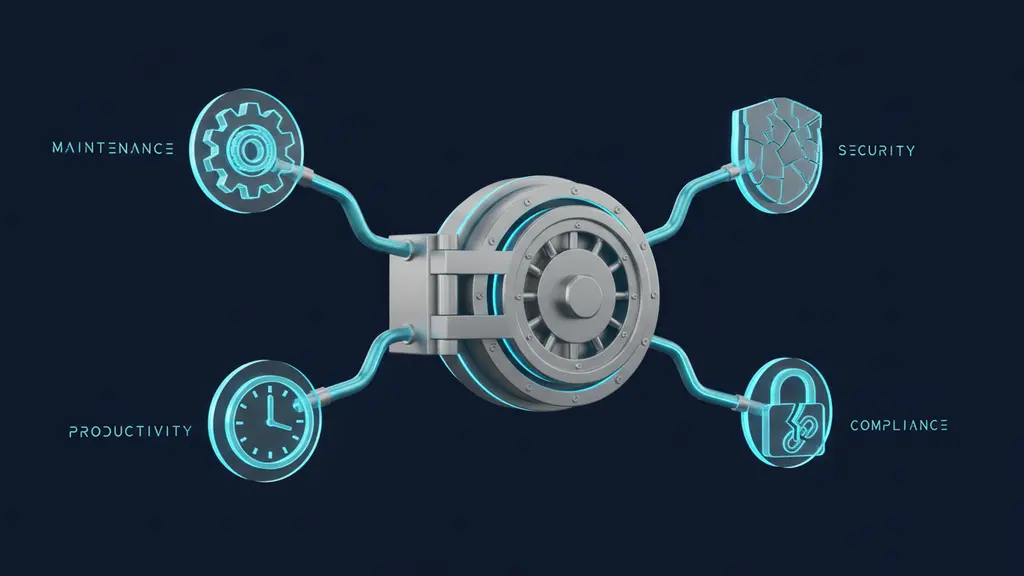
Hidden costs of legacy systems go far beyond basic maintenance fees, impacting your organization’s risk, reputation, and revenue potential. These expenses are often indirect and hard to quantify without a structured approach.
Types of Hidden Costs in Legacy Systems
| Cost Type | Description | Potential Impact | Example/Benchmark |
| Maintenance & Support | Rising expenses for patches, hardware, and expert support | Increased spend | 70–80% of IT budget (GAO) |
| Security Vulnerabilities | Unpatched systems open to breaches, ransomware | Breach risk, losses | Avg. breach: $4.45M (IBM, 2023) |
| Compliance & Regulatory | Outdated logging/encryption leads to audit failures, fines | Legal, financial | GDPR max fine: €20M or 4% of turnover |
| Productivity Losses | Manual processes, slow systems add labor/time costs | Operational drag | 40% more time on manual work |
| Talent & Knowledge Drain | Hard-to-find skills, high training and turnover | HR/retention risk | COBOL talent shortage (Gartner) |
| Opportunity Costs | Missing new markets or customer demands | Revenue loss | Cloud lag: 30% higher costs |
| Integration/ Data Silos | Poor analytics, blocked automation and reporting | Strategic friction | Data silos double analytics cost |
These cost categories offer a structured way to quantify where hidden risks and expenses are accumulating in your IT portfolio.
How Do Hidden Costs Impact Your Organization? (Deep-Dive on Key Cost Categories)

Maintenance and Support Costs: Where the Bill Keeps Growing
Legacy system maintenance and support costs steadily increase over time, eroding IT budgets even as value declines. These systems require specialized patching, expensive vendor contracts (often for end-of-life hardware), and custom fixes that modern platforms eliminate.
Key factors:
- Outdated hardware requires specialized support, often with rising vendor premiums.
- Patch management becomes costlier due to manual processes and obsolete modules.
- Older systems may consume 70–80% of IT spend just to “keep the lights on,” leaving little for innovation (U.S. GAO).
- Compared to SaaS or cloud-native alternatives, legacy support can be several times more expensive per user.
Takeaway: Maintenance costs are rarely fixed—they escalate, compounding technical debt each year modernization is postponed.
Security Vulnerabilities: The Hidden Risk of Data Breaches
Unpatched and unsupported legacy systems present prime targets for cybercriminals, leading to data breaches, ransomware attacks, and business disruption.
Key risk areas:
- Outdated platforms cannot receive critical security updates, leaving known vulnerabilities exposed.
- According to an IBM report (2023), the average data breach cost reached $4.45 million, with legacy systems cited as a common factor in incidents like the Equifax breach.
- Remediation, forensics, insurance premiums, and potential ransom demands all add to post-incident expenses.
- Organizations often pay a premium for cyber insurance if they retain unsupported IT.
Takeaway: Security risks tied to legacy IT are not hypothetical—they translate into measurable, rising costs and reputational harm.
Compliance and Regulatory Risks: Fines and Failures
Legacy systems make compliance with modern regulations, such as GDPR, CCPA, HIPAA, and SOX, challenging and expensive. Outdated logging, insufficient data retention, and obsolete encryption expose organizations to audits and penalties.
Common compliance gaps:
- Data handling and retention features fail to meet new regulatory standards.
- Encryption and access controls may be insufficient or unpatchable.
- Audit trails often cannot be generated or accessed easily, increasing audit costs and failure risk.
- Maximum GDPR fines can reach €20 million or 4% of global revenue (whichever is higher).
Takeaway: Utilizing legacy platforms increases the risk of significant compliance failures, leading to both financial and reputational losses.
Productivity Loss & Operational Inefficiency: The Cost of “Good Enough”
Manual workarounds and slow legacy tools hamper employee productivity, foster friction, and stifle organizational agility.
Key impacts:
- Employees lose time due to slow performance, system outages, or having to use multiple disconnected tools.
- Manual data entry, double work, and “shadow IT” proliferate.
- Staff burnout and turnover grow as inefficiencies mount, with up to 40% more time spent on manual processes compared to digital-first organizations (Capgemini).
- Quality of work and customer experience suffer due to systemic delays.
Takeaway: Operational inefficiency from legacy IT isn’t just a tech issue—it’s a human and business performance issue.
Talent Management: Shortages, Turnover, and Training Drains
Legacy IT environments often depend on a shrinking pool of specialized, high-cost talent—with a growing risk of knowledge loss and high recruitment or training expenses.
Talent challenges include:
- Specialized skills (e.g., COBOL programmers) are in high demand but short supply—”COBOL talent shortage” per Gartner.
- Ongoing training and onboarding costs rise as fewer candidates have the right legacy skills.
- Employee frustration leads to attrition, compounding recruitment and onboarding efforts.
- Organizations may pay a “legacy premium” in compensation for staff with rare expertise.
Takeaway: Hidden HR costs tied to outdated platforms can be as consequential as direct IT expenses.
Opportunity Costs: Delayed Innovation and Lost Revenue
Maintaining legacy systems slows digital transformation, leading to lost market opportunities and competitive disadvantage.
Missed opportunities from outdated IT:
- Organizations that delay cloud adoption or digital transformation initiatives often experience up to 30% higher operational costs compared to competitors (Forrester).
- Delays in launching new products or features result in lost revenue and market share.
- Customers may choose more agile competitors with better technology and UX.
Takeaway: Opportunity cost isn’t just theoretical—delayed modernization means actual lost sales and slower response to market change.
Integration Challenges and Data Silos: Blocking Analytics and Growth
Legacy systems often lack modern APIs, leading to fragmented data landscapes that stifle analytics, automation, and growth.
Common issues:
- Data is duplicated or stranded in isolated systems (“data silos”).
- Lack of interoperability increases manual reporting, slows decision-making, and inhibits real-time analytics.
- Integration costs and project complexity multiply as organizations stitch together old and new systems.
- In a typical organization, data silos can double analytics costs and reduce insight extraction (Capgemini).
Takeaway: Integration limitations block innovation and the ability to deliver seamless customer experiences.
Human and Cultural Impacts: How Legacy Systems Affect Your Team
Outdated technology has profound effects on employee morale, culture, and the organization’s ability to adapt and compete.
Key impacts:
- Teams become disengaged and frustrated with slow, complex interfaces and manual processes.
- Change resistance increases, creating a “culture of stagnation” where innovation is feared.
- High-performing staff may leave for organizations with more modern, efficient tools.
- HR and IT leaders consistently rate legacy systems as a top obstacle to talent retention and digital culture.
Takeaway: The ongoing use of legacy systems erodes morale and culture, making transformation even harder over time.
Examples and Cost Benchmarks (2025–2026)
Real-world data highlights just how costly outdated IT can become.
Public Data & Case Studies:
- Government Accountability Office (GAO) reported that U.S. agencies spend up to 80% of IT budgets on legacy maintenance.
- The 2017 Equifax breach, which resulted from an unpatched legacy system, led to losses exceeding $1.4 billion.
- Forrester research finds the average cost of a data breach rose to $4.45 million in 2023.
- Capgemini’s global study showed digital-first organizations gain up to 26% higher profitability than peers relying on legacy tech.
Sample Table: Average Hidden Costs by Category
| Category | Annual Benchmark Cost per Organization* |
| Maintenance/Support | $2–10M |
| Security/Breach Recovery | $1–5M+ (incident-based) |
| Compliance Fines | Up to 4% of global turnover |
| Productivity Loss | $500k–$4M |
| Talent/Recruiting | $100k–$2M |
| Missed Opportunities | Difficult to quantify, often 5–15% of potential revenue |
| Integration/Data Silos | $200k–$1M+ |
*Benchmarks vary by industry, size, and IT landscape.
Takeaway: Even conservative estimates show hidden costs can rival or exceed visible IT expenses.
How Do You Identify and Audit Hidden Legacy System Costs?

Auditing the hidden costs of legacy systems starts with a systematic framework that inventories assets and maps their financial, operational, and strategic impacts.
Step-by-Step Legacy Cost Audit Framework:
- Inventory all legacy systems (hardware, software, custom apps, databases).
- Catalog direct maintenance and support costs (contracts, licenses, repairs).
- Estimate security exposure (e.g., time since last patch, unsupported OS, number of incidents).
- Assess compliance risks (regulatory requirements, documented gaps, past audits).
- Quantify productivity impacts (manual processes, workarounds, employee feedback).
- Calculate talent costs (specialist salaries, training, recruiting premiums).
- Tally opportunity costs (delayed projects, missed revenue, lost market share).
- Review integration challenges (systems unable to support analytics, automation, APIs).
Toolkit Tip: Use a downloadable worksheet or vendor TCO calculator to organize findings. Review with IT, finance, HR, and compliance leaders to ensure nothing is missed.
Takeaway: A cross-functional audit delivers a credible baseline for the business case to modernize.
Making the Business Case: Turning Hidden Costs Into Modernization ROI
To win executive and board support for IT transformation, connect quantified hidden costs to modernization’s return on investment (ROI).
Building a Compelling Business Case:
- Summarize total hidden costs found in your audit (table, charts help).
- Project “before and after” TCO, comparing current state vs. potential savings from modernization (maintenance, risk, productivity).
- Highlight opportunity gains—faster time-to-market, new digital revenue, improved compliance.
- Showcase relevant case studies (e.g., reductions in breach risk, talent savings).
- Use clear, data-backed talking points suited for C-suite concerns: financial risk, security exposure, growth opportunity.
Example: Organization A reduced legacy IT spend by 35%, cut breach risk by half, and accelerated new product launches after modernizing core systems.
Takeaway: Decision-makers respond to credible data illustrating not just cost savings, but competitive and strategic upside.
Minimizing Modernization and Transition Costs: Practical Strategies
Transitioning from legacy systems doesn’t have to break the bank—proactive strategies can minimize both financial and operational disruption.
Cost-Smart Modernization Strategies:
- Phased migrations: Start with high-impact or low-risk systems; avoid “big bang” cutovers.
- Hybrid approaches: Maintain vital legacy functions alongside new cloud/native solutions when needed.
- Investment in training/upskilling: Prepare teams for new tools, reducing resistance and knowledge gaps.
- Leverage migration incentives: Many vendors offer credits, consulting, or discounts for modernization.
- Partner with experienced migration consultants: Reduces delays, cost overruns, and risk of business interruption.
Takeaway: With careful planning and change management, the path to modernization becomes manageable—and quickly ROI-positive.
Frequently Asked Questions (FAQ)
What are the hidden costs of maintaining legacy systems?
Hidden costs include escalating maintenance, security vulnerability risks, compliance penalties, productivity losses, talent shortages, opportunity costs, and integration challenges. These often exceed what is visible on IT budgets or vendor invoices.
How can I calculate the total cost of ownership (TCO) for outdated IT?
To calculate TCO, inventory all legacy systems, tally direct maintenance/support costs, estimate security and compliance risks, add productivity losses, account for talent and recruitment expenses, and assess opportunity and integration costs.
In what ways do legacy systems increase cybersecurity risks?
Legacy systems are more susceptible to cyberattacks due to unpatched vulnerabilities and lack of vendor support. They have been implicated in major breaches because attackers exploit known weaknesses that are difficult or impossible to fix.
What compliance challenges are associated with legacy technologies?
Outdated IT often fails to meet modern regulatory requirements for data retention, encryption, and auditability, which increases the likelihood of fines, audit failures, and legal liability under frameworks such as GDPR and HIPAA.
How do legacy systems impact employee productivity and morale?
Legacy systems slow down daily work, require manual processes, and frustrate employees. Morale drops as staff deal with inefficiencies, leading to higher turnover and more “shadow IT” as teams seek workarounds.
What is the sunk cost fallacy related to legacy platform choices?
The sunk cost fallacy is the tendency to continue investing in something (like outdated IT) just because of prior investments—ignoring future costs and risks—rather than making a rational upgrade decision.
How can organizations reduce transition costs when modernizing?
By adopting phased migrations, hybrid architectures, staff upskilling, and leveraging vendor incentives or expert partners, organizations can lower both the hard and soft costs of modernization.
What are the best practices for auditing legacy system costs?
Follow a structured cost audit framework: inventory systems, quantify all cost types, engage cross-functional stakeholders, and use checklists or TCO calculators to ensure full visibility.
When is the right time to upgrade or replace a legacy system?
Key triggers include rising support costs, growing security or compliance risks, staff turnover, integration challenges, or when maintenance costs threaten to surpass modernization investment.
How do organizations make the business case for legacy system modernization?
Build your case by quantifying hidden costs, projecting modernization ROI, aligning benefits to business strategy, and presenting data-backed evidence tailored to executive priorities.
Conclusion
Ignoring the hidden costs of legacy systems risks far more than just wasted IT spend—it exposes your organization to security incidents, mounting operational inefficiency, lost talent, and the slow erosion of your competitive edge. By prioritizing an internal audit with the frameworks and tools outlined here, you’ll gain a clear understanding of your true risk and ROI opportunities. The time to act is now: download the companion toolkit, launch your cost audit, and start building your modernization roadmap before small leaks become headline-making losses.
Key Takeaways
- Hidden costs of legacy systems stretch far beyond maintenance, including security, compliance, productivity, talent, and innovation barriers.
- Systematic cost audits reveal financial risks and lost opportunities often invisible on profit-and-loss statements.
- Legacy platforms increase cyber, legal, and operational risks, while sapping employee morale and limiting business agility.
- Making the modernization business case requires quantified data and cross-functional buy-in.
- Proactive modernization strategies and phased transitions minimize risk and unlock long-term ROI.
This page was last edited on 2 March 2026, at 11:41 am
Contact Us Now

Contact Us Now
Start a conversation with our team to solve complex challenges and move forward with confidence.


