

- What is eCommerce Virtual Assistant?
- Benefits of eCommerce Virtual Assistant
- Types of eCommerce Virtual Assistant
- Future of eCommerce Virtual Support
- eCommerce Virtual Assistant Trends
- eCommerce Virtual Assistant Skills
- How Does eCommerce Virtual Assistant Provide Support?
- How to Hire an eCommerce Virtual Assistant
- Common Misconceptions about an eCommerce Virtual Assistant
- Conclusion
- eCommerce Virtual Assistant FAQs
In today’s fast‑moving digital marketplace, e‑commerce businesses are expected to do more than publish products online; they must deliver seamless experiences, fast support, and personalized engagement at scale. That’s where e‑commerce Virtual Assistants (VAs) have evolved from simple task executors to strategic multipliers for growth.
Modern eCommerce VAs don’t just handle repetitive tasks like order processing and customer emails. They now work alongside AI tools and automated systems to manage complex workflows, optimize digital storefronts, and ensure your store keeps pace with evolving sales channels, marketplaces, and customer expectations.
In 2026, a successful VA adds value not just through execution, but by improving operational efficiency, enhancing visibility through AI‑powered tools, and integrating insights across platforms — helping merchants dedicate their time to scaling strategy, brand building, and innovation.
What is an eCommerce Virtual Assistant?
An eCommerce Virtual Assistant (VA) is a remote professional who supports online store operations, helping businesses with tasks such as customer service, order management, inventory updates, product listings, marketing support, and more. Unlike purely AI‑driven shopping bots, VAs work with both manual processes and AI tools to improve efficiency, personalize customer experiences, and streamline backend workflows.
In 2026, eCommerce VAs often blend human expertise with automation platforms and machine learning tools to enhance customer satisfaction, increase sales, save time, and help businesses scale across multiple platforms.

Why is an eCommerce Virtual Assistant Important?
An eCommerce virtual assistant is a remote support professional or team that helps manage daily online store operations and customer interactions. It can provide assistance to clients from a remote location outside of their client’s business, taking repetitive and time-consuming tasks off their hands.
If you want to scale your e-commerce business, you might already have faced the pain of growing your business. To overcome these challenges, you need an eCommerce virtual assistant team to support both backend operations and customer engagement.
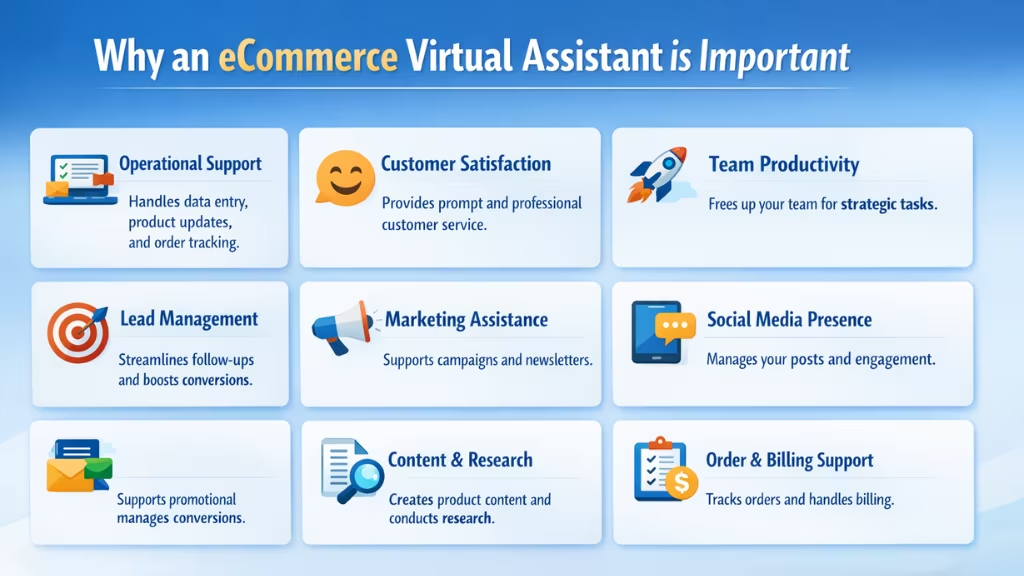
So, let’s see the importance of the eCommerce online assistant:
1. Operational Support
Having a dedicated eCommerce virtual assistant can take care of data entry, product updates, order tracking, and reporting, freeing up your schedule so you can focus on growth strategies.
2. Customer Satisfaction
With an eCommerce virtual assistant handling customer inquiries promptly and professionally, your company’s reputation and customer satisfaction improve significantly.
3. Team Productivity
With an eCommerce virtual assistant supporting routine tasks, your internal team can focus on strategy, product development, marketing, and other high‑value work.
4. Social Media Presence
An eCommerce online assistant can manage social media, ensuring your company maintains an online presence while creating a two‑way channel for loyal customers.
5. Lead Management
With an experienced eCommerce virtual assistant, you can streamline customer follow‑ups, manage leads, and improve conversion processes more efficiently.
6. Marketing Assistance
An eCommerce virtual assistant team can assist with marketing tasks, such as organizing promotional campaigns, preparing email newsletters, and supporting content creation.
7. Content and Research Support
An eCommerce virtual assistant team with copywriting and sales support skills can help create compelling product content and conduct market research that informs strategy.
8. Order and Billing Support
An eCommerce virtual assistant can also help track outstanding orders, follow up on delayed shipments or refunds, and support basic invoicing and billing tasks.

Types of eCommerce Virtual Assistant
Generally, when skills are lacking in a business, an eCommerce online helpdesk can help you to overcome this problem. However, hiring an eCommerce online assistant gives a business the advantage of scaling up faster.
So, an eCommerce virtual helpline is a game-changer for many companies. There are various aspects to consider when conducting business online.
Here are the key types of e-commerce virtual assistants:
- General E-commerce VAs: Handle day-to-day operations, including listing new products, updating inventory, processing orders, and managing returns.
- Customer Service VAs: Manage customer inquiries via email, live chat, or social media, resolving issues to maintain high ratings and customer satisfaction.
- Amazon/Platform-Specific VAs: Experts in navigating specific platforms like Amazon Seller Central, eBay, Shopify, or WooCommerce.
- Digital Marketing/Social Media VAs: Focus on boosting traffic and sales through social media campaigns, SEO, content creation, and advertising.
- Product Listing/Catalog Management VAs: Specialize in creating SEO-optimized product titles, descriptions, and images to increase visibility.
- Inventory/Supply Chain VAs: Monitor stock levels, manage relationships with suppliers, and coordinate dropshipping.
- Bookkeeping & Financial VAs: Manage expense tracking, invoicing, and financial reporting specifically for online stores.
Future of eCommerce Virtual Support
As e‑commerce continues to evolve, the role of virtual assistants and AI support tools is becoming more strategic — extending far beyond basic customer service. Virtual support in online retail is moving toward intelligent automation, personalized experiences, and seamless shopping journeys, driven by artificial intelligence and emerging technologies like AR and voice commerce.
Here are key ways eCommerce online assistants are shaping the future:
AI‑Driven Commerce and Shopping Agents
In the coming years, AI “shopping agents” will increasingly assist shoppers in discovering products, comparing prices, and even completing purchases automatically. These tools act as personal digital shoppers, providing recommendations and executing actions that make online shopping more efficient and personalized.
According to industry predictions, AI agents will play a transformative role in online retail, enabling features like conversational checkout and real‑time product suggestions — dramatically changing how customers interact with e‑commerce platforms.
Immersive Technologies (AR & VR)
Augmented reality (AR) and virtual reality (VR) are expanding the online shopping experience by making it more immersive. Shoppers can virtually try on products, place items in their real environments through AR, or explore 3D store layouts. This approach drives confidence and increases conversion rates because customers better understand what they’re buying.
By 2026, AR features like virtual try‑ons and interactive 3D product views are expected to become more common across retail sites and apps, enhancing customer engagement and reducing return rates.
Voice and Conversational Commerce
Voice search and voice‑activated shopping are growing rapidly as more consumers use smart speakers and virtual assistants to browse products, get recommendations, and place orders. More than one‑third of shoppers already use voice commands for at least part of the online buying process, and this trend is expected to continue expanding.
In the future, optimizing e‑commerce stores for conversational search (voice and chat) will be essential so virtual assistants can guide users smoothly through discovery and checkout.
AI Support for Operations and Personalization
Beyond front‑end customer interaction, AI and virtual assistants are transforming backend e‑commerce operations as well. AI‑powered tools handle personalization, predictive analytics, inventory forecasting, and operational automation, freeing human teams to focus on strategy and creative work.
For example:
- Personalized shopping experiences that tailor product recommendations to individual users
- AI chatbots that provide real‑time customer support 24/7
- Automated workflows that manage common tasks like order updates, returns, and follow‑ups without manual intervention
Unified and Seamless Channel Experiences
Modern e‑commerce is moving toward unified commerce — where inventory, pricing, and customer interactions are connected across all online touchpoints. AI and virtual support systems play a critical role in delivering consistent experiences, whether a customer shops via a website, app, voice search, or social channel.
This integration helps build loyalty and enhances the overall customer journey as shoppers move seamlessly from one platform to another.
eCommerce Virtual Assistant Trends (2025–2026)
The role of eCommerce virtual assistants is evolving rapidly. Gone are the days when they were limited to simple administrative tasks. In 2025–2026, VA roles are being reshaped by AI tools, specialization, multi‑channel operations, and performance‑focused work that impacts growth and customer experience directly.
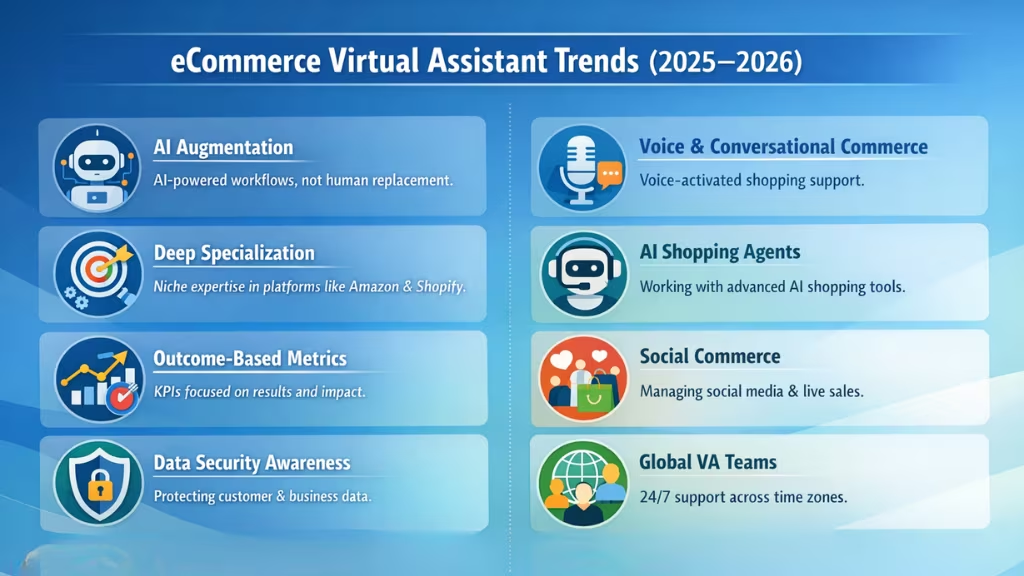
1. AI Augmentation, Not Replacement
Modern eCommerce VAs use AI to power workflows — from automating repetitive tasks to generating insights from customer behavior. Rather than replacing human assistants, AI helps VAs work smarter, improving efficiency in areas like customer support, product tagging, and inventory forecasting.
2. Deep Specialization Over General Admin
Brands are increasingly hiring VAs with niche expertise — such as Amazon marketplace management, Shopify operations, digital marketing support, SEO, and data analytics. Specialized skills reduce training time and deliver higher business impact compared to generalist roles.
3. Outcome‑Driven Performance Metrics
Instead of paying purely by hours worked, more businesses are tracking VA effectiveness through KPIs like turnaround time, accuracy, task impact on revenue, and customer satisfaction — aligning compensation with results rather than activity.
4. Support for Voice and Conversational Commerce
As voice search and conversational interfaces grow, VAs are learning to support voice‑activated shopping experiences and structured data that conversational systems rely on. This trend makes virtual assistants more valuable in helping stores optimize for hands‑free, natural‑language shopping.
5. Integration With Advanced AI Shopping Agents
AI “shopping agents” — systems that can recommend products, compare options, and complete purchases — are emerging as a force in online retail. VAs who understand how to work with these tools help brands stay visible and competitive in the AI‑driven buying journey.
6. Social Commerce and Community Management
Social shopping is no longer optional. VAs increasingly manage brand presence across social media, support live commerce events, engage with communities, and help leverage influencer partnerships to drive traffic and sales.
7. Enhanced Data Security Awareness
As virtual assistants handle more operational data, cybersecurity and privacy awareness are becoming essential skills. VAs are expected to understand basic data protection practices and help safeguard sensitive customer and business information.
8. Global and Team‑Based Support Models
Instead of relying on a single assistant, many eCommerce teams are building distributed, specialized VA teams that cover different functions and time zones. This structure improves coverage, response times, and operational continuity across global markets.
9. Strategic Partner Role
Ultimately, VAs are becoming strategic partners in eCommerce success, not just support staff. They manage complex, data‑driven, and repeatable processes that allow internal teams to focus on core business strategy and growth.
eCommerce Virtual Assistant Skills
An e-commerce virtual assistant (VA) requires a mix of technical platform knowledge and operational skills to manage online stores effectively. Key skills include product listing management, inventory tracking, customer service, order processing, and proficiency in tools like Shopify, Amazon Seller Central, WooCommerce, and spreadsheets.
Core Technical & Operational Skills
- Platform Management: Proficiency in Shopify, Amazon Seller Central, WooCommerce, eBay, Etsy, or Lazada.
- Product Listing & Optimization: Creating, editing, and optimizing product listings with SEO keywords to boost visibility.
- Inventory & Order Management: Tracking stock levels, managing product procurement, and processing orders (FBA/FBM).
- Customer Service & Support: Handling inquiries, managing returns/exchanges, and resolving complaints via email or chat.
- Data Entry & Management: Proficiency in managing spreadsheets and database management systems.
- Digital Tools: Basic knowledge of tools like Canva for graphics, Google Suite, and ERP software.
Essential Soft Skills & Responsibilities
- Communication: Excellent written and verbal English for customer service and team coordination.
- Time Management & Organization: Prioritizing tasks to meet deadlines in a fast-paced environment.
- Adaptability & Problem-Solving: Ability to learn new tools quickly and handle unexpected issues in daily operations.
- Research Skills: Conducting competitor analysis and market research to support marketing efforts.
Specific Task Areas
- Logistics: Coordinating with suppliers and managing shipping labels.
- Marketing: Basic social media management and email marketing.
- Financial Tasks: Monitoring refunds and updating pricing.
How Does an eCommerce Virtual Assistant Provide Support?
eCommerce virtual helpline provides services so that your eCommerce business can stay in balance. These services can also control your brand reputation.
So, let’s have a look at how the eCommerce virtual helpdesk provides services:
- Entering and uploading product data
- Putting products into relevant categories
- Writing product descriptions
- Managing inventory
- Doing an analysis of prices and discounts offered by competitors
- Optimizing the presentation of product pages
- Editing and optimizing product images
- Gathering product data from various sources
- Management of discount and promotion offers
- Designing and sending email newsletters
- Google Adwords and social media remarketing
- Designing landing pages, banners, and other marketing materials
- Website development and enhancement
How to Hire an eCommerce Virtual Assistant
Hiring an eCommerce virtual assistant (VA) can boost the efficiency and growth of your online business. Start by clearly defining the tasks and responsibilities you need help with. Create a detailed job description that outlines specific duties like managing product listings, handling customer support, conducting market research, or overseeing digital marketing campaigns. This clarity helps attract candidates with the right skills and experience.
Once you have a job description, begin your search for candidates. Use platforms like Upwork, Freelancer, or specialized VA services focused on eCommerce. These sites let you filter candidates by skills, experience, and ratings. You can also network within eCommerce communities or ask other business owners for recommendations.
Look for candidates who have relevant experience with the platforms you use, such as Shopify, Magento, WooCommerce, Amazon, or eBay. Check their familiarity with tools like email marketing software, inventory management systems, and social media scheduling apps.
Next, conduct thorough interviews with your shortlisted candidates. Ask questions that assess their technical skills, problem‑solving abilities, and understanding of eCommerce best practices. Invite them to describe how they would handle real business situations, such as processing orders or responding to customer inquiries. If possible, interview them over video calls to better evaluate communication skills.
You might also give a small, paid test task relevant to your business. Examples include editing a product listing, drafting a sample customer response, or organizing a simple social media schedule. This helps you see their practical skills and whether they deliver quality work on time.
After selecting a candidate, set clear expectations and establish good communication channels. Discuss whether you prefer email, Slack, or video calls and agree on how often updates should be shared. Provide onboarding materials and training so the VA understands your processes and expectations. Clearly explain your goals, deadlines, and how you will measure success.
Use collaboration tools like Asana, Trello, or ClickUp to assign and track tasks. Having regular check‑ins, especially at the start, ensures the VA stays aligned with your workflow and allows you to address any questions right away.
Finally, maintain ongoing feedback and performance reviews. Regularly evaluate the VA’s work to ensure it meets your standards and provide suggestions for improvement. Encourage open communication so they feel comfortable asking questions or discussing challenges. By building a supportive working relationship, you can maximize your eCommerce VA’s contribution, leading to greater efficiency and long‑term business growth.
Common Misconceptions about an eCommerce Virtual Assistant
One of the biggest hurdles to success with an eCommerce virtual assistant is misunderstanding their role. Clearing up these common myths and setting clear boundaries helps ensure a strong and productive working relationship.
eCommerce Virtual Assistant vs General VA
Not all virtual assistants are the same. General VAs help with broad administrative tasks, but eCommerce virtual assistants are trained specifically for online store responsibilities:
| Feature | General Virtual Assistant | eCommerce Virtual Assistant |
|---|---|---|
| Primary Focus | Broad support for many business types | Tasks specific to online stores |
| Key Skills | Scheduling, email, data entry | Product optimization, platform tools (Shopify/Amazon), customer service |
| Strategic Value | Increases general productivity | Boosts store operations, customer experience, and revenue growth |
A major misconception is that any VA can run an online store without guidance. In reality, an eCommerce virtual assistant is an experienced implementer — they execute your plans, not create your high‑level strategy.
Role Limits & Boundaries
To build a successful partnership, it’s important to understand what an eCommerce virtual assistant can do — and what they shouldn’t be expected to do.
| Area of Responsibility | What an eCommerce Virtual Assistant Does (Execution) | What They Do NOT Do (Strategic Ownership) |
|---|---|---|
| Business Strategy | Executes defined strategy and provides feedback for optimization | Sets the company’s overall business plan or long‑term vision |
| Financial Decisions | Handles bookkeeping, processes approved payroll, and generates reports | Makes major financial decisions or investments |
| Leadership Role | Acts as a supportive team member who manages tasks and workflows | Serves as a replacement for executives responsible for direction and culture |
An eCommerce virtual assistant supports your tasks and helps your business run well, but they don’t replace leadership or strategic planning roles.
Conclusion
eCommerce online helpdesk will allow you to scale operations with less risk. Since an eCommerce online assistant is a comparatively cost-effective alternative to IRL employees.
You can substantially reduce your costs and instead invest your money back into your business. The main issue with the eCommerce virtual helpline is that there is no way to communicate face-to-face.
eCommerce Virtual Assistant FAQs
For your benefit, I am listing some common questions for you. These questions are what people usually ask. But if you have any questions, you can ask.
So, let’s see some common questions:
What does an eCommerce virtual assistant do?
eCommerce virtual assistants are processing to perform various tasks, including understanding user queries, providing them with relevant information, or even creating product descriptions.
What tasks can an eCommerce virtual assistant perform?
An eCommerce VA can support a wide range of tasks including customer service, product listing and optimization, order processing, inventory management, social media content, analytical reporting, and basic website upkeep.
How can an eCommerce virtual assistant increase online sales?
They can optimize product listings, manage digital marketing strategies, handle customer inquiries professionally, and keep your store updated — all of which contribute to higher traffic and conversion rates.
Are eCommerce virtual assistants hard to find?
Some businesses report difficulty finding VAs with strong eCommerce experience or real passion for the industry, especially those with hands‑on prior store management experience.
What skills do eCommerce virtual assistants often have?
Based on Reddit job posts, common VA skills include store management (Shopify, Amazon, eBay, Walmart), product listing creation, order tracking, inventory management, customer communication, email marketing, social outreach, and basic data analysis.
How are eCommerce VAs typically paid or structured?
Many eCommerce VAs work hourly or on milestones. Flexible payment arrangements are common, with compensation based on the types of tasks and experience. Rates vary by skillset and complexity.
Can a virtual assistant handle customer support for my store?
Yes — responding to buyer messages, handling returns and refunds, tracking shipments, and resolving customer issues are commonly listed responsibilities for eCommerce VAs.
Do eCommerce virtual assistants work with multiple platforms?
Yes — experienced VAs often manage multiple sales channels such as Shopify, Amazon, eBay, and Walmart, including syncing product information and handling orders across platforms.
What are common challenges when hiring a virtual assistant?
Common concerns include:
1. Finding VAs with genuine eCommerce passion or background
2. Maintaining quality and communication with remote workers
3. Training to fit specific business workflows
This page was last edited on 20 February 2026, at 2:28 pm
Contact Us Now

Contact Us Now
Start a conversation with our team to solve complex challenges and move forward with confidence.


I hear about virtual assistant but I never think that it would be possible for eCommerce. But now I understand the whole thing. Thank you, it was really helpful.
Thank you Ethan. I’m really happy to help you.