
Imagine this. Your company has just announced a bold vision to “become an AI-driven enterprise within two years.” Excitement ripples across teams; budgets are allocated; vendors promise quick wins. Within months, pilots are running across departments from predictive analytics in sales to chatbots in customer support.
But then momentum stalls. Results are inconsistent, models are underutilized, and teams disagree on priorities. The board starts asking tough questions: Where’s the ROI? Who’s accountable? How do we know these systems are ethical and secure?
This is where a true AI strategy separates frontrunners from followers. It’s not about how many models you deploy or which platform you use. It’s about having a coherent blueprint, one that connects business vision to AI capabilities, aligns data and governance, and scales responsibly across the enterprise.
In this guide, we’ll explore what defines an effective AI strategy, break down its key elements, and walk through a step-by-step framework to build one that’s resilient, measurable, and future-ready.
What Is an AI Strategy?
An AI strategy is a clear plan for using artificial intelligence. It defines how a company will reach its goals with AI. This plan includes the vision, goals, governance, technology, and talent needed to turn small AI projects into company-wide value. A strong AI strategy ensures that every initiative aligns with measurable outcomes, ethical standards, and long-term sustainability.
At its core, an AI strategy links innovation to purpose. It explains why the company adopts AI, where it will make a difference, how it will be used responsibly, and who is responsible for its success. When executed well, it acts as a living guide. It helps with investment choices, builds trust, and allows the organization to adapt as technology and market conditions change.
What Defines an Effective AI Strategy?
An effective AI strategy connects AI projects to the organization’s key goals. It shows why AI matters, where it adds value, and how it will be used responsibly.
An effective AI strategy has three key traits:
- Alignment with business outcomes: AI investments must align with clear business goals. They can improve efficiency, customize customer experiences, or create new revenue.
- Data and governance maturity: Good AI systems need reliable and accessible data. Clear governance ensures ethical use and rule compliance.
- Scalable Implementation: Good strategies focus on reuse, teamwork, and a flexible setup. They focus on these aspects instead of isolated projects.
When alignment, governance, and scalability work together, AI turns into a key tool. This promotes ongoing improvement and provides a competitive advantage.
Key Elements of an Effective AI Strategy
An enterprise-grade AI strategy is not a list of projects it is a governed operating framework that integrates data, technology, talent, and decision-making into a single value engine.
From the vantage point of global leaders like Google Cloud, Deloitte, IBM, and Stanford, seven structural elements consistently determine success. These elements move the organization from experimentation to industrialized, measurable AI outcomes.

1. Principles
Every credible AI strategy begins with a defined set of guiding principles that articulate why the organization is investing in AI and how it intends to deploy it responsibly. These principles anchor decision-making and risk management across the lifecycle from data collection to model deployment.
Core considerations:
- Ethical use and accountability: Define ownership for AI outcomes and model risk.
- Transparency and explainability: Ensure AI-driven decisions can be interpreted and audited.
- Human oversight: Codify human-in-the-loop protocols where judgment or context is critical.
- Sustainability and inclusion: Evaluate societal and environmental impact.
Principles act as a moral and operational compass, ensuring scale does not compromise trust.
2. Business Strategy
AI initiatives derive their legitimacy from the business strategy they support. This alignment demands that executives clearly articulate the value thesis of how AI will drive growth, efficiency, or innovation in measurable terms.
Key imperatives:
- Embed AI goals within corporate OKRs and business-unit scorecards.
- Use portfolio-based prioritization to balance quick wins and long-term bets.
- Apply a value-realization framework to quantify impact and ROI.
A mature enterprise treats AI as a core enabler of competitive differentiation, not a discretionary technology investment.
3. Governance
Governance operationalizes responsibility. It defines who decides, who executes, and who oversees.
An effective governance architecture integrates compliance, risk, and performance across the AI lifecycle.
Structural pillars:
- Policy layer: Enterprise-wide AI principles, standards, and regulatory alignment.
- Operational layer: Risk scoring, model validation, bias audits, and version control.
- Oversight layer: Board-level visibility into ethical, financial, and reputational exposure.
Governance transforms AI from a set of initiatives into a controlled capability with auditable accountability.
4. Operating Model
An AI operating model defines how strategy becomes execution. High-performing organizations adopt a hub-and-spoke model: a central AI enablement function sets standards, while distributed business units execute domain-specific solutions.
Key features:
- Defined RACI (responsible–accountable–consulted–informed) for AI roles.
- Standardized delivery frameworks for model development and deployment (MLOps).
- Feedback loops for continuous improvement and performance optimization.
The result is agility with control, a system where experimentation and governance coexist.
5. Talent
Technology alone cannot scale AI. It requires a multidisciplinary workforce that blends analytics, domain expertise, and change leadership.
Strategic focus areas:
- Capability mapping: identify skill gaps across data science, engineering, and governance.
- Workforce upskilling: structured programs to embed AI literacy at all organizational levels.
- Culture shift: reward experimentation, data-driven decision-making, and ethical awareness.
An AI strategy succeeds when people are enabled, empowered, and accountable for value realization.
6. Technology
Technology is the infrastructure of intelligence. It comprises the data architecture, AI development platforms, and deployment pipelines that enable consistency, performance, and resilience.
Enterprise-grade design principles:
- Cloud-first, API-driven architecture with interoperability across tools.
- Centralized data fabric to unify structured and unstructured data.
- Built-in observability: continuous model monitoring, drift detection, and performance analytics.
- Security by design: encryption, access controls, and adversarial defense measures.
Technology decisions must be strategy-led, not vendor-led, guided by use-case requirements and total cost of ownership.
7. Activation
Activation is where the AI strategy becomes operational reality. It combines governance, processes, and performance metrics into a repeatable delivery engine.
Execution levers:
- Pilot-to-scale pipeline: proof of concept → validation → production → enterprise adoption.
- Value measurement: standardized KPIs linking technical performance to financial outcomes.
- Continuous improvement: agile iteration, model retraining, and lessons learned.
Activation is not a one-time launch; it’s an ongoing capability that ensures AI continues to evolve with the business.
Steps for Creating an Effective AI Strategy
Creating an AI strategy is not just about choosing the right technology. It’s about helping your entire organization understand what AI can do, where it fits, and how to make it work responsibly.
Think of this as a journey you start by learning, then planning, then testing, and finally scaling what works. Here’s how to walk through it, step by step.
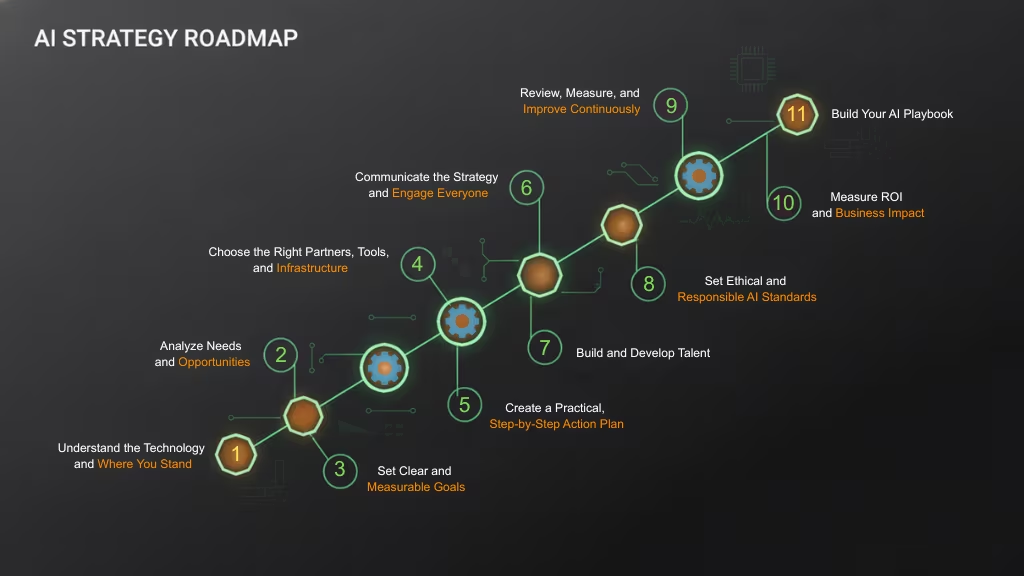
1. Understand the Technology and Where You Stand
Before you can lead with AI, you have to know what it is and how ready your company really is. This step is all about learning and self-assessment.
Start by teaching your leaders and teams:
- What AI really means, from basic automation to generative AI.
- How it works in simple terms: AI learns from data to make predictions or suggestions.
- What AI can realistically do for your type of business.
Then, measure your current readiness.
Ask:
- Do we have clean, organized data?
- Do we have the right tools and infrastructure?
- Are our people trained to use AI responsibly?
- Do we already have any governance or compliance rules in place?
This gives you a clear picture of where you are now and what you’ll need to build next.
2. Analyze Needs and Opportunities
Once you know your starting point, the next step is finding where AI can make the biggest impact.
Here’s how to do it:
- Look at your current business challenges. Where are things slow, manual, or costly?
- Think about where better predictions or insights could help customer service, operations, risk, marketing, etc.
- Collect ideas from different departments. Encourage them to share where AI might help.
- Score each idea based on:
- Value: How much benefit will it bring?
- Feasibility: Do we have the data and people to make it work?
- Risk: Are there privacy or ethical issues?
- Value: How much benefit will it bring?
This step turns “AI sounds interesting” into “These are the top three use cases we should start with.”
3. Set Clear and Measurable Goals
An AI strategy must have specific goals; otherwise, you can’t measure success. Think about what success looks like in business terms, not just technical terms.
For example:
- “Reduce customer wait times by 25% using an AI chatbot.”
- “Use predictive analytics to lower maintenance costs by 15%.”
- “Improve forecasting accuracy by 10% to optimize inventory.”
Set goals that are clear, measurable, and achievable within a certain timeframe. When everyone knows the target, projects stay focused and accountable.
4. Choose the Right Partners, Tools, and Infrastructure
AI doesn’t happen in isolation it depends on the right technology and partnerships.
Here’s what to consider:
- Choose tools that fit your business needs, don’t chase trends.
- If you use outside vendors, check for transparency, security, and compliance.
- Use cloud or hybrid systems that can grow with you.
- Decide what to build in-house and what to outsource based on your strengths.
Also, set up a vendor management plan. Keep track of your external tools and their performance. This ensures your AI ecosystem stays reliable and secure.
5. Create a Practical, Step-by-Step Action Plan
This is where strategy becomes execution. A great AI plan breaks the journey into manageable stages with ownership, milestones, and budgets.
Here’s a simple structure:
- Foundation Phase: Get your data ready, set up platforms, and define governance.
- Pilot Phase: Test your top 1–3 use cases. Measure what works and what doesn’t.
- Scale Phase: Expand successful pilots, improve workflows, and train more teams.
- Optimize Phase: Automate updates, monitor results, and refine processes.
A clear action plan keeps your teams aligned, your goals realistic, and your progress measurable.
6. Communicate the Strategy and Engage Everyone
Even the best strategy fails without good communication. People need to understand why the company is using AI and how it will affect them.
Tips for strong communication:
- Start with the “why” of how AI supports the company’s mission and goals.
- Explain the benefits simply, without jargon.
- Share early successes and lessons learned.
- Create open channels for questions and feedback.
When people understand the vision and see real progress, they become active supporters instead of passive observers.
7. Build and Develop Talent
AI is powered by people, not just machines. Your strategy should invest in both technical expertise and AI literacy for everyone.
Build a layered learning plan:
- AI basics for all employees: Helps everyone feel confident and informed.
- Deep technical training: For data engineers, analysts, and developers.
- Cross-functional teams: Combine business and tech experts to solve real problems together.
- Career paths and incentives: Reward those who help advance AI capabilities.
A culture of learning keeps your organization innovative and future-ready.
8. Set Ethical and Responsible AI Standards
AI must be used responsibly and transparently. Setting up ethics and governance early prevents serious issues later.
Here’s how to embed responsibility:
- Create a short, clear Responsible AI policy that defines fairness, privacy, and accountability.
- Test models regularly for bias, drift, and explainability.
- Form an AI ethics or review board to evaluate high-impact projects.
- Make sure your practices follow national and international regulations.
Responsible AI builds trust, and trust builds long-term adoption.
9. Review, Measure, and Improve Continuously
AI strategy isn’t “set it and forget it.” It’s an ongoing process of learning and adjusting. The best companies treat their AI roadmap as a living document.
Keep improving by:
- Reviewing results every few months, did you meet your goals?
- Tracking model performance for accuracy and fairness.
- Updating your strategy yearly to match new technology and business priorities.
- Using lessons from one project to guide the next.
Continuous review keeps AI aligned with business needs and ensures you’re always moving forward.
10. Measure ROI and Business Impact
To keep executive support, you must prove that AI creates value. That means tracking both technical success and business results.
Track three levels of metrics:
- Technical: Model accuracy, prediction speed, and reliability.
- Operational: Cost savings, automation rates, efficiency gains.
- Business: Revenue growth, customer satisfaction, and risk reduction.
When you can show how AI improves key performance indicators, it becomes a trusted business asset, not an experiment.
11. Build Your AI Playbook
Finally, document everything you learn. A playbook helps you repeat success, scale faster, and onboard new teams easily.
Your playbook should include:
- A clear process for submitting and approving new AI ideas.
- Templates for project plans, risk reviews, and model evaluations.
- Governance checkpoints for compliance, data security, and ethics.
- A summary of best practices from successful pilots.
This step turns your AI strategy into a repeatable system that grows stronger with every project.
Pitfalls in Creating a Successful AI Strategy
Even strong strategies can fail if key challenges are ignored. Most failures don’t come from bad technology; they come from weak planning, poor communication, or a lack of readiness. Let’s walk through the most common pitfalls and what you can do to prevent them.
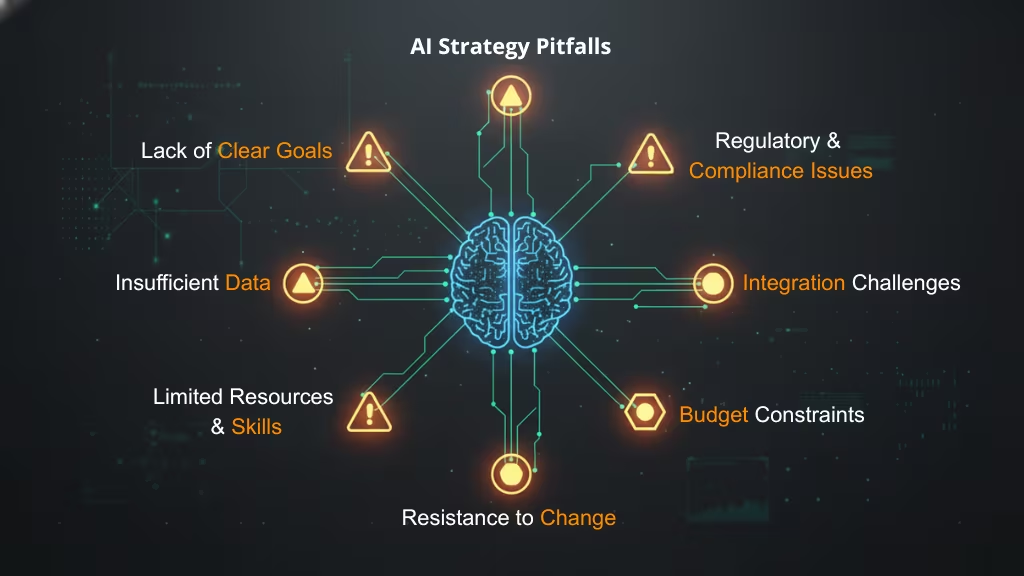
1. Lack of Clear Goals
One of the biggest mistakes is starting AI projects without a specific goal. When teams begin with “We should use AI somewhere,” they often end up building tools that nobody needs.
How to avoid it:
- Always tie AI initiatives to measurable business outcomes like revenue growth, customer experience, or efficiency gains.
- Define success early. Ask: What problem are we solving? How will we know it’s working?
- Keep goals simple, specific, and time-bound.
Clear goals turn AI from a science experiment into a business driver.
2. Insufficient Data
AI systems learn from data, and without the right data, they simply can’t perform well. Poor-quality, fragmented, or biased data leads to unreliable models and bad decisions.
How to fix it:
- Start a data readiness audit before building models.
- Clean and unify data sources across departments.
- Monitor data quality continuously, treat it like a product, not a by-product.
Strong data foundations are the single biggest predictor of long-term AI success.
3. Limited Resources and Skills
AI projects require time, money, and expertise. Many companies underestimate how many people and how much coordination are needed.
What to do instead:
- Begin with a small, well-funded pilot that proves value quickly.
- Upskill existing staff and recruit where needed, especially data engineers, MLOps, and governance experts.
- Invest in automation and cloud infrastructure to scale efficiently.
Start small, but start with the right resources. It’s better to succeed at one use case than fail at five.
4. Resistance to Change
People can be cautious or even afraid when new technology changes how they work. If AI is seen as a threat instead of a tool, adoption will stall.
How to overcome it:
- Communicate the purpose of AI early: it’s here to empower, not replace.
- Involve employees in designing and testing AI solutions.
- Celebrate small wins and share stories of how AI made jobs easier.
When people feel part of the journey, they support transformation instead of resisting it.
5. Budget Constraints or Misaligned Investment
AI can require significant investment in infrastructure, data platforms, and skills. But many companies spend either too little (stalling progress) or too much (without clear ROI).
How to stay balanced:
- Align AI funding with business priorities, not trends.
- Use a phased investment model: fund pilots first, scale only what works.
- Track ROI and adjust budgets based on proven outcomes.
Smart budgeting keeps momentum steady and confidence high.
6. Integration Challenges
AI doesn’t live on its own; it must connect with existing systems, processes, and data pipelines. Without proper integration, even the best models stay trapped in silos.
How to prevent this:
- Involve IT and operations teams from the start.
- Plan integration as part of the project timeline, not an afterthought.
- Use APIs and modular architectures to make AI easier to plug into workflows.
Integration is where value becomes visible; it’s how ideas turn into impact.
7. Regulatory and Compliance Issues
As governments tighten AI regulations, compliance becomes essential. Ignoring this can lead to fines, lawsuits, or loss of customer trust.
How to stay compliant:
- Stay informed about laws like the EU AI Act, GDPR, or local data protection rules.
- Build compliance checks into every stage from data collection to deployment.
- Keep detailed records (model cards, audit logs, risk assessments) to show accountability.
Compliance is not bureaucracy; it’s part of responsible innovation.
Conclusion
A solid AI strategy drives innovation and adds real value to the business. It links technology to purpose. It builds trust through governance. It also helps people use data-driven insights to take action. When used clearly and responsibly, AI is more than a tool. It turns into a key asset. It promotes growth, builds strength, and provides lasting benefits.
FAQs on Creating an Effective AI Strategy
What is the goal of an AI strategy?
The goal of an AI strategy is to align artificial intelligence initiatives with business objectives to drive measurable outcomes such as efficiency, innovation, and competitive advantage.
Why is governance important in AI strategy?
Governance ensures that AI systems operate ethically, comply with regulations, and remain transparent and accountable throughout their lifecycle.
How do I know if my organization is ready for AI?
An organization is ready when it has quality data, leadership commitment, clear goals, and the necessary skills or partnerships to implement and scale AI solutions.
What are the key elements of an effective AI strategy?
The seven key elements are: Principles, Business Strategy, Governance, Operating Model, Talent, Technology, and Activation.
How can I ensure my AI projects deliver value?
Define clear, measurable KPIs for every initiative, link them to business outcomes, and continuously review progress using both technical and financial metrics.
What are common reasons AI strategies fail?
The most common causes are unclear goals, poor data quality, lack of resources, resistance to change, integration difficulties, and weak governance.
How often should an AI strategy be reviewed?
AI strategies should be reviewed at least annually or more frequently in fast-changing industries to adapt to new technologies, regulations, and business priorities.
This page was last edited on 2 December 2025, at 5:00 pm
Contact Us Now

Contact Us Now
Start a conversation with our team to solve complex challenges and move forward with confidence.


