
Not every AI idea is worth the investment—yet the pressure to experiment has never been higher. Organizations face an overwhelming flood of potential AI projects, but resources and momentum are finite. Many AI pilots stall before scaling, producing little measurable value. This is where disciplined prioritization becomes critical.
The real challenge isn’t merely identifying what AI can do—it’s knowing which use cases to bet on for maximum business impact and scalability. This article delivers a concrete, proven AI playbook for prioritizing high-impact use cases: a practical, repeatable framework that helps enterprises select, score, and scale AI projects with confidence.
Read on for actionable steps, visual tools, and real-world examples—plus expert commentary and downloadable templates to turn prioritization into real business results.
Executive Summary: What Is an AI Playbook for High-Impact Use Case Prioritization?

An AI playbook for prioritizing high-impact use cases is a step-by-step framework organizations use to systematically select, evaluate, and scale AI initiatives that drive measurable business value.
This playbook includes defining business objectives, assessing data readiness, applying evidence-based selection criteria (such as an impact-effort matrix), forming cross-functional teams, running pilots, and scaling proven solutions. According to Info-Tech and McKinsey, organizations that follow a structured playbook are significantly more likely to realize ROI and accelerate digital transformation.
Why Prioritize High-Impact AI Use Cases? (Business Imperative)
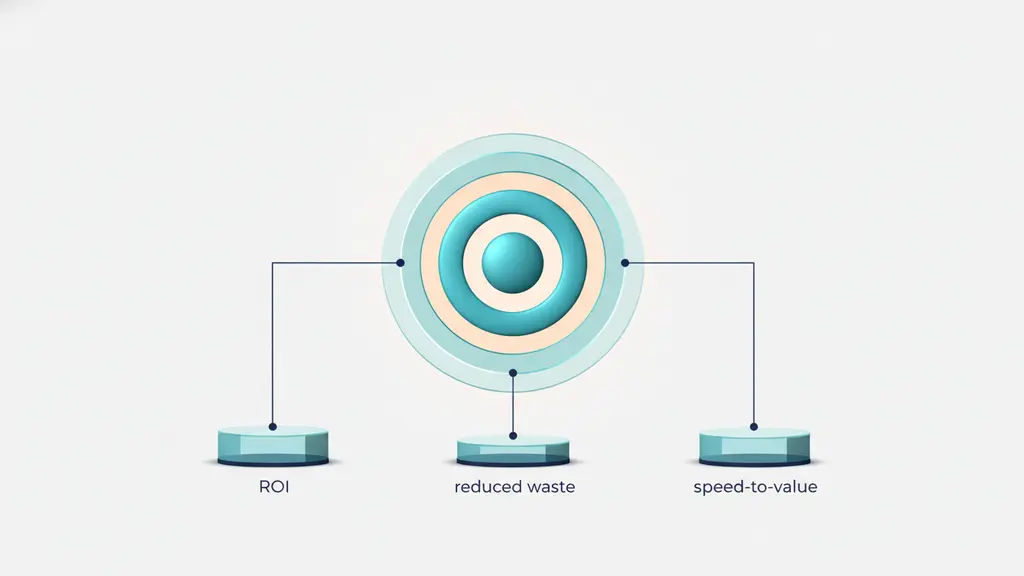
Systematic prioritization of AI projects ensures scarce resources are focused on initiatives that deliver clear, measurable value to the organization.
Business Benefits of Prioritizing High-Impact AI Use Cases:
- Maximizes ROI by selecting initiatives with the highest potential for business impact.
- Reduces wasted spend on pilots that do not deliver or scale.
- Accelerates time-to-value for AI investments.
- Aligns technology with strategic business goals, driving digital transformation.
- Strengthens competitive advantage by focusing on differentiated, high-ROI opportunities.
Industry research underscores the risk: According to McKinsey, more than half of AI pilots fail to scale due to unclear objectives or misaligned priorities. Adopting an impact-driven approach safeguards investments and builds long-term enterprise AI value.
Core Principles for Prioritizing AI Use Cases
Effective AI use case prioritization rests on a foundation of strategic, ethical, and evidence-based decision-making.
Core Principles:
- Business Impact First: Focus on use cases with clear, measurable outcomes tied to strategic objectives.
- Impact vs. Effort Balance: Prioritize initiatives that offer the best ratio of value to implementation complexity and cost.
- Feasibility Considerations: Assess data readiness, technical and operational feasibility before committing.
- Responsible AI: Integrate governance, ethics, and compliance from project inception.
- Repeatable Frameworks: Use standardized tools (e.g., impact-effort matrix) for consistency and transparency.
These principles help organizations cut through the hype, avoid “shiny object” distractions, and build a sustainable AI roadmap.
Step-By-Step AI Playbook: How to Prioritize High-Impact Use Cases

A structured, six-phase playbook guides organizations from idea to scaled value.
1. Align on Business Goals and AI Governance
Begin by anchoring every AI initiative to tangible business outcomes and establishing robust guardrails.
Action Steps:
- Clarify Objectives: Define strategic business goals (e.g., revenue growth, cost savings, customer experience improvements).
- Set Governance Structures: Establish policies for ethics, compliance, risk management, and data security. Reference leading frameworks such as those from Info-Tech or enterprise AI playbooks.
- Identify Executive Sponsors: Assign leadership accountability to drive alignment, funding, and adoption.
Example: A financial services firm set a clear objective to reduce fraud-related losses by 30% and created an AI council for oversight before evaluating potential AI use cases.
2. Assess Data and Technical Readiness
Assessing the quality and availability of data and necessary technical infrastructure avoids costly project false starts.
Checklist for Data & Tech Readiness:
- Data Availability: Is the required data accessible and sufficient in volume?
- Data Quality: Are datasets clean, accurate, and consistent?
- Data Security: Are privacy and compliance controls in place?
- Infrastructure Assessment: Is the current tech stack compatible with target AI solutions (cloud, on-prem, hybrid)?
- Responsible Data Practices: Ensure data is collected, managed, and used ethically.
Tip: Many AI pilots stall due to underestimated data barriers. Conduct a readiness audit before greenlighting candidates.
3. Identify, Score & Select AI Use Cases (With Impact-Effort Matrix)
A transparent, quantitative scoring process underpins defensible, repeatable prioritization.
- Brainstorm Potential Use Cases: Gather candidate ideas across the organization.
- Define Scoring Criteria: Typically includes business impact, technical feasibility, estimated cost, speed-to-value, and strategic alignment.
- Apply the Impact-Effort Matrix: Score each use case against defined criteria for consistent comparison.
Sample Impact-Effort Matrix Table:
| Use Case | Business Impact (1–5) | Effort/Complexity (1–5) | Score (Impact/Effort) | Priority |
| Automated Claims Review | 5 | 2 | 2.5 | High |
| Chatbot Concierge | 3 | 3 | 1 | Medium |
| Predictive Maintenance | 4 | 5 | 0.8 | Low |
Tip: High-priority projects combine maximum business value and low-to-moderate effort—“quick wins” that build confidence and momentum.
4. Build Cross-Functional Teams and AI Center of Excellence
AI success relies on more than technology—it requires strong collaboration across key roles.
Team-Building Steps:
- Form Cross-Functional Teams: Include data scientists, IT professionals, business unit leads, and compliance experts.
- Establish an AI Center of Excellence (CoE): Centralize expertise, share best practices, and champion responsible, repeatable processes.
- Promote Change Management: Facilitate regular knowledge sharing, training, and stakeholder engagement.
Best Practice: According to Gartner, organizations with a formal AI CoE are more likely to scale successful pilots and drive enterprise adoption.
5. Pilot, Prove Value, and Measure ROI
All promising use cases should be validated through focused pilots with clearly defined success criteria.
- Design Pilot Studies: Limit scope to test value hypotheses quickly and cost-effectively.
- Establish Success Metrics: Use KPIs linked to business value (e.g., lift in sales, reduction in claims processing time, customer satisfaction increases).
- Deploy ROI Dashboards: Track financial and operational metrics for each pilot.
Example Metric Table:
| KPI | Baseline | Target | Actual (Pilot) |
| Fraud Detection Rate | 85% | 95% | 93% |
| Processing Time (hrs) | 48 | 24 | 26 |
| Cost per Transaction | $15 | $10 | $11 |
Calculate ROI with a downloadable template for consistent measurement and executive reporting.
6. Scale, Optimize, and Sustain AI Initiatives
Once pilots have demonstrated value, shift focus to enterprise-wide scaling and continuous improvement.
Scaling Steps:
- Roll Out Successful Solutions: Move beyond pilot groups to broader business units, replicating proven approaches.
- Monitor and Iterate: Use feedback loops and ongoing performance dashboards to optimize deployments.
- Institutionalize Learning: Update playbooks, share lessons learned, and adapt governance to reflect real-world outcomes.
- Manage Change Proactively: Train and upskill teams to support adoption and reduce resistance.
Scaling isn’t just about technology—it’s about turning initial wins into a repeatable model for AI-driven transformation.
Practical Tools & Templates for AI Use Case Prioritization
Accessible, ready-to-use tools accelerate adoption of the playbook and ensure every step is operationalized.
Key Resources:
- Impact-Effort Matrix Template: Downloadable in Excel/PDF—score and compare use cases side by side.
- Use Case Evaluation Scorecard: Fillable checklist with criteria including impact, feasibility, data readiness, risks, and alignment.
- Step-by-Step Instructions: Each template includes embedded guidance and sample entries for fast onboarding.
Download these tools and share them with your teams to support collaborative, evidence-driven AI prioritization.
Avoiding Pitfalls: Common Mistakes and How to Ensure Success
Many AI programs falter due to avoidable missteps. Learn from the experience of leading organizations to maximize your odds of success.
Top 5 Pitfalls to Avoid:
- Underestimating Data Barriers: Skipping data quality checks leads to inaccurate results.
- Chasing Trends vs. Business Needs: Pursuing “shiny object” projects with low alignment erodes value.
- Siloed Decision-Making: Lack of cross-functional input increases risk of project failure.
- Ineffective Change Management: Failing to communicate or upskill causes poor adoption.
- Lack of Follow-Through: Stopping at pilot stage, with no plan for scaling or sustainability.
How to Succeed:
- Establish governance and cross-team collaboration early.
- Rely on evidence-based scoring, not intuition.
- Use the playbook to guide every stage—from idea to scaled impact.
Sector Spotlights: High-Impact AI Use Cases by Industry
Leading organizations adapt the AI playbook to address sector-specific challenges and opportunities.
Industry Examples:
| Industry | Use Case | Business Goal | Challenge | Outcome |
| Banking | Automated Fraud Detection | Reduce financial losses | High-volume, real-time analysis | 25% drop in fraud-related claims |
| Manufacturing | Predictive Maintenance | Minimize downtime | Equipment failure | 15% reduction in unplanned outages |
| Healthcare | Diagnostic Image Analysis | Improve care quality | Large unstructured data sets | Faster, more accurate diagnoses |
How the Playbook Applied:
- Banking: Used the impact-effort matrix to select fraud detection over less mature chatbot pilots.
- Manufacturing: Piloted predictive maintenance in one plant, then scaled after demonstrating cost savings.
- Healthcare: Established AI CoE to manage regulatory compliance and multidisciplinary collaboration.
Building an AI-Ready Culture and Establishing a Center of Excellence
A high-performing AI organization depends on people, culture, and structure as much as technology.
AI-Ready Culture Checklist:
- Executive leadership visibly supports and invests in AI.
- Change management programs are in place (training, upskilling, communication).
- A formal AI Center of Excellence governs projects, shares best practices, and ensures responsible AI adoption.
- Collaboration across IT, data, business, and compliance teams is the norm.
- Successes and learnings are celebrated and disseminated organization-wide.
Tip: According to Alteryx, organizations with dedicated AI champions and ongoing upskilling programs consistently outperform their peers in scaling AI.
Frequently Asked Questions (FAQ) About AI Playbook Prioritization
What is an AI playbook for prioritizing high-impact use cases?
It is a structured, step-by-step framework organizations use to identify, evaluate, and scale AI projects that offer the highest business value, ensuring resources are used effectively.
How do organizations define and identify high-impact AI use cases?
High-impact AI use cases are those with measurable, strategic benefits—such as increased revenue, reduced costs, or improved customer experience. Organizations identify them by aligning with core goals and using frameworks like the impact-effort matrix.
What Are The Best Frameworks For AI Use Case Selection?
The most effective frameworks for AI use case prioritization include the impact effort matrix, structured use case scorecards, and Info Tech style prioritization models. These approaches help organizations evaluate high impact AI use cases based on business value, technical feasibility, risk, and strategic alignment.
How Does An Impact Effort Matrix Work For AI?
An impact effort matrix supports AI use case prioritization by visually comparing potential use cases across two dimensions business impact and implementation effort. This helps teams quickly identify high impact AI use cases that are feasible to implement and capable of delivering early value.
What Are Common Challenges In Scaling AI Projects?
Organizations often struggle to scale high impact AI use cases due to poor data readiness, siloed teams, weak change management, unclear ownership, and lack of governance. These challenges can prevent promising AI initiatives from moving beyond experimentation.
How Should Data Readiness Be Assessed For AI Use Case Prioritization?
Data readiness should be assessed by reviewing data availability, quality, security, and interoperability. Strong data foundations are essential for selecting and executing high impact AI use cases that can scale reliably across the organization.
What Roles Are Needed In An AI Center Of Excellence?
An AI Center of Excellence typically includes data scientists, IT architects, business analysts, compliance and risk officers, project managers, and change leaders. Together, these roles support AI use case prioritization and ensure that high impact AI use cases are developed responsibly and aligned with business goals.
How Is AI ROI Measured And Tracked?
AI ROI is measured by linking high impact AI use cases to key performance indicators such as cost reduction, revenue growth, productivity gains, and process efficiency. Dashboards and regular reviews help track performance and guide future AI use case prioritization decisions.
What Governance Structures Are Essential For Responsible AI Adoption?
Effective governance for AI use case prioritization includes executive oversight, ethical guidelines, risk management policies, compliance checks, and regular audits. These structures ensure that high impact AI use cases are deployed responsibly and sustainably.
How Can Common Pitfalls In An AI Playbook Be Avoided?
Common pitfalls can be avoided by following standardized AI use case prioritization frameworks, investing early in data readiness, encouraging cross functional collaboration, communicating value clearly, and continuously refining the approach based on lessons learned.
Conclusion And Next Steps: Transform Your AI Strategy With A Practical Playbook
A structured AI playbook for prioritizing high impact use cases enables organizations to move beyond experimentation and focus on initiatives that deliver real business value. By applying a consistent framework, leaders can make better decisions about where to invest, how to scale successful use cases, and how to align AI initiatives with broader business goals.
Success depends not only on technology, but also on strong governance, cross functional collaboration, and a culture that supports data driven decision making. When these elements come together, organizations are better positioned to build scalable AI capabilities that drive long term impact and sustainable competitive advantage.
Key Takeaways: Your Action Plan for Prioritizing High-Impact AI Use Cases
- Focus resources on high-impact AI use cases tightly aligned with business strategy.
- Apply frameworks such as the impact-effort matrix and use case evaluation scorecards for transparent, repeatable prioritization.
- Ensure success through robust AI governance, data readiness, and cross-functional collaboration.
- Use ready-to-download templates and checklists to accelerate adoption and execution.
- Build an AI Center of Excellence and foster a culture of learning for scalable, sustained impact.
This page was last edited on 9 February 2026, at 10:53 am
Contact Us Now

Contact Us Now
Start a conversation with our team to solve complex challenges and move forward with confidence.


