

- AI in the Energy Sector
- Why AI is Needed for the UAE’s Energy Sector
- Use Cases of AI in The UAE's Energy Sector
- How to Implement AI in Energy Software/Apps?
- Cost Estimations for Implementing AI in the Energy Sector
- Challenges and Solutions For Implementing AI in the Energy Sector
- The Future of AI in the UAE’s Energy Sector
- Conclusion
- FAQs on AI in the UAE Energy Sector
The UAE operates one of the most complex energy ecosystems in the world, spanning large-scale oil and gas operations, rapidly expanding renewable capacity, and highly reliable power and grid infrastructure. Managing this system requires decisions to be made faster, with greater precision, and across far more variables than traditional tools were designed to handle.
This is where AI in the UAE Energy Sector is taking shape, not as a future experiment, but as a practical response to operational scale, system complexity, and long-term transition goals. As energy assets become more interconnected and data-intensive, the ability to continuously analyze, predict, and optimize is becoming a baseline requirement.
This article examines how AI is being applied across the UAE’s energy landscape, what it takes to implement it effectively, the costs and challenges involved, and how these systems are shaping the sector’s next phase.
TL;DR
- AI in the UAE Energy Sector is used to manage large-scale energy operations across oil & gas, renewables, power grids, and utilities.
- Key applications include predictive maintenance, demand forecasting, smart grid optimization, energy storage management, and emissions monitoring.
- Major UAE energy organizations deploy AI at production scale to improve reliability, reduce costs, and support energy transition goals.
- Implementing AI in energy systems requires strong data pipelines, system architecture, integration, and ongoing monitoring.
- AI implementation costs vary widely, with success depending on execution discipline, governance, and long-term operational planning.
AI in the Energy Sector
At the operational level, AI enables predictive control. Sensors across grids, power plants, and energy assets generate constant data streams. AI analyzes these signals to detect early signs of failure, performance drift, or inefficiency. This allows maintenance and operational actions to be taken before disruptions occur, reducing downtime and improving asset reliability.
AI also improves demand and supply planning. Energy consumption fluctuates based on time, weather, and behavior. AI models forecast demand more accurately using historical and real-time data, enabling better generation scheduling, storage use, and grid balancing. This is critical for maintaining stability without overproducing energy.
Renewable energy integration further increases the need for AI. Solar and wind output changes rapidly with weather conditions. AI systems forecast generation and coordinate storage and backup supply to maintain grid stability. Without AI, high renewable penetration would lead to increased volatility and operational risk.
AI is also shaping market and sustainability decisions. Energy pricing, dispatch, and emissions monitoring require fast analysis of complex variables. AI supports these functions by automating analysis and improving response times, while maintaining transparency and auditability in regulated environments.
In practice, AI allows the energy sector to operate as a dynamic system rather than a static one. When implemented correctly, it improves reliability, controls costs, and supports long-term sustainability without adding operational complexity.

Why AI is Needed for the UAE’s Energy Sector
The UAE’s energy sector is evolving faster than traditional systems can keep up with. Rising demand, aggressive decarbonization targets, and increasingly complex infrastructure have made AI a necessity rather than an upgrade. Below are the core reasons driving AI adoption across the sector.
Managing Scale and Operational Complexity
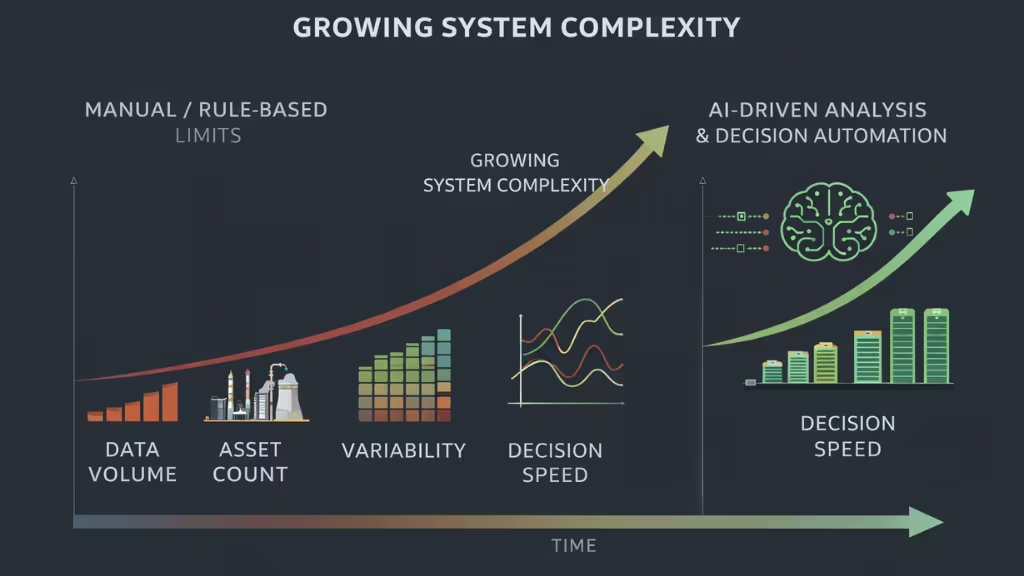
The UAE operates energy systems on a massive scale. ADNOC alone manages thousands of wells, pipelines, and processing facilities across upstream, midstream, and downstream operations. Coordinating these assets using manual or rule-based systems leads to inefficiencies and blind spots.
AI helps manage this complexity by analyzing large volumes of operational data in real time. ADNOC’s AI deployments across more than 30 use cases generated $500 million in value in a single year, largely by optimizing drilling, production, and maintenance workflows. At this scale, even small efficiency gains translate into significant financial and operational impact.
Enabling the Energy Transition and Net-Zero Goals
The UAE has committed to Net Zero by 2050, with interim targets that include rapidly increasing clean energy capacity. Abu Dhabi aims for 50% clean electricity by 2030, while Masdar is targeting 100 GW of renewable capacity globally.
Renewables introduce variability that traditional systems struggle to manage. AI is essential for:
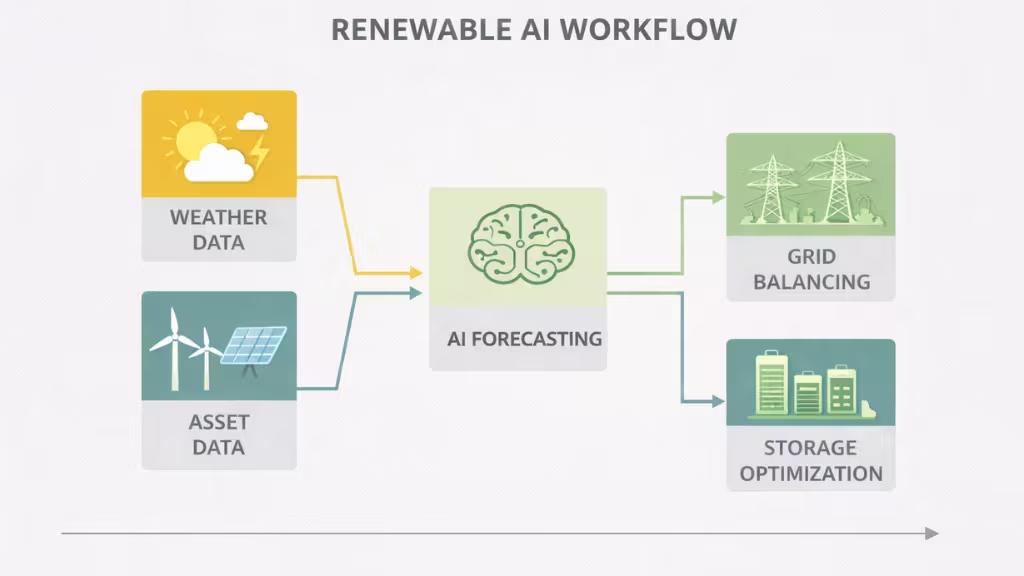
- Forecasting solar and wind generation
- Balancing supply and demand in real time
- Optimizing energy storage and backup generation
Without AI-driven forecasting and optimization, integrating renewables at this scale would increase grid instability and operational costs.
Maintaining Grid Reliability and Resilience
Reliability is non-negotiable for the UAE’s energy infrastructure. Utilities like DEWA have achieved global benchmarks, reducing average power outages to just over one minute per customer per year.
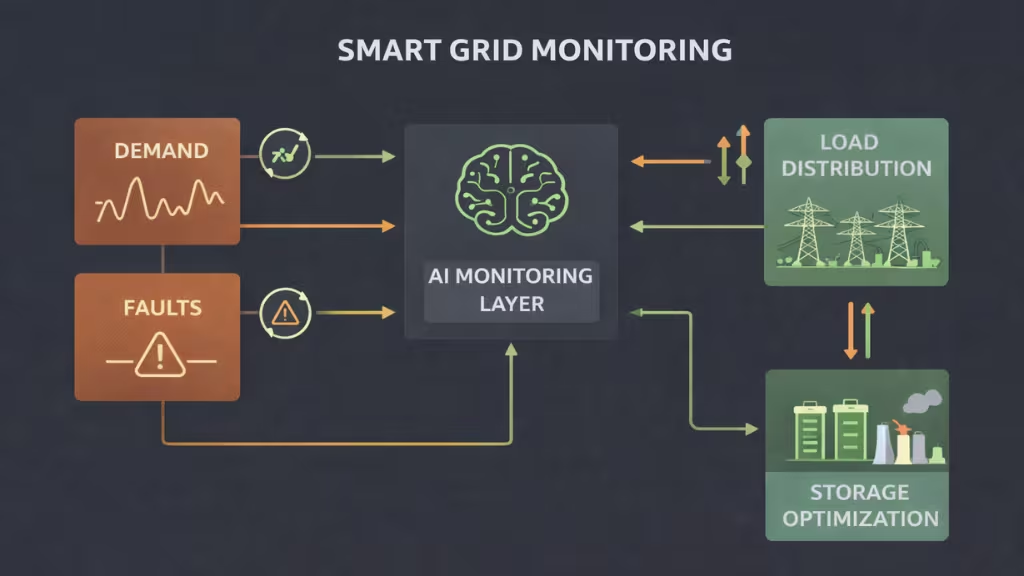
AI plays a central role in this performance. Machine learning models predict demand spikes, detect faults before they escalate, and automatically reroute power when issues occur. As electric vehicles, smart buildings, and distributed energy resources expand, AI becomes critical to maintaining grid stability without excessive manual intervention.
Reducing Costs Through Predictive Operations
Energy infrastructure is capital-intensive, and unplanned downtime is expensive. AI enables a shift from reactive to predictive maintenance, identifying potential failures before they occur.
In oil & gas, this reduces shutdowns and extends asset life. In power generation and renewables, it minimizes downtime and improves output efficiency. While AI systems introduce new costs for data pipelines and monitoring, these are outweighed by long-term savings from reduced failures, lower maintenance spend, and improved asset utilization.
Aligning With National Strategy and Global Competitiveness
AI adoption in energy is also driven by national policy. The UAE National AI Strategy 2031 explicitly identifies energy as a priority sector for AI deployment. This is supported by long-term investment commitments, including a $1.4 trillion multi-year framework tied to AI, energy, and advanced technologies.
As the UAE positions itself as a global hub for AI-driven energy systems, companies operating in this ecosystem are expected to align with these priorities. AI is becoming part of the baseline for competitiveness, not a differentiator reserved for early adopters.
Use Cases of AI in The UAE’s Energy Sector
AI adoption across the UAE’s energy sector is driven by operational scale, data volume, and the need for continuous optimization. Each segment below outlines a new context (without repeating earlier stats), followed by real, named implementations.

AI in Oil & Gas Operations
Oil and gas operations generate continuous high-frequency data from drilling equipment, pipelines, compressors, and refineries. A single offshore field can produce millions of sensor readings per day, making manual analysis impractical. As production environments become more automated and geographically distributed, AI is required to analyze patterns, detect anomalies, and support real-time decision-making across assets.
Use Case: Exploration and Reservoir Optimization
Real Example: ADNOC’s AI-Driven Subsurface Modeling (AIQ Platform)
ADNOC uses AI models developed through AIQ to process seismic and reservoir data, enabling faster interpretation and more accurate drilling decisions across complex geological formations.
Use Case: Predictive Maintenance and Asset Reliability
Real Example: ADNOC’s Centralized Predictive Analytics and Diagnostics (CPAD)
CPAD monitors equipment health across processing facilities, identifying early signs of failure and enabling proactive maintenance planning.
Use Case: Autonomous and Remote Operations
Real Example: ADNOC’s Smart Field and Remote Well Operations
AI-powered systems allow centralized control of wells and field equipment, reducing the need for on-site intervention in remote and offshore locations.
AI for Renewable Energy Generation and Asset Management
Utility-scale solar and wind assets operate across large geographic areas and are exposed to environmental factors such as heat, dust, and wind variability. Performance degradation can occur gradually and is difficult to detect without continuous analytics. AI is used to process asset-level data at scale and improve operational visibility across renewable portfolios.
Use Case: Renewable Energy Forecasting
Real Example: Masdar’s AI-Based Solar and Wind Forecasting Systems
Masdar applies AI models to combine weather data with historical plant performance, improving short-term and day-ahead generation forecasts.
Use Case: Predictive Maintenance for Renewable Assets
Real Example: Masdar–Presight AI Asset Management Platform
The platform analyzes sensor data from renewable assets to identify early signs of equipment degradation and schedule maintenance before failures occur.
Use Case: Energy Storage Optimization
Real Example: AI-Optimized Battery Management in Utility-Scale Solar Projects
AI systems optimize charge and discharge cycles for battery storage systems based on grid conditions and expected demand.
AI in Power Generation and Utilities
Electricity networks are increasingly complex due to distributed generation, rooftop solar, EV charging, and smart devices. Traditional grid management systems struggle to respond to these dynamics in real time. AI enables utilities to process large volumes of grid data and automate operational decisions at the network scale.
Use Case: Demand Forecasting and Load Management
Real Example: DEWA’s AI-Based Demand Forecasting System
DEWA uses AI models to analyze historical usage and environmental factors to improve short- and long-term demand forecasting accuracy.
Use Case: Smart Grid Monitoring and Fault Detection
Real Example: DEWA’s Smart Grid Optimization Program
AI systems monitor grid performance continuously, detect abnormalities, and support automated fault isolation and recovery.
Use Case: Loss Detection and Grid Efficiency
Real Example: DEWA’s AI-Driven Smart Meter Analytics
AI analyzes smart meter data to identify inefficiencies and losses across the transmission and distribution network.
AI for Energy Efficiency and Demand-Side Management
Cooling, lighting, and industrial processes account for a large share of electricity consumption in the UAE. Static control systems are inefficient in environments where usage patterns change throughout the day and across seasons. AI enables adaptive, real-time optimization based on occupancy, behavior, and environmental inputs.
Use Case: Smart Buildings and Energy Optimization
Real Example: DEWA’s Al Shera’a Net-Zero Building
AI-driven building management systems dynamically optimize HVAC, lighting, and space utilization based on real-time conditions.
Use Case: Industrial Energy Optimization
Real Example: AI-Based Energy Optimization in Large Industrial Facilities
AI systems adjust industrial processes to reduce energy consumption during peak demand periods while maintaining output levels.
AI for Emissions Monitoring and Sustainability
Emissions monitoring requires continuous data collection across multiple assets and processes. Manual reporting methods lack the resolution and timeliness needed for proactive mitigation. AI enables near real-time visibility into emissions sources and supports automated reporting workflows.
Use Case: Real-Time Emissions Detection
Real Example: ADNOC’s Emission X AI System
Emission X applies AI models to operational data to detect potential emissions risks early and support mitigation planning.
Use Case: ESG Reporting and Compliance
Real Example: AI-Driven Carbon Monitoring and Reporting Platforms
AI platforms automate emissions data aggregation and reporting, improving consistency and audit readiness.

How to Implement AI in Energy Software/Apps?
Implementing AI in energy software or applications is not a single-step upgrade. It is a staged engineering process that combines data readiness, system design, and long-term operational planning. In the UAE energy context, where systems are large-scale, regulated, and mission-critical, AI implementation must be deliberate, traceable, and production-focused.
Below is a practical implementation approach that reflects how AI is actually deployed in operational energy systems.
Step 1: Define the Business and Operational Objective
AI implementation should begin with a clearly defined operational problem, not a technology choice. Energy organizations that succeed with AI start by identifying the decision or process that needs improvement.
For example:
- An energy consumption app may aim to reduce peak load for residential users
- A wind farm system may focus on predicting turbine maintenance needs
- A grid application may target faster fault detection and recovery
Each objective should be measurable, such as improving forecast accuracy, reducing downtime, or lowering operational losses. These targets directly influence data requirements, model selection, and system architecture.
Step 2: Prepare and Structure Energy Data
Energy software relies on diverse and continuous data streams, but raw data is rarely usable in its original form.
Typical data sources include:
- Historical data: energy consumption, generation logs, asset performance history
- Real-time data: smart meters, IoT sensors, SCADA, and EMS systems
- External data: weather forecasts, pricing signals, regulatory inputs
To make this data usable, teams implement pipelines that:
- Clean and validate incoming data
- Normalize units and formats
- Align timestamps across systems
- Label events for supervised learning
- Version datasets for audit and traceability
Common tools used at this stage:
Python (Pandas, NumPy) for preprocessing, SQL for querying, Apache Spark for large-scale processing, Kafka or MQTT for streaming data ingestion, and Airflow or Prefect for pipeline orchestration.
Step 3: Design the AI System Architecture
AI in energy is deployed as a system, not a standalone model.
A typical architecture includes:
- Data ingestion and preprocessing layers (batch + streaming)
- Model layer for forecasting, anomaly detection, or optimization
- Integration layer connecting AI outputs to EMS, DMS, or ERP systems
- Monitoring and logging components for observability and audits
For example, in a smart grid application, demand forecasting may run upstream, optimization logic may sit in the middle, and control or advisory systems operate downstream. Designing these layers together ensures reliability, scalability, and compliance.
Step 4: Select and Train Models Based on Use Case
Model selection depends on the nature of the problem and operational constraints.
Common patterns include:
- Time-series models for demand or renewable generation forecasting (ARIMA, LSTM)
- Anomaly detection models for equipment faults or emissions monitoring
- Optimization or reinforcement learning models for dispatch and scheduling decisions
- Deep learning models for image-based inspections, such as solar panel defects
Models are trained on historical operational data and evaluated not only for accuracy, but also for latency, robustness, and explainability, critical factors in regulated energy environments.
Typical tools:
Scikit-learn and XGBoost for classical ML, TensorFlow or PyTorch for deep learning, and MLflow or similar tools for experiment tracking.
Step 5: Integrate AI Into Existing Energy Software
AI outputs must be embedded into real workflows to create value.
This usually involves:
- Exposing models through APIs using frameworks like FastAPI or Flask
- Integrating predictions into dashboards, alerts, or planning tools
- Connecting AI services to databases and real-time streams
- Ensuring access control and traceability for all predictions
For regulated systems, it is critical that operators can understand why a recommendation was generated, not just the output itself.
Step 6: Deploy, Monitor, and Maintain in Production
Deployment is the start of the operational phase, not the end of implementation.
In production, AI systems must handle:
- Continuous monitoring of model performance and latency
- Detection of data drift and behavior changes
- Scheduled retraining with updated data
- Security controls, audits, and access management
Common tools:
Docker for packaging, Kubernetes for scaling, Prometheus and Grafana for monitoring, Jenkins or GitHub Actions for CI/CD, and tools like Evidently or WhyLabs for drift detection.
Without these controls, models degrade silently and lose operator trust.
Step 7: Scale and Optimize Over Time
Once an AI solution proves value in one use case, it can be extended to additional assets, regions, or applications.
Successful UAE energy organizations treat AI as a platform capability, enabling reuse of data pipelines, model infrastructure, and monitoring systems across multiple initiatives.
Scaling requires:
- Modular architecture
- Cloud or hybrid deployment models
- Clear ownership and governance structures
Cost Estimations for Implementing AI in the Energy Sector
The cost of implementing AI in the UAE energy sector varies widely based on system scope, integration depth, and operational scale. In practice, AI investments typically start around $45,000 for focused pilot solutions and can exceed $50 million for enterprise-wide deployments spanning oil & gas operations, smart grids, and renewable energy systems.
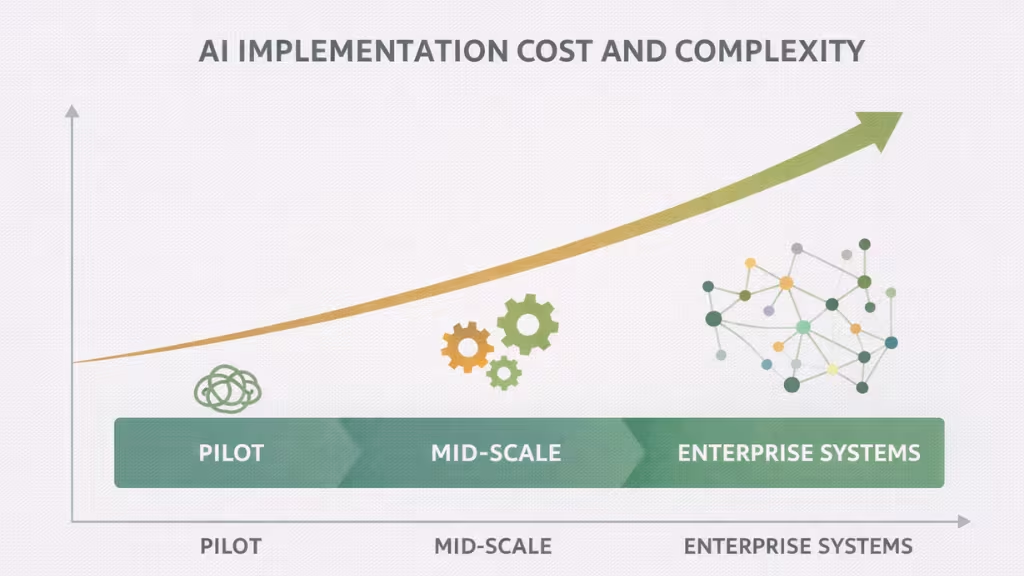
Most cost overruns occur not because AI is expensive upfront, but because long-term infrastructure, compliance, and maintenance costs are underestimated.
Cost Ranges by Project Complexity
AI implementation costs in the energy sector generally fall into three broad tiers.
| Project Scope | Typical Capabilities | Estimated Cost Range |
|---|---|---|
| Foundational AI Systems | Predictive maintenance, basic energy consumption forecasting | $45,000 – $250,000 |
| Mid-Scale Operational AI | Asset optimization, grid-level demand forecasting, smart metering, and fault detection | $500,000 – $5 million |
| Large-Scale Enterprise AI | End-to-end oil & gas operations, smart grids, renewables, energy trading platforms | $10 million – $50+ million |
Smaller projects are often used to validate ROI, while large-scale initiatives are designed as long-term digital infrastructure investments.
1. Factors Affecting the Cost of Implementing AI in the Energy Sector
Several variables determine where a project falls within these ranges.
| Cost Driver | Why It Matters | Cost Impact |
|---|---|---|
| Data Availability & Quality | Clean, structured data reduces engineering effort | Can reduce costs by $100K–$300K |
| Legacy Infrastructure | Older systems require custom integration layers | Adds $200K–$500K |
| Regulatory & Compliance Requirements | Energy AI must meet governance and audit standards | Adds $100K–$250K |
| AI Maturity Level | Existing ML tools and pipelines lower build time | Saves $150K–$400K |
| Degree of Customization | Bespoke AI delivers higher ROI but costs more | Adds $300K–$700K |
Projects with modern data platforms and cloud-ready infrastructure tend to move faster and stay within budget. Legacy-heavy environments experience higher integration and validation costs.
2. Hidden Costs for Developing & Implementing AI in the Energy Sector
Beyond visible development costs, energy AI projects carry recurring and often overlooked expenses.
| Hidden Cost Area | Typical Financial Impact |
|---|---|
| Data cleaning and labeling | $50,000 – $500,000+ |
| Model retraining and drift management | $20,000 – $150,000 annually |
| Organizational change and training | $50,000 – $300,000+ |
| Custom system integrations | $100,000 – $1 million+ |
| Cybersecurity and risk controls | $100,000 – $500,000+ |
These costs grow over time, especially in environments where AI models must adapt to seasonal demand shifts, asset aging, or regulatory updates.
3. Strategies to Minimize AI Costs in the Energy Sector
AI implementation does not have to be cost-prohibitive. Energy companies in the UAE often reduce spending by focusing on reuse, prioritization, and incremental rollout.
| Area | Cost-Control Strategy | Potential Savings |
|---|---|---|
| Data Infrastructure | Reuse existing data lakes and IoT pipelines | $50,000 – $200,000 |
| Model Development | Use pre-trained models and AutoML frameworks | $100,000 – $300,000 |
| Infrastructure | Adopt cloud-based AI platforms over custom stacks | $200,000 – $1M+ |
Other effective approaches include starting with advisory systems before automation, selecting interpretable models early, and designing AI as a reusable platform rather than a one-off solution.
Challenges and Solutions For Implementing AI in the Energy Sector
AI adoption in the energy sector fails less because of algorithms and more because of execution gaps. In the UAE, these gaps usually appear around data readiness, legacy systems, compliance, and operational ownership. Below is a clear, paired view of challenges and how they are realistically addressed in production environments.
Core Challenges and Practical Solutions
| Challenge | Why It Happens in Energy Systems | What Actually Works |
|---|---|---|
| Fragmented Data | Data lives across SCADA, IoT platforms, meters, and legacy databases | Centralized data lakes, standardized asset IDs, automated data validation |
| Legacy Infrastructure | EMS/DMS systems weren’t built for AI integration | API-based AI services, middleware layers, advisory-first deployment |
| Regulatory & Compliance Pressure | Energy is a critical infrastructure with strict audit requirements | Interpretable models, prediction logs, role-based access, approval workflows |
| Model Drift Over Time | Seasonality, asset aging, and demand shifts change data patterns | Continuous monitoring, drift detection, and scheduled retraining |
| Skill Gaps & Ownership Risk | AI knowledge is concentrated in small teams | Cross-functional teams, documentation, operator training |
| Pilot-to-Production Failure | Pilots built without scale or ownership plans | Modular platforms, reusable pipelines, and clear AI ownership |
Where Most AI Energy Projects Break Down
Most failures cluster around three pressure points:
- Data foundations are weak → models look good in testing but fail in production
- Integration is underestimated → AI outputs never reach operators or planners
- Lifecycle costs are ignored → retraining, monitoring, and compliance overwhelm budgets
Recognizing these early prevents expensive rework later.
What Successful UAE Energy Implementations Do Differently
Successful AI programs in the UAE energy sector tend to follow a few consistent principles:
- Treat AI as operational infrastructure, not a feature
- Start with decision support, then move toward automation
- Design for auditability and explainability from day one
- Reuse data pipelines and platforms across use cases
- Assign clear ownership beyond the pilot phase
This approach reduces risk while enabling scale.
The Future of AI in the UAE’s Energy Sector
AI in the UAE’s energy sector is moving beyond optimization toward autonomy, resilience, and market intelligence. What began as forecasting and monitoring is evolving into systems that can recommend, simulate, and eventually execute decisions across production, grids, and energy markets. This shift is being shaped by national policy, infrastructure investment, and the scale at which the UAE operates its energy assets.
Below are the key directions defining what comes next.
From Predictive Systems to Autonomous Operations
The next phase of AI adoption will focus on autonomous decision-making, not just predictions. In oil & gas, this means AI systems that continuously adjust production parameters, optimize drilling paths, and manage assets with minimal human intervention. In power systems, it means grids that self-balance in real time based on demand, renewable output, and storage availability.
Human oversight will remain critical, but AI will increasingly act as the first responder, detecting issues, proposing actions, and executing predefined responses within safe boundaries.
AI-Driven Energy Markets and Trading
As energy markets become more dynamic, AI will play a larger role in pricing, trading, and dispatch decisions. AI models can analyze demand forecasts, fuel availability, renewable output, and price signals simultaneously, far faster than manual systems.
In the UAE context, this capability supports:
- Optimized energy trading across regional markets
- Smarter dispatch of renewables and storage
- Better alignment between generation costs and real-time demand
This shift will be particularly important as renewable penetration increases and pricing volatility grows.
Deep Integration of AI With Clean Energy and Storage
AI will be central to managing high-renewable energy systems. As solar, wind, and storage capacity scale, AI will coordinate generation, storage, and demand response as a unified system.
Future deployments will rely on AI to:
- Optimize battery charging and discharging at the grid scale
- Balance intermittent renewable output without excess backup capacity
- Reduce curtailment and maximize clean energy utilization
This capability is critical to achieving long-term decarbonization targets without compromising grid stability.
Digital Twins as a Standard Operating Layer
Digital twins, virtual replicas of physical energy assets, will become a standard layer in UAE energy operations. Powered by AI, these twins simulate asset behavior under different scenarios, allowing operators to test decisions before applying them in the real world.
Use cases include:
- Simulating grid expansion or load growth
- Predicting long-term asset degradation
- Stress-testing systems under extreme weather or demand conditions
As these twins mature, they will support both operational decisions and long-term planning.
Stronger Focus on Governance, Trust, and Explainability
As AI systems gain more control, trust and transparency will become non-negotiable. Future AI deployments will place greater emphasis on explainability, auditability, and regulatory alignment.
This includes:
- Clear reasoning behind AI recommendations
- Traceable decision logs for audits
- Built-in compliance with evolving AI governance frameworks
In regulated energy environments, AI systems that cannot explain their behavior will not be allowed to scale.
Talent, Platforms, and Ecosystem Growth
The future of AI in the UAE energy sector will also be shaped by platform thinking. Instead of isolated projects, energy organizations will build shared AI platforms that support multiple use cases across departments and assets.
This approach reduces cost, improves reuse, and accelerates innovation. At the same time, investment in AI talent and cross-functional teams will remain a priority to sustain long-term capability.
Conclusion
AI adoption in the UAE energy sector is now a question of execution choices, not awareness. The differentiator moving forward will be how clearly organizations define ownership, manage long-term risk, and decide what should be automated versus advised.
As AI becomes embedded deeper into energy systems, the cost of poor design decisions will rise, while the value of well-architected systems will compound. The next phase will reward teams that move deliberately, build for durability, and understand that AI outcomes are shaped more by structure than by algorithms.
This is where the real work begins.
FAQs on AI in the UAE Energy Sector
How is AI used in the UAE energy sector?
AI is used to improve forecasting, predictive maintenance, grid optimization, renewable energy integration, emissions monitoring, and operational efficiency across oil & gas, utilities, and clean energy systems.
Why is the UAE investing heavily in AI for energy?
The UAE uses AI to manage large-scale energy assets more efficiently, support renewable integration, reduce operational risk, and meet long-term sustainability and net-zero goals while maintaining energy security.
What are the main AI use cases in the UAE oil and gas?
In oil and gas, AI is used for reservoir modeling, drilling optimization, predictive maintenance, emissions detection, and remote or autonomous operations to improve reliability and reduce costs.
How does AI help integrate renewable energy in the UAE?
AI forecasts solar and wind output, balances supply and demand, optimizes energy storage, and stabilizes the grid, enabling large-scale renewable deployment without increasing volatility.
Is AI already deployed in UAE power grids?
Yes. AI is used in demand forecasting, fault detection, smart grid management, and loss reduction to improve reliability and operational efficiency in electricity networks.
What challenges does the UAE face when implementing AI in energy systems?
Key challenges include fragmented data, legacy infrastructure, regulatory compliance, model drift, cybersecurity risks, and the need for long-term operational ownership.
How much does it cost to implement AI in the UAE energy sector?
Costs typically range from $45,000 for focused pilots to $10M+ for large-scale enterprise systems, depending on data readiness, system complexity, integration depth, and compliance requirements.
Is AI replacing human decision-making in energy operations?
No. In most UAE energy systems, AI supports decision-making by providing predictions and recommendations, while humans retain oversight and final control, especially in regulated environments.
What skills are needed to build AI solutions for the energy sector?
Successful AI projects require data engineering, machine learning, software integration, domain knowledge of energy systems, and experience with security and compliance requirements.
What is the future of AI in the UAE energy sector?
AI is expected to move toward autonomous operations, AI-driven energy markets, digital twins, and deeper integration with renewables and storage while maintaining strong governance and transparency.
This page was last edited on 6 January 2026, at 9:29 am
Contact Us Now

Contact Us Now
Start a conversation with our team to solve complex challenges and move forward with confidence.


