
Understanding agentic ai roi in dubai is becoming critical as organizations accelerate their digital transformation ambitions under the UAE’s smart city and AI leadership initiatives. While many enterprises and government entities are investing heavily in autonomous AI systems, turning those investments into measurable financial returns remains a major challenge. Global ROI models often fail to account for Dubai’s regulatory environment, sector-specific priorities, and rapid innovation cycles.
Agentic AI goes beyond traditional automation by enabling autonomous decision-making, workflow orchestration, and adaptive intelligence. However, without a structured ROI framework tailored to Dubai’s business ecosystem, initiatives can suffer from unclear KPIs, underestimated operational costs, and misaligned executive expectations.
This guide provides a Dubai-focused roadmap to evaluating and maximizing agentic AI ROI. You will gain practical cost breakdown models, performance measurement frameworks, and strategic planning insights designed specifically for enterprises operating in Dubai’s competitive and regulation-aware landscape. By the end, you will have a clear methodology to assess investment impact, mitigate risk, and unlock sustainable value from agentic AI deployments.
Summery Table: Agentic AI ROI in Dubai
| Pillar Concept | Key Insight |
| Definition | Agentic AI = autonomous digital worker, beyond chatbots/automation |
| ROI Formula | ROI = (Total Benefits – Total Costs) / Total Costs |
| Dubai Cost Buckets | One-time, ongoing, hidden, and human/organizational |
| Frameworks | Three Lenses: Financial, Time-to-Value, Risk; sector-specific dashboards |
| Critical Success Factors | Local compliance, modular sovereign stack, change management investment |
| Common Pitfalls | Underestimating legacy integration, compliance creep, skills shortage |
| Best Practice | Regular ROI reviews, upskilling, and regulatory pre-checks maximize value and minimize risk |
What Is Agentic AI, and How Does It Differ from Traditional Automation or Chatbots?
Agentic AI refers to advanced AI systems capable of autonomous decision-making and action, far beyond the static rules of traditional automation or chatbots. Unlike chatbots or RAG (Retrieval-Augmented Generation) systems that rely on predefined flows or simple data retrieval, agentic AI operates as digital workers, handling complex workflows, adapting to context, and collaborating across enterprise systems.
Key Differentiators:
- Autonomy: Agentic AI agents act independently, make decisions, and complete tasks end-to-end without human micro-management.
- Context Awareness: They adapt to business rules, learn from interactions, and respond to new information—unlike chatbots focused mainly on scripted Q&A.
- Business Integration: Digital workers run processes spanning HR, logistics, or finance—interacting with databases, applications, and even physical infrastructure.
Dubai Examples:
- Finance: An agentic AI that reconciles transactions, investigates anomalies, and files compliance reports across multiple bank systems.
- Government: Autonomous agents process permit applications, cross-verify uploaded documents, and prompt human review only for exceptional cases.
Agentic AI is a class of AI technologies that performs complex, context-driven business tasks autonomously, surpassing basic automation or chatbots in capability and flexibility.
Why Is Measuring Agentic AI ROI Especially Challenging in Dubai?
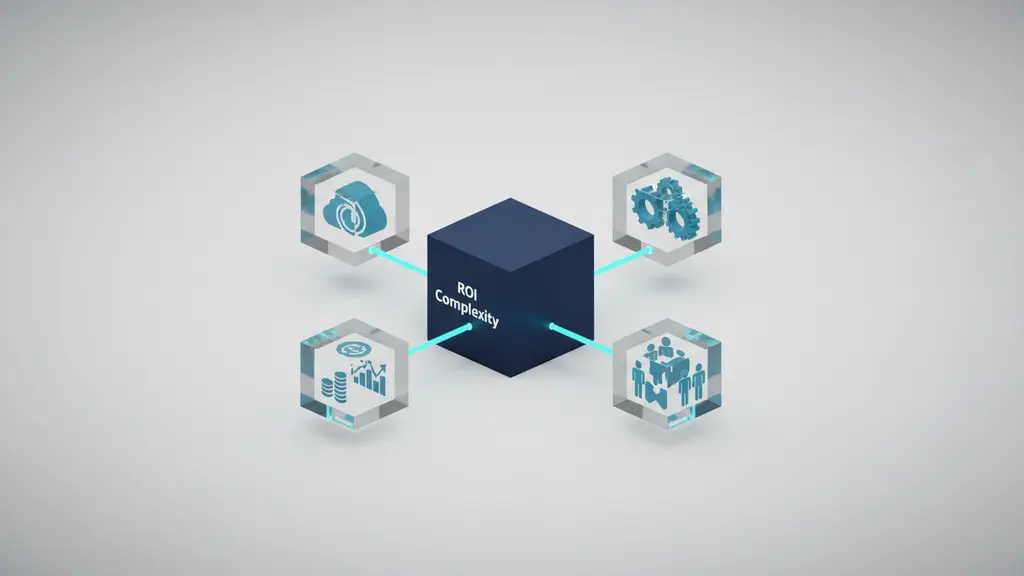
Calculating the ROI for agentic AI in Dubai is complicated by a tapestry of local regulatory, technical, and cultural factors. Oversights can lead to misjudged business cases and underperforming projects.
Major Dubai-Specific ROI Challenges:
- Stringent Data Residency & Privacy Laws: All sensitive data must often remain within UAE borders, dictating cloud choices and vendor selection.
- Legacy System Integration: Many organizations run on sovereign IT stacks, complicating AI system deployment.
- Operational and Compliance Demands: Ambitious “zero bureaucracy” initiatives require not just AI, but regulatory alignment and process redesign.
- AI Talent Gap: Dubai faces a regional shortage of deeply skilled AI professionals, increasing training and recruitment costs.
- Cultural and Organizational Change: Navigating “digital wasta”—the informal, relationship-driven decision culture—sometimes slows down operationalization or scales up unseen costs.
Top Challenges in Bullet Form:
- Data residency compliance
- Complex legacy integration
- Escalating operational/monitoring costs
- AI talent recruitment and retention
- Bureaucratic and decision-making inertia
What Are the Full Cost Buckets of Agentic AI Implementation in Dubai?

A clear cost breakdown is the foundation for credible AI project planning and accurate ROI determination. Agentic AI initiatives in Dubai include visible and hidden costs, each with unique local factors.
Agentic AI Cost Structure for Dubai/UAE:
| Cost Category | Examples & Notes |
| One-Time Costs | – Integration into legacy/sov. stack – System customization – Initial training/workshops |
| Ongoing Costs | – AI model subscriptions – Cloud hosting (often mandated in-country) – Compliance auditing – Performance monitoring & maintenance |
| Hidden Costs | – Data migration/clean-up – Vendor lock-in risks if using proprietary solutions – Escalation of compliance due to new regulations – Ongoing cybersecurity adaptation |
| Human Factors | – Change management program – Reskilling/upskilling existing staff – Productivity dips during transition |
Avoiding Surprises:
Cost escalations in Dubai often stem from underestimated compliance adaptation, long legacy integration cycles, and continual upskilling demands. Including all buckets in your TCO (Total Cost of Ownership) prevents budget overruns and improves boardroom confidence.
What ROI Frameworks Work Best for Agentic AI in Dubai?
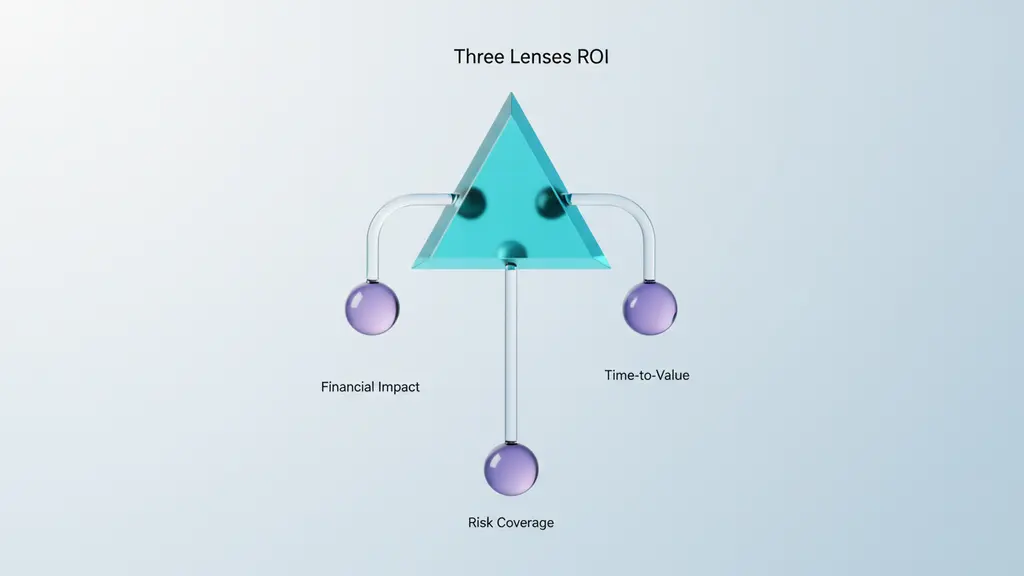
Effective ROI assessment for agentic AI requires frameworks that address Dubai’s unique business, regulatory, and operational realities. Applying proven, location-aware models enables clear investment decisions.
Three Lenses ROI Framework:
- Financial Impact:
Direct and indirect cost savings, increased revenues, and cost avoidance attributable to agentic AI. - Time-to-Value:
How quickly does the AI deliver measurable impact? This is critical under Dubai’s fast-paced transformation targets. - Risk Coverage:
Factors in regulatory compliance, cybersecurity readiness, and operational risk reduction—prioritized by UAE governance standards.
Vertical vs. Horizontal ROI Models:
- Vertical (Sector-Based):
Tailors metrics and dashboards for industries like finance (fraud reduction), logistics (route optimization), or government (permit processing time reductions). - Horizontal (Cross-Cutting):
Focuses on enterprise-wide improvements, such as overall workforce productivity or citizen satisfaction.
Sample Sectoral ROI Dashboard Structure:
| Framework Dimension | Finance Example | Government Example | Logistics Example |
| Cost Savings | Reduced reconciliation hours | Lower back-office staffing | Fewer route errors |
| Time-to-Impact | Weeks-to-live deployment | Instant permit checks | Near-term delivery gains |
| Compliance Risk | Automated reporting | Audit-friendly AI trails | Reduced regulatory fines |
Alignment Tips:
- Always map selected frameworks to Dubai/UAE AI governance, residency, and reporting mandates.
- Validate dashboards and metrics with sector regulators when possible.
How Do You Calculate Agentic AI ROI Step-by-Step? [Featured How-To]
Calculating ROI for agentic AI in Dubai requires a structured, data-driven approach to reflect both visible and hidden impacts. Organizations can follow this methodology to ensure accurate evaluations.
| Formula |
| ROI = (Total Benefits – Total Costs) / Total Costs |
Step-by-Step ROI Calculation for Agentic AI in Dubai:
- Define Use Case & Objectives:
Select a business process (e.g., invoice automation) and clarify the success metric (e.g., processing time reduced by 50%). - Gather Relevant Data:
– Current process costs (staff, error rates, manual hours)
– Regulatory or compliance reporting requirements - Enumerate All Cost Buckets:
– One-time (integration, training)
– Ongoing (subscriptions, monitoring)
– Hidden (data migration, compliance escalation)
– Human (change management, upskilling) - Estimate Quantifiable Benefits:
– Time saved, error reduction, cost savings
– Intangible benefits (customer satisfaction, audit speed) - Apply Dubai Benchmarks:
Use industry or government-provided cost/data points where available; adjust for local compliance overhead. - Plug Values into Formula:
Calculate the result. For example:
– Total Benefits = AED 2,000,000 annual savings
– Total Costs = AED 1,200,000
– ROI = (2,000,000 – 1,200,000) / 1,200,000 = 0.67, or 67% - Review, Monitor, Refine:
Post-launch, run quarterly ROI checks and adjust for operational realities and regulatory changes.
What Are the Most Relevant Agentic AI Use Cases and Case Studies in Dubai?
Dubai’s competitive agentic AI adoption offers tangible lessons, with sector-specific successes and cautionary tales shaping best practices.
Notable Dubai Agentic AI Use Cases (Table):
| Sector | Use Case Example | Measured Benefit | Common Pitfall |
| Government | “Zero bureaucracy” digital worker for permit approval | Application time cut by 70% | Slow legacy integration |
| Finance | Autonomous agent for compliance transaction monitoring | Reduced false positives by 60% | Data privacy adaptation costs |
| Logistics | AI agent optimizing warehouse picking | Throughput up 30%, error rate down 40% | Talent upskilling gaps |
“Without mapping AI outcomes to Dubai’s data residency and compliance requirements from day one, projects quickly lose momentum.”
— CTO, Dubai-based logistics provider
Winning Factors:
- Early alignment with governance bodies (e.g., Dubai Digital Authority)
- Strong change management programs
- Modular, sovereign stack architectures
Common Pitfalls:
- Overlooking legacy integration costs
- Neglecting workforce training programs
- Underestimating compliance adaptation timelines
What Is a “Sovereign AI Stack” and Why Does It Matter in Dubai?
A sovereign AI stack is an end-to-end AI system architecture built to comply with local data residency, privacy, and governance regulations—critical for ROI and operational security in Dubai.
A “sovereign AI stack” is an AI deployment comprising infrastructure, models, data pipelines, and governance layers—all physically and logically controlled within UAE borders and regulatory parameters
Why It Matters:
- Ensures Compliance: Satisfies UAE mandates for data handling, reducing legal and financial risk.
- Boosts ROI: Protects investments from regulatory disruption, futureproofing your solution.
- Empowers Integration: Enables smoother connections between modern AI and sovereign legacy IT systems.
Sample Sovereign AI Stack Layers:
- In-Country Cloud/Data Center
- Region-Authorized AI Engines
- Modular Middleware for Integration
- AI Model & Data Governance Modules
- Audit and Access Management Portal
Diagram reference: For visual representation, see architectures promoted by Dubai’s Digital Economy Authority.
How Can Leaders Maximize Agentic AI ROI? Dubai-Focused Best Practices & Checklist
Ensuring sustainable agentic AI ROI in Dubai requires methodical planning, governance, and organizational alignment throughout the AI lifecycle.
ROI Best Practices Checklist:
- Pre-Deployment:
Conduct Dubai-specific regulatory and compliance assessment
Model full TCO, including hidden and human costs
Validate sovereignty and modularity of tech stack - Governance:
Establish clear AI accountability and escalation paths
Schedule quarterly ROI and compliance reviews
Involve audit, risk, and legal teams from the outset - Talent & Change Management:
Launch structured upskilling and change leadership programs
Incentivize process champions in each impacted department - ROI Boosters (Sector-Specific):
Finance: Embed AI into audit trail and reporting workflows
Logistics: Leverage agentic AI for real-time inventory/picking
Government: Automate multi-channel citizen requests and document verification
Tip: Printing or bookmarking the checklist above enables fast internal alignment and boardroom-ready updates.
Frequently Asked Questions about Agentic AI ROI in Dubai
Q: What is agentic AI, and how is it different from chatbots or RAG systems?
Agentic AI refers to autonomous digital agents that independently plan, decide, and act. Unlike chatbots or retrieval-augmented generation (RAG) systems, they execute complex business workflows and adapt to context, integrating with enterprise platforms beyond simple information retrieval or scripted dialog.
Q: How do you calculate the ROI of agentic AI projects in Dubai?
To calculate ROI, subtract total project costs (including one-time, ongoing, hidden, and change management costs) from total benefits achieved (such as time savings or revenue increases), then divide by total cost. Use local benchmarks and factor in compliance/regulatory adaptation for Dubai.
Q: What are the typical cost buckets for deploying agentic AI in the UAE?
The main cost buckets are one-time (integration, customization), ongoing (cloud, subscriptions, monitoring), hidden (data migration, vendor lock-in, compliance evolution), and human/organizational (upskilling, change leadership).
Q: Why do most agentic AI pilots in Dubai deliver low ROI?
Low ROI often results from underestimating legacy system integration complexity, rising compliance costs, gaps in upskilling, and lack of proactive change management. Siloed or generic approaches rarely survive Dubai’s fast-changing business/regulatory climate.
Q: What makes agentic AI deployment in Dubai unique compared to other regions?
Dubai’s environment features strict data residency mandates, quick-evolving digital regulations, legacy IT stacks, a strong smart city mandate, and substantial focus on sovereign technology—creating both additional hurdles and significant rewards.
Q: How can organizations govern agentic AI for maximum ROI in Dubai?
Organizations should prioritize regular ROI reviews, cross-functional governance teams, in-country compliance validation, and a modular, sovereign tech architecture. Change management and executive buy-in remain vital throughout the deployment.
Q: What is a sovereign AI stack, and why does it matter for Dubai?
A sovereign AI stack is an AI system built and operated fully within UAE borders, complying with local law on data handling and privacy. This is essential to reduce compliance risk and safeguard both operational continuity and investment value.
Q: Which sectors in Dubai gain the most ROI from agentic AI?
Finance, government services, and logistics are leading early adopters. These sectors benefit from streamlined compliance, process automation, and improved customer or citizen experience metrics.
Q: How often should Dubai enterprises review agentic AI ROI performance?
Best practice is to conduct structured quarterly ROI and compliance reviews. This cadence enables fast adjustments for regulatory or business process changes unique to Dubai’s dynamic market.
Q: What are the main risks of agentic AI for business or government in the UAE?
Top risks include non-compliance with data residency/privacy laws, under-resourced talent pools, project delays due to integration challenges, and governance gaps leading to untracked value or rising costs.
Conclusion: Next Steps for Achieving High Agentic AI ROI in Dubai
Unlocking real value from agentic AI in Dubai requires a disciplined, locally informed approach. Success depends on aligning autonomous AI capabilities with clear business objectives, understanding the full spectrum of costs, and embedding compliance considerations from the outset. When organizations combine strategic planning with measurable performance indicators, agentic AI can move from experimentation to sustained competitive advantage.
Dubai’s fast evolving regulatory and innovation landscape rewards leaders who balance ambition with structure. By applying tailored ROI frameworks, defining realistic success metrics, and continuously optimizing deployments, enterprises can transform AI investments into tangible operational gains and long term growth.
With the right roadmap, agentic AI becomes more than a technology initiative. It becomes a strategic lever for efficiency, innovation, and measurable business impact within Dubai’s dynamic market environment.
Key Takeaways
- Agentic AI unlocks advanced automation but requires specialized ROI models for Dubai’s regulatory and operational context.
- Full ROI calculation must include hidden costs and ongoing compliance adaptation.
- Dubai’s sovereign AI stack approach is essential for mitigating risk and maximizing business value.
- Sector-specific use cases show measurable benefits when paired with robust change and talent management.
- Regular, structured ROI and compliance reviews are critical to long-term agentic AI success in Dubai.
This page was last edited on 27 February 2026, at 10:41 am
Contact Us Now

Contact Us Now
Start a conversation with our team to solve complex challenges and move forward with confidence.


