To mitigate offshore software development risks, enforce strict data security and legal agreements, choose certified partners, use clear contracts, ensure ongoing communication, and run regular audits. Use a risk management checklist for each project phase.
Offshore software development offers great cost savings and wide access to tech talent. But if handled poorly, hidden risks can threaten your project, data, and reputation.
I have seen companies suffer from security gaps, missed deadlines, and surprise expenses when they skip due diligence or post-contract oversight. These avoidable mistakes can put your business at real risk.
This article gives you a full risk mitigation playbook. You will get step-by-step strategies, practical checklists, and expert advice drawn from real-world projects. The goal: help you run safer offshore teams and achieve results you can trust.
Why Mitigating Offshore Software Development Risks Is Critical
Mitigating offshore software development risks protects your business, data, intellectual property, and budget. When you outsource abroad, you share access to key systems, source code, and confidential information. Without solid risk management, security checks, and clear contracts, your company may face financial losses, cyberattacks, legal disputes, or compliance issues.
The financial impact can be substantial. According to IBM’s Cost of a Data Breach Report, the global average cost of a data breach reached $4.88 million in 2024, representing a 10% increase from the previous year.
In my experience, skipping vendor checks, security audits, and compliance reviews often results in project overruns, data exposure, and missed regulatory requirements. These problems can lead to GDPR penalties, lost customer trust, and lasting brand damage. In contrast, businesses that verify offshore partners, define security responsibilities, and monitor development processes experience smoother delivery and fewer costly surprises.
Understanding the Key Risks in Offshore Software Development
Recognizing the most common risks is the first step to managing them. Offshore projects have unique dangers that can hit security, quality, budgets, and compliance if not managed from the start.
Below is a table outlining the main risk types, examples, and business impacts:
| Risk Type | Example | Business Impact |
| Security & Data Privacy | Unsecured data sharing, weak access controls | Data breach, IP theft, legal penalties |
| Quality Assurance | Poor code quality, lack of testing standards | Defective software, rework costs |
| Communication Barriers | Misunderstood requirements, time zone gaps | Delays, scope misalignment |
| Hidden Costs | Ambiguous contracts, extra features added | Budget overruns, delayed ROI |
| Vendor Lock-in | Dependency on a single vendor, unclear IP ownership | Hard to exit, IP loss risk |
| Knowledge Loss/Attrition | Staff turnover, poor documentation | Lost expertise, ramp-up delays |
| Compliance Failures | GDPR/HIPAA gaps, missing certifications (ISO 27001, CMMI) | Regulatory fines, lost trust |
Most risks stem from poor planning, weak contracts, or lack of transparency. Knowing how these appear in practice will help you avoid the worst outcomes.
Proven Strategies to Mitigate Offshore Software Development Risks (Step-by-Step)
Proactive risk mitigation involves specific actions mapped to each threat. Below, I outline methods that I have seen work across large and small offshore projects.
Securing Data & Intellectual Property (IP)
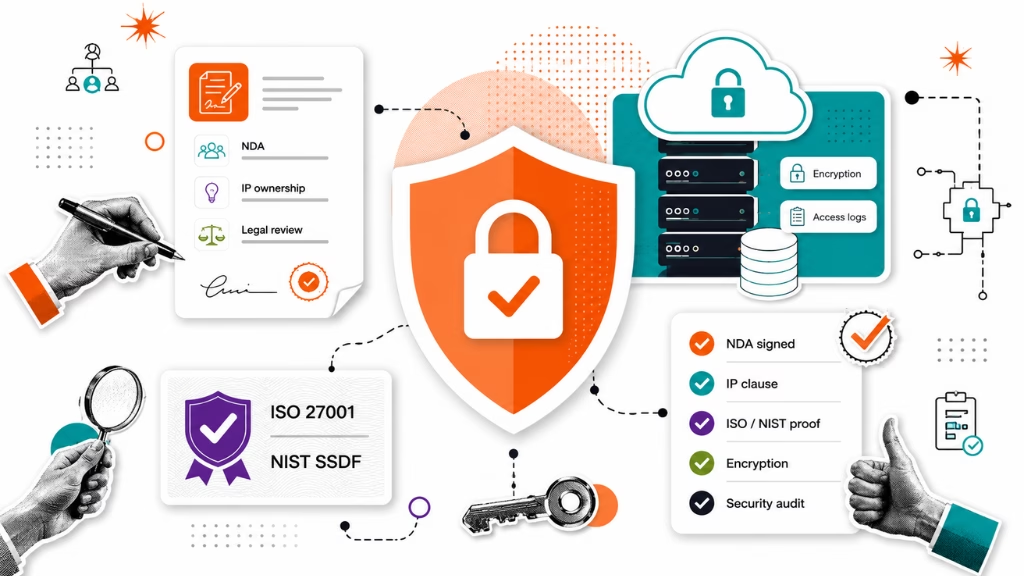
Protecting data and IP is a top priority. Most offshore incidents I have seen start with weak security or unclear IP rights.
To reduce risk:
- Enforce NDAs and IP clauses in all contracts.
- Choose vendors with ISO 27001 or NIST SSDF certifications.
- Require evidence of secure infrastructure and DevSecOps processes.
- Use strong encryption and limit access by role.
- Get a legal review of all data/IP agreements.
Checklist: Must-Have IP/Security Steps
- NDA signed by all vendor staff
- IP ownership clause in contract
- Vendor ISO 27001/NIST proof
- Data encryption and access logs
- Regular security audits
“A well-drafted contract and vendor security certification are the first layers of IP defense. Review these with legal counsel before work starts.” — External IP Counsel
Maintaining Quality & Technical Standards
Failing to set quality controls leads to buggy software and costly rework. I have seen this happen when clients skip detailed vendor assessments.
To avoid this:
- Demand code reviews and automated testing (CI/CD).
- Use clear coding standards and enforce QA (Agile or Scrum).
- Review sample work or run technical tests during vetting.
- Check for quality certifications (CMMI, ISO 9001).
- Define SLAs for deliverables.
Table: Quality Assurance Musts
| QA Element | What to Require from Vendor |
| Coding Standards | Enforced, documented practices |
| Code Review | Regular peer or lead developer review |
| Automated Testing | Unit, integration, regression coverage |
| QA Process | Agile/Scrum-based sprints with demo reviews |
| Certifications | CMMI, ISO 9001 |
A robust QA process helps you scale confidently and lowers production bugs.
Achieving Cost Transparency & Mitigating Hidden Costs
Hidden costs are a common but avoidable issue in offshore deals. The mistake I see often is accepting vague contracts or not budgeting for handover expenses.
To prevent surprises:
- Ask for detailed, itemized pricing in all contracts.
- Ban ambiguous “change requests” without price approval.
- Plan for project management and technical onboarding costs.
- Set clear acceptance criteria for each deliverable.
- Track spend versus milestones weekly.
Pricing Transparency Checklist
- Itemized pricing table
- Clear scope boundaries in contract
- Change request process defined
- Project management fees included
- Handover and documentation budgeted
Managing Communication & Cultural Barriers
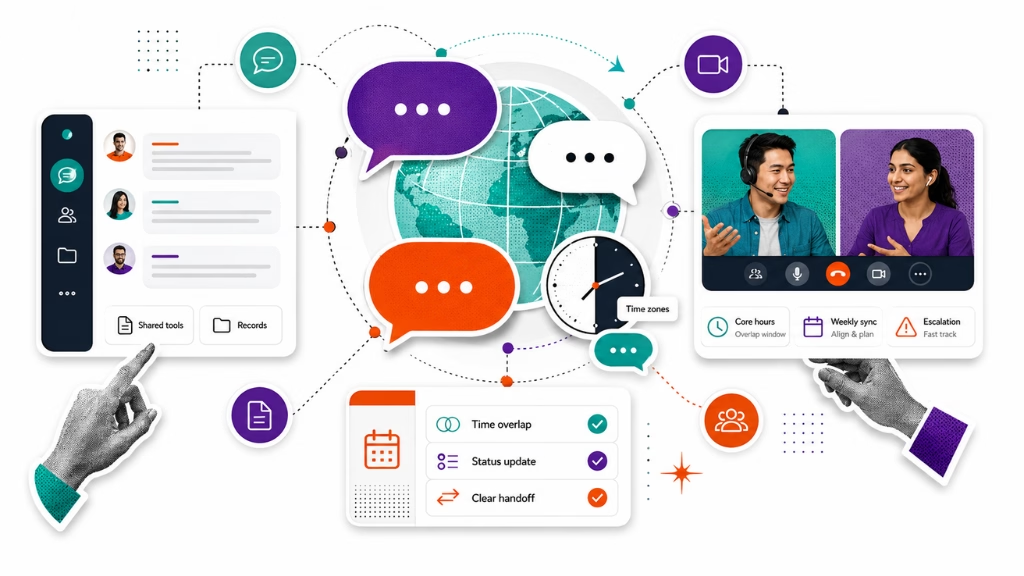
Communication can make or break an offshore project. A better approach is to make clear rules and shared tools from day one.
Practical steps:
- Use shared platforms like Slack, MS Teams, and keep records.
- Define “core hours” with time zone overlap.
- Set up regular video calls and reporting routines.
- Train both sides on cultural norms and communication styles.
- Name escalation paths for fast problem resolution.
This closes gaps and keeps everyone aligned as the project evolves.
Preserving Knowledge & Reducing Attrition Risk
When offshore teams face high turnover, so much tribal knowledge leaves. I have seen this delay releases and cause mistakes.
Best practices:
- Develop onboarding and offboarding playbooks.
- Require full technical documentation and a living project wiki.
- Schedule regular knowledge transfer sessions by phase.
- Use retention programs and recognize top contributors.
With clear processes, even staff changes will not slow project momentum.
Ensuring Business Continuity & Disaster Recovery
Business continuity planning shields the project from vendor outages or political risks. Last year when our dev team in Eastern Europe lost power, the backup plan saved days of work.
Actions to take:
- Confirm data is backed up to multiple locations.
- Check vendor’s disaster recovery plan and certifications.
- Agree on contingency steps for political unrest, pandemics, or tech issues.
- Include response time SLAs in the contract.
Well-defined plans help keep delivery on track during disruptions.
Governance, Oversight & Accountability
Good governance prevents problems from spiraling out of control. I have seen projects drift when no one owns oversight.
Set up:
- A clear governance model with defined roles and responsibilities.
- Regular audits and performance reviews with the vendor.
- Shared project management tools with real-time visibility (JIRA, Trello).
- Formal project reporting and review cycles.
Ongoing oversight helps you detect risks early and correct course fast.
Offshore Project Risk Management Framework & Checklist
A risk management framework keeps everyone accountable at each stage. Below is a practical checklist by project phase:
| Stage | Common Risks | Mitigation Actions |
| Pre-Contract | Vendor maturity, unclear IP, vague pricing | Assess certifications, legal review, itemized scope |
| Delivery | Quality, delays, miscommunication | Set QA process, conduct code reviews, use shared tools |
| Ongoing | Attrition, hidden costs, compliance gaps | Knowledge transfer, regular audits, monitor spend |
Process Overview:
- Assess and shortlist vendors using certification and track record.
- Review and negotiate contracts, focusing on IP/security.
- Launch project with QA, documentation, and oversight rules.
- Audit progress and handle knowledge transfer as team changes occur.
- Close project with a handover and review for lessons learned.
How to Choose the Right Offshore Development Partner (Selection Criteria & Red Flags)
Choosing the right vendor is the make-or-break moment. In my POV, a great partner is proactive, transparent, and certified.
Selection Checklist:
- ISO 27001, CMMI, and GDPR compliance proof
- Documented quality and security policies
- Clear, complete contract (scope, IP, pricing, termination)
- Transparent project management practices
- Established team with positive references
- Willingness to support audits and share infrastructure details
Red Flags:
- Vague or missing certifications
- Reluctance to share references or allow code review
- Non-transparent pricing or hidden fees
- Poor communication or slow response to queries
- No clear plan for team turnover or business continuity
10 Questions to Ask Every Offshore Vendor
- What certifications do you hold (ISO, CMMI)?
- How do you protect client IP and data?
- Can we visit your facility or conduct an audit?
- How do you handle staff turnover?
- What is your code review and QA process?
- How do you ensure compliance with regulations?
- Can you provide itemized pricing and terms?
- Who manages our account, and how often do we meet?
- How do you manage project documentation?
- What is your continuity and disaster recovery plan?
“The right partner will make documentation and compliance part of their delivery DNA. Trust comes from transparency, not just a ‘yes’ to every question.” — CTO perspective
Regional and Legal Compliance Considerations (EU vs US vs Other)
Legal compliance is core to offshore success. Overlooking it leads to big fines and IP loss.
The requirements differ by country and region. Below is a comparison:
| Region | Key Risk | Required Controls/Frameworks |
| EU | Data privacy | GDPR, ISO 27001 |
| US | Health/financial data | HIPAA, NIST SSDF |
| APAC | Data localization | Local privacy acts, ISO 27001 |
Legal Contract Checklist—Every Region
- Specify IP ownership and transfer rights
- Map data flows and confirm regional storage rules
- Add compliance clauses (GDPR, HIPAA)
- Confirm vendor references for compliance audits
- Require documentation of all key processes
Verify with your legal team before project launch. The real issue is that many teams assume “one size fits all,” which never works with regulations.
Real-World Example: Offshore Risk Mitigation Case Study
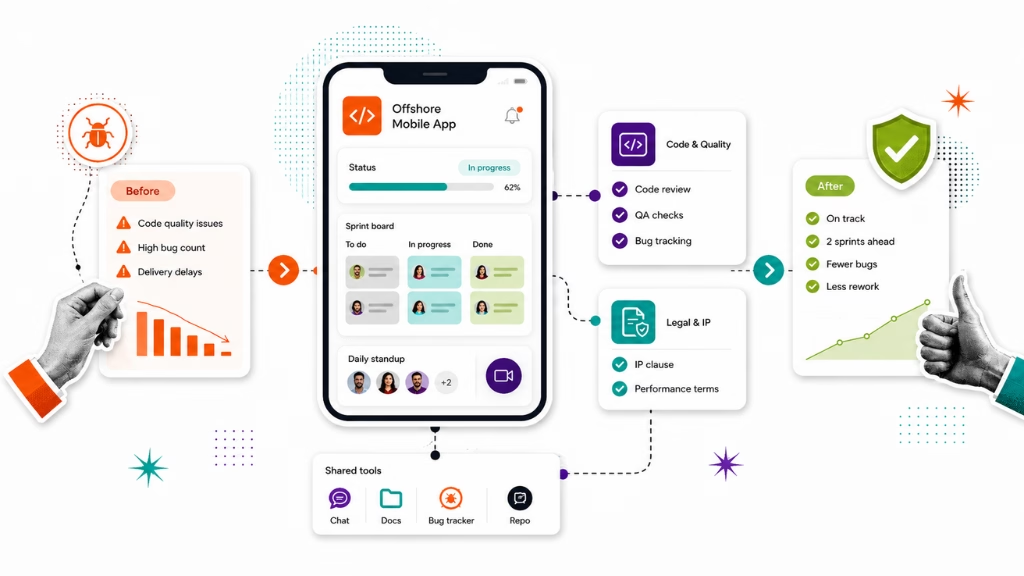
Stories help show how theory works in practice. Here’s a real but anonymized case that reflects what I see often.
A SaaS company shipped its mobile app project to an offshore partner. Within weeks, the client found code quality far below expected standards. They also saw growing delays. In my experience, this usually comes from unclear quality controls and poor project oversight.
To resolve it, they:
- Enforced code reviews, set up daily standups, and revamped the QA process.
- Brought in legal to clarify performance and IP ownership in the contract.
- Used shared tools for tracking bugs and status.
Outcome: Within two sprints, delivery hit the target. The client regained control, found several issues early, and avoided further rework. This approach saved extra month of budget and secured all IP.
Common Offshore Software Development Risk Mistakes to Avoid
The most painful project failures come from basic mistakes. I have seen these errors many times:
- Accepting contracts without a legal/privacy review
- Overlooking vendor’s real security practices
- Skipping technical tests for code quality
- Not budgeting for turnover or transition costs
- Ignoring knowledge transfer and documentation
- Failing to assess vendor’s business continuity setup
Avoid these, and your risk drops sharply.
Conclusion
Managing offshore software development risks is not optional. Getting it right starts with a clear plan, strict contracts, and regular audits—with each phase tracked by a practical checklist.
In my experience, success is built on vendor transparency, shared tools, airtight documentation, and region-by-region compliance. These steps help your business save money, protect IP, and avoid disruption.
The single best next step is to apply the frameworks and checklists provided here or contact a team with deep experience managing offshore risk. Riseup Labs can guide you through complex requirements, offer matched partner vetting, and support each delivery phase to ensure your offshore engagements are safe and productive.
The future will depend on blending human expertise and advanced tools to run secure, compliant, and cost-effective global teams.
FAQs
What are the major risks of offshore software development?
Major risks include data breaches, poor code quality, weak documentation, hidden costs, communication gaps, and compliance failures. Each risk can harm project delivery and business reputation.
How can I protect my intellectual property when outsourcing overseas?
Use detailed contracts with IP clauses, non-disclosure agreements, vendor certifications (like ISO 27001), and limit access to sensitive data through technical controls and regular audits.
What certifications should I require from an offshore partner?
Ask for ISO 27001 for security, CMMI or ISO 9001 for quality, and legal compliance with GDPR or HIPAA, depending on your data and target markets.
How do you manage communication across time zones?
Set shared working hours, use real-time collaboration tools, schedule regular video calls, and document all decisions to align teams and avoid confusion.
What steps ensure data security with offshore developers?
Enforce NDAs, use encryption, require vendor certifications, audit access logs, and restrict data on a “minimum necessary” basis. Review security protocols with your IT team.
How can I avoid hidden costs when contracting offshore teams?
Only sign detailed contracts with itemized pricing. Define scope and change management processes up front. Regularly track project costs versus milestones.
How to handle employee turnover and knowledge loss remotely?
Maintain a living project wiki, require full documentation, use structured onboarding and offboarding playbooks, and hold regular knowledge transfer meetings.
What legal and compliance factors should I consider?
Consider regulatory frameworks like GDPR or HIPAA, regional data privacy laws, contract enforcement, and require vendor proof of certifications and compliance.
How to choose a reliable offshore development company?
Check for valid certifications, proven references, transparency in operations, detailed contracts, and willingness to support audits and code reviews.
What’s the best risk management framework for offshore projects?
A best practice framework includes pre-contract vendor checks, strong legal agreements, ongoing quality and security audits, phased documentation, and formal project closure reviews.
This page was last edited on 25 July 2026, at 12:10 pm

Start a conversation with our team to solve complex challenges and move forward with confidence.