
Key Takeaways
- Poker app development focuses on building secure, engaging, and user-friendly digital poker experiences.
- The safest model is a free-to-play or social poker app with virtual chips and strong age controls.
- Success depends on gameplay quality, fair play systems, smooth UX, testing, and post-launch updates.
Poker apps continue to attract strong interest because mobile gaming is now a major part of digital entertainment. Players expect fast gameplay, smooth design, social features, fair game logic, and secure accounts from the first session.
For startups and gaming businesses, poker app development is no longer just about creating a card table on a screen. A successful poker app needs real-time gameplay, user-friendly design, fair play systems, data protection, player safety tools, and a clear launch plan.
This matters because poker apps are not just casual card games anymore; they are becoming real-time, mobile-first platforms where smooth gameplay, fair play systems, social features, and strong security directly affect user trust. Grand View Research estimates the global online poker market was valued at USD 3.86 billion in 2024 and is projected to reach USD 6.90 billion by 2030, growing at a 10.2% CAGR from 2025 to 2030.
In this guide, you’ll learn how social poker app development works, what features to include, how much a poker game app may cost, which technology choices matter, and how to plan a safer app experience from idea to launch.
Market Opportunity & Trends for Poker Apps
The global online poker app market is experiencing sustained growth, with millions of new players and increasing in-app revenue opportunities. As of 2024, mobile gaming continues to outpace other entertainment sectors, driven by innovations in payment systems, social gaming, and AI personalization.
- Market size & growth: According to Statista, the online gaming market—including poker—was valued at over $50 billion in 2023, with forecasts projecting annual growth rates between 7–10% through 2025.
- Key regions: The US, Europe, India, and parts of Asia are seeing rapid adoption, each with unique regulatory dynamics.
- User behavior: Players are favoring mobile-first experiences, fast payment integrations, and community features such as chat and real-time tournaments.
- Innovation: Advanced AI is shaping player experiences through personalized challenges and recommendations. Social gaming mechanics—like friends lists, leaderboards, and gifting—boost retention.
- Case in point: Major platforms like PokerStars and Zynga Poker have thrived by combining seamless mobile UI, social features, and robust compliance measures, proving that both free-to-play and real-money models can succeed.
| Region | 2024–2025 Projected Growth | Top Trend |
| US | 8–10% | Regulatory openings, real money |
| EU | 6–8% | Player protection, mobile shift |
| India | 15%+ | Mobile-first, social tournaments |
| Asia (excl. IN) | 10% | Casual/social, payment innovation |
Poker apps today offer a compelling investment opportunity, as both player interest and technological advancements climb.
Types Of Poker Apps You Can Build
Poker apps can be designed in different ways depending on audience, features, and business goals.
| App Type | Description | Best For |
|---|---|---|
| Social Poker App | Uses virtual chips, friends, clubs, and leaderboards. | Entertainment and community-based gaming |
| Tournament Poker App | Offers scheduled or casual tournaments using virtual entries. | Competitive players and events |
| Practice Poker App | Helps users learn game rules and improve decision-making. | Beginners and educational use |
| Private Table App | Allows friends or groups to create private rooms. | Casual social play |
| Multi-Game Card App | Includes poker plus other card games. | Wider audience reach |
For most startups, a free-to-play poker game app is the safest starting point. It lets you test the market, improve gameplay, and build a community without entering high-risk real-money gambling operations.
How Do You Develop a Poker App? Step-by-Step Blueprint
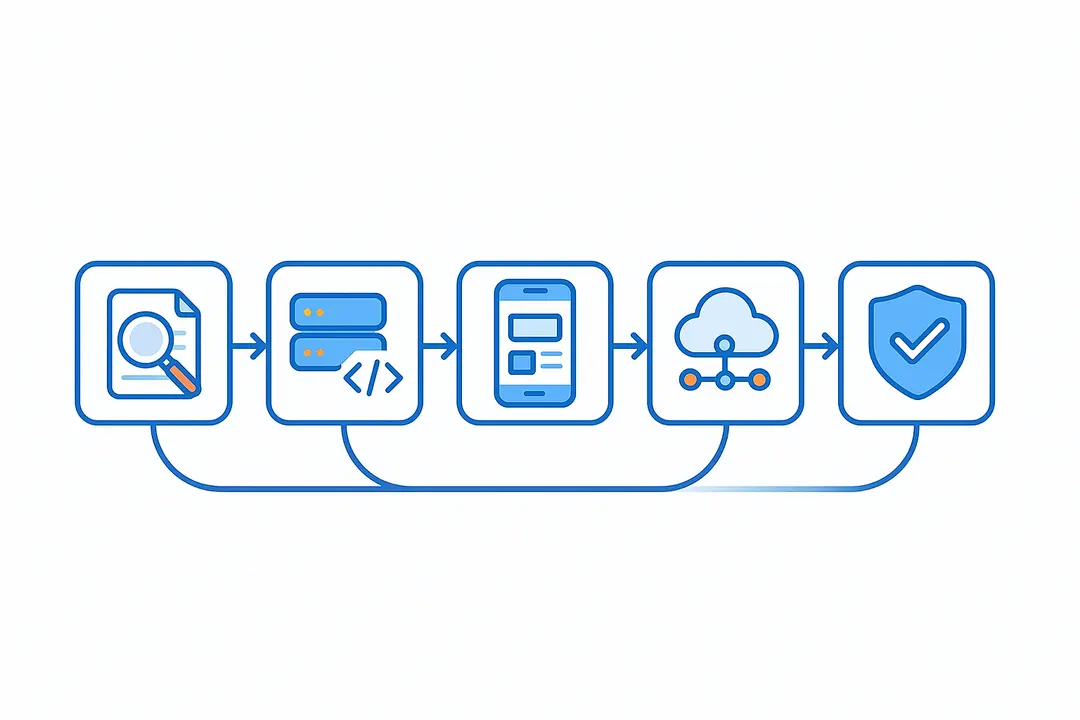
Step 1: Research The Market And Audience
Start by identifying your target users. A casual social poker app for friends will need different features than a competitive poker training app.
Look at popular card game apps and review:
- What users like about the gameplay
- What complaints appear in reviews
- Which features improve retention
- How simple or complex the onboarding is
- What makes the app feel fair and trustworthy
This step helps you define your app’s unique selling point. Your USP may be better design, smoother private tables, safer social play, beginner-friendly tutorials, or stronger community features.
Step 2: Define The Core App Features
Before development begins, create a clear feature list. This prevents scope creep and keeps the project easier to estimate.
MVP Features
| Feature | Why It Matters |
|---|---|
| User Registration | Allows players to create and manage accounts. |
| Poker Lobby | Helps users find tables, rooms, and game modes. |
| Virtual Chips | Supports free-to-play gameplay. |
| Private Tables | Lets users play with friends or invited groups. |
| Real-Time Gameplay | Keeps the experience smooth and interactive. |
| Chat Controls | Adds social interaction with moderation options. |
| Leaderboards | Encourages friendly competition. |
| Fair Play Logic | Builds trust in card dealing and outcomes. |
| Player Profiles | Supports personalization and progress tracking. |
| Help Section | Explains rules, features, and account settings. |
Advanced Features
| Feature | Why It Helps |
|---|---|
| Clubs Or Communities | Builds long-term player groups. |
| Daily Rewards | Encourages repeat visits. |
| Avatar Customization | Adds personality and engagement. |
| Multi-Table Support | Useful for experienced players. |
| AI-Based Match Suggestions | Helps players find suitable tables. |
| Reporting Tools | Allows users to report abuse or suspicious behavior. |
| Parental And Age Controls | Supports safer access management. |
| Analytics Dashboard | Helps teams track retention and user behavior. |
Step 3: Choose The Right Tech Stack
The technology stack affects performance, cost, scalability, and maintenance.
| Layer | Common Options |
|---|---|
| Frontend | Flutter, React Native, Swift, Kotlin |
| Backend | Node.js, Python, Java, Go |
| Database | PostgreSQL, MongoDB, Redis |
| Real-Time Communication | WebSockets |
| Cloud Hosting | AWS, Google Cloud, Azure |
| Analytics | Firebase, Mixpanel, Amplitude |
| Push Notifications | Firebase Cloud Messaging, OneSignal |
For many teams, Flutter or React Native is a practical choice because one codebase can support both Android and iOS. Native development may be better when performance, animations, or platform-specific features are a top priority.
Step 4: Design A Smooth Poker App Experience
Good UI/UX can make or break a poker app. Players should understand where to go, how to join a table, how to play, and how to manage their profile without confusion.
Important UX Areas
- Simple onboarding
- Clean poker lobby
- Easy table joining
- Clear card and chip visuals
- Smooth animations
- Readable buttons
- Fast loading screens
- Accessible controls
- Safe chat and reporting options
The best poker apps feel easy for beginners but still polished enough for experienced players.
Step 5: Build Real-Time Gameplay
Real-time gameplay is the core of poker game app development. The app must handle multiple users, table actions, timing, card distribution, player status, and connection issues.
Important development areas include:
- Turn management
- Table state synchronization
- Disconnection handling
- Player reconnect logic
- Game history
- Fair card distribution
- Server-side validation
- Anti-abuse monitoring
A stable backend is important because even small delays can make the game feel unreliable.
Step 6: Add Security And Player Safety
Security should be planned from the beginning. Even free-to-play poker apps collect user data, so account protection and privacy matter.
Important Safety Measures
| Safety Area | What To Include |
|---|---|
| Account Security | Strong login, password protection, optional two-factor authentication |
| Data Privacy | Clear privacy policy and secure data storage |
| Age Controls | Age-gating and access controls where needed |
| Chat Safety | Moderation, mute, block, and report options |
| Fair Play | Server-side game logic and abuse detection |
| Secure APIs | Encrypted communication and protected endpoints |
| Backups | Regular backups for user and gameplay data |
For any app involving card gameplay, fairness and transparency are essential for trust.
Step 7: Test The App Before Launch
Testing should cover more than whether the app “works.” A poker app needs performance, usability, fairness, security, and device testing.
Testing Checklist
| Test Type | What To Check |
|---|---|
| Functional Testing | Signup, lobby, gameplay, profiles, rewards |
| UI Testing | Screens, buttons, tables, animations |
| Device Testing | Android, iOS, tablets, different screen sizes |
| Load Testing | Multiple players and tables at once |
| Security Testing | API access, login, data storage |
| Gameplay Testing | Turn logic, card flow, reconnects |
| User Testing | Feedback from real users before public launch |
A beta launch can help you identify bugs, confusing screens, and missing features before scaling.
What Compliance, Licensing, and Security Measures Are Required for Poker Apps?
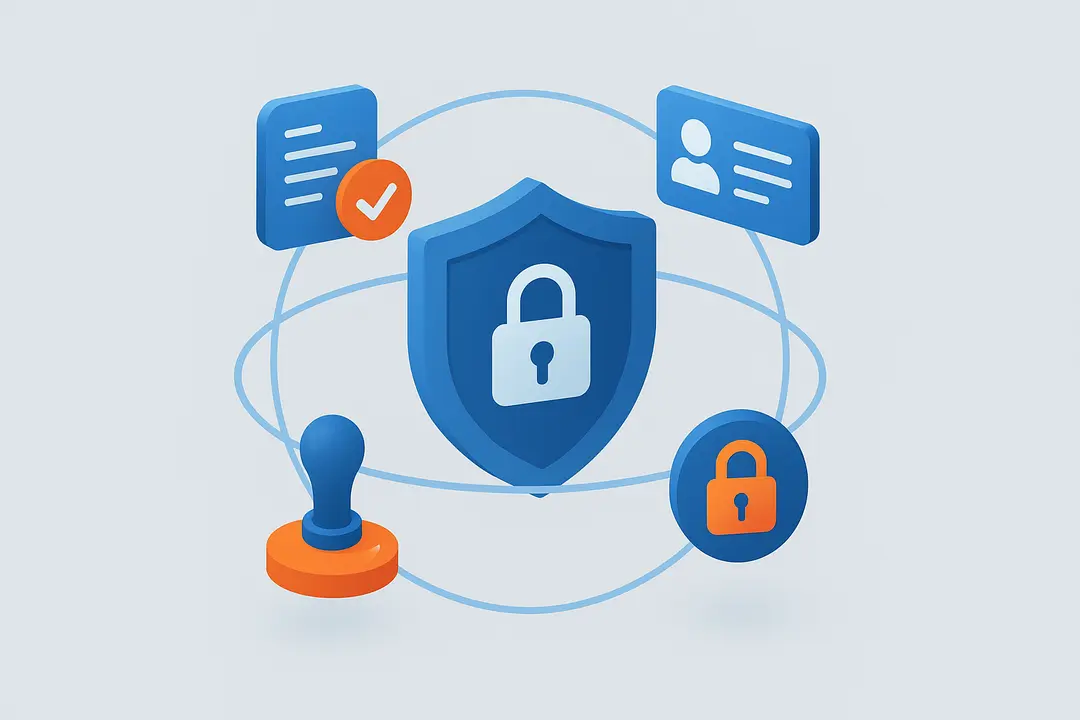
Ensuring legal, regulated, and secure operations is essential for poker app success and longevity. Every region and market presents unique requirements.
Jurisdictional Overview: US, EU, Asia, India
- United States: Regulations vary by state; approval from gaming commissions is needed for real money.
- Europe (EU): Countries such as the UK and Malta have established, complex licensing. Each market may require a separate application.
- India: Some states allow real money games; local laws and Supreme Court rulings are relevant.
- Asia (other): Most regions ban real money but allow skill-based/social formats.
| Region | Licensed Required? | Key Regulator | Notes |
| US (select states) | Yes | State Gaming Commissions | Strict KYC/AML, technical audits |
| UK/EU | Yes | UKGC, MGA, local regulators | Responsible gaming, GDPR compliance |
| India (varies) | Sometimes | State-level authorities | Legal definitions of skill vs luck |
| Rest of Asia | Rare | Varies | Often prohibits real money apps |
Always consult legal counsel in your region.
KYC, AML, and RNG Certification
- KYC (Know Your Customer): Identity verification at signup, as well as age checks.
- AML (Anti-Money Laundering): Transaction monitoring, source-of-funds checking, and reporting.
- RNG (Random Number Generator) certification: Guarantees fair play—must be certified by independent labs.
Responsible Gaming & Player Protection
- Age checks: Enforced via KYC and parental consent mechanisms.
- Session and loss limits: Customizable limits for deposit, bet, session duration.
- Player self-exclusion: Easy tools for users to pause or close accounts.
- Case Study: Leading platforms implement real-time reminders and session warnings to encourage responsible play.
Common Compliance Pitfalls (and How to Avoid Them)
- License errors: Failing to apply or maintain the correct local license.
- Privacy mistakes: Mishandling user data in violation of GDPR, CCPA, or local equivalents.
- Certification lapses: Launching without validated RNG or security testing.
Infographic:
- Always verify target-market laws.
- Implement KYC/AML at onboarding.
- Certify your RNG.
- Use secure, encrypted databases.
What Are the Essential Features of a Winning Poker App?
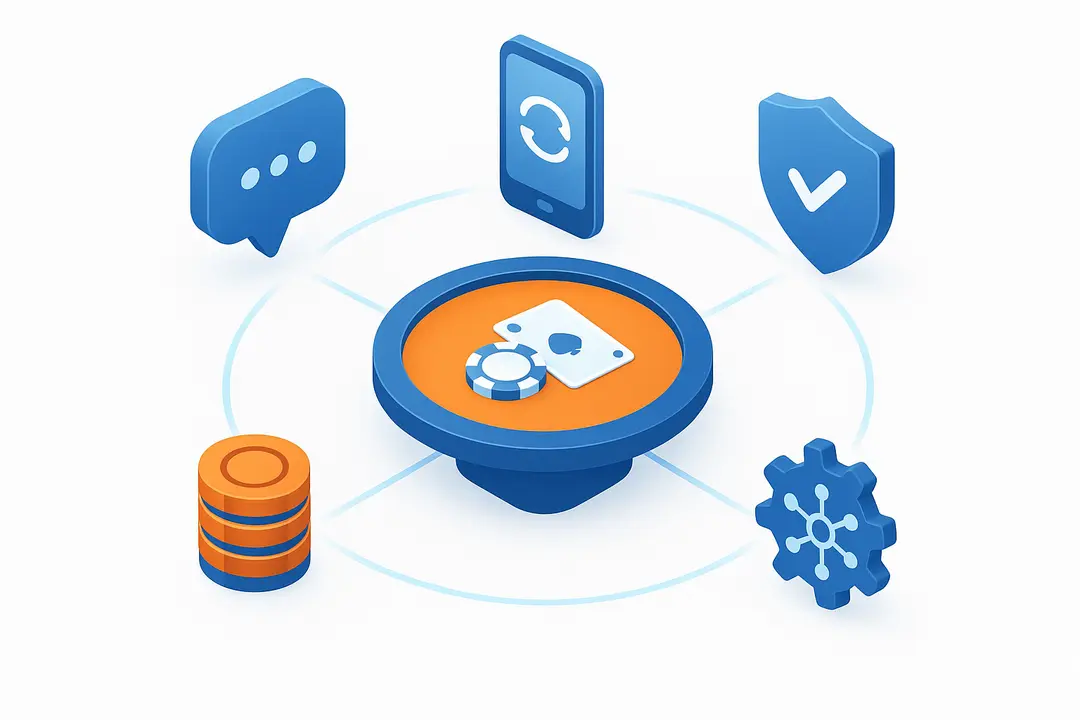
The best poker apps provide engaging gameplay, robust security, and community-driving features. Here’s what to include in your development spec.
- Core gameplay: Texas Hold’em, Omaha, Sit & Go tournaments, multi-table play.
- Multiplayer tools: Real-time chat, friend lists, and in-game events.
- Cross-platform sync: Consistent experience across iOS, Android, and web.
- Payment integration: PCI-compliant gateways supporting cards, wallets, and (where legal) crypto.
- KYC onboarding: Simple but thorough verification.
- Bonus/reward systems: Daily chips, referral bonuses, leaderboard prizes.
- AI-driven personalization: Intelligent recommendations and tips.
- Responsible gambling: Self-exclusion, bet/limit controls, and real-time session warnings.
- Advanced security: Anti-cheat technology, RNG certification, encrypted data flows, GDPR compliance.
- Community features: Custom avatars, leaderboards, social gifting, and reporting tools.
| Feature Category | MVP Essential | Advanced |
| Lobby & Gameplay | Yes | Yes |
| Texas Hold’em | Yes | Yes |
| Omaha | Optional | Yes |
| Tournaments | Yes | Yes |
| Chat/Community | Yes | Yes |
| Payments/KYC | Yes | Yes |
| Leaderboards | Optional | Yes |
| AI Personalization | No | Yes |
| Responsible Gaming | Yes | Yes |
| Anti-Cheat/Security | Yes | Yes |
Must-have features drive user trust, safety, and attach long-term value (LTV) to each player.
How Social Poker Apps Can Make Money
For a safer entertainment model, social poker apps usually avoid real-money betting and use non-cash monetization methods.
| Monetization Model | How It Works |
|---|---|
| In-App Purchases | Users buy virtual chips, avatars, themes, or cosmetic items. |
| Ads | The app shows rewarded videos or display ads. |
| Subscriptions | Users pay for premium features, ad-free play, or custom rooms. |
| Season Passes | Players unlock rewards over a limited period. |
| Brand Partnerships | Gaming or entertainment brands sponsor events or features. |
A balanced monetization strategy should not damage the user experience. The goal is to keep the app fun, fair, and transparent.
What Does Poker App Development Cost? Budget & Timeline Breakdown
Poker app development costs vary widely based on features, tech stack, legal needs, and team location. Here’s what you can expect in 2024.
- MVP/pilot poker app: Typically ranges from $25,000 to $50,000.
- Full-featured custom poker app: $75,000 to $200,000+ depending on depth, licensing, and security needs.
- White-label solutions: Start as low as $15,000 to $40,000, with reduced time-to-market but limited custom features.
| Type | Cost Range | Timeline |
| MVP/Basic App | $25k–$50k | 3–4 months |
| Custom App | $75k–$200k+ | 6–10 months |
| White-label | $15k–$40k | 1–2 months |
Cost factors:
– UI/UX design: 10–20% of total
– Backend & real-time logic: 30–40%
– Compliance & licensing: Varies (5–25%)
– Testing & certification: 10–15%
– Marketing & acquisition: 10–15%
Savings tips:
– Leverage cross-platform frameworks.
– Consider ready-made white-label engines.
– Outsource specialized compliance or QA work.
Always build a contingency budget for ongoing security and feature updates.
How Do You Launch and Grow a Poker App Successfully? Marketing And Post-Launch Playbook
Launching a poker app is only the first step. To grow, you need a simple plan for visibility, user engagement, and regular product improvements.
App Store And Pre-Launch Marketing:
Optimize your app title, description, screenshots, and preview video. Build interest before launch with a landing page, teaser content, beta access, and early user signups.
User Acquisition And Retention:
Use referral rewards, social sharing, gaming communities, and player challenges to bring users in. Keep them active with leaderboards, daily rewards, private tables, and useful push notifications.
Analytics And Ongoing Updates:
Track active users, session length, table joins, retention, reviews, and crash reports. Use the data to fix bugs, improve features, test new ideas, and release regular updates.
Simple Launch Timeline:
Week 1: Launch the app and monitor reviews.
Week 2: Start referral rewards and collect feedback.
Week 3: Run the first player challenge or event.
Week 4+: Improve features, fix bugs, and optimize retention.
A strong poker app grows through consistent updates, active community building, and data-driven improvements.
Conclusion
Poker app development is a strong opportunity for businesses that want to build an engaging mobile gaming product. But success depends on more than card gameplay. You need smooth design, real-time performance, fair play systems, strong safety features, and a launch plan that keeps users engaged after the first download.
For most startups, a social poker app development model is the safest place to begin. It allows you to build a fun and competitive experience with virtual chips, private tables, leaderboards, and community features while keeping the product focused on entertainment.
Start with a clear MVP, test the core gameplay carefully, protect user data, and improve the app based on real feedback. With the right planning and development approach, your poker game app can become a polished, scalable, and engaging digital product.
Poker App Development FAQs
What Is Poker App Development?
Poker app development is the process of designing, building, testing, and launching a digital poker game app for mobile or web users. It includes gameplay logic, UI/UX design, real-time multiplayer features, safety tools, and post-launch support.
How Much Does Poker App Development Cost?
Poker app development may cost around $20,000 to $45,000 for a basic MVP, $45,000 to $90,000 for a mid-level app, and $90,000+ for an advanced custom app. Final cost depends on features, platforms, design, and backend complexity.
How Long Does It Take To Build A Poker App?
A basic poker app usually takes 3–4 months, while a more advanced poker game app can take 6–10 months. White-label options may launch faster but offer less customization.
What Features Should A Poker App Have?
A poker app should include user accounts, poker lobby, virtual chips, table gameplay, fair play logic, chat controls, profiles, leaderboards, safety features, and analytics. Advanced apps may include tournaments, clubs, avatars, and personalized rewards.
What Is A Social Poker App?
A social poker app is a free-to-play poker game where users play with virtual chips instead of real-money betting. These apps focus on entertainment, friends, private tables, leaderboards, and community engagement.
Which Technology Is Best For Poker Game App Development?
Flutter and React Native are popular for cross-platform poker game app development. Node.js, Python, PostgreSQL, Redis, WebSockets, and cloud platforms like AWS or Google Cloud are commonly used for backend and real-time gameplay.
Is A Custom Poker App Better Than A White-Label App?
A custom poker app is better for unique branding, flexible features, and long-term scalability. A white-label poker app is better when you need faster launch and lower upfront cost, but it may limit customization.
How Do Social Poker Apps Make Money?
Social poker apps can make money through in-app purchases, subscriptions, ads, season passes, cosmetic items, and brand partnerships. These models focus on entertainment instead of real-money betting.
What Safety Features Should A Poker App Include?
A poker app should include secure login, age controls, privacy protection, chat moderation, block/report tools, fair play systems, encrypted APIs, and regular security testing.
How Do You Launch A Poker App Successfully?
To launch a poker app successfully, start with market research, build an MVP, test with beta users, optimize app store listings, release updates regularly, and use analytics to improve retention and user experience.
This page was last edited on 24 July 2026, at 6:32 pm

Start a conversation with our team to solve complex challenges and move forward with confidence.