
Building a stock trading app development guide is no longer just about technical execution; today’s market demands secure, compliant, and user centric platforms tailored to regulatory frameworks. Fintech entrepreneurs and CTOs face rising complexity, from real time data streaming to global compliance obligations and competitive UX expectations.
This stock trading app development guide provides a step by step framework, mapping each phase to regulatory, architectural, and budgetary impacts. By following this practical approach, you can confidently plan, build, and launch a trading app that meets both user expectations and financial regulations.
What Is Stock Trading App Development?
Stock trading app development is the end-to-end process of designing, building, and launching mobile or web applications that enable users to buy and sell securities in real time.
Modern trading platforms go beyond basic transactions—they require robust, compliant infrastructure, real-time market data, and seamless user experiences.
Unlike general fintech apps, stock trading apps must handle sensitive financial flows, regulatory reporting, order execution, and data privacy at scale.
Key Concepts:
- Stock Trading App: A digital platform, typically mobile or web-based, allowing users to trade securities such as stocks, ETFs, options, and bonds.
- Development Scope: Involves frontend interfaces, secure backend integration, market data feeds, KYC/AML checks, audit logs, and third-party connections (e.g., brokerage APIs).
- Market Landscape Examples:
- Robinhood: Direct-to-consumer, minimalist trading.
- Interactive Brokers: Full-service platforms with advanced analytics.
- Custom or White-Label Apps: Tailored for institutions or niche brokerages.
Use Cases:
– B2C self-directed trading
– White-label solutions for institutions
– Internal platforms for banks
Building a trading app is distinct from other fintech ventures due to stringent compliance and the need for highly responsive, always-on infrastructure.
What Trading App Models Can You Build? (Brokerage, API, Bank-Integrated)
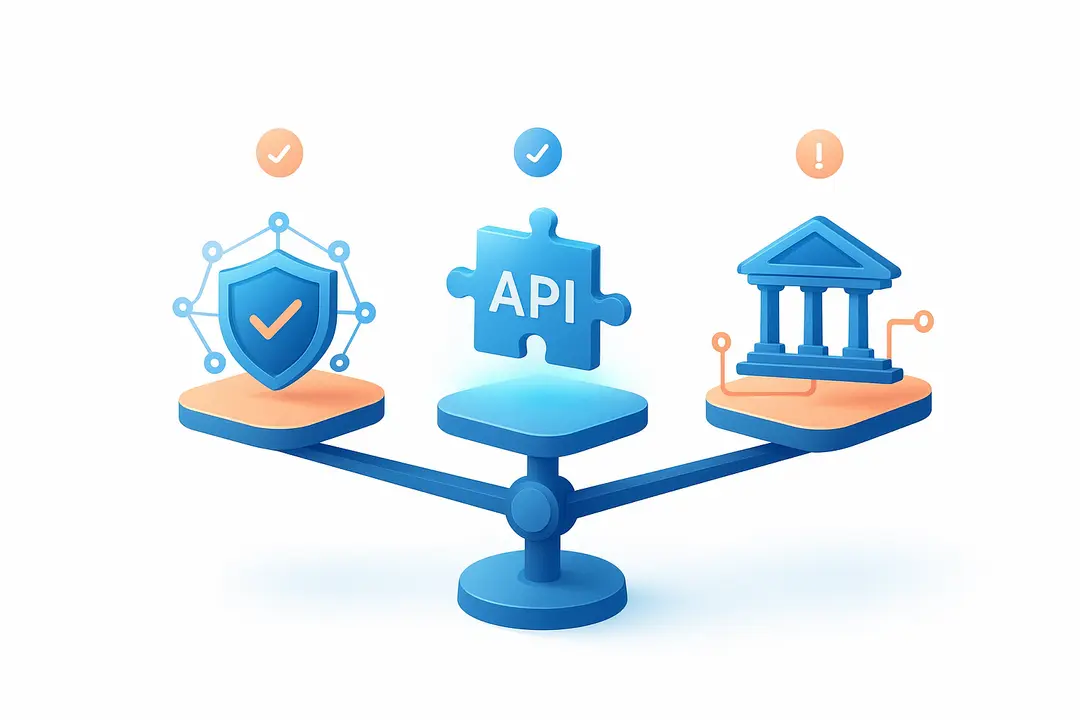
Choosing your trading app model directly shapes compliance, development effort, and go-to-market strategy.
The three primary operational models are:
| Model | Description | Pros | Cons |
| Pure Brokerage | You operate as a broker-dealer, routing orders and managing accounts. | Complete control, brand ownership | Highest regulatory burden, costly |
| Broker-API Integrator | Build on top of an existing broker’s API, handling front-end and UX. | Faster to market, less compliance | Limited backend control, partner risk |
| Bank/Hybrid Integration | Collaborate with banks or licensed partners for trading rails. | Reduces licensing load, brand trust | Shared revenue, less flexibility |
Decision Considerations:
– Time-to-market: API integration is often fastest.
– Compliance complexity: Full brokerage requires registration with entities like FINRA/SEC (US) or the FCA (UK).
– Scalability: Custom brokerages scale flexibly, but carry higher overhead.
Example: A startup wanting rapid entry can integrate with a brokerage API, focusing on differentiation via UX or niche features.
What Regulations and Compliance Must Your Stock Trading App Meet? (US/EU/UK/Global)

All trading apps must comply with market-specific regulations to operate legally and protect user assets.
Key Regulatory Bodies & Frameworks:
– US: FINRA, SEC (e.g., Rule 4511 & 17a-4)
– UK/EU: FCA, MiFID II, PSD2, DORA, GDPR
– Global Extensions: PCI DSS (payments), OWASP MASVS (mobile app security), MiCA (crypto assets in EU)
Core Compliance Requirements:
– Licensing: Broker-dealer registration or partnering with a regulated entity.
– KYC/AML: Robust identity checks and anti-money laundering controls.
– Data Privacy: GDPR (EU), CCPA (US), and other data protection laws.
– Operational Resilience: DORA in the EU now emphasizes system resilience and incident response.
– Audit Logging: Retain trade and access records per FINRA Rule 4511 or SEC 17a-4.
| Regulation | App Feature Impacted | System Module |
| FINRA Rule 4511 | Trade/audit logs, retention | Logging, analytics, data archiving |
| SEC 17a-4 | Electronic records & audit | Immutable storage, e-discovery |
| MiFID II (EU) | Best execution, transparency | Order tracking, reporting |
| DORA (EU) | Incident response/operational | Monitoring, recovery, resilience |
| PCI DSS (Global) | Secure payments | PCI-compliant tokenization, payment integration |
| GDPR | User data privacy, consent | Data erasure tools, privacy controls |
| OWASP MASVS | Mobile app security baselines | Secure coding, mobile hardening |
Emerging Standards:
– DORA (enforced for EU from 2025): Requires robust operational resilience and regular stress testing for fintechs. DORA Regulation (EU)
– MiCA: Upcoming requirements for crypto trading, may impact hybrid or multi-asset apps.
– OWASP MASVS (2024): Updated controls for mobile app security. OWASP MASVS
Fitting compliance “in” from day one avoids costly rework and accelerates approval by app stores and regulators.
How Do You Develop a Stock Trading App? (Full Step-by-Step Framework)
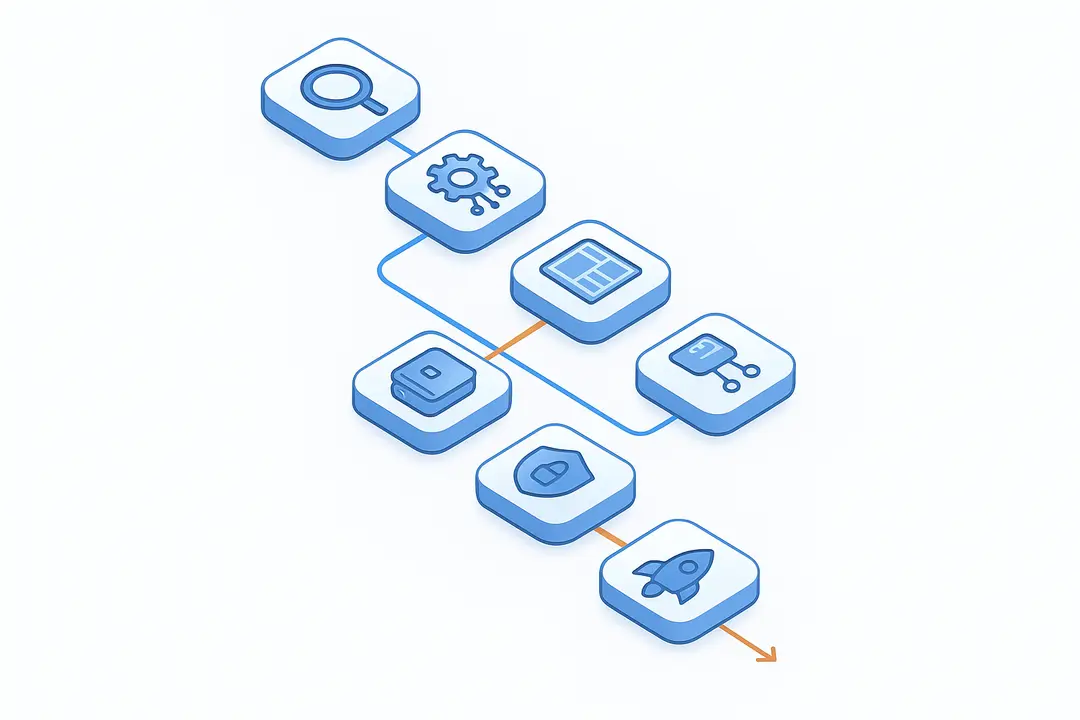
Developing a stock trading app demands a systematic, compliance-ready approach from research through to launch and ongoing maintenance.
To develop a stock trading app, follow these 7 steps:
- Research the Market & Define Requirements
- Define App Features & System Architecture
- Design UI/UX for Traders
- Engineer Backend & Integrate APIs
- Implement Security & Ensure Data Privacy
- Conduct Testing & Quality Assurance
- Deploy, Launch, and Monitor
Step 1: Research the Market & Define Requirements
Start by analyzing your target users, competitive set, and regulatory landscape.
- Target Audience: Identify primary users (retail, institutional, niche).
- Competitive Landscape: Map out current leaders (e.g., Robinhood, E*TRADE) and niche disruptors.
- Regulatory Review: Confirm licensing route and required compliance scope early.
- Feature Set: Draft initial list (e.g., onboarding, portfolio tracking, real-time quotes).
Action tip: Use this research to draft user stories and app specifications tailored to both your market and compliance gap.
Step 2: Define App Features & System Architecture
Clarify your must-have features and lay out the foundational system design.
- Essential Modules: Onboarding, user accounts, KYC checks, order routing, portfolio management, watchlists, funding, notifications.
- Architecture Choices: Monolithic architectures are simpler for MVPs, but microservices improve scalability for real-time trading.
- Real-time Data: Plan for integration of live market feeds and rapid order execution.
- Sample High-level Architecture:
[Client (Mobile/Web)]
        |
[API Gateway]
        |
[Microservices]
        |
[Market Data Feed]   [Brokerage API]   [Notification Service]
        |
[Compliance Module (KYC, Audit Logs)]
        |
[Data Storage (Encrypted, GDPR-compliant)]
Recommendation: Visualize your architecture early—align system modules with regulatory requirements before coding.
Step 3: Design UI/UX for Traders
Prototyping user journeys ensures both functional clarity and competitive differentiation.
- Wireframes/Prototypes: Sketch flows for onboarding, trading, watchlists.
- Mobile-First vs. Web: Choose based on target audience; most B2C apps skew heavily mobile.
- Accessibility: Meet WCAG standards; ensure colors, font sizes, and interactions are accessible.
- Data Visualization: Integrate advanced charting for positions, price histories, and P&L.
Best practice: Involve traders/user testers early in the design cycle to validate workflows and usability.
Step 4: Engineer Backend & Integrate APIs
Your app’s performance and reliability depend on the backend and third-party integrations.
- Market Data Feeds: Use trusted providers (e.g., IEX Cloud, Tradier, Polygon).
- Brokerage Integrations: Connect via APIs (Alpaca, Interactive Brokers).
- Payment Gateways: Ensure PCI DSS compliance for deposits/withdrawals.
- Event-Driven Design: Adopt event-driven or pub-sub patterns for scalability and resilience.
Expert tip: Modularize API integrations to enable future expansion to new asset classes or brokers.
Step 5: Implement Security & Ensure Data Privacy
Security and privacy cannot be bolt-ons; bake them into every app layer.
- Encryption: Use end-to-end encryption (at rest and in transit).
- SSO/2FA: Integrate single sign-on, two-factor authentication for account access.
- Audit Logs: Enable tamper-proof, immutable logging for all sensitive operations.
- Incident Response: Plan playbooks for breach, downtime, and fraud events.
- GDPR/PCI DSS Compliance: Respect rights to erasure, explicit consent, and secure payment processing—refer to PCI DSS v4 and GDPR guidance.
Quiet feature alert: Comprehensive audit and incident response modules are now expected by both regulators and advanced users.
Step 6: Conduct Testing & Quality Assurance
Test both user flows and “quiet” backend components to reduce risk post-launch.
- Functional Testing: Ensure all workflows (trading, funding, reporting) operate as specified.
- Security Testing: Regular penetration tests; OWASP MASVS-compliant for mobiles.
- Performance Testing: Simulate spikes in order placement and market data updates.
- Automated Suites: Reduce regression risk and speed up release cycles.
Compliance note: Documented test results often form part of regulatory audits, especially for MiFID II/DORA in the EU.
Step 7: Deploy, Launch, and Monitor
Go-live is only the beginning—plan for rapid response and ongoing improvement.
- Pre-launch Checklist: Verify compliance, performance, and data backups.
- Monitoring: Deploy real-time monitoring for orders, market events, security anomalies.
- Incident Management: “Hotfix” processes, automated rollbacks, and user communications are crucial.
- Upgrades: Schedule regular dependency reviews and feature pushes to stay competitive and secure.
Pro insight: Pair each new launch with a compliance review and customer support plan.
What Features and Trends Should a Modern Stock Trading App Include?
A winning trading app blends robust core features with compliance enhancements and emerging market trends.
Core Must-Have Features:
- Account onboarding & KYC/AML
- Real-time market data and quotes
- Trade order placement (buy/sell)
- Portfolio management with analytics
- Funding/withdrawal workflows
- Notifications (push, SMS, email)
- Audit logs and reporting
- Two-factor authentication & SSO
Advanced & Trending Features:
- Fractional investing: Democratizes high-priced asset access.
- Algorithmic/robo-advisory: Automated trade execution and investment recommendations.
- Social/community: Leaderboards, copy-trading, and discussion forums.
- AI-powered analysis: Predictive analytics, risk reports, and news sentiment.
- Voice or chatbots: Hands-free trading and account management.
Compliance-Driven Enhancements:
– Best execution tracking and reporting (MiFID II, SEC)
– Immutable audit logging (FINRA/SEC)
– GDPR/CCPA-compliant privacy controls
| Feature | Mandatory | Trend/Advanced | Compliance Impact |
| User Onboarding | ✔ | KYC/AML, GDPR | |
| Real-time Quotes | ✔ | ||
| Trade Orders | ✔ | Audit logs, BestEx | |
| Portfolio Analytics | ✔ | ||
| Audit Logging | FINRA, SEC, GDPR | ||
| Robo-Advisor | ✔ | MiFID II disclosure | |
| Social Trading | ✔ | Community controls | |
| Push Notifications | ✔ | User consents (GDPR) | |
| 2FA/SSO | ✔ | OWASP MASVS | |
| Reports & Statements | ✔ | Regulatory audits |
Staying current with new trends can improve retention and enhance app longevity in a crowded market.
Which Tech Stack Should You Choose for Stock Trading App Development?
Selecting the right tech stack is critical for performance, security, and scalability in stock trading app development.
Frontend Options:
- Native iOS/Android: Superior performance, device integration; more effort to maintain both.
- Cross-Platform (React Native, Flutter): Faster dev, single codebase, nearly-native user experience.
Backend Technologies:
- Node.js: Fast, ideal for event-driven real-time trading; rich ecosystem.
- .NET: High security, good for financial orgs with Microsoft stacks.
- Java: Enterprise-grade, proven for high-load systems.
- Python: Strong for analytics/AI modules, moderately scalable.
Cloud Infrastructure:
- AWS: Extensive fintech tooling, compliance certifications.
- Azure/GCP: Competitive alternatives with global reach.
- Self-Hosted: Rare outside of regulated banks or high-frequency trading outfits.
Key Integrations:
- Market Data APIs: IEX, Polygon, Tradier
- Charting Libraries: TradingView, Highcharts
- Payment Gateways: Stripe, Plaid, Adyen
| Requirement | Node.js | .NET | Java | Python |
| Real-time data | High | Med/High | High | Medium |
| Security/Compliance | Medium | High | High | Medium |
| Rapid prototyping | High | Low | Medium | High |
| Cost efficiency | High | Medium | Medium | High |
Pro tip: Choose your stack based not just on current needs, but anticipated growth—latency and performance bottlenecks can’t be retrofitted cheaply.
How Much Does It Cost (and How Long Does It Take) to Build a Trading App?
The cost to build a stock trading app depends on scope, feature depth, compliance obligations, and chosen technologies.
Typical Cost Breakdown by Phase:
| Phase | Estimated % of Total Cost |
| Market Research | 5–10% |
| UX/UI Design | 10–20% |
| App Development | 35–50% |
| Compliance/Testing | 15–20% |
| Launch & Go-Live | 5–10% |
| Maintenance (Year 1) | 10–15% |
Cost Ranges:
– MVP/Prototype: $60,000–$120,000
– Full-Featured Platform: $200,000–$600,000+
– White-Label Solution: Most cost-effective, lower end of above.
Timelines:
– MVP: 4–8 months (faster with APIs/white-label)
– Enterprise-grade: 9–18 months (more compliance/testing phases)
Cost Factors:
– Regulatory domain (US/EU/Asia adds complexity)
– Feature set (core vs. advanced/trend features)
– Chosen stack/infrastructure (AWS vs. on-premise)
– Geography of development team
Pro advice: Account for ongoing compliance, support, and cloud costs—operational budgets post-launch are significant for trading apps.
What Are Common Pitfalls in Trading App Development? (Plus Pro Tips from Experts)
Many trading app projects stumble due to overlooked compliance, under-scoped data systems, or insufficient operational planning.
- Retrofitting Compliance: Failing to embed KYC/AML or audit capabilities from the start leads to expensive rework.
- Underestimating Data Latency: Real-time trading needs low-latency architectures; delays cause poor UX or regulatory issues.
- Ignoring Scalability/Recovery: Lack of disaster recovery and scaling plans can mean downtime during market events.
- Minimal “Quiet Features”: Skipping audit logs, backup, and incident response leaves platforms vulnerable to both cyberattacks and compliance sanctions.
- Incomplete Security: Weak encryption or missing 2FA/SSO exposes users to theft and data breaches.
“The biggest surprise for new fintechs is the rigor around audit logs and disaster recovery. Regulators want hour-by-hour detail and documented incident plans.” — CTO, EU Trading Platform
Don’t Forget Checklist:
– Start with compliance mapping (not as an afterthought)
– Budget for performance engineering
– Plan a phased, test-driven rollout (not “big bang”)
– Document all system handoffs and automated logs
Being proactive mitigates both short-term delays and long-term regulatory or security headaches.
FAQs on Stock Trading App Development Guide
What are the steps in a stock trading app development guide?
A stock trading app development guide includes market research, requirement planning, UI UX design, backend and API development, security and compliance setup, testing, and deployment as part of the stock trading app development process.
What regulatory requirements are covered in a stock trading app development guide for US and EU?
A stock trading app development guide includes compliance with SEC and FINRA in the US, and FCA, MiFID II, GDPR, and DORA in Europe. These are critical steps in the stock trading app development process.
What is the trading app development cost in a stock trading app development guide?
The trading app development cost ranges from $60,000 for basic apps to $600,000 or more for enterprise platforms depending on features, compliance, and architecture defined in the stock trading app development guide.
What tech stack is recommended in a stock trading app development guide?
A stock trading app development guide recommends Node.js, React Native, Java, or .NET along with cloud platforms like AWS or Azure to support scalability in the stock trading app development process.
What features are essential in a stock trading app development guide?
A stock trading app development guide includes features like KYC onboarding, real time trading, portfolio tracking, 2FA security, reporting, and secure payments as part of a complete stock trading app development process.
How is user data protected in a stock trading app development guide?
In a stock trading app development guide, data protection includes encryption, secure access control, audit logs, and compliance with privacy laws as part of a secure stock trading app development process.
What are common mistakes in a stock trading app development process?
Common mistakes in a stock trading app development guide include ignoring compliance early, underestimating infrastructure needs, and overlooking security, all of which increase trading app development cost.
How long does the stock trading app development process take?
According to a stock trading app development guide, timelines range from 4 to 8 months for MVPs and up to a year or more for full scale platforms.
How do you ensure best execution in a stock trading app development guide?
A stock trading app development guide ensures best execution through smart order routing, real time data analysis, and audit trails within the stock trading app development process.
Can APIs reduce trading app development cost in a stock trading app development guide?
Yes, using brokerage APIs can reduce trading app development cost and speed up the stock trading app development process, though it may limit customization.
What skills are needed for a successful stock trading app development process?
A stock trading app development guide highlights the need for fintech expertise, backend development, cloud architecture, security engineering, and compliance knowledge.
How can you scale your app using a stock trading app development guide?
You can scale effectively by following a stock trading app development guide that focuses on cloud infrastructure, modular architecture, and performance optimization to manage growing users and transactions.
Conclusion & Next Steps: Move from Vision to Viable Trading App
Successful stock trading app development requires a balance of strong technical execution, regulatory awareness, and a clear understanding of user expectations. Focusing on security, scalability, and compliance from the start helps reduce risks and builds trust with your users.
By taking a structured approach and aligning your development strategy with market demands, you can create a platform that performs reliably and meets industry standards. Careful planning, the right technology choices, and consistent testing will play a key role in long term success.
With the right foundation in place, your trading app can deliver a seamless experience, adapt to evolving regulations, and support sustainable growth in a highly competitive fintech landscape.
Key Takeaways: Building Your Trading App Right
- Regulatory compliance must be integral to both design and code from day one.
- Choosing the correct operational model (brokerage, API, hybrid) steers both cost and capability.
- Modern trading apps require secure, real-time data flows and robust auditability.
- Tech stacks should be selected for both scale and compliance agility—future-proof where possible.
- Avoidable pitfalls can delay launch and risk regulatory scrutiny; expert guidance and “quiet features” save time and cost.
This page was last edited on 26 April 2026, at 9:35 am

Start a conversation with our team to solve complex challenges and move forward with confidence.