AI-driven churn prevention workflows are quickly becoming essential for SaaS and enterprise teams facing rising retention challenges. As churn costs for B2B SaaS continue to climb—Forbes estimates customer acquisition is 5–25 times pricier than retention—outdated manual retention methods can’t keep up. Traditional churn mitigation approaches are slow, resource-heavy, and rarely proactive.
Today’s SaaS leaders need faster, smarter solutions. AI-powered workflows now deliver outsized value: instant behavioral signal processing, precise churn risk scoring, and real-time, automated retention actions—at scale. This step-by-step guide breaks down how to implement an AI-driven churn prevention workflow, offers a comparison of top platforms, presents real ROI benchmarks, and provides downloadable assets to begin optimizing now.
What Is an AI-Driven Churn Prevention Workflow?
An AI-driven churn prevention workflow is an automated process that uses artificial intelligence to continuously predict, identify, and counteract customer churn risks through real-time data analysis and targeted interventions.
Unlike manual approaches, AI-driven workflows integrate machine learning models, behavioral analytics, and automated playbooks to detect early churn signals and empower SaaS teams to intervene before customers leave.
Sample Workflow Overview Table:
| Step | Description |
| 1. Signal Detection | Collect and analyze usage, support, and sentiment data in real time |
| 2. Churn Risk Scoring | Assign health scores and churn risk levels using AI/ML models |
| 3. Automated Interventions | Trigger retention playbooks or targeted messaging instantly |
| 4. Human Escalation | Escalate high-risk cases for personalized support |
| 5. Performance Monitoring | Measure outcomes, retrain models, and optimize workflows continuously |
AI-driven workflows automate detection and response, dramatically improving speed and accuracy compared to conventional churn management that relies on manual check-ins and late-stage outreach.

Why Is AI Essential for Churn Prevention in SaaS and B2B?
AI is essential for churn prevention because it enables faster, more accurate identification of at-risk customers and delivers proactive, scalable interventions that traditional methods can’t match.
Research by Gartner and Forbes consistently shows the high cost of churn—in SaaS, losing a customer impacts Annual Recurring Revenue (ARR) and Net Revenue Retention (NRR) far more than winning a new deal. Predictive analytics and AI platforms outperform simple rules-based approaches by identifying subtle patterns and signals across millions of data points, leading to:
- Time Savings: Automated workflows reduce manual analysis and repetitive tasks, freeing teams for higher-value work.
- Accuracy Gains: AI-powered scoring delivers up to 85–90% prediction accuracy according to leading platforms (e.g., Kissmetrics).
- Revenue Impact: Companies see improvement in key metrics such as NRR and increased save rates when AI is operationalized for churn prevention.
FAQ Quick Answer:
AI-driven churn prevention helps SaaS teams detect customers likely to churn much earlier, enables automated, tailored retention actions, and drives measurable improvements in retention metrics compared to manual or rules-based methods.
What Are the Key Components of an AI Churn Prevention Workflow?
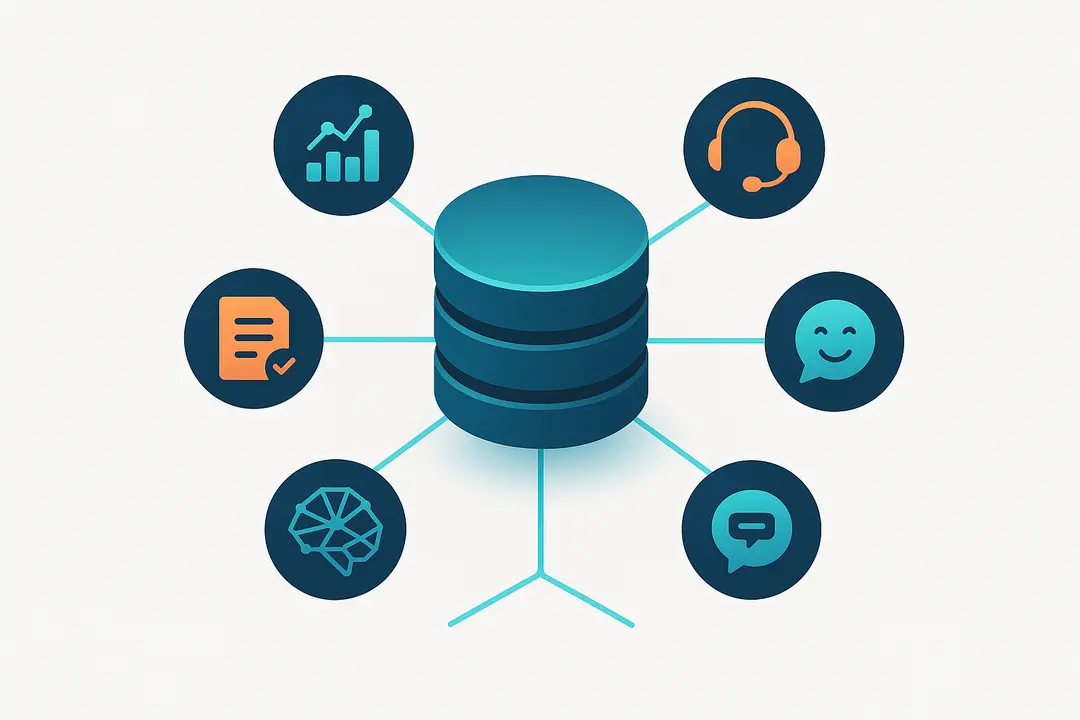
A comprehensive AI churn prevention workflow consists of connected elements that transform raw customer data into actionable retention strategies. Understanding each component ensures effective benchmarking and platform selection.
Data Sources for Churn Prediction
AI churn workflows rely on diverse, high-quality data inputs to predict risks:
- Product usage analytics: Features accessed, frequency, and depth of engagement.
- Login/activity data: Session counts, inactivity periods, and sudden drops.
- Support tickets: Volume, resolution time, sentiment, and escalation patterns.
- Survey/sentiment signals: Net Promoter Score (NPS), CSAT responses, review data, and open-ended feedback.
How Churn Risk Scoring Models Work
AI models assess each customer’s likelihood to churn by generating health scores and risk scores based on pattern recognition and historical outcomes.
- Risk scoring models: Use supervised machine learning to predict churn probability, typically over the next 30/60/90 days.
- Cohort and segment analysis: Groups customers by similar traits or behaviors for tailored scoring.
- Dynamic scoring: Updates in real time as new data flows in, producing up-to-date risk insights.
Automated Retention Playbooks & Interventions
Powerful workflows enable instant, trigger-based actions:
- Playbook automation: Configurable templates for at-risk customers, such as proactive check-ins or education campaigns.
- Personalized outreach: AI customizes messaging by risk score, segment, or previous behavior.
- In-app or multichannel messaging: Automated reminders, offers, or help tips delivered via email, SMS, or directly in the product.
Escalation Tiers and Human Touchpoints
Not all churn risks can be managed automatically. High-risk or high-value accounts often require a human touch:
- Escalation tiers: Map risks to human intervention levels (e.g., low = automated, high = manager outreach).
- Save offers: Personalized incentives or solutions for customers flagged as highly likely to churn.
- Support team integration: Seamless handoff from AI triggers to account managers or customer success reps.
Re-engagement and Post-Churn Automation
To win back lost customers or re-engage inactive accounts, leading AI workflows include:
- Reactivation sequences: Automated, multi-touch campaigns targeting recently churned or inactive customers.
- Incentive campaigns: Time-bound offers or product updates to re-capture attention.
- Win-back workflows: AI predicts best timing and messaging for maximum reactivation rates.
Visual Diagram:
End-to-end workflow diagram showing data intake, AI risk scoring, intervention ladders, escalation tiers, and feedback loops.
How Does the AI-Driven Churn Prevention Workflow Operate? (Step-by-Step)
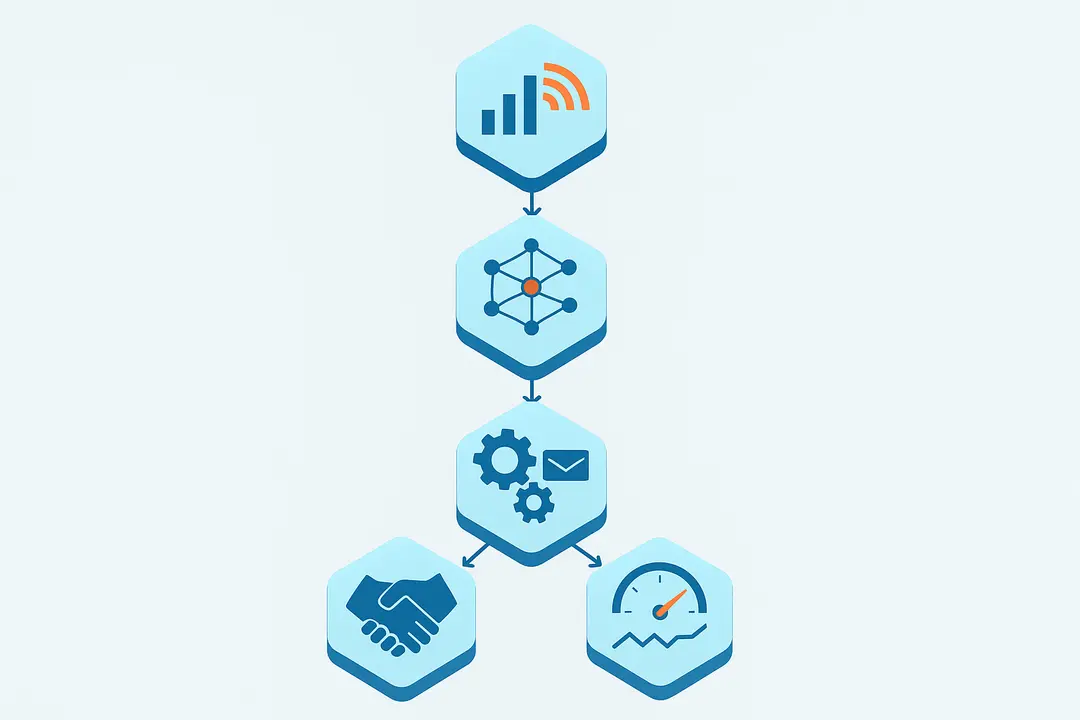
An AI-driven churn prevention workflow follows five core steps to predict and prevent customer churn in SaaS organizations.
1. Behavioral Signal Detection
Monitor product usage, support interactions, and sentiment signals for early churn risk indicators.
2. Real-Time Churn Risk Scoring
Use AI/ML models to assess and update each customer’s churn likelihood, generating health scores.
3. Automated Retention Actions
Trigger automated retention playbooks—personalized messaging, offers, or guidance—based on risk level.
4. Escalate to Human Intervention
For high-risk scenarios, notify support or Customer Success (CS) teams to deliver timely, personalized outreach or incentives.
5. Monitor, Measure, and Iterate
Continuously track workflow performance, collect feedback, retrain AI models, and optimize intervention strategies for improved results.
Step Table for Featured Snippet:
| Step | Purpose |
| 1. Detect Behavioral Signals | Identify early churn warnings from data |
| 2. Score Churn Risk | Calculate real-time health/risk scores with AI |
| 3. Automate Retention | Instantly trigger targeted playbooks and messages |
| 4. Escalate Humans | Engage human CS team for high-value/high-risk accounts |
| 5. Monitor & Improve | Measure outcomes, refine models, enhance workflow with new learnings |
Who Are the Leading AI Churn Prevention Platforms and Tools?
Today’s top AI churn prevention platforms offer advanced features for B2B SaaS teams: from behavioral analytics to seamless integrations and AI Copilot support. Below is a snapshot of the leading platforms, with ROI and feature highlights.
Comparison Table:
| Platform | Key AI Features | Integration | Pricing | ROI Focus Areas | Noteworthy Strengths |
| Gainsight | Predictive scoring, journey orchestration, AI Copilot | Native, API | Tiered/SaaS | NRR uplift, time saved | Escalation tiers, rich workflow builder |
| Vitally | Real-time risk models, no-code playbooks | HubSpot, Slack | Transparent | Automation, proactive alerts | Ease of setup, automated interventions |
| Kissmetrics | AI-powered behavior analytics, churn forecasting | Web/app data | Custom/Opaque | Accuracy improvement, insight speed | Custom dashboards, flexible segmentation |
| ChurnZero | Health scoring, trends, automation triggers | SaaS apps, CS tools | SaaS plans | Save rate, NPS, time-to-insight | Playbook automation, customer journey mapping |
| Planhat | AI models, multilingual sentiment, success analytics | Global | Custom/SaaS | Enterprise insights, global support | Flexible data mapping, enterprise scale |
Open-Source/DIY Options:
Open-source churn models (e.g., with Python, scikit-learn/XGBoost) exist primarily for technical teams; however, comprehensive, ready-to-launch open-source platforms are limited. Most SaaS teams use commercial CSPs for out-of-the-box AI and workflow orchestration.
Which Metrics & KPIs Matter Most for AI Churn Prevention Workflows?
Tracking the right metrics and KPIs is critical to measure the effectiveness of AI churn prevention workflows and secure executive buy-in.
Core Metrics:
- Retention Rate: % of customers retained over a set period.
- Net Revenue Retention (NRR): Revenue kept after churn, downgrades, and expansions.
- Churn Rate: % of customers or revenue lost.
- Prediction Accuracy: % of correct churn predictions from the AI model.
- Customer Health Score: Composite score indicating customer engagement and satisfaction.
- Customer Acquisition Cost (CAC): Cost to acquire a new customer (for ROI context).
- Save Rate: % of at-risk customers successfully retained after workflow application.
- Customer Lifetime Value (CLTV): Total predicted value from a customer over the relationship.
Where to Track:
Most AI customer success platforms offer built-in dashboards and analytics for these KPIs. Teams can also export data to a downloadable KPI tracker (Excel/Google Sheets) for custom analysis.
Benchmarks:
– Best-in-class SaaS often report NRR > 120%, churn rates below 5–7% annually, and AI model prediction accuracy above 85%.
– Industry averages vary; always compare within your relevant SaaS segment.
Downloadable Asset:
[Churn KPI Tracker: Excel/Sheets template – link for download]
How to Implement AI-Driven Churn Workflows Successfully (Best Practices & Roadmap)
Implementing AI churn prevention workflows requires strategic planning, cross-team collaboration, and ongoing refinement. Follow this phased roadmap to maximize success and minimize risk.
1. Assess Data Readiness
– Audit your existing data: ensure usage, support, and engagement data are available, clean, and cohesive.
2. Select Platform/Tools
– Evaluate platforms based on AI capabilities, integration needs, pricing, and internal alignment.
3. Design Custom Workflow
– Map key churn touchpoints, customer segments, and intervention playbooks tailored to your business.
4. Test and Validate
– Pilot the workflow on a cohort; conduct A/B tests; monitor prediction accuracy and retention outcomes.
5. Train and Enable Teams
– Guide CS, support, and ops teams on using new tools and workflows efficiently; provide ongoing resources.
6. Measure and Optimize
– Regularly review KPIs, collect feedback, retrain AI models, and refine workflows based on outcomes.
7. Leverage Workflow Checklist
– [Download implementation checklist/template for stepwise adoption]
Tips to Succeed:
- Secure executive and cross-functional buy-in early.
- Prioritize clear documentation and data governance.
- Start small, iterate, and expand based on validated learning.

How to Protect Privacy, Ensure Compliance, and Avoid AI Bias in Churn Prevention
Data privacy, compliance, and ethical AI are crucial when deploying AI-driven churn prevention workflows in SaaS.
Best Practices for Compliance and Ethics:
- Customer Consent: Always collect and process data with explicit, documented customer consent.
- Data Minimization: Limit data collection to only what’s necessary for churn prediction and intervention.
- GDPR & CCPA Compliance: Ensure workflows align with applicable regulations—offer opt-outs, support data deletion requests, and comply with regional requirements.
- Bias Mitigation:
– Regularly audit AI models for bias or disparate impact by segment.
– Use diverse training data and document model decisions. - Transparency & Explainability:
– Choose platforms with explainable AI features and robust audit trails.
– Clearly communicate how decisions and scores are derived.
Compliance Checklist:
- Documented data processing policies
- Regular AI model audits for bias/fairness
- Customer-facing privacy disclosures and opt-outs
- Data access controls and encryption
- Vendor/platform support for audit logging
What’s Next? AI Trends and the Future of Churn Prevention
The future of churn prevention will be defined by ever-smarter AI, richer data signals, and evolving customer expectations. Leading trends include:
- AI Copilots & Conversational Interfaces: Advanced copilots guiding CS reps and directly advising customers in real time.
- Hyper-Personalized Retention: Micro-segmentation and dynamically tailored interventions for each user or account.
- Multimodal Analytics: Integrating product usage, voice, text, and behavioral data for a 360° customer view.
- Privacy-First AI: Stricter global data laws will push vendors to invest in consent management and transparent AI workflows.
- Industry Consolidation & Innovation: Notable deals, like Gainsight’s acquisition of Staircase AI, will accelerate AI capabilities and platform integrations across the ecosystem.
Expert Insight:
“AI-driven churn prevention moves us from reactive firefighting to proactive, personalized retention at global scale.” — VP, Customer Success, Leading SaaS Platform
FAQs: AI-Driven Churn Prevention Workflows
What is an AI-driven churn prevention workflow?
An AI-driven churn prevention workflow uses AI and automation to monitor customer behavior, predict churn risk, and trigger targeted retention interventions before customers leave.
How does AI detect customers at risk of churning?
AI models analyze behavioral, support, and sentiment data to identify early signals—such as reduced activity, negative feedback, or unresolved tickets—that historically precede churn.
What data is needed to build an AI churn prediction model?
Key inputs include product usage logs, login frequency, support ticket data, survey scores (e.g., NPS), and account changes. The more comprehensive and clean your data, the better the AI model performs.
Which platforms offer the best AI churn prevention tools?
Top platforms include Gainsight, Vitally, Kissmetrics, ChurnZero, and Planhat. They differ in AI capabilities, integrations, and analytics features—compare based on your stack and business needs.
How accurate are AI models for predicting churn?
Industry averages show 85–90% predictive accuracy for well-trained models, though accuracy depends on your data quality and the complexity of your customer journeys.
What steps are involved in deploying an automated churn workflow?
Key steps include assessing data readiness, selecting a platform, designing workflows, running pilot tests, training your team, and continuously measuring results.
Can AI prevent churn without human intervention?
AI can automate detection and many retention actions, but high-value or complex cases often require human follow-up for best results.
What metrics should I track to measure churn workflow success?
Monitor retention rate, Net Revenue Retention (NRR), churn rate, prediction accuracy, health scores, and save rates.
How do I ensure customer data privacy in churn prediction?
Follow GDPR/CCPA guidelines, ensure customer consent, minimize unnecessary data collection, and use platforms with transparent data governance and audit tools.
How do re-engagement campaigns work after a customer churns?
AI workflows can trigger multi-channel win-back campaigns, such as personalized emails, special offers, or feature updates, timed to maximize the chance of reactivation.
Conclusion
AI-driven churn prevention workflows are no longer a luxury—they’re the foundation for scalable, data-driven retention in modern SaaS. By following this step-by-step guide, benchmarking your efforts, and choosing the right tools, your team can reduce churn, grow revenue, and deliver greater customer value.
Key Takeaways
- AI-driven churn prevention workflows enable proactive, scalable retention for SaaS and B2B organizations.
- Key workflow components include behavioral data collection, risk scoring models, automated interventions, escalation tiers, and re-engagement automation.
- Tracking vital KPIs (NRR, prediction accuracy, save rate) is essential for measuring and improving workflow success.
- Leading platforms (Gainsight, Vitally, Kissmetrics, ChurnZero, Planhat) offer robust AI features for diverse needs.
- Privacy, compliance, and ethical AI practices are critical for trust and regulatory adherence.
This page was last edited on 22 April 2026, at 10:07 am

Start a conversation with our team to solve complex challenges and move forward with confidence.