Procurement has never been more complex or critical to business resilience. Today’s organizations face mounting pressure to deliver faster sourcing, bulletproof compliance, and lower costs—with leaner teams and higher risk. Yet, outdated manual processes still dominate many procurement workflows, causing delays, errors, and lost value.
AI automation for procurement workflows now offers a game-changing path forward. This comprehensive guide provides a practical, step-by-step playbook for leaders seeking to modernize procurement—from foundational concepts to implementation, with checklists, maturity models, and real-world ROI insights.
By reading on, you’ll gain the clarity, frameworks, and tools required to future-proof your procurement function, maximize value, and minimize adoption risks.
What Is AI Automation in Procurement?
AI automation in procurement refers to the application of artificial intelligence to streamline, optimize, and automate procurement business processes such as sourcing, supplier onboarding, purchase order management, compliance, and spend analytics.
A typical procurement workflow includes phases like:
- Intake and requisition
- Supplier sourcing and onboarding
- Contract negotiation and management
- Purchase order (PO) creation and approvals
- Invoice processing and payment
- Ongoing compliance and spend analysis
AI automation goes beyond simple digitization or process mapping. Instead of just moving paper forms online, AI leverages intelligent agents, orchestration layers, and workflow bots that can analyze data, make recommendations, automate decisions, and adapt as conditions change.
Key terms include:
- Agentic AI: Autonomous agents that handle complex, cross-stage procurement tasks.
- Orchestration Layers: Middleware that coordinates humans and AI in workflows.
- Workflow Agents: Task-specific AI bots that execute procurement steps.
AI automation for procurement workflows empowers organizations to reduce cycle time, enhance compliance, manage risk, and gain real-time spend visibility.
Key Concepts: Agentic AI vs. RPA vs. Workflow Automation
Understanding the difference between agentic AI, Robotic Process Automation (RPA), and traditional workflow tools is crucial to choosing the right solution for your needs.
| Feature | Agentic AI | RPA | Workflow Automation |
| Intelligence & Decision-Making | High (adapts and learns) | Low (rules-based) | Medium (pre-defined decision points) |
| Autonomy | High (can act without human input across workflows) | Low (repeatable tasks only) | Medium (process routing) |
| Best Use | Complex, variable procurement tasks | Simple, repetitive activity | Standardized process flows |
| Example in Procurement | Autonomous sourcing agent evaluating suppliers | Auto-transferring invoice data | Multi-stage approval routing |
When to use:
- Agentic AI: For dynamic, high-variability tasks (e.g., risk evaluation, negotiation).
- RPA: For repetitive, stable steps (e.g., copying data between systems).
- Workflow Automation: For routing and coordinating activities between roles.
Agentic AI enables a leap from “automated tasks” to “autonomous procurement decisions,” delivering higher value as your processes mature.
How Does AI Transform Procurement Workflows?
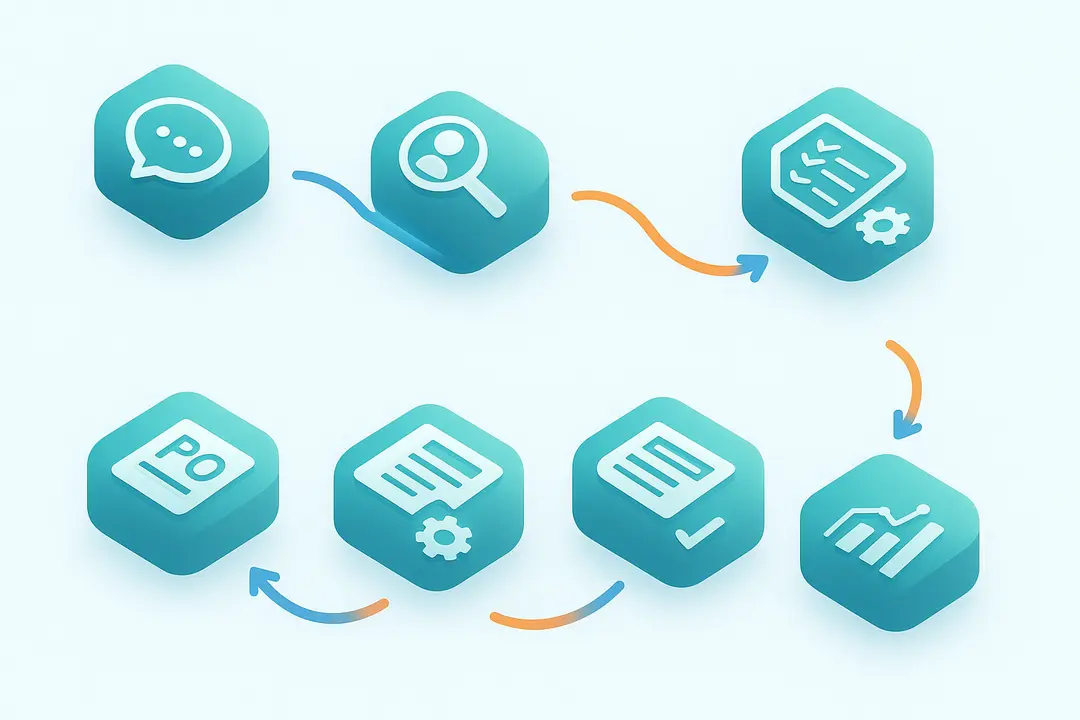
AI fundamentally enhances procurement at every stage—speeding up operations, reducing errors, and uncovering deeper business insights. By automating major steps, procurement teams gain agility and strategic bandwidth.
Typical end-to-end journey with AI:
- Intake: AI chatbots guide users through needs clarification and policy checks.
- Sourcing: AI agents suggest suppliers, draft RFQs, and predict sourcing risks.
- Supplier Onboarding: Automated data gathering, risk screening, and compliance validation.
- Contract Management: AI reviews, redlines, and tracks KPIs in contracts.
- Purchase Order Management: Automated PO creation, exception handling, and approval routing.
- Invoice & Payment: AI matches invoices to POs, detects duplicates, and prompts approvals.
- Spend Analysis & Reporting: Real-time AI-driven dashboards flag outliers and savings opportunities.
Visual cue: Imagine a streamlined workflow diagram, mapping these AI-enabled steps versus traditional manual handoffs.
Before and After AI Automation:
- Cycle time: Shrinks from weeks to hours.
- Errors and rework: Drop significantly thanks to automated checks.
- Bottlenecks: Are eliminated as AI triages and escalates exceptions immediately.
AI Automation Use Cases: From Intake to Analytics
AI delivers tangible results across procurement stages by addressing high-impact pain points:
| Workflow Stage | Leading AI Use Cases | Key Benefits |
| Intake | Chatbots for policy guidance | Faster, compliant requisition intake |
| Sourcing | AI-driven supplier selection, RFQ drafts | Improved supplier quality, cycle time cut |
| Supplier Onboarding | Automated screening, KYC, risk check | Reduced onboarding from weeks to days |
| Contract Mgmt | AI clause review, compliance monitoring | Better contract terms, fewer disputes |
| PO Management | Auto-creation, exception handling | Lower manual work, fewer delays |
| Invoice Processing | Matching, fraud detection | Reduced duplicate/erroneous payments |
| Spend Analysis | AI dashboards, anomaly detection | Real-time insights and ongoing savings |
Real-world outcomes:
- According to Deloitte, organizations leveraging AI-enabled procurement orchestration have seen cycle time reductions of up to 50%, and cost savings ranging from 5–15% on addressable spend.
- In a case shared by IBM, automated supplier onboarding with AI cut processing times by over 60%.
What Are the Steps to Implement AI Automation in Procurement?
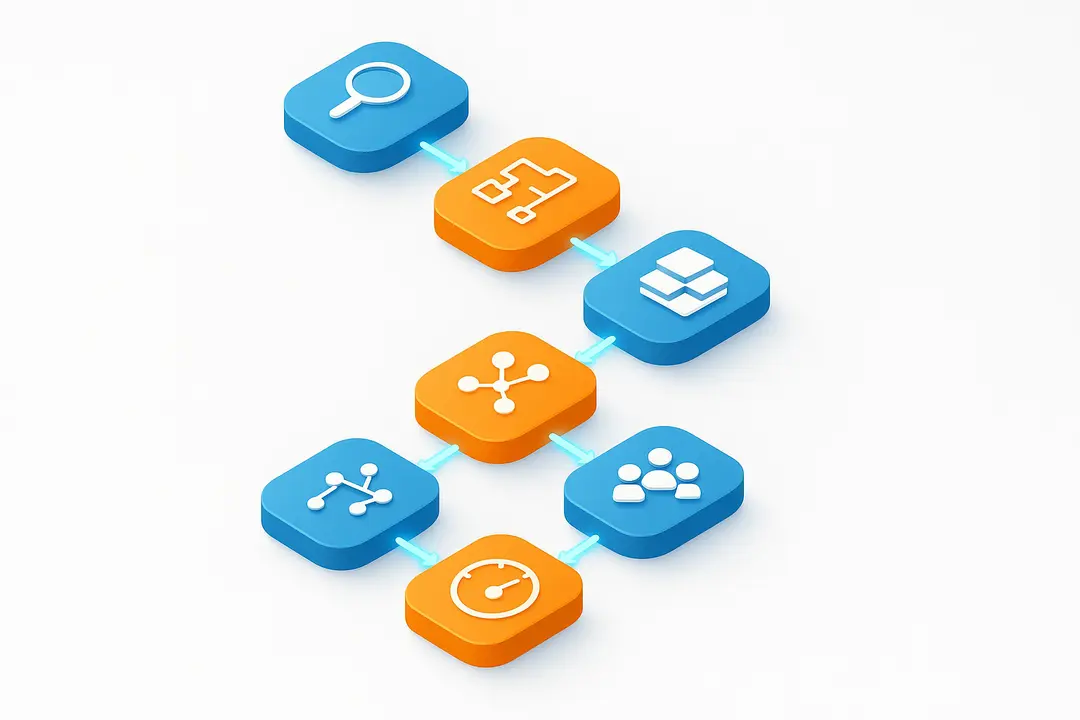
Launching AI automation for procurement is most successful with a stepwise, maturity-aligned approach. Here’s a proven pathway:
- Readiness Self-Assessment: Use a procurement AI maturity checklist to evaluate your current state.
- Workflow Discovery and Mapping: Document key procurement processes and pain points.
- Build or Select an Orchestration Layer: Design an agentic AI platform to manage workflow handoffs between humans and bots.
- Choose AI Tools/Platforms: Select vendor-neutral, modular solutions that align with your priorities.
- Integrate with ERP/Legacy Systems: Plan for API/middleware connections, data normalization, and governance.
- Change Management: Engage stakeholders, update policies, and provide training.
- Pilot, Measure, and Scale: Start with a high-impact area, track KPIs, then expand.
Pro tip:
Begin where process pain and data quality are highest—often supplier onboarding, invoice management, or spend analytics.
Checklist: Is Your Procurement Function AI-Ready?
Evaluate your organization’s automation readiness using this quick checklist:
- Digital infrastructure: Modern ERP/platform?
- Process documentation: Clear, current, and mapped workflows?
- Data quality: Reliable, accessible, well-structured data?
- Skills: In-house AI/automation and change leadership?
- Governance: Policies for risk, compliance, and auditability?
- Security: Controls and monitoring in place?
- Leadership: Executive sponsorship and buy-in?
A downloadable version of this checklist is available for in-depth self-assessment.
How Does AI Integration with ERP and Legacy Procurement Systems Work?
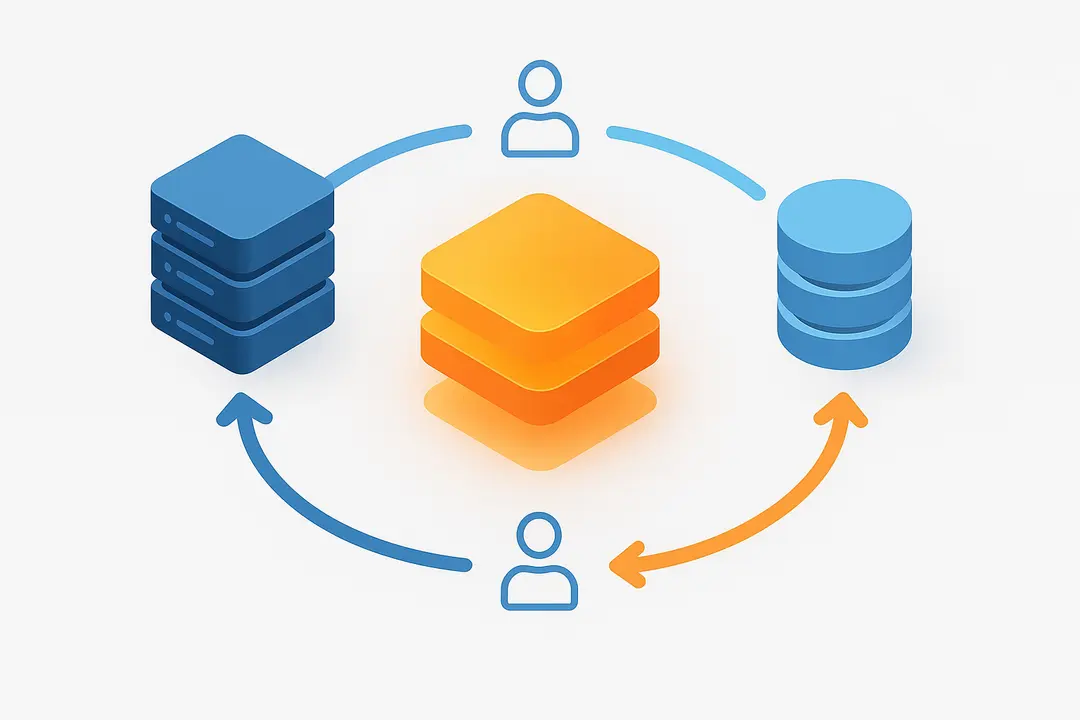
AI integration with ERP and legacy procurement environments is often the biggest technical hurdle—but it’s solvable. Integration is usually achieved via APIs, middleware orchestration platforms, or agentic overlays.
Key integration pathways:
- API Integration: Direct connection between AI tools and ERP modules.
- Middleware Orchestration: Platforms that unify data and processes across systems (multi-cloud and hybrid setups).
- Agentic Overlays: AI agents operate above legacy systems, extracting, processing, and writing back data.
Critical steps:
- Inventory all procurement-related applications and data sources.
- Use standard interfaces (e.g., SAP Gateway, Oracle REST APIs) for connectivity.
- Normalize data to ensure consistency for AI models.
- Establish robust data governance and security protocols.
- Monitor, test, and validate end-to-end process flows.
Diagram concept: Depict ERP, procurement apps, and AI orchestration middleware with bidirectional flows, showing seamless process automation and human-in-the-loop touchpoints.
What Are the Core Benefits and ROI of Automated Procurement?
AI-driven procurement delivers measurable improvements across efficiency, compliance, cost, and transparency. Below is a summary of typical benefits, compared to traditional procurement:
| Benefit Area | Traditional Approach | AI-Enabled Procurement |
| Efficiency | Manual tasks, slow cycles | Up to 50% faster with automation |
| Compliance | High risk, manual audits | Automated, continuous monitoring |
| Cost | Missed savings, high labor | 5–15% savings on addressable spend |
| Transparency | Siloed, delayed reporting | Real-time spend analytics |
ROI Evidence:
- Coca-Cola Europacific Partners reported cutting supplier onboarding from 17 days to under 7 with an agentic AI layer.
- FCL achieved a 30% reduction in manual invoice touchpoints post-AI rollout.
- Recent Hackett Group studies cite 2–3x increase in third-party compliance adherence after automation.
KPI Checklist:
- Cycle time reduction (requisition to PO, onboarding, etc.)
- Percentage of spend under management
- Invoice processing accuracy and speed
- Compliance and audit hit rates
- Cost savings achieved
Real-World Case Studies: AI Procurement in Action
Case 1:
International Manufacturing Company
- Challenge: High error rates and long approval cycles in procurement.
- Solution: Deployed agentic AI for PO management and invoice reconciliation.
- Results: PO cycle time cut by 45%, error rates halved, and overall spend visibility increased.
Case 2:
Global Consumer Brand
- Challenge: Supplier onboarding inefficiency and compliance risk.
- Solution: Automated data validation, KYC, and risk scoring with AI orchestration.
- Results: Onboarding time dropped by 60%, audit failures fell significantly.
These anonymized cases demonstrate how leadership, process mapping, and targeted AI applications yield quick, sustainable wins.
How Do You Ensure Security, Compliance, and Risk Management in AI-driven Procurement?
AI can amplify existing procurement risks if controls aren’t embedded. Strong security, compliance, and governance frameworks are essential to responsible adoption.
Main compliance & security risks:
- Data privacy violations (e.g., GDPR)
- Lack of auditability of AI-driven processes
- Value leakage or rogue spend
- Cybersecurity vulnerabilities in integration points
Best Practice Checklist:
- Data encryption in transit and at rest
- Role-based access controls and regular reviews
- Automated audit logs for all AI-triggered actions
- Regular AI model monitoring and explainability
- Compliance frameworks aligned with ISO 42001 and corporate policy
- Ongoing staff training on AI risk and security awareness
Implementing these controls not only safeguards the organization but builds stakeholder confidence in automation.
What’s Next? Agentic AI and the Future of Autonomous Procurement
Agentic AI is shaping a future where procurement moves beyond automation into true autonomy. Features of next-generation procurement include:
- Self-orchestrating workflows that span intake to payment with minimal human touch.
- AI agents negotiating, evaluating risk, and auto-resolving exceptions.
- Continuous compliance via embedded policy checks and audit trails.
- “Orchestration maturity,” a concept from Ivalua and AWS research, classifies procurement functions from basic automation to full autonomy.
Emerging trends:
| Trend | Expected Impact by 2025 |
| Generative AI in Sourcing | Scenario modeling, faster market scans |
| Autonomous Agent Layers | 60% of workflows touchless (Deloitte) |
| Real-time Risk Sensing | Predictive, not reactive compliance |
Organizations embracing these trends today are positioning for strategic advantage as procurement becomes an autonomous, intelligent control center.
FAQs about AI Automation for Procurement Workflows
What is AI automation for procurement workflows?
AI automation for procurement workflows means using artificial intelligence to handle tasks like sourcing, onboarding, order management, and compliance—streamlining processes, reducing errors, and unlocking cost savings.
How does agentic AI differ from RPA in procurement?
Agentic AI acts autonomously, managing complex, variable tasks and coordinating across workflows. RPA is rule-based, focusing on simple, repetitive activities such as copying or entering data.
Which procurement processes can be automated with AI?
Commonly automated processes include supplier onboarding, contract review, purchase order creation, invoice matching, compliance monitoring, and spend analytics.
How do you integrate AI automation with an ERP system?
Integration usually involves APIs, middleware orchestration layers, or overlay agents that connect AI tools directly to ERP software for seamless data and process flow.
What are the benefits/KPIs of AI-driven procurement?
Key benefits include faster cycle times, improved compliance, reduced manual effort, higher spend visibility, and measurable cost savings. KPIs may track cycle time, compliance rates, error reductions, and spend under management.
What compliance and security concerns exist?
Risks include data privacy breaches, improper access, and lack of audit trails. Mitigate with robust encryption, access controls, audit logging, and adherence to standards like ISO 42001.
How do you measure ROI of AI automation?
ROI is calculated by comparing pre- and post-automation metrics—such as cost savings, process speed, error rates, and compliance outcomes—against initial investment.
What is orchestration maturity in procurement automation?
Orchestration maturity refers to the stage at which procurement processes are managed seamlessly end-to-end, with AI agents coordinating and adapting tasks with minimal human intervention.
What are best practices for implementing AI in procurement workflows?
Start with workflow discovery, secure leadership buy-in, select modular AI platforms, integrate with existing systems, implement controls, and scale gradually while tracking KPIs.
Conclusion
AI automation for procurement workflows is now essential—not optional—for organizations seeking agility, compliance, and cost leadership. By leveraging agentic AI, robust orchestration, and thoughtful integration, procurement teams can unleash transformative speed and value while confidently addressing security and compliance.
Key Takeaways
- AI automation streamlines all procurement stages, improving speed, compliance, and spend control.
- Agentic AI delivers more adaptability and value than traditional RPA or workflow automation.
- Integration with ERP and legacy systems is achievable with APIs, middleware, and overlays.
- A readiness checklist and orchestration maturity framework enable safe, high-ROI adoption.
- Security and compliance risks are manageable with best-practice controls and governance.
This page was last edited on 21 April 2026, at 3:43 pm

Start a conversation with our team to solve complex challenges and move forward with confidence.