IT staff augmentation lets companies add specialized talent quickly—but without the right strategies, it can create costly challenges. In 2026, issues such as onboarding delays, communication gaps, security risks, and vendor transparency have grown even more complex due to remote and hybrid work trends. If these problems go unresolved, organizations face wasted resources, project overruns, and weakened data security. This guide provides an expert-backed playbook for solving the most pressing IT staff augmentation challenges, drawing on proven frameworks and actionable checklists. By following these solutions, IT leaders can reduce risk, accelerate integration, and maximize the ROI of their augmented teams.
At-a-Glance: Table of Top IT Staff Augmentation Challenges & Solutions
The table below offers a quick-reference guide to the most common IT staff augmentation challenges, their impacts, and practical solutions.
| Challenge | Impact | Proven Solution | Quick Tip |
|---|---|---|---|
| Onboarding & Integration | Delayed ramp-up, poor productivity | Structured onboarding frameworks | Provide a clear onboarding checklist and owner |
| Communication & Collaboration | Project errors, wasted time | Standard protocols & collaboration tools | Set regular syncs and use shared platforms |
| Cultural Fit & Engagement | Low morale, turnover, teamwork breakdown | Pre-engagement assessment, team-building | Assign a buddy/mentor to every new augmented member |
| Knowledge Transfer & Retention | Lost expertise, rework required | Live handover sessions and documentation | Maintain up-to-date wikis and record key meetings |
| Security, IP & Data Protection | Data breaches, IP leakage, compliance failures | NDAs, strict access controls, audit trails | Limit access to critical systems for external staff |
| Vendor Transparency & “Shadow Devs” | Hidden substitution, accountability issues | Named personnel clauses, resource verification | Require transparent reporting and regular verification |
| Performance & Quality Control | Missed KPIs, low output quality | Clear metrics, regular reviews, automated tools | Use dashboards and OKRs for ongoing performance review |
| Cost, Scope & Scalability | Budget overruns, inflexible resourcing | Flexible contracts, real-time cost tracking | Build in options to scale teams up/down as needed |
What Are the Most Common IT Staff Augmentation Challenges in 2026?
The biggest IT staff augmentation challenges in 2026 include onboarding delays, communication breakdowns, cultural fit issues, knowledge transfer losses, security risks, lack of vendor transparency, quality control, and cost or scalability problems.
Main Challenges:
- Onboarding and integration hurdles
- Communication and collaboration breakdowns
- Cultural fit and engagement struggles
- Knowledge transfer and retention pain points
- Security, IP protection, and data exposure
- Vendor transparency issues and “shadow devs”
- Performance, quality, and accountability gaps
- Cost overruns and scaling rigidity
These pitfalls can cause project slowdowns, strained relationships, or major business risks. Each is explored—and solved—in depth below.
How to Overcome Onboarding & Integration Issues with Augmented IT Teams
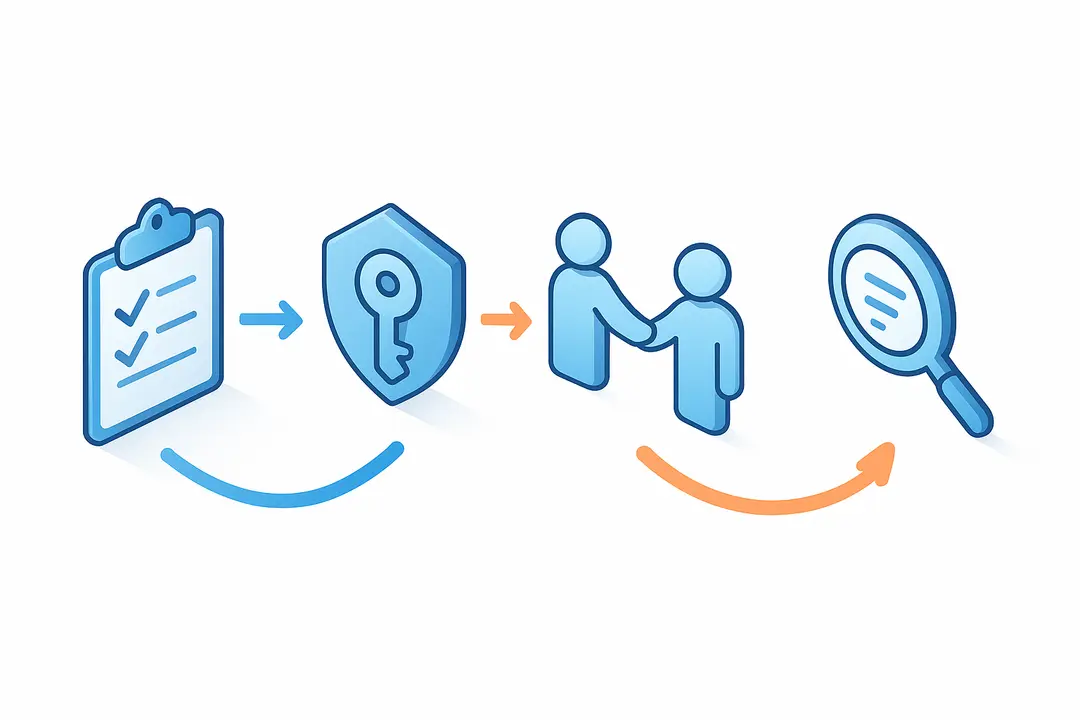
Seamless onboarding is critical for productivity, yet it’s often slowed by unclear processes, delayed access, or mismatched expectations. To solve this, companies should implement a structured onboarding framework tailored for IT augmentation.
Proven Onboarding Framework:
- Preparation:
- Define project scope, access rights, and stakeholder map before arrival.
- Share documentation (architecture, repositories, key contacts).
- Access Provisioning:
- Grant system access in advance (VPN, codebase, collaboration tools).
- Assign a named onboarding owner (internal PM/HR or vendor lead).
- Kickoff & Induction:
- Host welcome calls; review project goals, roles, and team norms.
- Pair new contractors with an internal “buddy.”
- Integration & Monitoring:
- Set 7-, 14-, and 30-day check-ins.
- Use a checklist to track completed steps (see below).
Sample Onboarding Checklist:
- Signed NDA and contract
- Tool and system access provisioned
- Project documentation shared
- Kickoff meeting held
- Buddy/mentor assigned
- First deliverables reviewed
Who Owns Onboarding:
Ideally, core onboarding is co-owned by your internal sponsor/manager and the vendor’s delivery lead.
Onboarding Success Metrics:
- Time-to-productivity: Target 1–2 weeks for basic integration
- Checklist completion rate
- Early feedback from both the contractor and their team
What’s the Best Way to Solve Communication & Collaboration Barriers?
Clear communication is essential for teams to function, especially when working across time zones or company boundaries. The best approach combines protocols, tools, and feedback cycles.
Best Practices for Communication with External IT Teams:
- Standardize Platforms: Use the same channels (Slack, Teams, Jira) for everyone.
- Set Protocols: Schedule regular daily/weekly syncs and document everything in shared folders/wikis.
- Address Language & Culture: Encourage simple, clear business English and clarify communication preferences.
- Over-Communicate Early: Use written updates, meeting notes, and regular feedback sessions.
- Escalation & Feedback: Define how issues are raised and who resolves them.
Essential Tools:
- Slack, Microsoft Teams (chat)
- Jira, Trello (task tracking)
- Confluence, Notion (documentation)
- Loom or Zoom (async video updates)
Set the expectation that issues should be raised as soon as they arise and maintain open channels for continuous improvement.
How Do You Ensure Cultural Fit and Employee Engagement in Augmented Teams?
Integrating external IT professionals into your company culture helps maintain morale, trust, and productivity. The biggest risks come from poor alignment on values or lack of engagement.
Strategies to Build Cultural Fit & Engagement:
- Pre-Engagement Assessment: Screen for value alignment and work norms during interviews.
- Consistent Induction: Include contractors in company-wide onboarding and culture sessions.
- Virtual Team Building: Host regular social calls or shared learning events.
- Mentor/Buddy System: Pair new staff with an internal employee for peer guidance.
- Pulse Surveys & Feedback Loops: Regularly collect feedback to spot issues early.
Cultural fit should be monitored at the start and throughout the engagement, not just at onboarding.
What Are the Best Practices for Knowledge Transfer & Retention?
Knowledge loss is a major threat in staff augmentation, especially as projects wrap up or contractors rotate off assignments. Proactive documentation and structured handover are essential.
Core Knowledge Transfer Techniques:
- Living Documentation:
- Maintain up-to-date wikis or knowledge bases (Confluence, Notion).
- Regular Handover Sessions:
- Schedule walkthroughs of code, architecture, and decisions.
- Q&A Archives:
- Document key questions and answers in a searchable format.
- Offboarding Checklist:
- Require formal documentation, asset return, and recorded knowledge transfer.
Recommended Tools:
- Confluence or Notion for collaborative documentation
- Loom for recorded walkthroughs
- Google Drive/SharePoint for file repositories
How Do You Manage Security, IP & Data Risks in Staff Augmentation?
Unmanaged security and IP risks can lead to breaches, legal exposure, and regulatory penalties. The best defense combines legal, technical, and process controls.
Key Security & IP Protection Steps:
- Legal Protections: Require signed NDAs, robust contracts, and specific IP clauses with vendors and every external resource.
- Access Controls: Apply the principle of least privilege—only the necessary systems and data are shared.
- Segmentation: Isolate augmented teams’ environments where feasible.
- Monitoring and Audit Trails: Keep logs of all system accesses and changes.
Sample Contract Language:
“All deliverables, inventions, and code authored during this engagement shall be the exclusive property of [Client Name]. Contractor acknowledges transfer of all IP rights as a condition of payment.”
Responding to a Breach: Have a clear incident response plan ready and educate all team members—internal and external—on procedures.
According to ISACA, third-party vendor risk management is now a core compliance requirement for IT leaders worldwide.
How to Ensure Vendor Transparency & Avoid “Shadow Dev” Risks

“Shadow dev” refers to vendors quietly swapping agreed-upon personnel for less qualified staff, risking quality and breaking trust. Transparent processes and contract clauses are your best defenses.
Preventing Shadow Developer Scenarios:
- Due Diligence: Vet vendors thoroughly; check references and technical backgrounds of proposed team members.
- Contract Clauses: Require named personnel with restrictions on substitutions without written consent.
- Resource Verification: Regularly confirm who is working on your project via regular video check-ins, weekly timesheets, and milestone reviews.
- Watch for Red Flags: Consistently late deliverables, unclear reporting, or resistance to meetings with the assigned team may signal hidden substitution.
Vendor Transparency Checklist:
- Confirm the background and skills of each assigned developer
- Include a substitution/replacement approval clause in the contract
- Require regular status updates from named staff
- Maintain a direct communication channel to assigned personnel
How to Measure & Sustain Performance and Quality in Augmented Teams
Ongoing performance management ensures that external IT contractors meet project goals. Clear metrics, regular reviews, and timely feedback help sustain quality.
Performance Management Steps:
- Define Clear KPIs: Set measurable outcomes (e.g., sprint velocity, defect rate, feature delivery).
- Use Monitoring Tools: Tracking tools like Jira, Asana, or Monday.com can provide visibility for both internal and external teams.
- Regular Reviews: Conduct bi-weekly or monthly reviews with contractors, using scorecards or OKRs.
- Feedback Loops: Schedule retrospectives and 1:1s to address issues and recognize wins.
- Action on Underperformance: If KPIs are consistently missed, follow a pre-defined escalation and, if necessary, replacement process.
Sample metric: “90%+ of project deliverables met on time over the last quarter.”
How to Manage Cost, Scope & Scalability Risks in IT Staff Augmentation Projects

Cost overruns and scalability issues are a top concern. Managing these risks requires transparent budgeting, flexible contracts, and careful ROI tracking.
Cost Control Strategies:
- Audit for Hidden Costs: Watch for additional fees, overtime, or “change request” surcharges.
- Flexible Contracts: Use agreements that allow for scaling team size or hours as project scope evolves.
- Budget Monitoring: Regularly review spend vs. budget with real-time dashboards.
- ROI Calculations: Compare project outputs and time savings to in-house hiring alternatives (e.g., time-to-hire, productivity gain).
Sample Calculation: If augmented staff launch a feature two months faster than hiring, calculate the value of that early time-to-market versus the cost of the augmentation.
Build in quarterly reviews to decide on scaling up or down as business needs shift.
How to Choose the Right IT Staff Augmentation Partner: A Checklist
Selecting the right vendor is the foundation for success. Use this checklist to vet, compare, and select your IT staff augmentation partner.
- Proven track record (call at least two references)
- Transparent contract (named staff, clear terms, SLAs)
- Clear legal protections (IP, data, NDAs)
- Detailed onboarding and knowledge transfer processes
- Flexible scaling and transparent pricing
- Cultural and technical fit
- Solid security and compliance measures
- Responsive, clear communication
Red Flags to Avoid:
- Vague or noncommittal about team members
- Unwilling to provide references
- Rigid in contracts or process
- Weak data security practices
Pre-Contract Questions:
- Who will be assigned to our team, and can we interview them?
- How do you handle knowledge transfer and offboarding?
- What happens if a team member underperforms or leaves?
Having a structured evaluation framework ensures you avoid costly mistakes and unreliable providers.
Future Trends: What’s Changing in IT Staff Augmentation Beyond 2026?
IT staff augmentation is rapidly evolving, driven by new trends in remote work, compliance, and talent specialization. Staying ahead means adapting your strategies continually.
Key Emerging Trends:
- Remote/Hybrid Models: More projects are using global, distributed teams, requiring even better onboarding, communication, and documentation practices.
- New Compliance Challenges: Regulations around data privacy (GDPR, CCPA) and ethical AI are tightening; vendors must adapt fast.
- Specialized Skills on Demand: The rise of niche technologies (AI, cybersecurity, DevOps) fuels demand for specialized augmentation.
- Consolidation and Multi-Vendor: Some companies are consolidating vendors for accountability; others run multi-vendor models for redundancy and flexibility.
Keep these shifts in mind when shaping your IT staffing strategy for 2026 and beyond.
Frequently Asked Questions on IT Staff Augmentation Challenges & Solutions
What are the biggest challenges in IT staff augmentation?
The main challenges include onboarding delays, communication breakdowns, inadequate cultural fit, knowledge loss, security risks, lack of vendor transparency, inconsistent quality, and budget/scope management.
How do you effectively onboard augmented IT staff?
Use a structured onboarding checklist, assign system access before the start date, hold an induction session, and provide a buddy or mentor to accelerate integration.
What are best practices for communication with external IT teams?
Standardize tools (e.g., Slack, Jira), document all decisions, schedule regular check-ins, and set clear escalation paths for issues.
How do you ensure data security in staff augmentation models?
Insist on signed NDAs, use role-based access controls, monitor system usage, and follow clear incident response procedures.
What quality control measures work best for external IT contractors?
Define KPIs and goals up front, use performance dashboards, hold regular reviews, and apply a clear feedback and escalation protocol for underperformance.
How do you prevent knowledge loss after project completion?
Require thorough documentation as work progresses, conduct formal handovers, and maintain searchable archives of key decisions and assets.
What legal precautions should be taken with IT staff augmentation vendors?
Use contracts with clear IP assignment, substitution restrictions, and strong NDA clauses; confirm vendor compliance with regional laws.
How can you evaluate the cultural fit of an augmented IT team?
Assess cultural alignment during interviews, involve contractors in team-building, and use regular feedback surveys to monitor fit and engagement.
What are signs of an unreliable IT staff augmentation provider?
Red flags include reluctance to name staff, vague reporting, inconsistent communication, frequent staff changes, and poor security practices.
How do you scale augmented teams up or down efficiently?
Work with vendors who offer flexible contracts, real-time performance and cost dashboards, and documented processes for ramping resources up or down.
Conclusion
Solving IT staff augmentation challenges requires a proactive, structured approach. By tackling onboarding, communication, cultural fit, knowledge retention, security, vendor transparency, quality, and cost management with proven frameworks, organizations can unlock the full value of external IT talent while minimizing risk. To get started, apply the checklists and tools shared in each section. For custom templates, process guides, or a personalized consultation, reach out to our expert team and accelerate your IT project success.
Key Takeaways
- Streamlined onboarding and integration drive contractor productivity.
- Transparent communication and collaboration tools lower project risk.
- Cultural fit and engagement strategies boost morale and retention.
- Documented knowledge transfer prevents costly expertise loss.
- Strict contracts, access controls, and metrics ensure quality and security.
This page was last edited on 18 April 2026, at 3:34 pm

Start a conversation with our team to solve complex challenges and move forward with confidence.