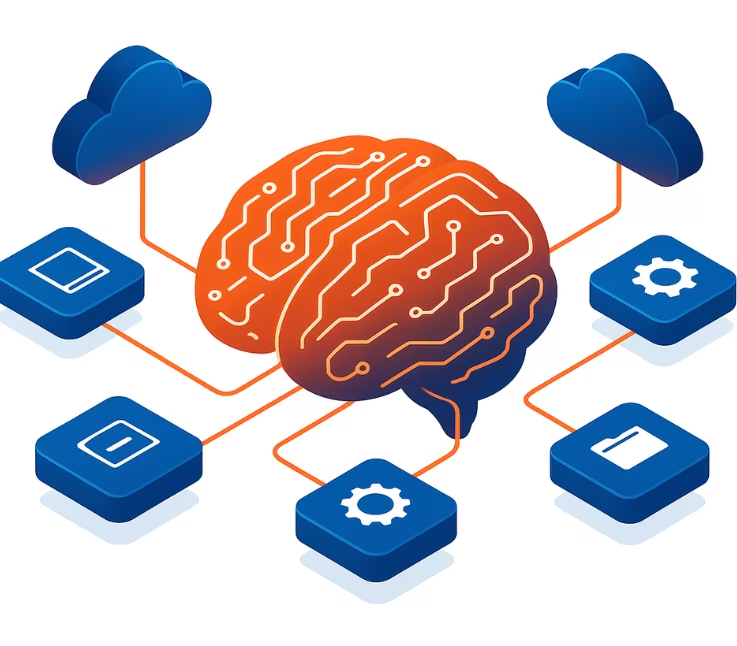
Application re-engineering has become a strategic imperative as enterprises grapple with costly, complex legacy systems in 2026.
Modernizing aging applications is no longer a matter of choice—it’s a business necessity due to mounting risks like security gaps, agility barriers, and spiraling technical debt.
This guide delivers authoritative insight into the future of application re-engineering—from cutting-edge AI-driven trends to actionable modernization roadmaps—empowering CIOs, CTOs, and transformation leaders to build resilient, future-ready digital foundations.
Application re-engineering refers to systematically transforming outdated software and architectures into optimized, agile, and secure systems that align with modern business and technology needs.
What Is Application Re-Engineering?
Application re-engineering is the process of analyzing, redesigning, and transforming legacy software systems to improve functionality, scalability, and alignment with current business and IT requirements.
Scope:
- Goes beyond code fixes—embraces architecture, processes, data, and user experience.
- Encompasses modernization, refactoring, platform shifts, and full system re-architecture.
How Application Re-Engineering Differs from Other Approaches:
| Approach | Focus Area | Typical Use Case |
| Re-engineering | End-to-end system transformation | Outdated apps needing deep change |
| Refactoring | Code-level improvement | Boost maintainability, minor enhancements |
| Lift-and-shift | Infrastructure migration | Move to new hosting/cloud with minimal code change |
Application re-engineering is comprehensive—it modernizes software to support innovation, address technical debt, and meet today’s agility and security demands.
Why Is Application Re-Engineering Essential for Enterprises?
Modern enterprises must re-engineer applications to mitigate risk, optimize costs, and accelerate digital transformation.
The cost of maintaining legacy systems is rising: according to Gartner (2024), organizations spend up to 60–80% of IT budgets on legacy maintenance, limiting innovation and responsiveness.
Key Business Drivers:
- Business Agility: Legacy systems slow response to market changes.
- Security & Compliance: Older platforms expose organizations to threats and regulatory penalties.
- Technical Debt: Accumulates costs and complicates future change.
- AI & Cloud Opportunity: Digital leaders modernize to leverage AI, cloud-native scalability, and advanced analytics.
- Time-to-Market: Modern platforms speed up product launches and service enhancements.
Business Impacts & Modernization Outcomes:
| Area | Risks of Legacy Systems | Benefits of Modernization |
| Cost | High operating expense | Reduced maintenance cost |
| Agility | Inflexibility, long change cycles | Faster innovation & response |
| Security | Outdated protocols, vulnerability | Security-by-design, compliance |
| Growth | Scalability barriers | Cloud-scale, API integrations |
| Talent | Hard-to-find legacy skills | Modern developer ecosystems |
Failing to modernize means missed growth opportunities, rising risks, and falling behind more nimble competitors.
How Has Application Re-Engineering Evolved? (Trends & Paradigms)
The field of application re-engineering has shifted from basic code fixes and “lift-and-shift” migrations to comprehensive, AI-enabled cloud-native modernization.
Summary:
- Early approaches focused on infrastructure migration or minor refactoring.
- Modern re-engineering is business-driven, AI-powered, and cloud-native.
- The urgency for change has intensified with increasing innovation demands and technical complexity.
Evolution Timeline:
| Era | Approach | Key Limitations |
| 2000s–2010s | Refactoring, lift-and-shift | Surface-level change, limited agility |
| 2020–2022 | Phased modernization, cloud migration | Siloed efforts, manual analysis |
| 2023+ | AI-driven, DevOps, cloud-native | End-to-end automation, continuous improvement |
Modernization Paradigm Shifts:
- Move from monolithic to modular/microservices architecture.
- Increased automation at every stage.
- Continuous delivery and improvement models via DevOps and Site Reliability Engineering (SRE).
Organizations now need visionary, agile approaches to keep pace with the accelerating digital landscape.
What Are the Key Trends Shaping the Future of Application Re-Engineering?
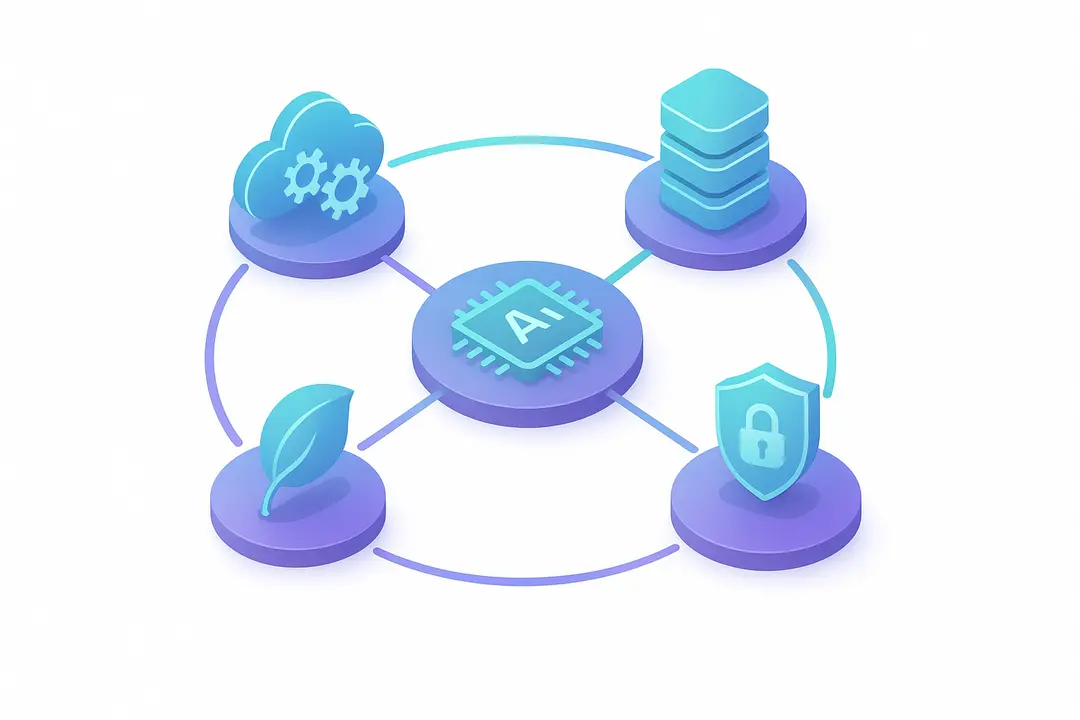
Application re-engineering is rapidly evolving due to several trends—including AI-led automation, migration to cloud-native architectures, and sustainability practices.
Future Trends Include:
- AI and automation in code analysis, testing, and migration.
- Embrace of microservices and API-first strategies.
- Rise of low-code/no-code platforms for accessibility.
- Continuous integration and continuous delivery (CI/CD) pipelines.
- Focus on data governance, compliance, and security by design.
- Sustainability and cost optimization through FinOps.
Below, we break down each trend and its strategic impact.
AI and Automation in Modernization
AI and automation will transform how legacy systems are analyzed, restructured, and tested.
AI-driven tools can scan codebases, detect inefficiencies, auto-generate documentation, and even suggest or implement code refactors.
Key facets:
- AI-powered code analysis and transformation accelerate projects.
- Generative AI assists with migration and test case creation.
- Automated CI/CD pipelines reduce manual effort and risk.
- According to Forrester, automation can cut modernization timelines by up to 30%.
Cloud-Native & Microservices Architectures
Re-engineering now favors cloud-native, microservices-based models that enable agility and rapid scale.
What’s Changing:
- Breaking monoliths into loosely coupled microservices.
- Leveraging containers, Kubernetes, and serverless platforms.
- API-first designs foster ecosystem connectivity and faster upgrades.
Benefits:
- Independent deployment for faster releases.
- Simplified scalability and fault tolerance.
Low-Code/No-Code Platforms
Low-code and no-code development lowers barriers for business teams to participate in modernization.
Pros:
- Speed up simple app rebuilds or workflows.
- Democratize modernization to non-developers.
Considerations:
- Risks include limited customization and vendor lock-in.
- Best for non-critical or edge applications, not core transactional systems.
DevOps, SRE, and Continuous Modernization
DevOps, SRE (Site Reliability Engineering), and continuous improvement enable organizations to evolve apps frequently and reliably.
Drivers of Success:
- Integration of development and operations for rapid, reliable releases.
- ML-driven monitoring and automated rollback.
- Continuous feedback loops improve quality and reduce technical debt.
Data Governance & Security by Design
Modernization must weave data governance and security into every phase.
Strategic Best Practices:
- Data classification, lineage tracking, and compliance audits.
- Security architectures built from the ground up (zero-trust, encryption).
- Embedding compliance into pipelines reduces risk and audit costs.
Sustainability and FinOps
Sustainability and cost control (FinOps) are rising priorities in app re-engineering.
Key moves:
- Optimize for energy-efficient code and infrastructure (Green IT).
- Cloud cost monitoring and FinOps frameworks for ongoing governance.
- Sustainable architectures support both environmental and business goals.
Diagram: Trends Map
*(Visual suggesting AI, cloud-native, DevOps, security, and sustainability as interconnected drivers converging on future-ready modernization)*
How Do You Approach Application Re-Engineering? (Roadmap & Frameworks)
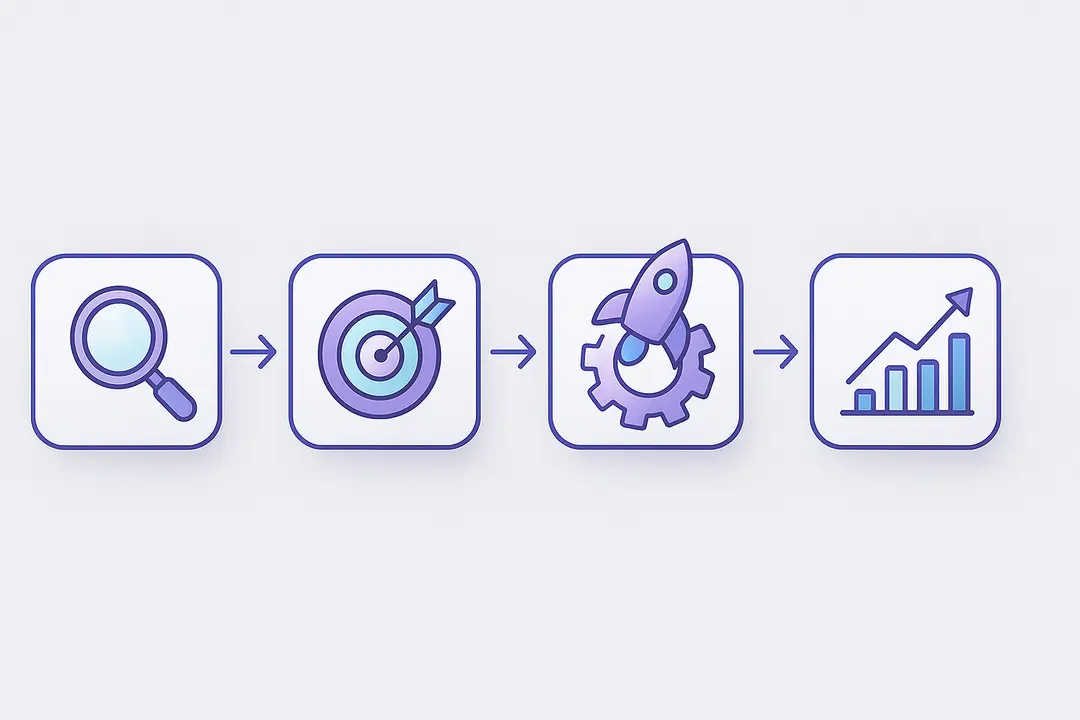
A successful modernization initiative follows a structured roadmap, leveraging proven frameworks like the 6R model to align with business goals and ensure minimum disruption.
Summary:
- The application reengineering process is strategic, phased, and mapped to organizational needs and resources.
- The 6R framework guides decision-making; phased delivery ensures value and continuity.
The 6R Framework Explained
The 6R framework is a widely adopted model for evaluating and executing application modernization paths.
| Path | Definition | Typical Use Case |
| Retire | Decommission obsolete systems | Apps with no business value |
| Retain | Preserve current form (temporarily) | Critical, stable apps |
| Rehost | “Lift-and-shift” to new infrastructure | Minimal code change, fast migration |
| Replatform | Move to new platform with minor adjustments | Enable new capabilities |
| Refactor | Optimize code without changing functionality | Improve maintainability |
| Re-architect | Redesign for new requirements (e.g., cloud-native) | Scale, flexibility needed |
Framework Usage:
- Use a decision tree to determine which R fits each app.
- Combine approaches across the application portfolio for best outcomes.
Phased Modernization and Business Case Alignment
Modernization success comes from a planned, iterative approach:
- Assess – Audit current apps, map dependencies, and define business goals.
- Plan – Select modernization path (6Rs), align with enterprise strategy.
- Execute – Implement in phases, with pilot projects to reduce risk.
- Optimize – Monitor outcomes, iterate for continuous improvement.
Business Case Tips:
- Develop ROI models for each phase.
- Quantify cost reductions, agility gains, and risk mitigation for buy-in.
Ensuring Change Management & Business Continuity
Change management is critical to safeguard operations during re-engineering.
Best Practices:
- Early stakeholder involvement and clear communication.
- Minimize downtime with phased/hybrid deployments.
- Ongoing training to transition teams to new skills and toolsets.
Checklist for Project Planning:
- Secure executive sponsorship.
- Map dependencies and risks.
- Define success metrics and KPIs.
- Plan workforce enablement.
What Are the Benefits and Challenges of Application Re-Engineering?
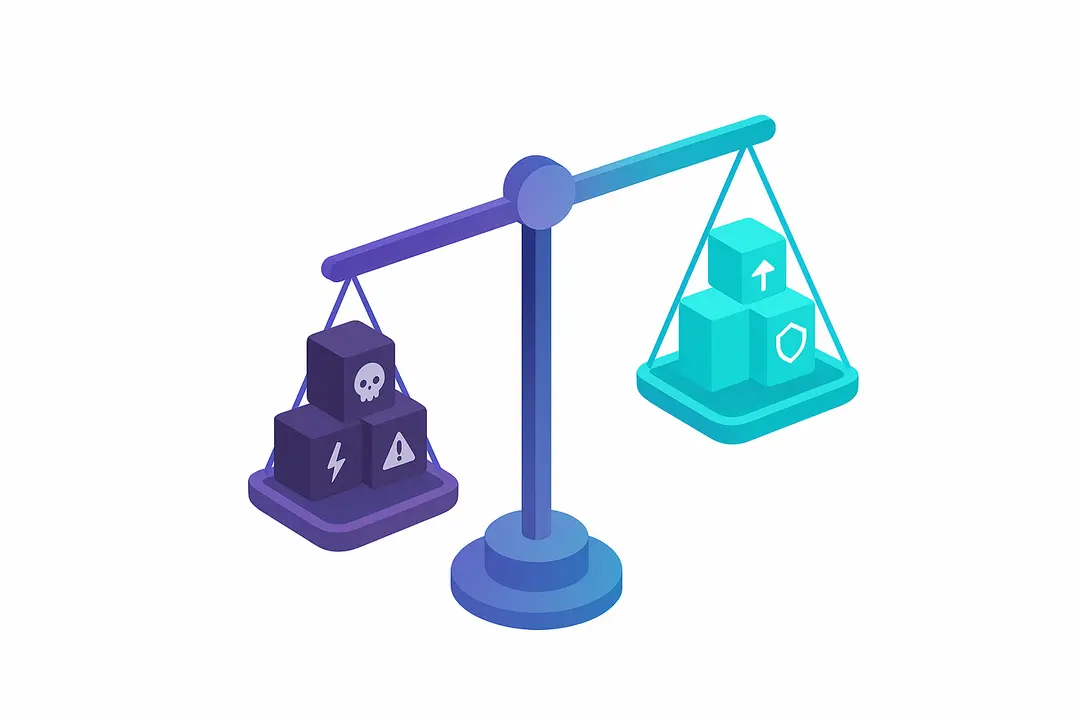
Application re-engineering delivers substantial benefits but poses significant challenges that must be addressed deliberately.
At a Glance:
- Benefits: increased agility, innovation, and cost savings.
- Challenges: technical complexity, skills gaps, and governance issues.
Benefits:
- Significant technical debt reduction and future-proofing.
- Enhanced agility—respond to business changes quickly.
- Cost optimization by retiring or consolidating legacy assets.
- Strengthened security, compliance, and business continuity.
- Accelerated innovation through modern architectures.
Challenges:
- High up-front investment and difficulty estimating total cost.
- Legacy system complexity and undocumented dependencies.
- Scarcity of modernization skillsets.
- Potential vendor or technology lock-in if mismanaged.
| Pros | Cons |
| Agility and speed | Complexity of legacy environments |
| Cost savings over time | Initial modernization expense |
| Improved security and compliance | Skills/resource gaps |
| Supports new digital business models | Change management overhead |
Overcoming Challenges:
- Start with pilot projects and phased rollouts.
- Invest in upskilling and cross-functional teams.
- Select trusted modernization partners with proven experience.
How Have Leading Enterprises Succeeded (Or Failed) With Application Re-Engineering?
Many enterprises have leveraged application re-engineering to transform their operations—while others have struggled due to strategic missteps or poor execution.
Summary:
- Success requires clear vision, phased execution, strong governance, and stakeholder buy-in.
- Failure often stems from insufficient planning, underestimated complexity, or lack of expertise.
Case Study Summaries:
| Company Type | Approach | Outcome | Lesson Learned |
| Global Retailer | Modularization & re-architecture | 25% TCO (total cost of ownership) reduction, launch of new digital channels | Phased rollout, strong executive alignment critical |
| Financial Services Org | Lift-and-shift only | Persistent technical debt, no real agility gains | “Lift-and-shift” alone is not modernization |
| Healthcare Provider | AI-driven replatform & refactor | Faster go-to-market, improved compliance | Combining AI automation with expert oversight accelerates progress |
Critical Success Factors:
- Clear business case and modernization KPIs.
- Strong change management and upskilling.
- Embracing automation but not bypassing strategic oversight.
How Can You Future-Proof Re-Engineering Initiatives? (Sustainability, FinOps, Continuous Improvement)
To ensure modernization delivers value well beyond project completion, organizations must integrate sustainability, cost governance, and continuous improvement into ongoing practices.
Essential Actions:
- Implement FinOps practices for ongoing cost optimization in cloud environments.
- Design green IT strategies (energy-efficient architectures, resource scaling).
- Establish CI/CD pipelines and leverage AIOps for adaptive, automated operations.
- Measure, benchmark, and refine based on business and technical feedback.
Checklist for Future-Proofing:
- Automate cost and usage monitoring.
- Choose sustainable (energy, carbon-conscious) platforms and providers.
- Embed continuous modernization into DevOps cycles.
- Regularly review technical debt and set reduction targets.
- Align modernization with business sustainability and resilience goals.
Summary Table: Modernization Approaches & Outcomes
| Modernization Approach | Pros | Cons | Best Use Case |
| Retire | Immediate cost savings | Possible business disruption | Obsolete/non-critical |
| Retain | No change required | Defers tech debt | Must-keep, stable apps |
| Rehost (Lift-and-shift) | Fast, low-risk migration | Limited agility gains | Quick cloud moves |
| Replatform | Adds new platform benefits | Some redevelopment needed | Modernize core apps |
| Refactor | Improves code quality/maintenance | Time-consuming for large legacy | Apps needing fixing |
| Re-architect | Maximum agility and scalability | Highest cost and disruption | Core, future apps |
Frequently Asked Questions About the Future of Application Re-Engineering
What is application re-engineering?
Application re-engineering is the comprehensive process of transforming and optimizing legacy software systems to enhance functionality, scalability, and alignment with current business objectives.
How is application re-engineering different from refactoring or lift-and-shift?
Re-engineering addresses the entire application stack (architecture, process, data, interface), while refactoring focuses on improving code without changing functionality. Lift-and-shift simply moves apps to new infrastructure, often without any enhancements.
Why is AI important for the future of application modernization?
AI enables automated code analysis, defect detection, generation of test cases, and faster migration, reducing manual effort and project timelines while improving modernization quality.
What are the main benefits of application re-engineering?
Key benefits include increased agility, lower technical debt, improved security, optimized costs, and readiness for innovation and digital transformation.
What risks or challenges should be planned for?
Enterprises should plan for high complexity, skill shortages, cost overruns, and the need for thorough change management to avoid disruption.
How do you measure ROI in application re-engineering?
ROI is typically measured by comparing reduced maintenance costs, gains in agility (time-to-market improvements), revenue from new capabilities, and risk mitigation.
Is cloud migration enough, or is deeper reengineering necessary?
While cloud migration (“lift-and-shift”) can lower hosting costs, it does not address fundamental architectural or business agility needs. Reengineering delivers deeper transformation.
What is the 6R framework in modernization?
The 6R framework helps organizations choose among Retire, Retain, Rehost, Replatform, Refactor, or Re-architect strategies for each application in the modernization portfolio.
How does application reengineering support future business agility?
By moving to modular, cloud-native architectures and automating delivery, organizations can roll out changes faster and respond more effectively to business demands.
Conclusion
Application re-engineering is no longer optional—it’s the backbone of sustained digital transformation for enterprises facing mounting legacy risk and fast-changing markets.
By embracing AI-driven automation, cloud-native architectures, sustainability practices, and proven frameworks like the 6Rs, organizations can accelerate innovation, reduce costs, and build lasting resilience.
Key Takeaways
- Application re-engineering is vital for business agility, security, and innovation.
- The future is AI-driven, cloud-native, and sustainability-focused.
- Use structured frameworks (like the 6Rs) and phased approaches for lasting results.
- Address benefits and challenges upfront—skills, costs, and change management matter.
- Future-proof by integrating FinOps, green IT, and continuous modernization practices.
This page was last edited on 17 April 2026, at 3:11 pm

Start a conversation with our team to solve complex challenges and move forward with confidence.