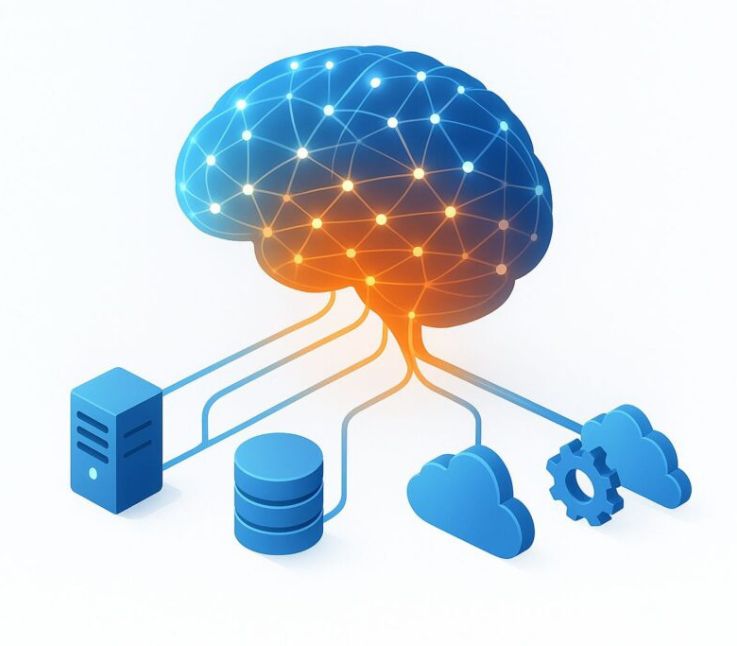
Enterprise Application Integration is a critical component of modern digital strategy, enabling organizations to connect systems, streamline operations, and unlock real time insights. This enterprise software development guide is designed to help executives understand how integration plays a key role in building scalable, efficient, and future ready enterprise systems.
In today’s connected business environment, fragmented systems can create data silos, slow decision making, and limit innovation. Without a clear integration strategy, organizations risk inefficiencies that directly impact performance and growth.
This enterprise software development guide provides a practical, executive focused roadmap to enterprise application integration. It covers key concepts, strategic benefits, and implementation approaches to help you maximize ROI and drive successful digital transformation.
What Is Enterprise Application Integration and Why Should Executives Care?
Enterprise Application Integration (EAI) is the structured process of connecting disparate business applications to enable automated data flow, reduce silos, and drive real-time decision-making. For executives, EAI is central to business agility, operational efficiency, and future-proofing core systems.
Modern enterprises rely on dozens—sometimes hundreds—of specialized software platforms: ERPs, CRMs, HRIS, custom tools, and SaaS apps. Without integration, information gets trapped in silos, causing redundant work, inconsistent reports, and costly delays.
Historically, integration started with simple point-to-point connections. As business needs evolved, central integration platforms like Enterprise Service Bus (ESB), middleware, and, most recently, cloud-native and event-driven approaches were introduced to better support scalability and adaptability.
For executives, the key impacts of EAI include:
- Unlocking business agility: respond quickly to new opportunities and threats.
- Simplifying IT complexity for lower risk and cost.
- Enabling digital transformation with unified, accessible data.
By taking a strategic approach to integration, executive teams can drive sustainable growth and innovation rather than fighting fires and patching legacy systems.
What Business Benefits Does EAI Deliver for Enterprises?
EAI delivers tangible business value: streamlined operations, data-driven decision-making, improved stakeholder experiences, and accelerated digital transformation. For executives, these outcomes drive measurable ROI and competitive advantage.
Key EAI benefits at the enterprise level include:
- Streamlined Operations & Process Automation
- Automate cross-functional workflows and reduce manual re-entry of data.
- Decrease operational friction—speed up core business processes.
- Data Unification for Better Decision-Making
- Gather, cleanse, and present real-time data across all systems.
- Enable more accurate analytics and business intelligence.
- Driving Digital Transformation
- Simplify the integration of new digital tools, cloud apps, and partners.
- Shorten time-to-market for products or digital channels.
- Enhanced Experiences
- Improve customer satisfaction with consistent, responsive service.
- Boost employee productivity by reducing process bottlenecks.
- Lower Total Cost of Ownership (TCO)
- Reduce redundant systems and unmanageable custom code.
According to the MuleSoft Connectivity Benchmark Report 2024, 80% of digital leaders cite integration as a primary driver of business value, and organizations with mature EAI strategies are 2.5x more likely to accelerate innovation cycles.
Executive Benefit Table:
| Benefit Area | Executive Outcome |
| Operations Automation | Cost reduction, faster processes |
| Data Visibility | Informed, real-time decisions |
| Customer Experience | Higher retention, NPS uplift |
| Employee Productivity | Less manual work, clear workflows |
| Digital Transformation | Ease of technology adoption |
| IT Risk & Compliance | Stronger audit trail, lower exposure |
What Are the Core Approaches and Architectures in Enterprise Application Integration?
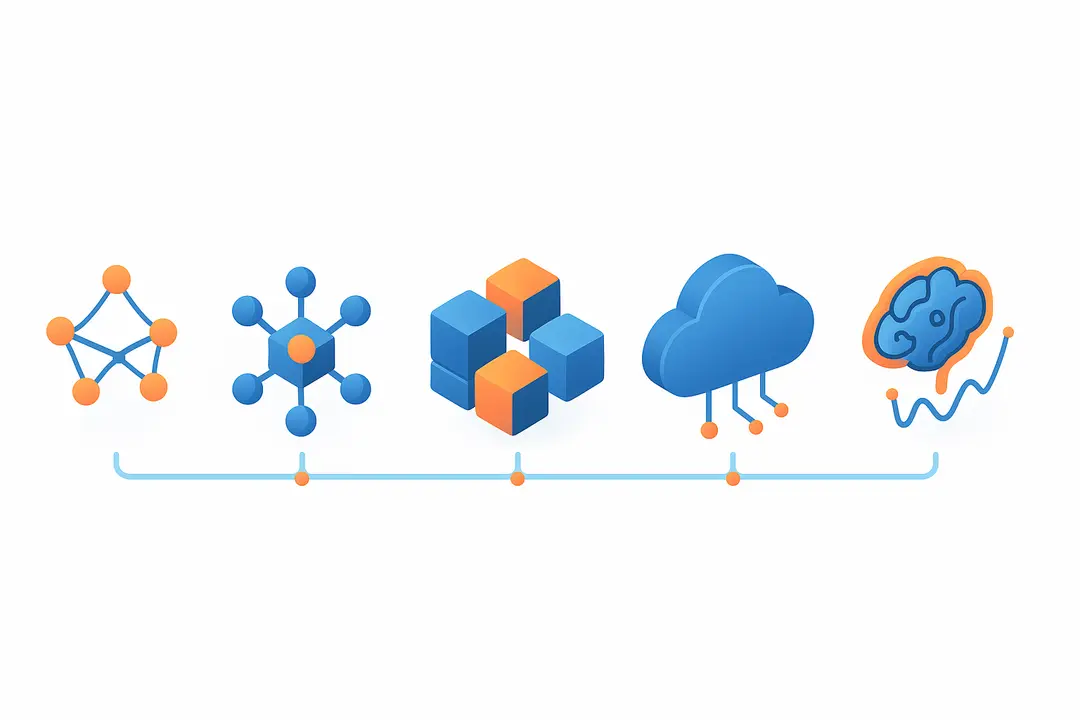
Enterprises have several architectural options for application integration, each with distinct strengths, weaknesses, and fit-for-purpose scenarios. Executives should understand these core models to select the right approach for organizational needs.
Below, we outline the primary EAI architectures, from legacy to modern, with key business trade-offs.
Point-to-Point Integration: Legacy Simplicity vs. Sprawl
Point-to-point integration connects applications directly but quickly becomes complex as systems multiply. It’s best for small environments or quick fixes, yet poorly scalable and hard to govern at scale.
- Definition: Each application is connected individually to every other application it needs to interact with.
- Use Cases: Legacy environments, few systems, rapid pilots.
- Pros: Fast setup for limited connections; minimal upfront investment.
- Cons: Exponential growth in connections; expensive to maintain; poor visibility; high fragility.
Hub-and-Spoke and Middleware/ESB: Centralized Coordination
This model employs a central “hub” (often middleware or ESB) to manage communication, reducing direct connections and supporting scalable integration.
- Definition: Applications connect through a central integration platform, which routes and transforms data.
- Use Cases: Enterprises with many systems; need for standardized governance.
- Pros: Improved scalability; enables centralized monitoring; simplification of connections.
- Cons: Can become a bottleneck if not architected correctly; middleware investment and skills required.
SOA, Microservices, and API-First: Modern, Modular Integration
API-first and microservices architectures enable composable, modular integration across cloud and on-premise systems, supporting rapid digital transformation.
- API-First: Prioritizes APIs as the primary method to expose and consume business functions.
- Microservices: Breaks functionality into independent, deployable services; aligns with DevOps strategies.
- Pros: High agility; easier scaling; supports partner ecosystems and third-party integration.
- Cons: Initial design investment; requires API management/governance discipline.
Cloud, iPaaS, & Hybrid Integration: Adapting to Modern Enterprise
Integration Platform as a Service (iPaaS), multi-cloud, and hybrid models allow organizations to bridge on-premise and cloud applications, supporting modern digital strategies.
- iPaaS: Cloud-based tools offering pre-built connectors and scalable architecture.
- Hybrid: Combines cloud flexibility with on-premise reliability.
- Pros: Rapid onboarding of new SaaS; scalable; reduced infrastructure overhead.
- Cons: Ongoing subscription costs; integration vendor lock-in; data residency considerations.
Event-Driven and AI-Powered Integration: Enabling Real-Time Agility
Event-driven architectures and AI/ML-infused integration platforms are emerging trends enabling real-time, responsive data flows and process automation.
- Event-Driven: Systems communicate via real-time events, triggering processes instantly.
- AI/ML Integration: Platforms use AI for process orchestration, error handling, and optimization.
- Pros: Real-time responsiveness; auto-scaling; predictive, self-healing capabilities.
- Cons: Still emergent; can increase architectural complexity and require new skills.
Integration Approaches by Scenario:
| Approach | Best For | Key Drawbacks |
| Point-to-Point | Small setups, legacy remediation | Sprawl, poor governance |
| Hub-and-Spoke/ESB | Enterprise core integration | Middleware cost, central bottlenecks |
| API-First/Microservices | Digital transformation, new products | Governance, design complexity |
| iPaaS/Hybrid | Rapid SaaS, cloud migration | Cost, vendor lock-in |
| Event-Driven/AI | Real-time data, future-proofing | Skills gap, emerging standards |
How Should Executives Build an Effective EAI Roadmap? (Step-by-Step Framework)
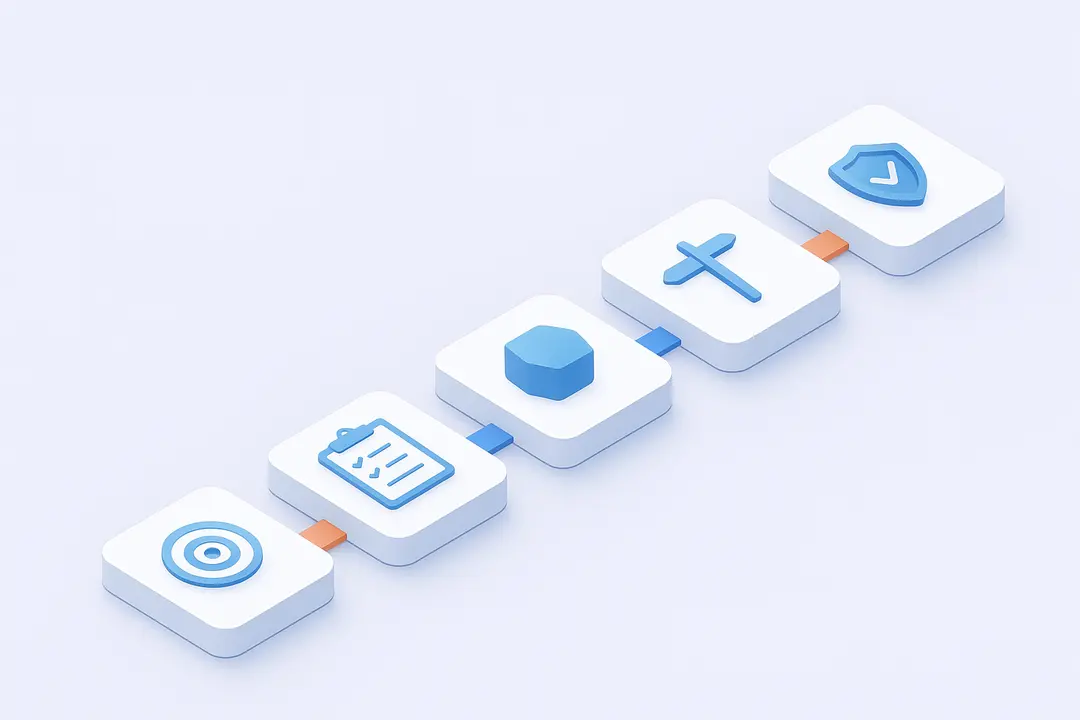
A successful executive integration roadmap begins with vision alignment and leads through readiness assessment, platform selection, phased rollout, and ongoing optimization. This structured process ensures value delivery and stakeholder buy-in.
Steps for Executive-Led EAI Implementation
- Align Vision and KPIs
- Define integration’s strategic role (e.g., digital transformation, customer experience).
- Set measurable outcomes and executive sponsors.
- Assess Current State
- Inventory existing applications and manual integrations.
- Evaluate integration maturity with a readiness checklist (data quality, skills, risk).
- Select Platform & Approach
- Use a decision matrix (see next section) weighing scalability, security, cost, and fit.
- Involve key IT/business stakeholders early.
- Develop Roadmap
- Prioritize quick wins and strategic milestones.
- Allocate resources and define clear change management steps.
- Implement Governance & Continuous Optimization
- Establish roles, policies, and feedback loops.
- Monitor outcomes, adjust for new priorities, and adapt as business needs evolve.
Sample Checklist: Executive EAI Implementation Readiness
- Executive sponsorship and vision aligned
- Application & data inventory complete
- Maturity and risk assessment performed
- Platform requirements and evaluation matrix prepared
- Stakeholder communication plan established
- Governance structure assigned
- Phased roadmap approved
What Are the Key Risks, Challenges, and Governance Requirements in EAI Projects?
EAI projects carry common risks including integration complexity, legacy constraints, cost overruns, and data governance failures. Executives can mitigate these risks with proactive planning, clear governance, and strong compliance practices.
Top Challenges and Mitigation Strategies:
| Challenge | Mitigation Strategy |
| Legacy system incompatibility | Incremental modernization, use of middleware |
| Data quality and inconsistency | Invest in Master Data Management, cleansing tools |
| Scope creep and project delays | Phase deliverables, strong change control |
| Budget/cost overruns | Rigorous TCO modeling, executive checkpoints |
| Security and compliance lapses | Data governance, robust audit/certification |
| Vendor lock-in | Multi-vendor strategy, open standards |
Governance Principles for Integration Success:
- Assign clear data stewardship and security responsibilities.
- Use policy templates for integration security and process standards.
- Schedule regular audits and stakeholder reviews.
Consult Info-Tech’s EAI Blueprint for governance frameworks and sample policy artifacts.
How to Model Integration Costs and ROI for the C-Suite
Integration costs are driven by software, labor, infrastructure, and ongoing operational needs, while ROI is measured through efficiency gains, risk reduction, and new value creation. Accurate modeling supports sound investment decisions.
Integration Cost Factors
- Software/Platform Licenses: Initial and recurring vendor costs.
- Labor: Internal/external implementation team; change management.
- Infrastructure: Cloud subscriptions, on-prem maintenance, network.
- Ongoing Support/Enhancement: Monitoring, updates, training.
Sample ROI Calculation Toolkit
ROI can be expressed as:
ROI (%) = [(Annual Benefit – Annual Integration Cost) / Annual Integration Cost] x 100
Example:
If automation saves $500K/year and annual costs are $250K:ROI = [($500,000 – $250,000) / $250,000] x 100 = 100%
Executive Tip: Always account for indirect returns—such as risk reduction, improved compliance, and time-to-market—in addition to direct OPEX savings.
How Do You Choose the Right Integration Approach or Platform?
Selecting the optimal integration architecture or platform requires aligning business requirements with technology capabilities, using a structured evaluation framework.
Decision Criteria for EAI Platforms and Approaches
| Criteria | What to Consider |
| Scalability | Will the approach support growth? |
| Security/Compliance | Does the vendor meet your controls? |
| Speed to Value | How fast can integration be delivered? |
| Flexibility | Is it easy to adapt/process change? |
| Total Cost of Ownership | All-in licensing, support, upgrades |
| Vendor Stability | Long-term viability, ecosystem |
| Integration Breadth | Connects to all required apps? |
Major EAI Platform Vendors:
- Boomi — iPaaS leader; rapid, low-code
- MuleSoft — Robust API management; scalability
- IBM App Connect — Enterprise integration; hybrid models
- Microsoft Azure Logic Apps — Seamless with MS ecosystem
- Informatica, SnapLogic — Specialized data and application integration
Sample Evaluation Checklist:
- Does the platform integrate all target systems (on-prem/cloud)?
- Is the vendor committed to regular security updates?
- How customizable are the workflows and connectors?
- What are the real world references (Gartner, Forrester ratings)?
What’s the Role of Data Governance & Security in EAI Success?
Strong data governance and security are essential for trusted, compliant enterprise integrations. Executives must promote policy frameworks, responsible access, and proactive monitoring to ensure ongoing compliance and risk mitigation.
Best Practices for Data Governance in EAI:
- Data Mapping & Lineage
- Document how data moves between systems.
- Establish clear ownership for critical datasets.
- Master Data Management (MDM)
- Deduplicate and harmonize records across applications.
- Integration Security
- Use API gateways, encryption, and secure authentication.
- Regularly update integration endpoints and monitor logs.
- Compliance Frameworks
- Adhere to GDPR, SOX, HIPAA, or sectoral requirements.
- Schedule periodic audits and penetration testing.
- Incident Response & Monitoring
- Define escalation routes for integration failures or security breaches.
According to Gartner’s 2024 Security Assessment, data governance gaps are among the top three causes of enterprise integration failures.
Future-Proofing: AI, Machine Learning, and Evolving Integration Trends
AI-driven integration, composable architectures, and event-driven models are reshaping enterprise application integration. Staying ahead of these trends helps executives ensure their strategies remain resilient and growth-oriented.
5 Trends Shaping Enterprise Integration in 2025+
- AI and ML in Integration: Platforms use artificial intelligence to orchestrate workflows, predict integration failures, and optimize data quality automatically.
- Event-Driven Architectures: Real-time data triggers allow enterprises to act instantly on business events.
- Composable, API-First Integration: Enterprises expose core business processes through APIs, creating plug-and-play “business capabilities.”
- Self-Healing Integration Platforms: Automation detects and resolves common integration errors or outages autonomously.
- Heightened Compliance and Data Sovereignty: New regulations and cross-border requirements fuel demand for advanced compliance features and auditability.
Forrester’s 2025 iPaaS Wave highlights “autonomous integration” as a critical investment area for leading organizations.
Executive FAQ on Enterprise Software Development Guide
What is enterprise application integration in an enterprise software development guide?
In an enterprise software development guide, enterprise application integration refers to connecting systems and applications to enable seamless data flow and improve operational efficiency across the organization.
Why should executives prioritize enterprise application development in their strategy?
An enterprise software development guide highlights that enterprise application development supports agility, automation, and unified data, which are essential for digital transformation and competitive advantage.
What are the main types covered in an enterprise software development guide for integration?
An enterprise software development guide outlines integration approaches such as point to point, middleware based systems, API driven architectures, cloud integration, and event driven models in enterprise application development.
How do you choose the right approach in an enterprise software development guide?
To follow an enterprise software development guide, organizations should assess scalability, security, and flexibility needs while aligning with business goals and custom enterprise software development requirements.
What challenges are discussed in an enterprise software development guide?
Common challenges in an enterprise software development guide include system complexity, legacy limitations, cost overruns, and governance issues in enterprise application development.
How is cost evaluated in an enterprise software development guide?
An enterprise software development guide explains that costs include software, infrastructure, development effort, and maintenance, especially for custom enterprise software development projects.
How does enterprise application development support digital transformation?
Within an enterprise software development guide, enterprise application development enables faster data sharing, automation, and adoption of modern technologies that drive transformation.
What data governance issues are highlighted in an enterprise software development guide?
An enterprise software development guide addresses issues such as data inconsistency, lack of ownership, and compliance risks in custom enterprise software development environments.
How can legacy systems be managed in enterprise application development?
In an enterprise software development guide, legacy systems can be integrated using middleware, APIs, or gradual modernization strategies within enterprise application development frameworks.
What trends are shaping enterprise software development guide strategies?
An enterprise software development guide highlights trends such as AI driven integration, event based systems, and composable architecture in custom enterprise software development.
How can businesses scale using enterprise application development?
Businesses can scale through enterprise application development by adopting flexible architectures, cloud solutions, and automation strategies recommended in an enterprise software development guide.
Why is custom enterprise software development important for large organizations?
Custom enterprise software development allows organizations to build tailored solutions that align with unique workflows and goals, a key principle emphasized in any enterprise software development guide.
Conclusion & Next Steps: Leading Integration Success
A robust enterprise application integration strategy is no longer a technical detail—it’s a board-level imperative.
This guide has outlined the strategic benefits, executive decision frameworks, stepwise implementation roadmap, and future-facing trends critical to EAI success.
Now, take the next step: leverage the downloadable executive toolkit, conduct an integration readiness assessment, or schedule a consultation with EAI experts to accelerate your organization’s digital transformation.
Key Takeaways
- A well-planned EAI strategy empowers executives to unlock business agility, efficiency, and digital transformation.
- Core integration architectures vary; choosing the right model depends on your size, goals, and maturity.
- Risks include complexity, data governance, and cost—mitigate by using structured frameworks and strong executive alignment.
- ROI modeling helps justify investment and ensure value from EAI initiatives.
- Emerging trends like AI, event-driven, and composable integration are reshaping best practices—adopt a future-ready mindset.
This page was last edited on 9 July 2026, at 11:06 am

Start a conversation with our team to solve complex challenges and move forward with confidence.