Travel apps have transformed how millions of people plan trips, book accommodations, and explore new destinations. However, many entrepreneurs and product teams still ask how do travel apps make money while offering convenient features and often free downloads. Understanding the revenue strategies behind these platforms is essential for anyone building or managing a travel application.
As competition in the travel technology space grows, businesses need clear monetization strategies to remain profitable and sustainable. Knowing how do travel apps make money helps founders and marketers design products that balance user experience with effective revenue generation. This guide explains the most common monetization models, real world examples, and practical insights to help you understand how successful travel apps generate consistent income.
How Do Travel Apps Make Money?
Travel apps make money through several core revenue streams by connecting users with services and partners. The business model usually combines commission fees, advertising, subscriptions, affiliate marketing, premium features, SaaS or white-label licensing, and sometimes data monetization.
- Commission on bookings (hotels, flights, experiences)
- In-app advertising and sponsored listings
- Subscription or freemium plans
- Affiliate partnerships and referral programs
- Premium features or in-app purchases
- Licensing their technology (white-label, SaaS)
- Monetizing data (anonymized analytics, with consent)
Each model offers unique benefits, risks, and suitability depending on the app’s audience and business goals, which we’ll explore in detail below.
What Are the Main Revenue Models for Travel Apps?
Travel app monetization relies on a mix of proven revenue models, each tailored to different audiences and market segments. Some apps focus on a primary model, while others combine several for diversified income.
Below is a comparative overview of the most common revenue streams:
| Model | Description | Top Apps | Pros | Cons |
|---|---|---|---|---|
| Commission-Based Bookings | Fee on bookings (hotels, flights, etc.) | Booking.com, Expedia, Skyscanner | Scalable, high-value transactions | Dependent on supplier deals |
| In-App Advertising | Ads shown to users, or sponsored results | TripAdvisor, Rome2rio | Monetizes large free user base | Can degrade UX if overused |
| Subscription/Freemium | Paid upgrade for features or ad-free experience | Hopper, TripIt Pro | Predictable revenue, loyal users | High churn if not enough value offered |
| Affiliate & Referral | Paid for driving bookings to partners | Skyscanner, TripAdvisor | Low technical overhead, scalable | Lower margins, dependent on conversion |
| In-App Purchases | Users buy single features/upgrades | SeatGuru, TripIt Pro | Flexible, targeted upsell opportunities | Requires strong value proposition |
| White-Label/SaaS Licensing | License platform/tech to other businesses | Sabre, Amadeus (B2B) | Recurring B2B revenue, market reach | Long sales cycles, customization demand |
| Data Monetization | Selling/analyzing (anonymized) user data | Larger OTAs/analytics providers | Additional revenue, market insights | Privacy/legal risks, trust concerns |
Revenue Model Mapping
- Primary models: Typically deliver 60–90% of an app’s revenue (e.g., commissions for OTAs).
- Complementary models: Supplement core earnings (e.g., ads, in-app purchases).
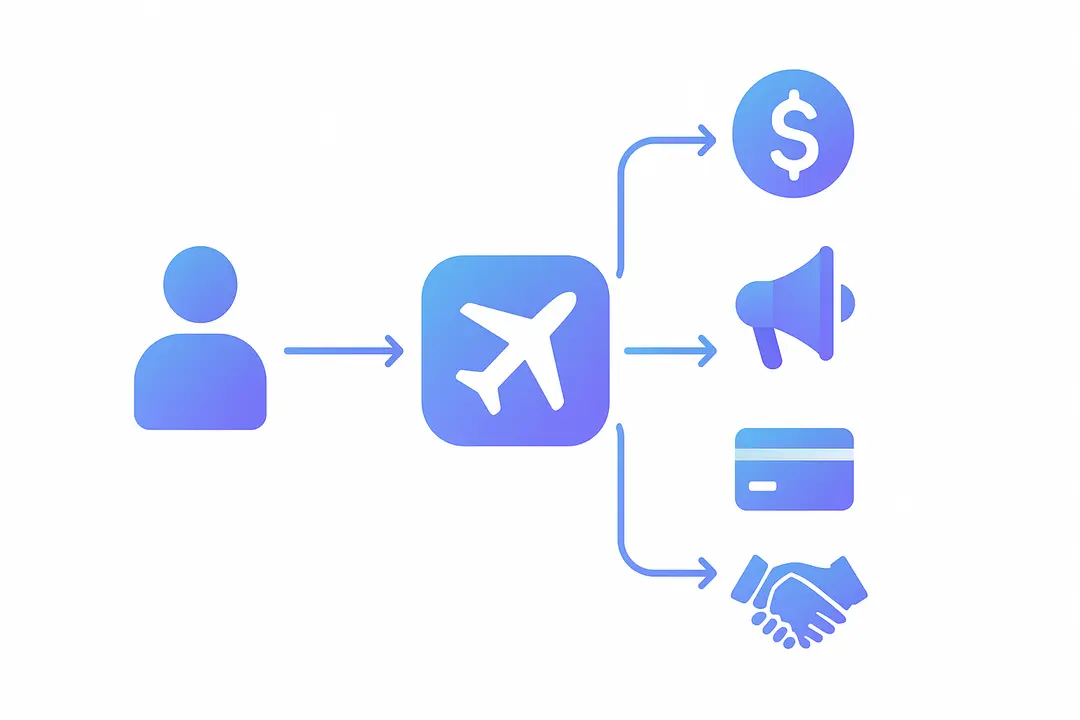
Visual Revenue Flow (Infographic Concept):
User ➔ Travel App ➔ Booking/Ad/Upgrade/Partner ➔ Revenue
Commission-Based Bookings: The Backbone of OTA Profit
Commission-based bookings are the heart of most online travel agencies (OTAs). These apps earn a percentage fee for every hotel, flight, or activity booked through their platform.
- How it works: When a traveler books via the app, the travel service provider (hotel, airline, etc.) pays a commission to the app.
- Industry stats: Typical commission rates for OTAs range from 10% to 25% for hotels, and 3% to 7% for flights (BusinessOfApps, Booking Holdings annual reports).
- Booking flow: User searches → books a vendor listing via app → app charges provider a commission.
- Market leaders:
- Booking.com: Charges 10–20% hotel commission based on region.
- Expedia Group: Averages 12–20% across services.
- Skyscanner: Uses a mix of affiliate and commission for flights and hotels.
| Segment | Typical Commission Range | Example Apps |
| Hotels | 10%–25% | Booking.com, Expedia |
| Flights | 3%–7% | Skyscanner, Kayak |
| Activities | 10%–20% | GetYourGuide, Klook |
Pros: High scalability, can drive large revenues with sufficient volume.
Cons: Margin pressure from supplier negotiations, high competition.
Advertising and Sponsored Listings in Travel Apps
Many travel apps monetize their audience with in-app ads and premium/sponsored listings. With high-traffic platforms, advertising provides a significant secondary revenue stream.
- Formats: Banner ads, native ads, video, interstitial, or sponsored slots in search results.
- Pricing models:
- CPM (cost per mille): Paid per 1,000 ad impressions.
- CPC (cost per click): Paid only when a user clicks.
- Sponsorship: Fixed fees for “top spot” placements.
Ad partners: Google AdMob, Facebook Audience Network, and direct-to-brand partnerships.
Example: TripAdvisor generates ad revenue by selling sponsored placements and destination guides to hotels and tours.
| Ad Type | Description |
| Banner | Static or animated display ads |
| Native | Blends with app content |
| Video | Short clips, sometimes skippable |
| Interstitial | Full-screen ads between actions |
| Sponsored Listing | Paid position in search results |
When does it work best?
- Large, free user bases.
- Apps with high session frequency.
Risks: Ad detracts from user experience if overused, users may ignore or block ads.
Subscription and Freemium Models: Are Paid Plans Worth It?
Subscription and freemium models invite users to pay for advanced features, loyalty perks, or an ad-free experience. This model builds predictable, recurring revenue.
- How it works: The app is free to use, but access to premium features requires a subscription or one-time payment.
- Examples:
- Hopper: Offers “Hopper+,” with price freeze, cancellation, and other perks starting at ~$8/month.
- TripIt Pro: $49/year for advanced itineraries, alerts, and priority support.
Freemium upsells: Ad-free browsing, offline maps, early booking access.
| Subscription App | Price Point | Core Premium Features |
| Hopper | ~$8–$20/month | Price lock, change/cancel flights |
| TripIt Pro | $49/year | Real-time alerts, auto-import itineraries |
Pros: Steady cash flow, increases user loyalty.
Cons: High churn risk if users perceive low value, requires continuous feature innovation.
Affiliate and Referral Marketing: Monetizing Partnerships
Affiliate marketing in travel apps means earning commission when users are referred to book with a partner site or service. The app integrates affiliate links or promo codes and earns a flat fee or percentage when bookings occur.
- How it works: User clicks partner link → completes booking on affiliate site → app earns referral commission.
- Networks: TravelPayouts, CJ Affiliate, and individual OTA programs.
- Examples:
- TripAdvisor: Embeds affiliate links to Booking.com, Expedia, and other partners.
- Skyscanner: Redirects users to airlines, OTAs, or hotel booking partners.
Typical Process:
- App registers with affiliate networks.
- Embeds partner links/promo codes in app UI.
- User clicks and converts.
- App receives commission after partner confirms booking.
Pros: Fast to implement, low tech overhead.
Cons: Dependent on partner conversion and terms; margins often lower than direct commission.
In-App Purchases & Premium Features: Unlocking Extra Value
In-app purchases (IAPs) offer on-demand paid features or upgrades within travel apps, separate from subscriptions.
Examples of IAPs:
- Flight seat alerts (pay to receive notifications on price drops)
- Custom itinerary planning
- Offline city maps or exclusive travel content
Implementation: Users pay once for lifetime access, or via microtransactions.
| App Feature | IAP Price Range | Benefit to User |
| Seat Alerts | $2–$10/alert | Early bargain notification |
| Itinerary Customization | $5–$15/plan | Export, share, print |
| Offline Maps | $3–$7/map | No roaming/data needed |
When is this effective?
- For apps solving high-friction “pain points” users are willing to pay to address.
- As a supplement to existing freemium/subscription models.
White-Label & SaaS Licensing: B2B Travel Monetization
Beyond consumer apps, some travel tech companies offer their platforms as white-label or SaaS solutions to other businesses.
- White-label: Custom-branded apps offered to travel agencies, hotels, airlines, or tour operators.
- SaaS: Cloud-hosted travel app platforms licensed on a subscription basis.
- Revenue approach: Recurring fees, per-seat licenses, or revenue share.
- Examples:
- Amadeus and Sabre: Leading B2B reservation technology providers.
- Co-branded travel apps for major airlines or hospitality chains.
| Partner Model | Example Use Case | Revenue Range |
| White-label platform | Agency-branded mobile app | $10k–$200k+/year |
| SaaS subscription | Self-service booking engine | $99–$999/month |
Ideal for:
- Businesses wanting to expand digital offerings without building from scratch.
Data Monetization & Privacy: Are User Insights for Sale?
Some travel apps monetize user data, but this comes with complex ethical and legal concerns—especially under privacy regulations like GDPR.
- Direct monetization: Selling anonymized data sets (e.g., travel demand trends) to hotels or analytics firms.
- Indirect use: Leveraging user behavior data for better personalization, upselling, or internal analytics.
- Legal considerations: GDPR (Europe), CCPA (California), and other privacy laws require explicit user consent for data usage or sale.
- Best practices:
- Full transparency through clear privacy policies.
- Opt-in/opt-out controls for sharing data.
- Collect and share only anonymized, non-identifiable information.
Checklist for app founders:
- Inform users about data collection.
- Get consent before storing or selling data.
- Allow users to withdraw consent anytime.
Ethically, user trust is now a core value. According to GDPR guidelines, monetizing personal data without consent risks fines and brand damage.
Next-Generation Trends: AI, Blockchain, and eSIMs in Travel App Monetization
Innovations are opening new monetization avenues for travel apps:
- AI-powered Dynamic Pricing: Machine learning analyzes user profiles and market trends to offer personalized prices or bundles. Example: Apps like Hopper use AI to forecast airfares and offer savings tools.
- Blockchain Payment & Contracts: Some startups experiment with crypto payments and smart contracts for secure, transparent bookings. Uptake is emerging but not yet mainstream.
- eSIM Partnerships: eSIM-enabled apps let users buy mobile data plans on arrival, monetizing through telecom partnerships or embedded commissions. This is particularly relevant for international travelers.
2024–2025 Trends:
- Wider adoption of AI for real-time personalization.
- Growth in telecom/eSIM integrations as 5G rolls out.
- Exploration of decentralized transaction models.
Early adopters gain competitive advantage, but these models require technical and regulatory diligence.
How Leading Travel Apps Make Money: 2024 Case Studies
Real-world examples reveal how top travel apps blend revenue streams for maximum profit and user value.
| App | 2023 Revenue ($B) | Revenue Mix (%) | Main Models Employed | Notable Innovations |
|---|---|---|---|---|
| Booking.com | $17.1* | 85% commission, 10% ads, 5% affiliate | Commission, advertising, affiliate | Genius loyalty program, AI price prediction |
| Airbnb | $8.4* | 95% service fee, 5% experiences, ads | Commission, in-app sales | Dynamic pricing for hosts, split pay |
| Skyscanner | N/A | 70% affiliate/commission, 30% ads | Affiliate, commission, ads | Price alerts, metasearch licensing |
| Hopper | N/A | 70% commission, 20% IAP, 10% subscriptions | Commission, in-app purchases, subscriptions | AI-powered fare prediction, fintech tools |
| TripAdvisor | $1.49* | 60% ads, 35% affiliate, 5% tours | Advertising, affiliate, tours | Sponsored listings, review platform |
| BlaBlaCar | N/A | 80% service fee, 20% in-app ads | Commission, ads | Carpooling marketplace, dynamic pricing |
*2023 data from corporate annual reports where available; N/A = recent data not disclosed.
Mini Case Study Infoboxes
Booking.com
- Dominates hotel OTA sector with 17.1B revenue (2023).
- 85% from hotel/room commissions (10–20%/booking).
- Invests heavily in loyalty programs and data-driven personalization.
Airbnb
- Primarily profits via 14% service fee on bookings.
- Diversifying into experiences and advertising.
- Introduced AI-driven dynamic pricing for hosts.
Skyscanner
- Acts as a metasearch/affiliate, redirecting traffic.
- Earns through flight/hotel referrals (commission or CPA).
- Innovative price alerts and B2B API licensing.
Hopper
- Pioneers AI-powered fare prediction and fintech add-ons.
- Revenue mix includes trip protection IAPs and paid subscriptions.
TripAdvisor
- Monetizes via high-traffic travel reviews.
- 60% ad revenue (display/sponsored listings), 35% affiliate bookings.
BlaBlaCar
- Peer-to-peer carpool platform.
- Charges commission/service fee per trip, uses ads for supplementary income.
Choosing the Right Monetization Model for Your Travel App
Selecting a profitable monetization strategy requires a data-driven approach and understanding your audience.
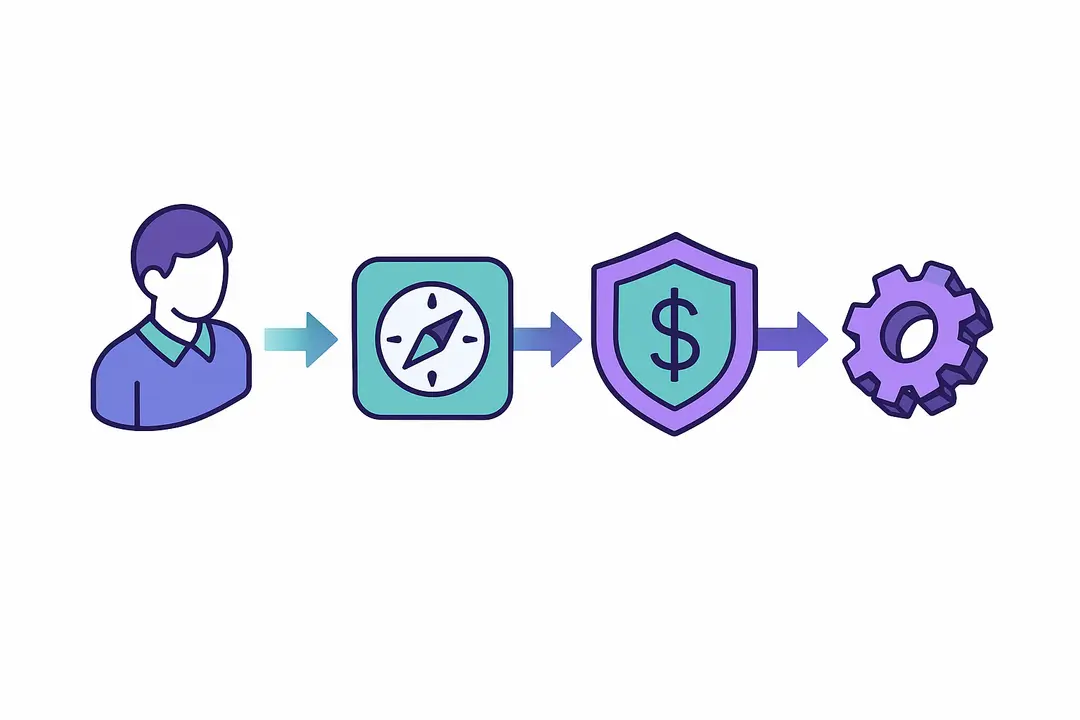
Step-by-step playbook:
- Analyze Your User Base:
- Size, engagement, repeat vs. one-time use.
- Is your primary user a traveler, host, or business?
- Define Your App’s Core Value:
- Booking, planning, navigation, reviews, etc.
- Map Business Goals to Revenue Model:
- Need scalable B2C? Consider commissions or ads.
- Targeting niche/pro audiences? Explore subscriptions or licensing.
- Assess Competitive Landscape:
- What do top apps in your niche use? Where can you differentiate?
- Select Primary + Complementary Models:
- Example: Commission (primary) + in-app purchase/ads (secondary).
- Prototype and Test:
- Use A/B testing to compare adoption, churn, and profit metrics.
- Monitor and Adapt:
- Review user feedback and adjust pricing, offers, or models as needed.
Pro tip: Many leading travel apps use hybrid models and continuously test new monetization flows to maximize both earnings and user satisfaction.
Trends and Challenges in Travel App Monetization for 2024–2025
The landscape for travel app monetization is rapidly evolving, shaped by technology, regulation, and shifting traveler demands.
Key trends:
- Mobile-first growth: Gen Z and Millennials demand seamless, personalized mobile experiences.
- Privacy regulation: GDPR and global counterparts are tightening rules; user trust is critical.
- Sustainability: Apps that support eco-conscious travel (carbon offset, green hotels) are gaining traction.
- AI & Dynamic Pricing: Increasing use of machine learning for personalization and yield management.
- Pandemic impact: More flexible booking, cancellation, and virtual experiences now standard.
Challenges:
- Keeping pace with regulatory changes.
- Balancing monetization with user experience and privacy.
- Staying competitive as “super-apps” consolidate booking, reviews, loyalty, and local offers.
Staying informed and agile is key to benefiting from these shifts as the industry matures.
Frequently Asked Questions: Travel App Monetization
How do travel apps make money through different monetization models?
Understanding how do travel apps make money begins with looking at common travel app revenue models. Most travel apps generate income through booking commissions, in app advertising, affiliate partnerships, premium subscriptions, and paid features. These travel app monetization strategies allow apps to earn revenue while providing free or low cost services to users.
What is the most common travel app revenue model used by popular travel apps?
The most widely used travel app revenue models involve commission based bookings. Platforms earn a percentage every time a user books a hotel, flight, or activity through the app. This approach is one of the main answers to how do travel apps make money and is widely used by large travel platforms.
How do free travel apps make money without charging users?
Many entrepreneurs wonder how do travel apps make money when the app itself is free to download. In most cases, free apps rely on travel app monetization strategies such as advertising, affiliate commissions, and optional premium upgrades that provide additional features or benefits.
What commission rates are common in travel app revenue models?
Typical travel app revenue models involve hotel booking commissions of around 10 to 25 percent and flight booking commissions of around 3 to 7 percent. These rates vary depending on the platform scale, partnerships, and the specific travel app monetization strategies used.
Are subscription based travel app monetization strategies effective?
Yes, subscription models can be a powerful part of travel app monetization strategies if they provide clear value. Apps may offer premium features such as travel planning tools, exclusive discounts, or personalized recommendations. Subscription services are another way to answer the question of how do travel apps make money consistently.
How do affiliate partnerships work in travel app revenue models?
Affiliate marketing is one of the most popular travel app revenue models. Apps partner with airlines, hotels, and tour providers, earning a commission when users complete bookings through referral links. These partnerships are a major part of modern travel app monetization strategies.
Can travel apps monetize user data ethically?
Some platforms explore data driven travel app monetization strategies, but this must be handled carefully. If companies use anonymized data for analytics or partnerships, they must follow privacy regulations and obtain user consent. Responsible data practices are important when considering how do travel apps make money while maintaining trust.
What emerging trends are shaping travel app monetization strategies?
New travel app monetization strategies include AI powered trip planning, travel insurance add ons, eSIM or connectivity services, and partnerships with travel experience providers. These innovations expand traditional travel app revenue models and create additional revenue opportunities.
How did global travel disruptions influence travel app revenue models?
Major global travel disruptions pushed companies to rethink travel app revenue models. Many apps introduced flexible booking options, travel insurance integrations, and virtual travel experiences. These changes influenced how travel platforms approach how do travel apps make money today.
How should founders choose the best travel app monetization strategies?
Founders exploring how do travel apps make money should analyze their audience, the type of travel services offered, and the competitive landscape. Selecting the right combination of travel app revenue models such as commissions, subscriptions, and advertising helps build a sustainable travel app business.
What role do in app advertisements play in travel app monetization strategies?
In app advertising is another common approach when analyzing how do travel apps make money. Travel apps often display sponsored listings, destination promotions, or contextual ads. These advertising based travel app revenue models can generate consistent revenue without charging users directly.
Conclusion: Building Profitable, Ethical, and Future-Ready Travel Apps
Understanding how do travel apps make money is essential for anyone building or managing a travel platform. Successful travel apps combine different travel app revenue models such as booking commissions, advertising, affiliate partnerships, and premium features to create sustainable income while maintaining a strong user experience.
As the travel technology market continues to evolve, companies that carefully select and refine their travel app monetization strategies will be better positioned to compete and grow. By focusing on user value, reliable partnerships, and scalable revenue models, businesses can build travel apps that not only attract users but also generate consistent long term profitability.
Key Takeaways
- Travel apps monetize through a blend of commissions, ads, subscriptions, affiliate links, IAPs, and B2B licensing.
- Commission-based models remain the primary revenue engine for most OTAs and booking platforms.
- New trends like AI-powered pricing, eSIM monetization, and data privacy are shaping the future of travel app profits.
- Success relies on matching the right monetization model to your app’s audience and value proposition—and adapting as the market evolves.
- Prioritizing transparency, user trust, and regulatory compliance is essential for long-term business growth.
This page was last edited on 16 March 2026, at 10:52 am

Start a conversation with our team to solve complex challenges and move forward with confidence.