
Cloud migration has become the defining IT strategy for modern enterprises. According to Gartner, nearly 75% of large organizations will adopt a cloud-first approach by 2026, driven by the need for greater agility, efficiency, and resilience. Many technology and market trends—including rapid digital transformation, remote work shifts, and evolving customer expectations—are accelerating this move.
There are compelling reasons enterprises should migrate to cloud — but for business and IT leaders, the decision is rarely simple. What business value does cloud migration truly deliver? And how can organizations balance risk, reward, and return on investment?
In this guide, you’ll find expert analysis, up-to-date industry research, and a practical framework to help you justify, plan, and optimize your enterprise cloud strategy.
What Is Enterprise Cloud Migration?
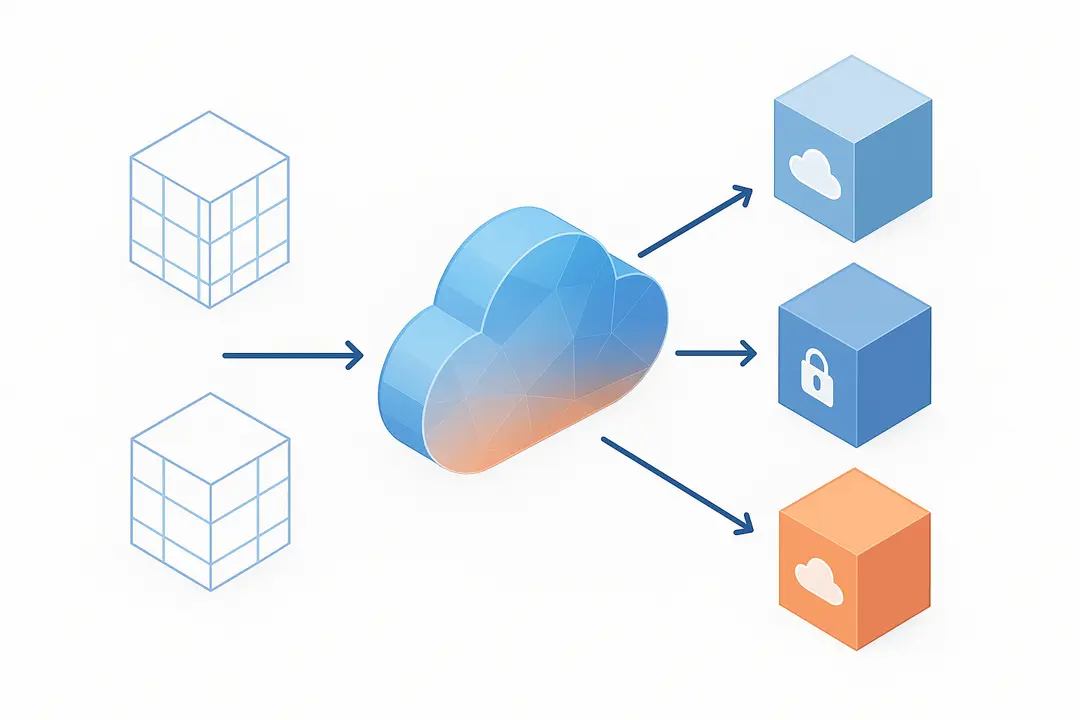
Enterprise cloud migration is the process of moving digital assets—data, applications, and workloads—from on-premises infrastructure to cloud environments such as public, private, or hybrid clouds. This modernization often aims to improve efficiency, scalability, and innovation velocity.
- Legacy apps and databases
- File storage and backup systems
- Platforms (SaaS, PaaS, IaaS)
Key cloud models include:
- Public cloud: Shared infrastructure managed by providers like AWS, Microsoft Azure, or Google Cloud.
- Private cloud: Dedicated environments for single organizations, on-premises or hosted by third parties.
- Hybrid cloud: Combines on-premises and cloud resources for optimal flexibility.
Common triggers for migration include end-of-life (EOL) hardware, mergers and acquisitions, scalability needs, and innovation imperatives.
Quick View: Top 7 Reasons Enterprises Should Migrate to Cloud (2026)
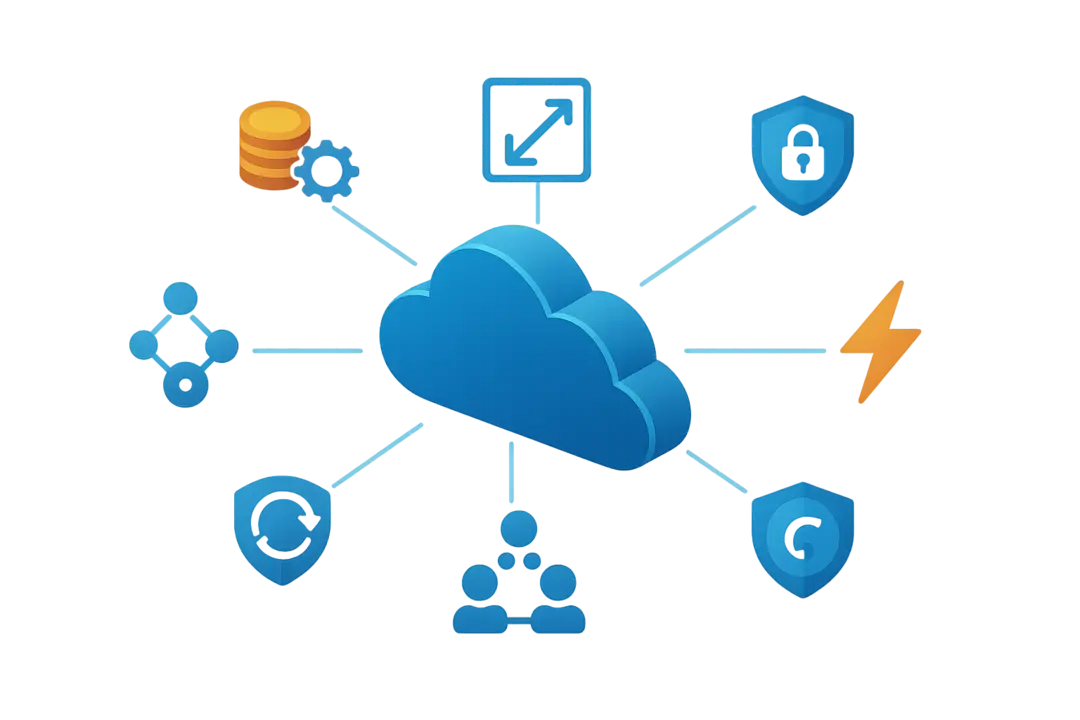
Enterprises migrate to the cloud for seven primary reasons:
- Cost Reduction & Operational Efficiency
- Scalability & Flexibility
- Enhanced Security & Compliance
- Business Agility & Innovation
- Disaster Recovery & Business Continuity
- Collaboration & Workforce Enablement
- Sustainability & Environmental Impact
Each of these drivers impacts how organizations compete, grow, and protect their operations in a digital world.
Why Are Enterprises Moving to the Cloud? (Comprehensive Analysis)
Below, we break down each core benefit of enterprise cloud migration, supported by current research, industry benchmarks, and practical use cases.
Cost Reduction & Operational Efficiency
Cloud migration helps enterprises reduce IT spend by shifting from capital expenditures (CAPEX) to pay-as-you-go operational expenses (OPEX) and optimizing ongoing costs.
Key financial benefits include:
- Lower upfront investments: No need for expensive, depreciating hardware or idle data centers.
- Pay-per-use efficiency: Resources scale dynamically, so you only pay for what you need.
- Resource reallocation: IT teams can focus on innovation and value creation rather than routine maintenance.
According to IDC’s 2026 research, organizations often realize up to 30% lower total cost of ownership (TCO) within two years of migrating key workloads to the cloud. Real-world example: a global manufacturer reduced IT operational costs by over $4 million annually after migrating SAP workloads to a managed cloud environment.
Cost differences at-a-glance:
| Expense Category | On-Premises (Traditional) | Cloud-Based (Modern) |
| Hardware | Large upfront CAPEX | OPEX, included in usage |
| Maintenance | In-house staff, downtime | Provider-managed |
| Scalability | Overprovisioned assets | Auto-scaling, usage-based |
| DR/Backup | Dedicated infrastructure | Integrated by provider |
Scalability & Flexibility
Cloud computing enables near-instant scaling of resources—both up and down—supporting business growth and fluctuating demand without IT headaches.
Major scalability advantages:
- Auto-scaling: Infrastructure adapts to peak loads (e.g., retail spikes, campaign launches) without overprovisioning.
- Global reach: Deploy apps and services across multiple regions in minutes, not months.
- Hybrid adoption: Retain sensitive workloads on-premises while leveraging cloud for flexible expansion.
For example, e-commerce leaders routinely increase cloud capacity during seasonal sales, then dial back during normal operations, optimizing both performance and cost.
Enhanced Security & Compliance
Modern cloud platforms offer robust, built-in security controls and compliance certifications that often exceed the capabilities of traditional on-premises IT.
Main security and compliance improvements:
- Advanced encryption: Data is encrypted at rest and in transit by default.
- Zero trust architectures: Granular access controls and real-time threat detection.
- Regulatory alignment: Leading cloud providers maintain compliance standards such as GDPR, HIPAA, and PCI DSS.
Myth vs. Reality:
– Myth: “The cloud is less secure than on-premises IT.”
– Reality: According to Gartner, over 99% of public cloud security failures will be the customer’s fault, not the provider’s. Leading platforms invest heavily in security innovation, continuous monitoring, and compliance support.
Cloud adoption often enables faster certification and audit readiness, especially for global and highly regulated enterprises.
Business Agility & Innovation
Migrating to the cloud supports digital transformation, faster response to market changes, and business model innovation.
How cloud enables agility:
- Accelerated development: Launch new products or services quickly using cloud-native tools and microservices.
- Rapid experimentation: Test, pivot, and iterate ideas with minimal capital risk.
- AI and analytics integration: Leverage advanced data platforms, AI/ML models, and automation.
According to McKinsey, enterprises with mature cloud adoption innovate up to two times faster than competitors with legacy IT stacks. As a CIO in retail noted, “Cloud platforms allowed us to reduce product launch cycles from months to weeks—opening doors to new revenue streams and customer experiences.”
Disaster Recovery & Business Continuity
Cloud-based disaster recovery gives enterprises enhanced protection against outages, cyberattacks, or natural disasters, reducing risk and downtime.
Key resilience gains:
- Geo-redundant storage: Data automatically backed up across multiple regions.
- Automated failover: Instant switchovers maintain uptime with minimal disruption.
- Recovery SLAs: Cloud providers offer guaranteed restoration times, often exceeding what is feasible in-house.
For organizations subject to regulatory DR mandates, cloud migration simplifies compliance and accelerates recovery posture.
Collaboration & Workforce Enablement
The cloud transforms how organizations collaborate, communicate, and enable distributed teams for future-ready work.
People and productivity benefits:
- Anywhere access: Staff can securely access data, apps, and communications tools from any device or location.
- Modernized work platforms: Adoption of SaaS and PaaS solutions streamlines workflows and platform integration.
- Remote work support: Robust identity and mobility management enhance workforce agility and security.
This is a cornerstone for digital transformation, allowing global enterprises to maintain productivity regardless of geographic or macroeconomic shifts.
Sustainability & Environmental Benefits
Cloud migration is a powerful lever for meeting environmental, social, and governance (ESG) goals and positioning the enterprise as a sustainability leader.
Environmental and efficiency impacts:
- Lowered carbon footprint: According to a study by Accenture, migrating workloads to the cloud can reduce related carbon emissions by up to 80%.
- Efficient data centers: Major cloud providers operate at much higher energy efficiency and renewable energy mix than typical private data centers.
- Regulatory compliance: As ESG mandates increase, cloud adoption provides vital reporting and innovation platforms.
Companies now measure the “green” impact of IT—and cloud solutions are increasingly key to both cost and compliance outcomes.
What Challenges Should Enterprises Consider Before Migrating to the Cloud?
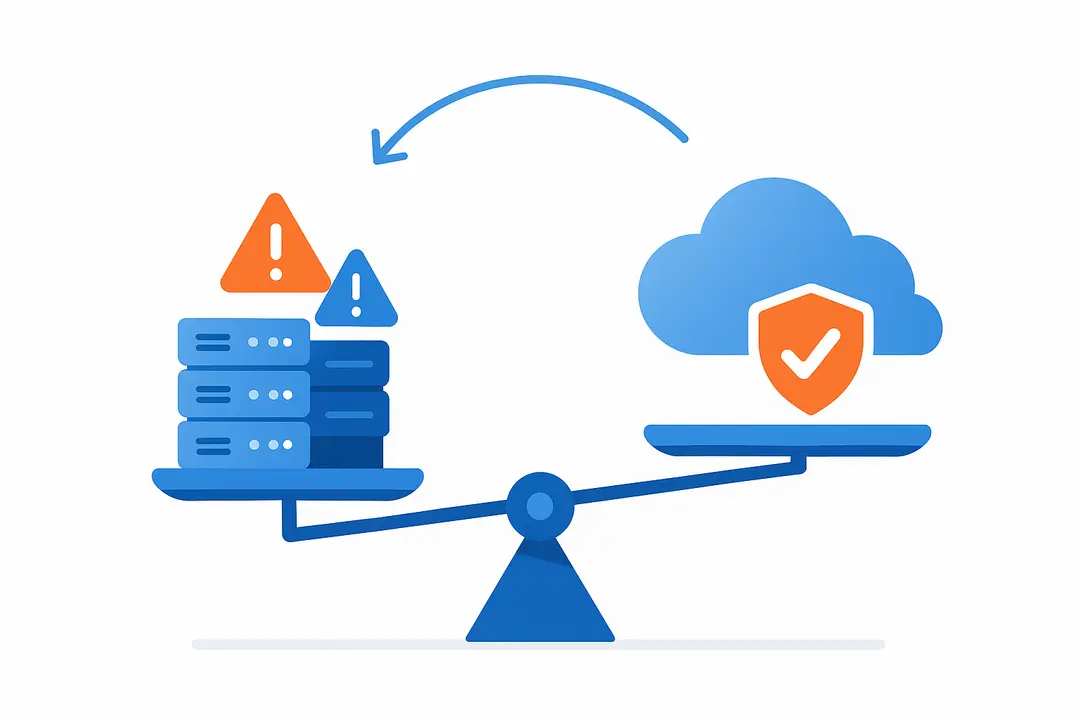
While migrating to the cloud presents substantial benefits, it also brings complexity and potential risks. Addressing these challenges upfront is vital for success.
Major considerations include:
- Legacy systems: Older applications may be difficult or costly to modernize.
- Skills gaps: Cloud projects require new expertise in architecture, security, and operations.
- Security and privacy: Ensuring robust control over sensitive data, especially across jurisdictions.
- Migration cost overruns: Unexpected expenses from data transfer, integration, or vendor lock-in.
- Downtime and disruption: Potential business interruptions during migration.
Change management—preparing and training employees to operate in new cloud environments—is often the biggest determinant of success. Many enterprises overcome these barriers by starting with targeted pilot projects and building on early wins.
How Can Enterprises Assess Cloud Migration Readiness?
Before committing to migration, organizations should conduct a structured readiness assessment to align business, IT, and compliance priorities.
A practical cloud readiness checklist:
- IT Infrastructure: Are server and application inventories documented and up-to-date?
- Business Triggers: Are you facing hardware refresh cycles, M&A activity, or rapid growth?
- Financial Planning: Is there an established budget and TCO/ROI model?
- Compliance and Security: Are regulatory requirements clear? Is data sovereignty addressed?
- Stakeholder Alignment: Have executive, IT, finance, and compliance roles defined success metrics and timelines?
Several frameworks are available from analyst firms and providers. Start with a role-based approach:
| Stakeholder | Top Considerations |
| CIO/CTO | Strategic fit, scalability, security |
| IT Operations | Migration complexity, app compatibility |
| Finance | Cost, ROI, contract flexibility |
| Compliance | Data protection, audit, regulatory fit |
For more, consult tools like “Is your enterprise cloud-ready?” assessments offered by top cloud vendors and advisory firms.
Future Trends: What’s Next for Enterprise Cloud Strategy?
Enterprise cloud adoption is entering a new era shaped by advanced technologies and rising expectations for agility, sustainability, and compliance.
Emerging trends to watch:
- Generative AI (GenAI): Integrating AI/ML models for smarter automation, customer personalization, and analytics.
- Edge computing and IoT: Moving processing closer to users and devices for lower latency and real-time insights.
- Composable platforms: Flexible, API-driven architectures that let businesses build modular services on demand.
- Sustainability mandates: Increasing requirements for green reporting and lower IT emissions.
- Industry vertical clouds: Tailored solutions for sectors like healthcare, manufacturing, and finance.
To maintain a competitive edge, enterprises must continually evaluate their cloud strategy and readiness to adopt these innovations.
Key Benefits Table: Quick Reference Comparison
| Benefit Area | What It Enables | Real-World Example/Stat |
| Cost Reduction & Efficiency | Reduced IT spend, pay-per-use, streamlined ops | 30% lower TCO after 2 years (IDC, 2024) |
| Scalability & Flexibility | Instant resource adjustment for demand | Seasonal e-commerce scaling, global app launches |
| Security & Compliance | Advanced threat protection, audit, certifications | 99% of breaches due to customer configuration, not providers (Gartner) |
| Agility & Innovation | Faster launches, innovation, data-driven business | 2× faster innovation cycles (McKinsey) |
| Disaster Recovery/Continuity | Lower risk, faster recovery, automated failover | Geo-redundant backups, recovery SLAs |
| Collaboration & Workforce | Remote work, SaaS adoption, productivity gains | Secure, global access—key for hybrid/remote teams |
| Sustainability | Carbon footprint reduction, eco-compliance | Up to 80% less emissions vs. legacy IT (Accenture) |
Frequently Asked Questions (FAQ)
What are the main reasons enterprises migrate to the cloud?
Enterprises migrate to the cloud for cost savings, enhanced scalability, improved security and compliance, business agility, better disaster recovery, workforce enablement, and sustainability advantages. Each factor helps organizations become more resilient, efficient, and innovative.
How does cloud migration save costs for businesses?
Cloud migration shifts expenses from upfront capital expenditures to flexible, pay-as-you-go operating costs. This model reduces hardware, maintenance, and energy costs, and enables ongoing cost optimization—often lowering total IT spend by 20–30% within two years.
Is security better in the cloud than on-premises?
Modern cloud providers typically offer robust security controls, including advanced encryption, continuous monitoring, and built-in compliance features. According to Gartner, most security incidents in the cloud result from customer misconfigurations, not deficiencies in provider technology.
What compliance advantages does cloud migration offer?
Cloud platforms maintain up-to-date certifications (GDPR, HIPAA, PCI DSS) and automate many compliance processes, supporting faster audits and regulatory reporting. This helps enterprises reduce risk—especially in highly regulated industries.
Can cloud migration support business growth and agility?
Yes, the cloud enables rapid resource scaling, faster deployment of new applications, and easier experimentation with emerging technologies. This accelerates innovation and helps businesses respond quickly to market changes and new opportunities.
What disaster recovery benefits does the cloud provide?
Cloud solutions offer geo-redundant storage, automated backups, and instant failover capabilities. These features minimize downtime, protect against data loss, and help meet strict recovery time objectives for business continuity.
How does cloud migration impact collaboration and remote work?
Cloud platforms offer secure, anywhere-access to apps and data, enabling distributed teams to collaborate effectively. Integrated tools such as SaaS suites improve communication, workflow automation, and workforce mobility.
What are common challenges in migrating to the cloud?
Key challenges include modernizing legacy systems, addressing skill and resource gaps, managing data security and privacy, preventing cost overruns, and ensuring smooth employee adoption. Careful planning and expert support can help overcome these obstacles.
Is cloud migration suitable for highly regulated industries?
Yes, but extra due diligence is required. Leading cloud providers offer solutions tailored for sectors like healthcare and finance, with specialized compliance controls and support for regulatory requirements.
How do I know if my enterprise is ready for cloud migration?
Assess readiness using structured checklists covering IT strategy, financial planning, compliance, and stakeholder alignment. Readiness frameworks and vendor-led assessments can help identify triggers and best-fit approaches for your organization.
Conclusion
Today’s enterprise cloud migration is less about IT infrastructure and more about driving sustainable competitive advantage. At its best, cloud unlocks new business models, lowers risk, enables rapid innovation, and addresses critical mandates for cost, compliance, and sustainability.
The decision is not one-size-fits-all. Enterprises should evaluate migration through the lens of business goals, existing challenges, and strategic priorities. Start by assessing readiness, identifying quick-win workloads, and engaging experienced partners to guide your journey.
Key Takeaways
- Cloud migration delivers significant cost, efficiency, and agility improvements for enterprises.
- Scalability, security, compliance, and resilience are core reasons organizations move to the cloud.
- Successful migration requires careful readiness assessment and change management.
- Cloud adoption supports digital transformation and sustainability goals.
- Evaluate your organization’s needs, involve all stakeholders, and plan for the future of enterprise IT.
This page was last edited on 9 March 2026, at 3:45 pm

Start a conversation with our team to solve complex challenges and move forward with confidence.