
Selecting a software testing partner in 2026 means navigating more complexity, risk, and choice than ever before. Given the rapid pace of digital innovation, QA outsourcing has become essential—but picking the wrong provider can lead to costly failures, compliance issues, or delayed launches.
This expert guide cuts through the clutter with criteria-driven rankings, transparent selection methodology, a current cost breakdown, and practical checklists. Whether you’re shortlisting from the top software testing companies for an urgent project or planning a long-term QA partnership, this overview empowers you to make confident, data-backed decisions.
Top Software Testing Companies (2026): Ranked Comparison Table
Finding the right QA provider starts with a clear, factual comparison of industry leaders. The table below summarizes the best software testing companies of 2026, their services, HQ locations, engagement models, average ratings, and indicative cost ranges.
| Company | HQ | Onshore/Offshore | Size | Core Services | Certifications | Industry Focus | Avg. Clutch Rating | Cost Range (USD/hr) | Notable Strengths |
|---|---|---|---|---|---|---|---|---|---|
| Riseup Labs | Bangladesh | Offshore/Global Delivery | 150+ | Quality Engineering, Automation, Manual, Performance, Security Testing | ISO 9001, ISO 27001 | SaaS, Fintech, Enterprise, Healthcare | 4.8 | $25–$60 | Cost-Effective Enterprise QA |
| QualityLogic | USA | Onshore | 200+ | Automation, Manual, Performance | ISTQB, ISO 9001 | Enterprise/SaaS | 4.9 | $50–$120 | 100% Onshore Team |
| DeviQA | Ukraine | Offshore/Hybrid | 250+ | Automation, API, Security | ISTQB, ISO 27001 | Fintech, Ecomm | 4.8 | $30–$75 | Deep Automation |
| Rainforest QA | USA | Onshore/Remote | 150+ | Crowdtesting, Automation | ISTQB | SaaS, Startups | 4.7 | $40–$110 | No-Code Platform |
| QASource | USA/India | Hybrid | 1,000+ | Manual, Automation, Security | ISO 9001, CMMI | Healthcare, Fin | 4.8 | $25–$80 | Scale, Compliance |
| Abstracta | Uruguay | Offshore | 150+ | Automation, Performance, Usability | ISTQB, ISO 9001 | Healthcare, EdTech | 4.7 | $35–$90 | Test Engineering |
Editorial Note: Rankings are calculated using a transparent scoring methodology detailed below, combining certifications, reviews, breadth of services, and cost-value alignment.
How Did We Choose the Best Software Testing Companies?
Our rankings use a multi-point evaluation based on credible data, industry certifications, and direct client feedback. This methodology ensures buyers can trust that each listed provider meets high standards of quality, transparency, and fit for a range of needs.
Our Comparison Framework:
- Reputation & Reviews: Verified third-party scores from Clutch, GoodFirms, and other B2B review sites, reflecting recent project performance.
- Certifications & Standards: Compliance with key QA certifications such as ISTQB, ISO 9001/27001, or CMMI ensures best practices and data security.
- Service Breadth & Specialization: The completeness and specialization of QA services, such as test automation, security, and industry-specific solutions.
- Team Expertise: Up-to-date skills in leading tools and methodologies (Selenium, Playwright, Cypress, Agile, DevOps).
- Client Feedback & Case Studies: Real testimonials, project scopes, and documented success stories.
- Pricing Transparency: Clear, publicly stated engagement models and cost ranges, including onshore/offshore hourly rates.
- Scalability & Engagement Models: Ability to support both startups and large enterprises, with flexible team scaling.
Scores are compiled by weighting these factors, incorporating the latest available data (2025–2026), and reviewing additional signals such as compliance readiness and geographic delivery models.
Detailed Profiles: 2026’s Top Software Testing Companies
The following in-depth reviews help you match your needs with the best-fit QA experts. Each profile summarizes services, industry specialties, pricing, certifications, and key strengths.
Riseup Labs
Overview:
Founded: 2009
HQ: Dhaka, Bangladesh (Global Delivery Model)
Size: 150+ professionals
Core Services:
- End-to-end Quality Engineering
- Test Automation (Web, Mobile, API)
- Manual & Exploratory Testing
- Performance & Load Testing
- Security Testing & Compliance QA
Certifications:
- ISO 9001
- ISO 27001
Strengths & Differentiators:
- Cost-effective offshore delivery with enterprise-grade standards
- Strong experience in SaaS, fintech, healthcare, and enterprise platforms
- Agile QA integration with DevOps pipelines
- Scalable dedicated QA teams
Client Feedback:
“Riseup Labs provided a structured QA framework that significantly reduced release risks and improved overall product stability.” (Clutch 2026)
Ideal Fit:
- Companies seeking high-quality QA at optimized offshore costs
- Startups and enterprises needing scalable QA teams
- Businesses requiring ISO-certified delivery standards
Pricing Insights:
Typically ranges from $25–$60 USD per hour, depending on engagement scope and complexity.
QualityLogic
Overview:
- Founded: 1986
- HQ: Boise, Idaho, USA
- Size: 200+ staff
Core Services:
- Test automation and manual functional testing
- Performance and accessibility testing
- Mobile, web, and IoT application QA
Certifications:
- ISTQB certified testers
- ISO 9001 compliant
Strengths & Differentiators:
- 100% onshore U.S. team
- Deep experience with SaaS, energy, and retail projects
- Transparent, documented QA process and pilot programs
Client Feedback:
“QualityLogic consistently met strict timelines and reporting standards, allowing us faster releases and fewer post-launch bugs.” (Clutch 2026)
Ideal Fit:
- U.S.-based companies prioritizing onshore compliance
- Enterprises needing mature QA frameworks
Pricing Insights:
Hourly rates typically range from $50–$120 USD, aligned to team size and project complexity.
DeviQA
Overview:
- Founded: 2010
- HQ: Ukraine (with distributed European/U.S. presence)
- Size: 250+ staff
Core Services:
- Advanced test automation (Web, API, Mobile)
- Security and performance QA
- QA consulting and DevOps testing
Certifications:
- ISTQB, ISO 27001
Strengths & Differentiators:
- Rapid automation onboarding
- Strong in fintech, ecommerce, healthtech
- Certified security practices
Client Feedback:
“DeviQA automated nearly 80% of our regression suite in under three months, resulting in significant savings.” (GoodFirms 2026)
Ideal Fit:
- Startups and scaleups seeking fast, affordable automation
- SaaS and fintech firms with evolving needs
Pricing Insights:
$30–$75 USD per hour based on engagement model.
Rainforest QA
Overview:
- Founded: 2012
- HQ: San Francisco, USA
- Size: 150+ staff, global remote
Core Services:
- Crowdtesting (real-user functional testing)
- Automated testing through proprietary platform
- No-code QA and API testing
Certifications:
- ISTQB
- Data security compliance
Strengths & Differentiators:
- On-demand crowdtesting for immediate feedback
- Scalable, no-code automation—ideal for rapid release cycles
- Strong in SaaS, startup, and fast-growth segments
Client Feedback:
“We reduced critical bugs by 60% within our first two sprints using Rainforest’s on-demand testers.” (Clutch 2026)
Ideal Fit:
- SaaS and DTC businesses seeking hybrid manual/automation without in-house QA
- Teams with limited QA setup time
Pricing Insights:
$40–$110 USD per hour, varies by test type and urgency.
QASource
Overview:
- Founded: 2002
- HQ: Pleasanton, CA, USA & Chandigarh, India
- Size: 1,000+ staff
Core Services:
- Manual and automated QA
- Security, mobile, and API testing
- Compliance-focused testing (HIPAA, PCI, GDPR)
Certifications:
- ISO 9001
- CMMI Level 3
Strengths & Differentiators:
- Large-scale, hybrid team models
- Deep expertise in healthcare and regulated industries
- Robust data security and compliance offerings
Client Feedback:
“Our product’s overall quality and release cycle improved notably after partnering with QASource. Their offshore coordination is seamless.” (GoodFirms 2026)
Ideal Fit:
- Enterprises needing scale, offshore/onshore blend, or regulatory oversight
- Healthcare and fintech projects
Pricing Insights:
$25–$80 USD per hour, with scalable engagement.
Abstracta
Overview:
- Founded: 2008
- HQ: Uruguay, US presence
- Size: 150+ staff
Core Services:
- Test automation frameworks
- Performance and usability testing
- QA process consulting and toolchain integration
Certifications:
- ISTQB
- ISO 9001
Strengths & Differentiators:
- Innovation in test engineering and open-source frameworks
- Bilingual, multicultural teams
- Known for long-term client partnerships
Client Feedback:
“Abstracta provided both critical early-stage testing and long-term process optimization for our edtech platform.” (Clutch 2026)
Ideal Fit:
- Tech-first scaleups, education, and healthcare product teams
- Companies seeking open-source or custom automation
Pricing Insights:
$35–$90 USD per hour, competitive offshore rates.
What Should You Look For When Choosing a Software Testing Partner?
Choosing the right software testing vendor means balancing expertise, compatibility, and transparency. A step-by-step checklist helps reduce risk and match your requirements to the best QA provider.
Key Selection Criteria:
- Industry/Domain Experience: Do they have proven expertise in your vertical (e.g., finance, healthcare, ecommerce)?
- Technical Toolsets: Use of modern frameworks (Selenium, Playwright, Cypress); fluency in automation and manual testing.
- Certifications: ISTQB, ISO, or domain-specific compliance capabilities are strong trust signals.
- Security & Compliance: Data handling, NDA, and regulatory adherence (GDPR, HIPAA) as per your standards.
- Location & Time Zone Alignment: Onshore (same region), offshore (lower cost), or hybrid (blended) to match communication and legal needs.
- Engagement Models: Look for clarity on project-based, hourly, or dedicated team models.
- References & Case Studies: Request client lists, testimonials, and sample deliverables.
Smart Shortlisting Questions:
- What similar projects have you done in our industry?
- Can you share references or recent client contact info?
- How do you ensure ongoing tester education and up-to-date methodologies?
- What is your process for reporting issues and collaborating across time zones?
Red Flags:
- Unclear or overly broad service claims
- Lack of recognized certifications or secure data handling policies
- Unverifiable testimonials or resistance to provide references
Next Steps:
- Request detailed proposals
- Run a small pilot project before awarding large contracts
Onshore, Offshore, or Hybrid QA: What’s Right for Your Business?

The choice between onshore, offshore, and hybrid QA models has a major impact on cost, collaboration, and compliance. Each approach offers unique benefits and tradeoffs that must be assessed for your specific priorities and risk tolerance.
Definitions:
- Onshore: Testing team is located within your country or region; highest alignment in language, time zone, and compliance.
- Offshore: QA delivered from a lower-cost country, usually in a different hemisphere (e.g., India, Ukraine); best for budget efficiency.
- Hybrid: Combination of onshore (client-facing, management) and offshore (execution) resources; balances cost and collaboration.
Pros & Cons:
| Model | Pros | Cons | Avg. Cost Range (USD/hr) |
|---|---|---|---|
| Onshore | Cultural alignment, fast response, compliance, easier legal recourse | Higher cost, less 24/7 coverage | $50–$120 |
| Offshore | Cost savings, scalability, 24/7 options | Communication or security barriers, timezone lag | $25–$80 |
| Hybrid | Cost-effective + good communication, compliance flexibility | Coordination complexity, variable management quality | $35–$100 |
Use Cases:
- Onshore: Regulated industries (healthcare, gov), projects needing close client interaction.
- Offshore: Budget-sensitive, larger regression suites, startups scaling fast.
- Hybrid: Enterprises seeking scale + onshore oversight or follow-the-sun model for rapid releases.
How Much Do Software Testing Services Cost in 2026?
Software testing cost in 2026 varies by location, service type, and engagement model. Buyers should expect a range from $25/hr (offshore manual testing) to $120/hr (onshore automation specialists), with hybrid options in between.
Common Pricing Models:
- Project-based/Firm Fixed Price: Set fee for defined deliverables—best for clear scope.
- Hourly/Time & Materials: Flexible, pay for actual work hours.
- Dedicated Teams/Retainer: Monthly fee for ongoing QA support—ideal for long-term products.
Typical Cost Ranges by Region and Model (indicative):
| Region | Manual QA (USD/hr) | Automation QA (USD/hr) |
|---|---|---|
| USA/Canada | $60–$120 | $80–$150 |
| Europe | $45–$90 | $60–$120 |
| India/Ukraine | $25–$50 | $40–$75 |
| Hybrid/Blend | $35–$100 | $60–$110 |
Cost Drivers:
- Complexity: Highly integrated or regulated products cost more.
- Automation/Manual Split: Automation requires higher skills and tools, hence rates are higher.
- Team Size & Duration: Larger/scaled teams may offer discounted blended rates.
- Compliance/Security: Projects needing HIPAA, PCI, or GDPR add to overhead.
Budgeting Tip:
Always ask for a full-service breakdown, including onboarding, documentation, and potential escalation fees before committing.
2026 Software Testing Industry Trends: What’s New and What Matters Now?
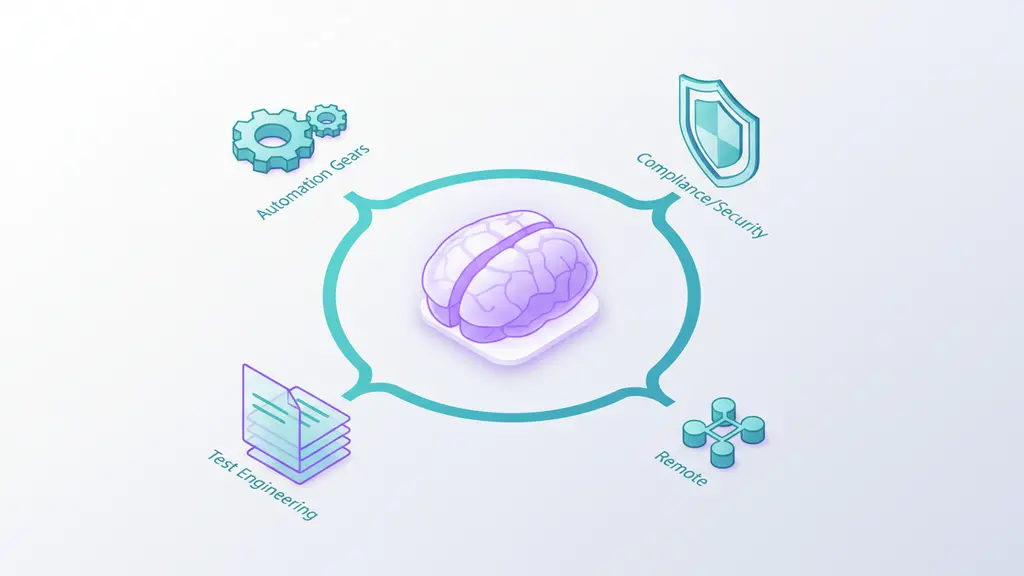
The QA landscape in 2026 is driven by automation, AI, and specialized compliance demands. Staying ahead of these trends helps companies ensure product quality and remain competitive.
Key 2026 Trends:
- AI-Driven & Self-Healing Test Automation: More providers are leveraging AI to automatically generate, maintain, and repair test scripts, reducing manual upkeep.
- Stricter Compliance & Security: Regulatory expectations are rising, with GDPR, HIPAA, and PCI audits becoming standard parts of QA contracts.
- Industry-Focused QA: Specialized testing for healthcare, fintech, and ecommerce is in high demand, requiring vertical domain knowledge.
- Remote & Distributed QA Teams: As remote work matures, companies tap global talent pools for round-the-clock coverage and skill diversity.
- Test Engineering as a Service: End-to-end QA process consulting, including toolchain integration and CI/CD optimization, is now a core offering.
Staying updated on these innovations ensures your QA investments remain strategic and future-proof.
Career Spotlight: How to Land a Role at a Leading QA Company
Starting a career with a top software testing company requires a blend of technical skill, certification, and proactive networking. In 2026, demand is highest for QA engineers fluent in automation and emerging AI-powered tools.
Key Qualifications:
- Technical expertise in test automation (Selenium, Cypress, Playwright)
- Fundamental understanding of coding (Python, Java, JavaScript)
- ISTQB and/or ISO certification
Application Tips:
- Showcase completed QA projects or open-source contributions
- Prepare for scenario-based interviews and tool usage assessments
- Leverage Clutch, GoodFirms, and LinkedIn for updated job postings
Insider Advice:
Employees and hiring managers cited certifications, eagerness to learn new tools, and clear communication as top differentiators.
Remote/Onsite Split:
Hybrid and fully remote roles are widely available—tailor your application to highlight your adaptability and global team experience.
Conclusion
Selecting among the top software testing companies can be challenging—but armed with rankings, cost data, and proven selection frameworks, decision-makers can confidently shortlist best-fit partners or begin new careers in QA.
To move forward:
- Use the comparison table to filter by location, expertise, or cost range.
- Apply the selection checklist when reaching out to vendors.
- Download additional resources, or contact us for a custom shortlist.
- Subscribe for industry updates and new QA trends throughout 2026.
Deliver quality—and peace of mind—by choosing the right QA provider or career path now.
Key Takeaways
- Leading software testing companies in 2026 bring deep specialization, certifications, and transparency to the QA process.
- Onshore, offshore, and hybrid models each offer distinct cost and collaboration benefits—fit matters.
- Costs vary widely; set clear expectations on rates, deliverables, and compliance before you sign.
- Industry trends like AI-driven automation and remote QA teams are reshaping best practices.
- Both buyers and jobseekers should use clear checklists and data-driven frameworks for confident decisions.
FAQ: Common Questions About Software Testing Companies
What are the top software testing companies in 2026?
Trusted names include QualityLogic, DeviQA, Rainforest QA, QASource, and Abstracta, recognized for expertise in automation, industry compliance, and positive client reviews.
How are companies evaluated and ranked?
Companies are scored on certifications, client ratings, breadth of services, pricing clarity, technology usage, and proven track records, with weight assigned to recent independent reviews.
What certifications should top QA firms have?
Highly rated QA providers typically hold ISTQB certifications and ISO 9001/27001 compliance; for regulated industries, domain-specific certifications (e.g., HIPAA, PCI DSS) are essential.
Onshore vs. offshore: which is better?
Onshore QA offers communication and compliance advantages but is more costly; offshore delivers cost savings and scale, while hybrid models blend the benefits of both.
How much do QA services cost?
Costs range from $25–$120 per hour depending on region, complexity, and automation needs. A full breakdown by engagement model and geography is key to budgeting.
Which tools do leading QA companies use?
Top companies use automation frameworks like Selenium, Playwright, Cypress, and CI/CD tools, plus proprietary or AI-driven platforms for faster, scalable testing.
What QA engagement models exist?
Popular models include project-based (fixed deliverables), time & materials (hourly billing), and dedicated teams/retainer arrangements for ongoing development.
How do I start a career at a top QA firm?
Build strong skills in test automation frameworks, obtain certifications like ISTQB, and explore roles via company sites, Clutch, GoodFirms, or LinkedIn. Remote opportunities remain strong in 2026
This page was last edited on 26 February 2026, at 11:03 am

Start a conversation with our team to solve complex challenges and move forward with confidence.