
Offshore web development is surging in 2026, as companies seek to scale quickly, control costs, and access global talent. Yet with hundreds of vendors and regional models to consider, choosing the right offshore partner has never been more complex—or more critical for your business outcomes.
This expert buyer’s playbook is designed for CTOs, IT leaders, and founders navigating the evolving landscape of web development outsourcing. You’ll get actionable checklists, side-by-side company comparisons, up-to-date cost benchmarks, and transparent methodology behind every recommendation.
By the end, you’ll be able to confidently shortlist and engage with the top offshore web development companies to achieve scalable, secure, and cost-effective results for your business in 2026 and beyond.
What Is Offshore Web Development?
Offshore web development refers to partnering with external agencies or teams in distant (often lower-cost) countries to design, build, and support web solutions.
This approach typically involves hiring a web development company located in regions such as India, Eastern Europe, Southeast Asia, or Latin America, as opposed to working with teams in your own (onshore) country.
Key Features of Offshore Web Development
- Cost efficiency: Lower developer rates due to wage differentials.
- Access to talent: Expanded global pool with specialized technical skills.
- Scalability: Flexibility to ramp teams up or down as project needs change.
Common Offshore Web Development Services
- Website and web application development
- UI/UX design
- E-commerce platforms
- QA/testing and maintenance
- DevOps and support
Each provider may offer a portfolio covering end-to-end web design, build, deployment, and managed services, tailored to both startups and enterprise needs.
Offshore vs. Nearshore vs. Onshore: What’s the Difference?
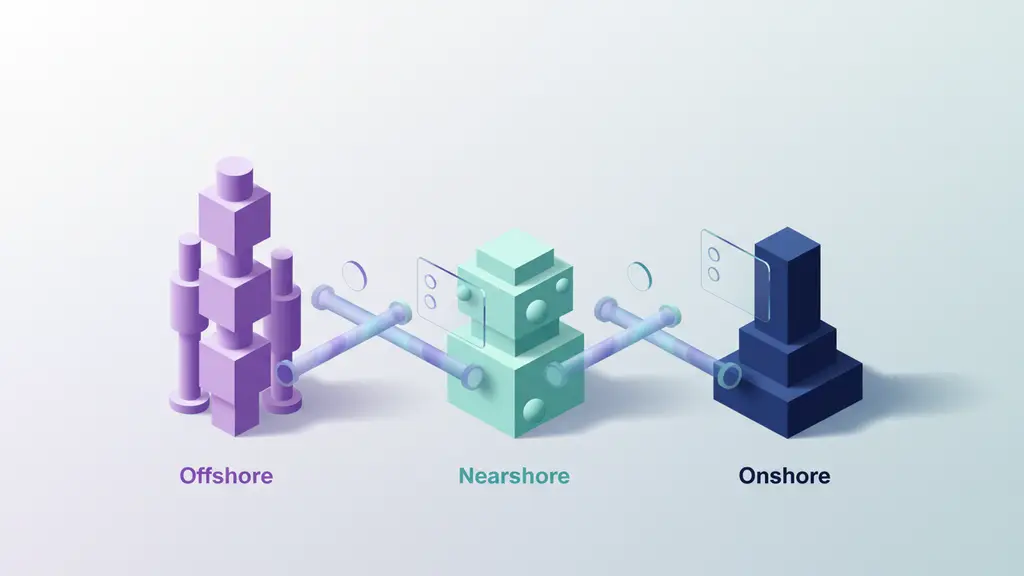
Offshore, nearshore, and onshore web development describe the location and nature of outsourced development partners relative to your company.
Offshore means outsourcing to a company in a distant country, often several time zones away, while nearshore refers to providers in nearby countries. Onshore means working with domestic agencies or teams.
| Model | Cost | Typical Regions | Time Zone Proximity | Communication | Types of Projects |
| Onshore | $$$ | US/UK/Canada/W. Europe | Same | Easiest | Regulated/complex, IP-heavy |
| Nearshore | $$ | Latin America (for US), E. Europe (for EU) | Close | High | Agile builds, collaboration |
| Offshore | $ | India, Philippines, Ukraine, Vietnam | Distant | Requires planning | Cost-driven, scale/SaaS, 24/7 dev |
When to Use Each Model
- Onshore: For sensitive, highly regulated projects requiring close collaboration.
- Nearshore: If you want cultural and time zone overlap but lower costs.
- Offshore: For maximum cost savings and access to a broader talent pool, especially on large-scale or ongoing development.
What Are the Pros and Cons of Offshore Web Development?
Offshore web development offers significant advantages, but it also brings certain risks that demand strategic management.
Key Advantages
- Cost reduction: Save up to 40–70% on development costs, especially in regions like India and Southeast Asia (Clutch.co).
- Talent access: Tap into millions of skilled engineers unavailable locally.
- Faster delivery: Leverage time zone differences for round-the-clock productivity.
Major Risks
- Communication gaps: Language barriers and time zone differences can slow progress.
- Quality control: Varying standards in coding, documentation, and testing.
- IP and data security: Vulnerabilities if security protocols are weak.
- Coordination overhead: Added project management complexity.
Common Mitigation Strategies
- Rigorous vendor vetting and reference checks
- Clear, documented requirements and milestones
- Frequent status updates and agile frameworks
- Robust contracts covering IP protection and SLAs
How Do You Choose the Best Offshore Web Development Company?
Selecting an offshore partner is a multi-step process that requires clear criteria, due diligence, and structured evaluation.
Stepwise Selection Checklist
- Define project scope and objectives.
- Shortlist candidates using verified directories (Clutch, GoodFirms).
- Evaluate key criteria: Experience, technology expertise, certifications, references.
- Request proposals (RFPs): Compare pricing, methodologies, and communication plans.
- Check cultural and communication fit: Conduct interviews or workshops.
- Review case studies and client feedback.
- Negotiate contracts: Clarify IP, security, and quality expectations.
- Start with a pilot project: Reduce risk before scaling.
Key Evaluation Criteria
- Technical expertise: Proven track on similar tech stacks and industries.
- Communication skills: Language proficiency, response time, collaboration tools.
- Security standards: Compliance with ISO, SOC2, or region-specific frameworks.
- Delivery model flexibility: Ability to ramp teams and scale up/down.
- Cultural fit: Alignment of values, working hours, and business etiquette.
Due Diligence Best Practices
- Review references and third-party reviews
- Request code samples or past deliverables
- Schedule live demos or project walkthroughs
Red Flags to Avoid
- Vague or generic proposals
- Lack of references or incomplete portfolio
- Reluctance to provide contracts or security assurances
What Engagement Models Are Available With Offshore Providers?
Offshore partnerships come in several engagement models, each suited to different needs and project types.
| Model | Description | Pros | Cons | Best for |
| Project-Based | Fixed scope, timeline, and price | Predictable cost, hands-off management | Low flexibility, scope creep risk | MVPs, short-term |
| Dedicated Team | Hire a full-time offshore team dedicated to you | Team control, scalability, flexibility | More oversight needed, higher commitment | Long-term projects |
| Build-Operate-Transfer (BOT) | Vendor sets up and manages team, then transfers to you | Localized operation, IP retention | Higher setup complexity | Enterprises, R&D |
- Project-Based: Ideal when requirements are stable and you want clear deliverables.
- Dedicated Team: Preferred for ongoing development or when building technical IP.
- BOT: Used for establishing a tailored offshore delivery center you eventually own.
Top Offshore Web Development Companies in 2026: Comparison Table
Leading offshore web development companies are selected based on their track record, technical expertise, client ratings, and regional delivery capabilities for 2026.
| Company Name | HQ / Offshore Locations | Core Services | Staff Size | Regions Served | Sample Clients | Certifications / Ratings |
|---|---|---|---|---|---|---|
| Riseup Labs | Bangladesh, USA, UK, UAE | Web Development, Mobile App Development, Game Development, Emerging Technologies | 100+ | North America, Europe, Asia | UNICEF, UNDP, BBC Media Action | ISO Certified, BASIS Member, Clutch 5★ |
| Improving.com | USA, India, Mexico | Web, software engineering | 1400+ | Americas, APAC | American Airlines, Microsoft | ISO 27001, Clutch Top 10 2024 |
| TheScalers.com | Ireland, India | Dedicated dev teams, R&D | 500+ | Europe, APAC | allpay, Kongsberg | Great Place to Work |
| ELEKS | Ukraine, Poland, US | Custom web, digital | 2000+ | Europe, N. America | Aramex, Emaar | ISO 9001, Clutch 5★ |
| Daxx (Grid Dynamics) | Ukraine, Poland, NL | Dedicated teams, web solutions | 1000+ | Europe, N. America | J.P. Morgan, HotSchedules | ISTQB, Clutch 5★ |
| Codal | USA, India, UK | Full-stack web, UX, eCommerce | 300+ | Americas, Europe | Pepsi, United Airlines | Shopify Plus Partner |
| TatvaSoft | India, UK, Australia | Custom web/app dev | 1000+ | Asia, Europe, N. America | AngloAmerican, De Beers | ISO 9001, CMMi Level 3 |
| DOIT Software | Poland, Ukraine | Web, app, SaaS | 150+ | Europe, US | Siemens, Oracle | Clutch 5★ |
| Altoros | USA, Belarus, Argentina | Web, cloud, blockchain | 350+ | Americas, Europe | Sony, Allstate | AWS, Clutch 5★ |
Methodology:
Companies were shortlisted based on recognized industry directories (Clutch, GoodFirms), regional presence, staff size, technical certifications (ISO, CMMi, SOC2), and verified client reviews as of late 2024/early 2025.
Brief Overviews
Riseup Labs
A globally recognized software and BPO company delivering offshore web development, enterprise solutions, and dedicated team services. Known for cost-efficient scaling, strong project governance, and experience working with international clients across North America, Europe, and the Middle East.
Improving
Renowned for high-caliber engineering teams and a consultative approach, with strong certifications and a presence in both the US and offshore hubs.
TheScalers
Specializes in building dedicated teams in Bangalore, India, with a focus on low attrition and ownership transfer (BOT) for scaling.
ELEKS
A leader in custom digital transformation, serving major European and North American brands, with deep expertise in fintech, logistics, and R&D.
Daxx (A Grid Dynamics Company)
Offers a flexible dedicated-team model, noted for technical rigor and client-centric delivery.
Codal
Blends offshore delivery with UK/US operations to offer a balance of quality and cost control, especially for e-commerce and UX-heavy projects.
TatvaSoft
Long-established in web and enterprise development, with scalable teams and global delivery.
DOIT Software
Agile boutique focused on SaaS and enterprise web applications, recognized for flexibility and niche tech stack proficiency.
Altoros
Delivers end-to-end transformation including emerging technologies like cloud and blockchain, with global delivery centers.
How Do Offshore Web Development Costs Compare by Region?

Offshore web developer rates vary significantly by region, reflecting differences in wages, experience, and local economic conditions.
Average Hourly Rate Comparison by Region (2025)
| Region | Junior Developer | Mid-Level Developer | Senior Developer |
| India/South Asia | $20–$35 | $35–$50 | $50–$70 |
| Eastern Europe | $30–$45 | $45–$65 | $65–$90 |
| Southeast Asia | $20–$35 | $35–$55 | $50–$70 |
| Latin America | $35–$50 | $50–$70 | $70–$90 |
Source: Clutch and Upwork market data, 2024.
Cost Drivers
- Project complexity: Niche technologies or enterprise-grade security requirements increase rates.
- Team size and composition: More senior/architect roles command higher fees.
- Engagement model: Dedicated teams or BOT models may include management or setup costs, while project-based models are more transactional.
Value Beyond Cost
While India and Southeast Asia typically offer the lowest rates, Eastern Europe and Latin America often balance cost with Western-style communication, proximity, and quality standards. When budgeting, consider not only advertised rates but also the potential need for rework, project management, and ongoing support.
How to Manage Offshore Web Development Teams Effectively

To achieve high-quality results from managed offshore web teams, organizations must implement robust communication, process, and security frameworks.
Key Management Strategies
- Agile collaboration: Use tools like Jira, Slack, and Microsoft Teams to enable daily stand-ups and real-time updates.
- Time zone planning: Overlap working hours for critical meetings; establish clear reporting cadence.
- Quality assurance: Standardize QA, require frequent code reviews, and use automated testing protocols.
- IP and data security: Sign NDAs and utilize secure communication channels; ensure compliance with ISO/SOC2 where needed.
- Cultural alignment: Provide onboarding to bridge cultural gaps, encourage two-way feedback, and recognize good performance.
By proactively addressing these areas, companies can minimize attrition and build long-term, mutually rewarding offshore teams.
What’s Trending in Offshore Web Development for 2026 and Beyond?
Offshore web development is evolving rapidly—driven by technology, market demand, and emerging delivery models.
Key Trends for 2026
- AI and automation: Widespread use of AI-assisted development and testing tools for faster, more reliable deliverables.
- Cybersecurity: Increased integration of advanced security protocols and compliance frameworks.
- Hybrid and hyper-specialized teams: Combining onshore leadership with offshore technical execution; more niche-focused agencies.
- Scaling via BOT and R&D centers: Enterprises setting up Build-Operate-Transfer models for localized talent retention and IP control.
- New delivery hot spots: Growing traction in Tier-2 Indian cities, Vietnam, and Latin America as cost and talent advantages shift.
According to Gartner’s 2024 Outsourcing Report, 65% of enterprises plan to increase offshore investments—citing flexibility, access to rare skills, and time-to-market acceleration as principal drivers.
Frequently Asked Questions
What is an offshore web development company?
An offshore web development company is an agency or firm based in a different country—usually one with lower labor costs—that offers web design, development, and related digital services to clients worldwide.
How do I choose the best offshore web development partner?
Assess potential partners by reviewing their technical expertise, past client results, certifications, communication skills, and alignment with your business culture. Always request references and pilot projects before making a long-term commitment.
Which regions are best for offshore web development?
Popular regions include India, Eastern Europe (Ukraine, Poland), Southeast Asia (Philippines, Vietnam), and Latin America (Mexico, Argentina). Each offers different balances of cost, talent availability, and time zone proximity.
What models are available for offshore engagement?
Common models are project-based (fixed deliverables/cost), dedicated teams (full-time, integrated collaboration), and Build-Operate-Transfer (BOT), where the vendor builds and manages a team before transferring it to you.
How do offshore web development costs compare by region?
India and Southeast Asia tend to offer the lowest rates ($20–$35/hr for junior developers). Eastern Europe and LatAm are more expensive ($30–$90/hr), but often provide higher English fluency and work-culture alignment.
What are the key advantages of offshore web development?
Primary benefits include lower development costs, access to specialized skills, scalability, and the ability to accelerate project timelines by leveraging global time zone differences.
How do I address risks such as security and communication?
Mitigate risks by insisting on clear contracts, NDAs, regular status meetings, robust security protocols, and selecting providers with strong client references and established delivery processes.
What’s the difference between offshore and nearshore web development?
Offshore means outsourcing to distant countries (often with significant time zone/language differences), while nearshore involves nearby countries that share similar time zones and cultures.
What is a Build-Operate-Transfer (BOT) model in web development?
BOT is an engagement model where a vendor sets up and operates a dedicated team for you, then transfers that team and processes to your control after a set period.
How do I ensure code quality with an offshore team?
Establish clear coding standards, require peer reviews/automated testing, and set up regular QA checkpoints. Choose partners with strong technical leadership and transparent quality assurance processes.
Conclusion
Finding the right offshore web development company will shape your project’s success, scalability, and ROI in 2026. By leveraging this expert playbook—complete with criteria, company comparisons, cost tables, and proven management frameworks—you’re equipped to navigate the offshoring landscape confidently.
Key Takeaways
- Define clear goals and selection criteria before starting your search for the best offshore web development companies.
- Use side-by-side comparisons and reviews to shortlist partners with verifiable expertise and strong process maturity.
- Balance cost considerations with quality, security, and long-term scalability.
- Engage using the optimal delivery and engagement model for your project stage and risk profile.
- Stay informed of technology, process, and region trends to ensure your offshore strategy remains future-proof.
This page was last edited on 24 February 2026, at 10:02 am

Start a conversation with our team to solve complex challenges and move forward with confidence.