The mobile app landscape is poised to undergo a dramatic transformation by 2026, driven by emerging technologies and evolving user expectations.
If you’re a product leader, developer, or business owner, keeping pace with these mobile app development trends can mean the difference between industry leadership and digital irrelevance.
This guide delivers a data-backed, expert forecast of the top trends for 2026—explaining why each matters, where they’re headed, and how you can act now to future-proof your mobile app strategy. By exploring these trends, you’ll unlock a competitive edge and practical steps to ensure your apps thrive in a fast-changing market.
Key Trends at a Glance: 2026 Summary Table
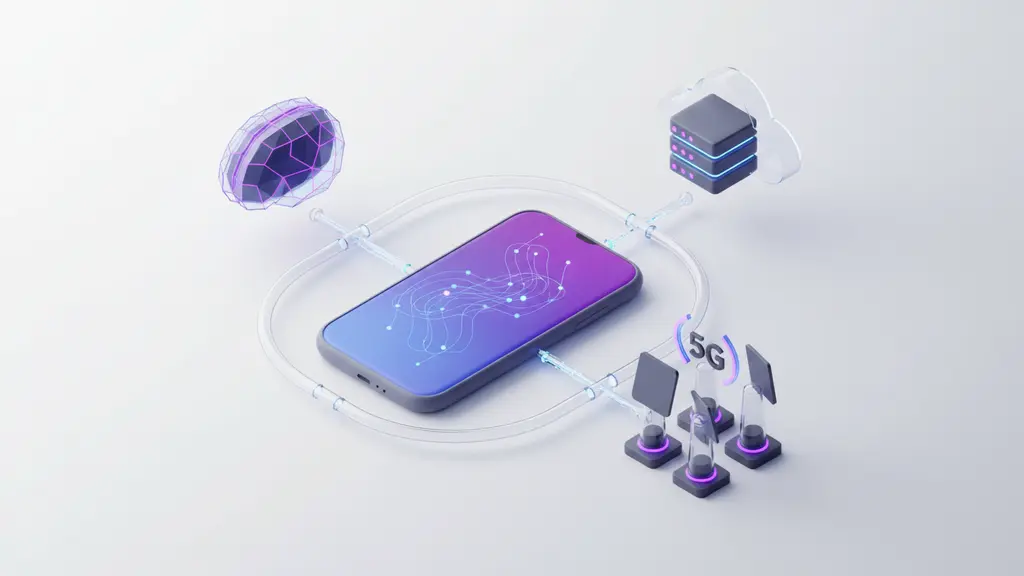
Here’s a quick-reference summary of the most impactful mobile app development trends for 2026, their key benefits, leading industries, and adoption readiness:
| Trend | Core Benefit | Top Industries | Adoption Readiness |
|---|---|---|---|
| AI & Machine Learning Integration | Personalization, automation | All (esp. Retail, Healthcare) | Mainstream |
| Low-Code & No-Code Platform Expansion | Faster development & prototyping | SaaS, SMBs, Enterprise IT | Accelerating |
| IoT-Enabled Mobile Applications | Real-time insights, automation | Healthcare, Industrial, Smart Home | Established |
| Cloud-Native & Serverless Apps | Scalability, cost efficiency | Finance, Retail, GovTech | Expanding |
| 5G-Driven Mobile Experiences | Low latency, immersive UX | Media, Gaming, AR/VR, Healthcare | Early-Majority |
| AR, VR & Extended Reality (XR) | Immersive, spatial interaction | Retail, Education, Training | Emerging |
| Progressive Web Apps & Instant Apps | Access without install, mobility | Retail, Government, Finance | Gaining Momentum |
| Voice and Touchless UIs | Accessibility, ease of use | Automotive, Healthcare, IoT | Gaining Momentum |
| Advanced App Security & Privacy | Trust, regulatory compliance | Finance, Healthcare, All Sectors | Critical |
| Sustainable & Green App Development | Resource efficiency, ESG goals | Cross-industry | Early Adoption |
Why Are Mobile App Development Trends So Important in 2026?
Understanding and acting on mobile app development trends in 2026 is vital for sustaining business growth, competitive advantage, and regulatory compliance.
Companies that prioritize trend adoption see better user retention, accelerated innovation, and more resilient business strategies.
Neglecting key trends can lead to outdated products, security vulnerabilities, and missed opportunities—especially as funding decisions and tech roadmaps increasingly favor forward-thinking organizations.
Modern trends also impact compliance, user privacy, and the user experience, influencing everything from app store rankings to market share.
Staying proactive allows you to:
- Improve product-market fit and customer loyalty
- Secure technology leadership and investor interest
- Anticipate and manage regulatory and security challenges
What Are the Leading Mobile App Development Trends for 2026?
The top mobile app development trends for 2026 include AI and machine learning integration, low-code platforms, IoT connectivity, cloud-native services, 5G, AR/VR/XR, PWAs and instant apps, voice and touchless UIs, advanced security, and sustainable practices. Below, we break down each trend with practical definitions, business cases, and expert insights.
AI & Machine Learning Integration
AI and machine learning in mobile app development enable personalized experiences, predictive capabilities, and smarter automation for users and businesses.
- What is it?
AI in mobile apps includes generative AI, natural language processing, intelligent chatbots, and context-aware code assistants. - Why it matters in 2026:
By 2026, apps using AI will deliver tailored content, increased automation, superior analytics, and real-time decision-making at scale. - Example:
Retail apps use AI-powered product recommendations; healthcare apps employ AI diagnostics. Generative AI in code assistants accelerates development and bug fixing. - Data point:
Industry studies project over 60% of new mobile apps will embed some form of AI or machine learning by 2026 (source: Appinventiv). - Key challenge:
Ensuring data privacy and unbiased AI models, plus maintaining transparency in AI-driven decisions.
Low-Code & No-Code App Development
Low-code and no-code platforms empower non-developers and small teams to create and adapt mobile applications quickly.
- What is it?
Platform solutions with drag-and-drop interfaces for rapid prototyping and deployment, minimizing manual coding. - Why it matters in 2026:
They’re democratizing innovation, reducing time-to-market, and addressing developer shortages at both startups and enterprises. - Example:
A SaaS provider rapidly deploys a customer portal without hiring a specialist team, accelerating market entry. - Industry trends:
According to Gartner, low-code tools will support over 65% of all app development activity by 2026. - Key limitation:
Complex, highly customized apps may still require traditional coding for performance and integration.
IoT-Enabled Mobile Applications
IoT-integrated mobile apps connect users to a vast network of smart devices and real-time data environments.
- What is it?
Apps that interact with wearables, industrial sensors, smart appliances, and connected vehicles. - Why it matters in 2026:
IoT enhances automation, contextual services, and remote monitoring across industries. - Example:
Healthcare apps track patient vitals using connected wearables; logistics apps monitor fleet health via industrial IoT sensors. - Data point:
Grand View Research projects global connected device usage will exceed 30 billion by 2026. - Development note:
Creating secure, reliable connections across diverse hardware ecosystems is increasingly complex.
Cloud-Native & Serverless Apps
Cloud-native and serverless architectures are shaping how apps scale, remain resilient, and manage costs.
- What is it?
Structuring apps to run on distributed, elastic cloud infrastructure using serverless functions for scalability and cost-effectiveness. - Why it matters in 2026:
Enables rapid scaling, disaster recovery, multi-cloud flexibility, and optimized resource usage. - Example:
Banking apps leverage serverless clouds to manage traffic spikes during promotions or financial events. - Expert insight:
IBM notes cloud-native models are pivotal for digital transformation—especially as hybrid and multi-cloud become the norm. - Key implementation note:
Migrating legacy apps and managing cross-cloud security standards remain ongoing challenges.
5G-Driven Mobile Experiences
The rollout of 5G unlocks new possibilities in app responsiveness, real-time content, and advanced user experiences.
- What is it?
Leveraging the high speed and ultra-low latency of 5G networks for richer, more interactive mobile apps. - Why it matters in 2026:
Enhances mobile AR/VR, live-streaming, multiplayer gaming, telehealth, and real-time industrial control. - Examples:
Sports apps stream multiple camera angles in real time; AR navigation overlays in cities respond instantly to user movement. - Data point:
According to Statista, mobile 5G device adoption is expected to reach nearly 5 billion users worldwide by 2026. - Key challenge:
Coverage disparities mean global app rollouts must account for mixed 4G/5G environments.
AR, VR & Extended Reality (XR)
Augmented, virtual, and extended reality are moving from novelty to essential tools in training, retail, and beyond.
- What is it?
Immersive technologies that blend spatial computing with real environments, creating new user experiences. - Why it matters in 2026:
XR delivers hands-on learning, virtual product demos, interactive gaming, and next-gen remote collaboration. - Examples:
Retailers offer in-app “try-on” AR experiences; enterprise training platforms employ VR simulations. - Market note:
Statista reports global AR app usage is predicted to double between 2024 and 2026. - Key challenge:
High production costs and hardware fragmentation can hinder adoption for some sectors.
Progressive Web Apps (PWAs) & Instant Apps
PWAs and instant apps offer users app-like experiences without the friction of installation or updates.
- What is it?
PWAs are web applications designed for mobile, providing offline access and push notifications. Instant apps let users trial features without a full install. - Why it matters in 2026:
They bridge engagement and convenience, making high-quality experiences accessible even on low-storage devices or patchy networks. - Examples:
Government agencies use PWAs for citizen services; retail chains enable instant purchasing experiences in a browser.
| Feature | PWAs | Native Apps | Instant Apps |
|---|---|---|---|
| Install Required | No | Yes | No (partial use) |
| Offline Access | Yes (PWA) | Yes | Limited |
| Platform Reach | Cross | Specific | Android-focused |
| Push Notifications | Yes (with PWA) | Yes | No |
Key note: While PWAs work on all platforms, deep hardware integration may still require native apps.
Voice and Touchless UIs
Touchless interfaces are revolutionizing accessibility, safety, and convenience in mobile app design.
- What is it?
Interacting with mobile apps via voice commands, facial recognition, gestures, or biometric inputs. - Why it matters in 2026:
Reduces friction for users, supports hands-free scenarios (healthcare, automotive), and meets accessibility requirements. - Examples:
Banking apps with voice assistants; healthcare apps using facial authentication for privacy and rapid access. - Industry insight:
Biometrics and VUIs rank among the top-four investment areas for UX/UI innovation according to PwC’s latest digitech survey. - Implementation challenge:
Ensuring reliability in noisy or data-limited environments, and providing accessibility for all users.
Advanced App Security & “Privacy by Design”
Security and privacy aren’t optional—they’re foundational for trust, compliance, and business resilience.
- What is it?
Proactive integration of encryption, DevSecOps practices, and privacy-first architectures from the ground up. - Why it matters in 2026:
New regulations (GDPR, CCPA), rising cyber threats, and increased data collection heighten risk and opportunity. - Examples:
Finance and healthcare apps employing end-to-end encryption; apps adopting biometric authentication and adaptive permissions. - Expert advice:
“Security must move left—built in, not left on the table,” says an IBM security architect. - Key tactic:
Regular threat modeling and updating, along with transparent user consent flows.
Sustainable & Green App Development
Sustainability in mobile app development addresses environmental impact, energy use, and resource-efficient coding practices.
- What is it?
Designing apps with a focus on minimal processing, efficient data storage, and energy-aware features—supporting companies’ ESG and Carbon Neutrality goals. - Why it matters in 2026:
Consumers and investors increasingly favor green solutions, and regulations may soon require proof of digital sustainability. - Examples:
Apps offering dark mode and data-throttling to reduce power consumption; cloud-powered apps using clean energy providers. - Industry observation:
Gartner notes that sustainability in app development will be a key differentiator for B2B procurement by 2026. - Challenge:
Measuring true app energy usage and incentivizing sustainable choices across the supply chain.
How Are These Trends Impacting Different Industries?
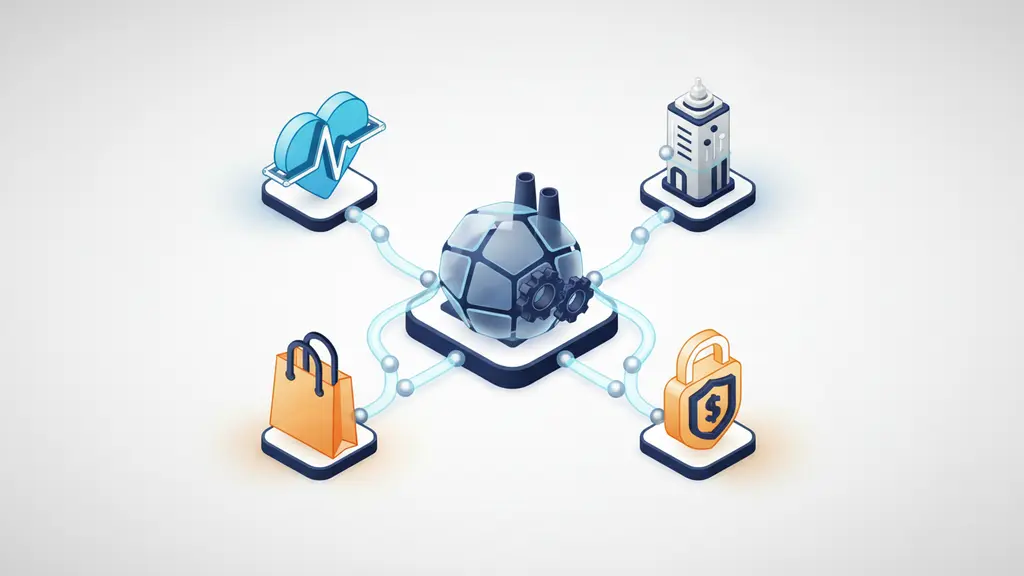
Mobile app trends aren’t one-size-fits-all—their impact varies by industry, unlocking unique opportunities and advantages.
Industry x Trend Matrix
| Industry | Top Trends Impacting | Example Use Case |
|---|---|---|
| Healthcare | AI, IoT, Security | Remote patient monitoring and secure health records |
| Retail | AR/VR, Instant Apps, AI | Virtual try-ons, data-driven recommendations |
| Finance | Security, Analytics, Touchless UI | Biometric logins, real-time fraud detection |
| Government | PWAs, Accessibility, Sustainability | Digital citizen portals, mobile voting |
| Education | XR, Cloud-Native | Interactive learning, remote classrooms |
| Manufacturing | IoT, 5G | Real-time equipment tracking, augmented maintenance |
Case Study:
A major hospital system integrated IoT-enabled wearables and AI analytics, reducing emergency response times and improving patient outcomes.
Emerging Sectors:
Agriculture embraces IoT-powered monitoring via mobile, while logistics firms use cloud-native apps for supply chain tracking.
Which App Development Model Wins in 2026? (Native vs. Cross-Platform vs. PWAs vs. Instant)
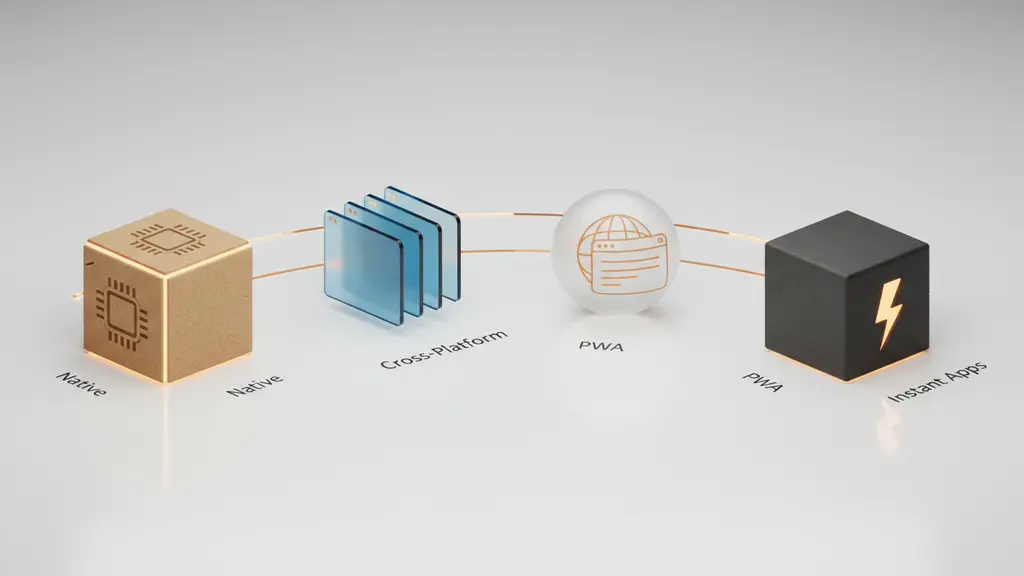
Selecting the right app development approach in 2026 means weighing benefits, trade-offs, and best-fit scenarios for your goals.
Development Model Comparison Table
| Model | Definition | Pros | Cons | Best For |
|---|---|---|---|---|
| Native | Built specifically for iOS/Android | Maximum performance, deep hardware access | Higher dev costs, longer time-to-market | Performance-critical apps |
| Cross-Platform | Single codebase for multiple OS | Faster dev, wider reach | Limited access to device features | MVPs, budget-conscious |
| PWAs | Web apps, installable on device | No install, cross-platform, offline | Limited hardware integration | Broad reach, public services |
| Instant Apps | Native segments run without install | Try-before-buy, fast adoption | Android-centric, limited features | Promotions, onboarding |
Trends indicate:
Hybrid and cross-platform models are now viable for most mainstream applications, while PWAs and instant apps are ideal for mass outreach and lightweight use cases.
Native remains essential for advanced graphics, AR/VR, and device-intensive solutions.
How Can You Prepare for the Future of Mobile Apps?
To stay competitive, organizations should proactively assess, skill up, and invest for the next wave of mobile innovation.
Action Checklist for Future-Proofing Mobile Apps
- Audit Teams & Skills:
Identify gaps in AI, UX/UI, security, and cloud expertise—train or hire as needed. - Invest in Emerging Platforms:
Experiment with low-code, AI toolkits, and progressive web technologies. - Design for Privacy & Sustainability:
Embed privacy by design and efficient coding practices from project inception. - Build Scalable, Modular Architectures:
Prioritize cloud-native, serverless, and cross-platform compatibility. - Monitor Regulatory Changes:
Stay updated with evolving privacy, accessibility, and environmental standards. - Foster Continuous Learning:
Follow industry reports from IBM, Gartner, Statista, and trusted analyst sources.
FAQs: Your Mobile App Development Trend Questions Answered
What are the top mobile app development trends for 2026?
The leading trends are AI and machine learning integration, low-code/no-code platforms, IoT-enabled applications, cloud-native and serverless architectures, 5G experiences, AR/VR/XR, PWAs and instant apps, touchless UIs, advanced app security, and sustainable development.
How will AI and machine learning impact mobile app development?
AI and machine learning power advanced personalization, instant automation, smart analytics, and more responsive user experiences—enabling smarter, more competitive applications.
What is the difference between PWAs, native, and instant apps?
PWAs run in browsers with app-like features; native apps are built for specific OS and offer full performance; instant apps let users access select features without full install, mainly on Android.
Why is sustainability important for mobile app development?
Sustainable development reduces energy, storage, and networking demands, helping organizations meet ESG targets and align with consumer and regulatory expectations.
How does 5G technology enhance app user experiences?
5G dramatically lowers latency and boosts bandwidth, enabling richer media, real-time AR/VR, and faster response in areas like healthcare and entertainment.
What security practices should mobile apps follow in 2026?
Key practices include end-to-end encryption, “privacy by design,” biometric authentication, secure APIs, and timely compliance with data protection laws.
Are low-code/no-code platforms suitable for complex apps?
Low-code/no-code platforms excel in rapid prototyping and simpler workflows; while they’re evolving, high-complexity or performance-intensive apps may still require traditional development.
How can businesses implement IoT in their mobile apps?
Successful IoT implementation requires robust device integration, real-time data processing, and strong security measures to protect user information and device controls.
What industries benefit most from AR/VR mobile applications?
Retail, education, healthcare, training, and real estate are among the top sectors leveraging AR/VR for immersive and interactive experiences.
What are touchless UIs and how are they used in modern apps?
Touchless UIs enable interaction via voice, gestures, or biometrics—used in apps requiring hands-free use or advanced accessibility, such as in cars, healthcare, or smart home environments.
Sources & Expert Insights: Who Drives This Analysis?
This report synthesizes expert perspectives from leading authorities.
- IBM: Industry research on application modernization, cloud-native, and security
- Appinventiv: Mobile app market and trend adoption studies
- Gartner & PwC: Digital transformation, low-code, and sustainability reports
- Statista: 5G, IoT, and AR/VR adoption figures
- Grand View Research: Data on wearable technology and device proliferation
Expert Voices:
– IBM Cloud Architect: “Cloud-native models are no longer optional—they’re an enterprise imperative.”
– Appinventiv Trend Analyst: “By 2026, AI-driven automation and low-code tools will be central to mobile strategy.”
– PwC Digital UX Specialist: “Touchless, accessible design is reshaping the future of mobile interaction.”
For continued insights, explore further reading from IBM Institute for Business Value, Appinventiv, Gartner, Statista, and Grand View Research.
Conclusion
Staying ahead of mobile app development trends is essential for anyone aiming to lead or innovate in a digital-first world. By investing in AI, prioritizing user privacy, adopting scalable development models, and embracing sustainable practices, organizations can create future-ready mobile experiences that delight users—and drive business growth. Start today: assess your current capabilities, experiment with emerging solutions, and keep learning from industry experts.
Key Takeaways
- Mobile app trends in 2026 center on AI, low-code, IoT, cloud-native, 5G, and sustainable practices.
- Trend adoption drives user retention, innovation, and competitive advantage.
- Industry impacts vary—healthcare, retail, finance, and government can all realize transformative gains.
- Choose development models based on project scale, user needs, and technology readiness.
- Future-proof your mobile strategy through proactive upskilling, investment, and regulatory awareness.
This page was last edited on 13 February 2026, at 9:27 am

Start a conversation with our team to solve complex challenges and move forward with confidence.