
Economical approaches to implement AI strategy are becoming essential as businesses face increasing pressure to innovate while managing tight budgets. While artificial intelligence was once viewed as a capability reserved for large enterprises with extensive resources, recent advances in open source tools, cloud based AI services, and flexible deployment models have made AI far more accessible to organizations of all sizes.
The real challenge is not whether AI can be adopted affordably, but how to implement it in a way that delivers measurable value without unnecessary complexity or cost. Many organizations hesitate because of concerns around investment, talent, and infrastructure, yet practical and cost efficient pathways now exist to overcome these barriers.
This guide presents a structured, step by step approach to building an economical AI strategy that balances cost control with innovation. By focusing on targeted use cases, scalable technologies, and responsible governance, businesses can adopt AI in a sustainable way and remain competitive in an increasingly AI driven landscape.
What Are the Most Economical Approaches to Implement an AI Strategy?
Businesses looking to implement AI on a budget can use eight core approaches, each balancing affordability, scalability, and practical business value. Here’s a quick reference list:
| Approach | Pros | Cons |
| 1. Align AI with business objectives | Focuses investment, ensures ROI | Requires clear goal-setting |
| 2. Leverage open-source AI tools | Lower upfront cost, high flexibility | May need technical expertise |
| 3. AI-as-a-Service (AIaaS) | Fast deployment, pay-as-you-go pricing | Ongoing costs, vendor lock-in risk |
| 4. Pre-trained AI models | Speeds up development, saves on training | May require customization |
| 5. Pilot projects & incremental rollout | Minimizes risk and wasted spend | May slow long-term rollout if too conservative |
| 6. Outsourcing vs. in-house | Flexible, fills skills gaps quickly | Hidden costs, IP and data considerations |
| 7. Affordable AI talent-building | Grows capability internally, lasting value | Training takes time; limited short-term |
| 8. Data quality & governance | Prevents waste, increases AI effectiveness | Initial audit/setup can take effort |
| 9. Grants & incentives | Directly offsets costs | Competitive application process |
Each step is covered in detail with action lists, toolkits, and real-world examples in the sections below.
Why Economical Approaches To Implement AI Strategy Matter For Business Success
Investing in economical AI strategies delivers better ROI, enables businesses to compete in crowded markets, and helps prevent costly implementation mistakes.
Cost-effective AI offers:
- Faster payback and lower total cost of ownership
- Reduced risk of project failure due to overspending
- The ability to test, learn, and scale AI solutions incrementally
The pitfall of over-investing in complex, unproven AI projects is real—according to Gartner, as many as 85% of AI projects fail to deliver business results, often due to unclear goals and runaway costs. Avoid this with a practical focus and measured investment.
Common budget pitfalls to avoid:
- Chasing hype over business value
- Rushing into large custom AI builds
- Underestimating data quality requirements
- Overlooking available grants or service models
Step 1: Align AI Strategy With Specific Business Objectives

Effective AI planning begins by linking the technology to clear, measurable business outcomes—saving both time and money.
Start with questions:
- What are the specific pain points you want to solve with AI?
- How will success be measured—by revenue growth, efficiency gains, or risk mitigation?
Examples of objective statements:
- Retail: “Increase online conversion rate by 10% with AI-powered product recommendations.”
- Healthcare: “Automate appointment reminders to reduce no-shows by 20%.”
- Finance: “Flag potentially fraudulent transactions in real time to reduce losses by $100K annually.”
Framework for this step:
- Map company goals to potential AI use-cases
- Prioritize based on expected impact and cost
- Set KPIs and a realistic timeline
Step 2: Leverage Open-Source AI Tools to Minimize Upfront Costs
Open-source AI tools provide powerful, industry-proven frameworks for implementing AI at minimal cost, making them ideal for businesses on a budget.
Leading open-source AI tools:
| Tool | Best Fit For | Primary Strength | Industry Example |
| TensorFlow | Machine Learning models | Scale, library support | Healthcare, Retail |
| PyTorch | Research, rapid prototyping | Flexibility, community | R&D, Education |
| Scikit-learn | Data analysis/classification | Simplicity, APIs | E-commerce, SMBs |
| spaCy | Natural Language projects | Fast, practical NLP | Customer Service, Martech |
When to use open-source tools:
- You have (or can access) basic data science skills
- Rapid prototyping or proof-of-concept projects
- Desire for flexibility over vendor lock-in
Mini-Case: Small Business Success
A regional retailer used Scikit-learn to predict inventory needs with no software licensing cost. With free tutorials and a part-time data analyst, they cut overstock by 15% within six months.
Risks to consider:
- Limited dedicated support (typically community-driven)
- May require development or customization resources
Checklist:
- ✓ Align tool selection with your needs
- ✓ Review support/documentation
- ✓ Pilot before committing to scale
Step 3: Adopt AI-as-a-Service (AIaaS) Solutions for Scalable, Pay-as-You-Go AI
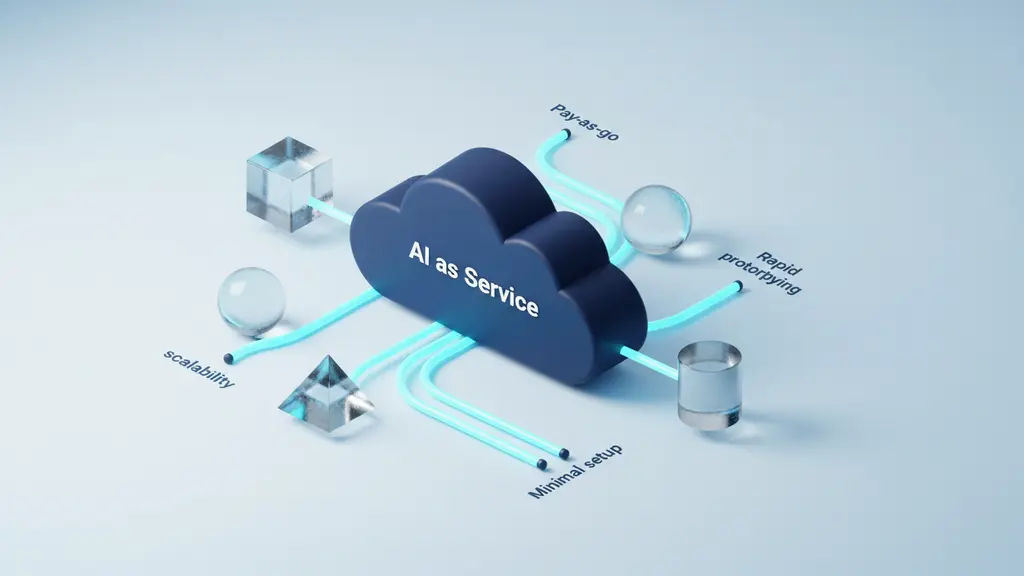
AIaaS platforms offer cloud-based AI models and services you can rent as needed, eliminating the need for costly infrastructure or deep technical skills.
Top AIaaS providers (2024 snapshot):
| Platform | Pricing Model | Key Capabilities | Strengths |
| AWS AI Services | Usage-based | Vision, speech, predictions | Global reach, security |
| Google Cloud AI | Usage-based | NLP, vision, AutoML | Pre-trained models, UX |
| Microsoft Azure | Pay-as-you-go | Cognitive services, ML | Enterprise integration |
| IBM Watson | Subscription/usage | Chatbots, language, forecasting | Customization |
Why choose AIaaS?
- Minimal setup—no servers to maintain
- Rapid prototyping—test ideas instantly
- Clear, predictable pricing as you scale
Potential drawbacks:
- Data residency/security concerns
- Vendor lock-in (switching providers can be complex)
Cost Comparison Example:
Building and maintaining an in-house AI chatbot might require $20K+ initial investment. An AIaaS chatbot (like Google Dialogflow) can start at under $50/month with no upfront technical build.
Step 4: Use Pre-Trained AI Models to Accelerate Deployment and Reduce Development Costs
Pre-trained models offer ready-to-use AI functionality, slashing both development time and costs for common tasks like language processing or image recognition.
Sample Directory: Pre-Trained AI Models
| Model | Use Case | Industry Example |
| BERT | Text understanding/NLP | Customer support |
| GPT (OpenAI) | Content generation/chat | E-commerce, support bots |
| ResNet | Image classification | Healthcare, manufacturing |
| Dialogflow | Chatbot conversations | Retail, travel |
When are pre-trained models ideal?
- Standard use-cases (translation, sentiment analysis)
- Rapid deployment needs
- Limited data or AI expertise in-house
When customization is needed:
- Highly domain-specific requirements
- When model “out-of-the-box” accuracy isn’t enough
Example:
An e-commerce company used Google Vision (pre-trained) to tag thousands of product images, saving weeks of manual labor.
Step 5: Start with Pilot Projects and Incremental Rollouts to Control Costs

Launching AI with small-scale pilots allows you to test value and minimize risk before wider deployment—key to economical AI.
How to design a cost-effective AI pilot:
- Identify a high-impact, low-risk use case (e.g., automating invoice processing)
- Limit scope—start with a single department, channel, or product
- Set clear KPIs—define what success looks like in 60–90 days
- Use affordable tech (open-source or AIaaS)
- Monitor results, adjust, and decide whether to scale
Best practices:
- Involve business users early to ensure buy-in
- Pilot first, then document lessons and ROI before expanding further
- Use a pilot project canvas for focus
Mini-case:
A healthcare practice piloted AI appointment scheduling using Azure AI, reducing administrative time by 20% with less than $1,000 invested upfront.
Step 6: Outsourcing vs. In-House AI Development: Which Is More Economical?
Choosing between outsourcing and building in-house can determine both cost and agility of your AI project. Each path fits different business contexts.
Comparison Table: Outsourcing vs. In-house
| Metric | In-house | Freelancers | AI Agency/Consultancy |
| Upfront Cost | High ($30K+) | Moderate ($5–15K) | Moderate–High ($10–50K+) |
| Speed to Start | Slow (hiring/training) | Fast (onboarding) | Fast (ready teams) |
| Flexibility | High (control) | Variable | Medium |
| Ongoing Support | High (retained staff) | Low (by project) | Contractual |
| IP Control | High | Needs NDAs | Typically covered |
When to outsource:
- Lacking in-house expertise or resources
- Need fast prototyping or scaling up
How to vet affordable partners:
- Request references and see portfolio
- Clarify IP, data security, and ongoing support terms
- Compare fixed vs. variable pricing
Legal considerations:
Always ensure vendor agreements address data privacy, compliance (e.g., GDPR), and intellectual property.
Step 7: Building or Augmenting AI Talent on a Budget
Growing internal AI skills or leveraging affordable external talent can offer long-term value and operational flexibility.
Affordable talent-building strategies:
- Free or low-cost AI courses: Coursera (Google/Microsoft AI), edX, DataCamp, Udemy
- Low-code/no-code AI platforms: Microsoft Power Platform, Google AutoML, DataRobot
- Gig platforms: Upwork, Toptal, Fiverr (task-based, fractional AI consultants)
Key actions:
- Encourage internal upskilling with sponsored online courses
- Use low-code tools to empower non-technical staff to prototype AI solutions
- Hire freelance AI experts for specific short-term needs without long-term payroll impact
Step 8: Ensuring Data Quality & Governance for Efficient AI Strategy
Good data quality and governance are essential for AI success—and prevent wasted investment and inaccurate results.
Simple process for data readiness:
- Conduct a basic data audit: Where is your data stored? What format? Is it consistent?
- Clean data: Use free tools (OpenRefine, Trifacta Wrangler, AWS DataBrew)
- Set minimum viable data policies: Who owns the data, who can access, and how is it updated?
Simple Data Quality Checklist:
- ✓ Data location and ownership identified
- ✓ Inconsistencies/duplicates cleaned
- ✓ Access and security policies in place
A one-day audit and cleanup can dramatically improve project outcomes, especially when budgets are tight.
Step 9: Explore Grants, Funding, and Incentives for Cost-Effective AI Adoption
Numerous grants, government programs, and industry incentives exist to help offset AI adoption costs—yet most businesses miss them.
2024 Snapshot: AI Funding Sources
| Region | Program Name | Description |
| USA | SBIR/STTR | Small business R&D funding |
| EU | Horizon Europe | Innovation & digital transformation |
| APAC | Singapore IMDA AI Grant | AI for SMEs |
| Global | Google AI for Social Good, AWS AI ML Grants | Nonprofit & innovation grants |
How to apply:
- Review eligibility and focus areas (industry, project stage)
- Prepare a concise project plan with clear impact metrics
- Use local/regional small business development agencies as guides
Industry Case Examples: What Works for Small, Medium, and Large Businesses
Real-world examples highlight practical, scalable results at every business size.
Small Business (Retail)
• Situation: Local shop implemented AI-based inventory forecasting (Scikit-learn, free)
• Result: Inventory costs dropped by 15%, breakeven in 3 months
Medium Business (E-Commerce)
• Situation: Adopted pre-trained NLP for customer email routing (Microsoft Azure)
• Result: 30% faster response time, increased customer satisfaction, under $2,000 setup
Large Enterprise (Healthcare)
• Situation: Piloted AI diagnostics with AWS AIaaS and external agency support
• Result: Improved diagnostic accuracy, returned $100K annual savings, enabled grant-funded expansion
Comparison Table: Cost, Complexity & Best Use Cases for Each Approach
Use this table to compare approaches and choose the one matching your needs and constraints:
| Approach | Upfront Cost | Time to Deploy | Complexity | Ideal Use Case |
| Open-source tools | Low | Medium | Medium | Skilled team, need customization |
| AIaaS | Low–Medium | Fast | Low | Rapid, scalable, no tech infrastructure |
| Pre-trained models | Low | Fast | Low | Standard tasks, quick wins |
| Pilot projects | Low | Fast | Low-Medium | Test ideas, control budget |
| Outsourcing | Variable | Fast | Low-Medium | Skills gap, fast start |
| Internal upskilling | Low–Medium | Slow-medium | Medium | Long-term capability building |
| Grants/funding | None (offset) | Medium | Medium | Innovation, R&D, non-profits |
| Data governance | Low | Medium | Medium | Any data-dependent project |
FAQ: Common Questions on Affordable AI Implementation
What are the cheapest ways to implement AI?
The most cost-effective ways include using open-source AI tools, leveraging pre-trained models, and testing ideas with pilot projects or AI-as-a-Service platforms.
Can small businesses afford AI?
Yes, affordable artificial intelligence is within reach. Many solutions—such as open-source software and cloud-based AIaaS—offer pay-as-you-go pricing suitable for limited budgets.
Is AIaaS really cost effective?
AI-as-a-Service reduces upfront costs, streamlines implementation, and makes it easy to scale, especially for companies without large development teams.
How do I pick the best open-source tool?
Select based on your business need, available skills, and active community support. TensorFlow and Scikit-learn are great starting points for most use cases.
Is it better to outsource AI or build in-house?
Outsourcing is faster and suits skills gaps, but building in-house offers longer-term value and control. Many firms combine both by outsourcing pilots and then hiring or training staff as they scale.
How do I calculate ROI on AI projects?
Track direct cost savings, error-rate reductions, or revenue uplift against your initial and ongoing investment. ROI = (Net Benefit / Total Cost) × 100%.
Are there grants for AI implementation?
Yes. Programs like US SBIR/STTR, EU Horizon Europe, and various tech vendor grants offer funding to offset AI project costs.
What common mistakes inflate AI costs?
Lack of clear objectives, poor data quality, skipping pilots, and over-investing in custom solutions before proving business value are the top pitfalls.
Conclusion: Prosper with Economical AI—Take Your First Step Today
Affordable artificial intelligence is no longer a distant promise—it’s a practical imperative for organizations of every size. By following this economical AI strategy framework, you can unlock new efficiencies, drive innovation, and compete on a global scale—all without stretching your budget beyond its limit.
Begin by aligning your AI goals to your business priorities, then leverage cost-saving technologies and funding programs. Download our toolkit, use the fillable checklists, and take your first, low-risk step toward an AI-powered future.
Key Takeaways
- Economical AI strategies focus on delivering measurable business value while controlling costs.
- Open-source tools, AIaaS platforms, and pre-trained models make AI accessible and affordable.
- Start with small-scale pilots before scaling, and prioritize data quality for ongoing efficiency.
- Outsourcing and upskilling are cost-effective options for expanding AI capabilities.
- Tap into grants and funding to maximize ROI and minimize risk during AI adoption.
This page was last edited on 9 February 2026, at 10:52 am

Start a conversation with our team to solve complex challenges and move forward with confidence.