
Outsourcing software development can unlock global talent and speed up your projects—but only if you get the process right. Many businesses face spiraling costs, poor code quality, and even vendor lock-in when outsourcing goes wrong. In 2026, as the global shift toward distributed teams accelerates, mastering software outsourcing is more critical than ever for startups, SMEs, and enterprises.
This comprehensive guide will walk you through how to effectively outsource software development, providing step-by-step frameworks, model comparisons, risk controls, and real-world tips. By the end, you’ll know exactly how to choose the right model, select the best region and partner, manage delivery, and avoid common failures—arming your organization for outsourcing success.
What Are the Main Software Outsourcing Models and When to Use Them?
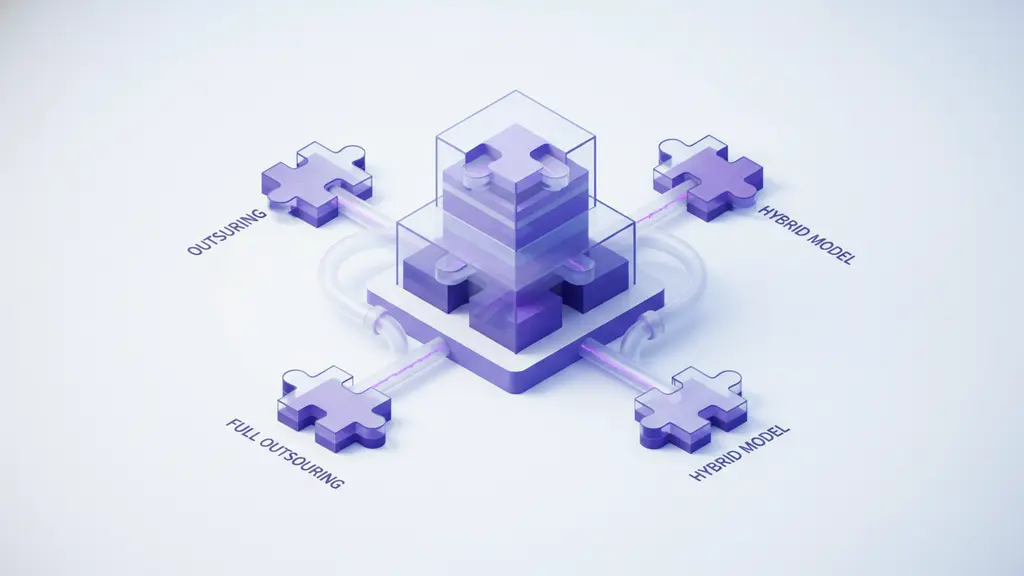
There are several core software outsourcing models—full, partial, hybrid, and regional (nearshore, offshore, onshore)—each suited to different business needs. Choosing the right model impacts cost, quality, project control, and risk.
Key Software Outsourcing Models:
| Model | Definition | Pros | Cons | Best For |
| Full Outsourcing | Provider handles the entire project | Turnkey solution, less overhead | Less control, higher risk | SMBs, non-tech firms |
| Partial Outsourcing | Provider handles specific modules/processes | Flexibility, in-house integration | Extra management overhead | Startups, tech firms |
| Staff Augmentation | External devs integrated into your team | Greater control, quick scaling | Variable productivity | Scale-ups, agile teams |
| Dedicated Team | A handpicked team works full-time on your project | Domain expertise, aligned incentives | Higher cost, variable management | Large projects, enterprises |
| Managed Services | Provider maintains/supports your systems | Predictable spending, SLAs | Less innovation capacity | Maintenance, legacy apps |
| Hybrid/Blended | Mix of above (e.g., nearshore PM, offshore devs) | Customized fit | Coordination complexity | Complex/global orgs |
Regional Approaches
- Onshore: Outsource to providers in your country—more expensive, high trust.
- Nearshore: Nearby countries share time zones/culture, mid-range cost.
- Offshore: Distant countries, often lower cost but require greater oversight.
For example, a U.S. startup may use partial outsourcing (offshoring the MVP frontend to Ukraine, while building the backend in-house) to balance speed and code control.
Mini-case study: A fintech startup partially outsourced its mobile app UI to a nearshore team in Mexico, ensuring agile alignment and easy communication, while keeping sensitive backend logic with its internal developers for IP protection.
Visual tables and downloadable checklists can streamline your decision process. Select the model and region that align best with your budget, technical oversight needs, and delivery timelines.
How Do You Outsource Software Development Effectively? (Step-by-Step Framework)

Effectively outsourcing software development follows a six-step framework: clarifying goals, vetting vendors, rigorous contracting, setting governance, onboarding, and knowledge transfer. Each phase de-risks your project and sets clear expectations.
Step 1: Define Goals, Scope, and Internal Capabilities
Clearly defining what to outsource—and why—lays the foundation for project success.
- Specify your business goals and success metrics.
- Determine which parts of the project stay in-house (e.g., strategic logic, IP-sensitive modules).
- List required skills, preferred tech stacks, and timelines.
- Prepare a project scoping checklist that covers user stories, deliverables, integration points, and acceptance criteria.
Step 2: Research, Shortlist, and Qualify Providers
Shortlist vendors with the right expertise and a proven track record.
- Research using platforms like Clutch, GoodFirms, and peer recommendations.
- Evaluate providers on domain expertise, security posture, cultural alignment, and communication skills.
- Use a vendor evaluation checklist noting attributes like previous client testimonials, tech stack match, and reference projects.
- Consider regional factors (English proficiency, time zone overlap).
Step 3: Issue RFI/RFP and Score Responses
A well-crafted RFP clarifies expectations and makes vendor selection measurable.
- Request information on previous work, staffing, methodologies, security, and client references.
- Use an evaluation matrix scoring technical approach, proposed timeline, pricing, and transparency.
- Prefer respondents who challenge assumptions or suggest improvements.
Step 4: Negotiate Contracts and Legal Safeguards
Ironclad contracts protect your IP and ensure your interests.
- Specify IP ownership, NDA terms, code repository access, and delivery milestones.
- Choose contract types:
- Time & Materials: Flexible, but cost risk is higher.
- Fixed Price: Predictable spend, risky for scope changes.
- Target Cost: Incentivizes efficiency, aligns incentives.
Ensure clauses for right-to-audit, exit, and minimum performance standards.
Step 5: Set Up Project Governance & Communication Loops
Strong governance structures reduce risk of misalignment or delays.
- Assign responsible roles (project owner, scrum master, delivery lead).
- Choose collaboration tools (Slack, Jira, GitHub, Asana).
- Set cadence for reporting, quality gates, demos, and escalation paths.
Step 6: Onboarding & Knowledge Transfer
Smooth onboarding and knowledge transfer prevent costly handover gaps.
- Provide documentation, access credentials, and coding standards.
- Arrange initial walkthroughs, Q&A sessions, and process alignment meetings.
- Define access levels and change management protocols.
How to outsource software development effectively:
1. Define project goals and scope.
2. Assess internal capabilities and needs.
3. Shortlist qualified outsourcing providers.
4. Issue RFP and evaluate responses.
5. Secure contracts and IP protections.
6. Set governance and reporting loops.
7. Onboard provider and transfer knowledge.
What Are the Keys to Managing an Outsourced Software Project Successfully?
Proactive management, transparent communication, and rigorous quality assurance are essential to outsourced project success. These practices reduce miscommunication, missed deadlines, and poor outcomes.
Communication & Collaboration Best Practices
Clear, consistent communication keeps teams aligned and issues visible.
- Use synchronous tools (Zoom, Slack) for quick problem-solving; asynchronous (email, project boards) for documentation and daily tracking.
- Establish escalation paths and decision-makers.
- Share a weekly reporting template covering progress, blockers, KPIs, and next steps.
Quality Assurance, Testing, and Progress Tracking
QA ensures your deliverables meet expectations and remain bug-free.
- Implement bug-tracking (e.g., Jira), code reviews, and regular releases.
- Use remote QA tools and peer review checklists to formalize standards.
- Track sprint/milestone progress objectively (burn-down charts, story points).
Security, Remote Access & IP Protection
Safeguard your source code and sensitive information.
- Apply role-based system access, VPNs, and multi-factor authentication.
- Mandate strict NDA compliance and maintain code in centrally-managed repositories (GitHub, GitLab).
- Consider source code escrow for mission-critical projects.
Handling Time Zone & Cultural Differences
Plan for distributed collaboration to maximize productivity and avoid misunderstandings.
- Maximize daily overlap hours by choosing compatible regions.
- Recognize local holidays and cultural norms in planning.
- Encourage documentation and use “working agreements” for distributed teams.
How Can You Optimize Costs and Choose the Best Outsourcing Region?

Optimizing your outsourcing cost and region selection depends on understanding cost models, comparing regional advantages, and tracking hidden fees.
Software Outsourcing Cost Models Explained
- Time & Materials: Pay for actual hours spent—best for dynamic, evolving projects.
- Fixed Price: Pay for clearly defined deliverables—ideal for projects with static requirements.
- Hybrid: Combine both for core/build and support/maintenance phases.
When to use each:
- Use Time & Materials for R&D, MVPs, or agile builds.
- Use Fixed Price for well-scoped, low-change projects.
- Hybrid fits complex builds that later transition to maintenance.
2025/2026 Regional Price & Talent Analysis
| Country | Avg. Hourly Rate (USD) | Key Strengths | English Level | Timezone Overlap with US |
| Poland | $40–70 | High quality, EU standards | High | Moderate |
| Ukraine | $35–60 | Strong tech talent, affordability | Moderate-High | Moderate |
| Brazil | $30–55 | Good overlap, innovation | Moderate | High |
| Mexico | $30–50 | Proximity, bilingual teams | High | High |
| India | $25–50 | Large talent pool, competitive | Moderate | Low |
| Vietnam | $20–45 | Fast-growing, cost-effective | Moderate | Low–Moderate |
- Nearshore: Mexico, Brazil — Cost-effective, strong US time zone match.
- Offshore: Ukraine, India, Vietnam — Lower cost, more management overhead.
- Eastern Europe: Poland, Ukraine — Balanced rates, high quality, strong English.
Note: Rates are indicative; verify current wage and inflation data for your timeframe and needs.
How to Budget and Track Costs
- Account for hidden overhead (management time, onboarding, infrastructure).
- Use milestone-linked payments and detailed invoices.
- Track spend vs. budget regularly to avoid overruns and scope creep.
For an IT outsourcing cost comparison, build a spreadsheet including hourly/daily rates, currency risk, onboarding costs, and communication overheads by region.
What Are the Most Common Outsourcing Pitfalls—And How Can You Avoid Them?
Software development outsourcing carries risks like vendor lock-in, IP theft, communication breakdowns, and poor delivery. Awareness and safeguards are your best defense.
Top Outsourcing Pitfalls and Solutions:
- Vendor lock-in: Relying on undocumented code or proprietary tools; maintain codebase access, require documentation, and exit clauses.
- IP risks: Weak contracts or offshore jurisdictions; use strong NDAs, define IP transfer terms, and retain code repo access.
- Quality gaps: Infrequent reviews and vague specs; implement structured QA, acceptance tests, and milestone demos.
- Communication lapses: Timezone/cultural challenges; set regular stand-ups, reporting, and working agreements.
Mini-case: A SaaS company realized late that critical database logic was only accessible by the vendor; they resolved by enforcing a handover plan, code documentation, and knowledge transfer workshops, avoiding months-long delays.
Red Flags:
- Unwillingness to sign NDAs or disclose references
- Vague proposals, no code samples
- Lack of transparency in billing or progress
- Reluctance to give repository access
What’s Next? Emerging Trends in Software Development Outsourcing
The outsourcing landscape is evolving rapidly—driven by AI, new regulations, and shifts in preferred regions. Staying ahead of these trends ensures your outsourcing strategy remains effective.
Key Trends for 2025/2026:
- Generative AI: Vendors are offering AI-augmented coding, testing, and documentation, speeding up project cycles and reducing errors.
- Async Collaboration: More teams leverage asynchronous tools to minimize time zone barriers and boost developer productivity.
- Geographic Shifts: Latin America and Eastern Europe gain traction as nearshore/offshore favorites due to talent, cost, and geopolitical stability.
- Data Privacy & IP Law: Compliance with new data privacy rules (such as GDPR in Europe) and cross-border IP protection is non-negotiable.
- Remote/Hybrid Playbooks: Companies adopt frameworks tailored to remote-first, distributed development.
Tip: Ask providers about their implementations of AI/automation, compliance protocols, and experience in your preferred region for future-proof outsourcing.
Frequently Asked Questions About Software Development Outsourcing
What are the key steps to outsourcing software development effectively?
Begin by defining project goals, scoping what to outsource, and evaluating internal gaps. Research and shortlist qualified providers, issue a clear RFI/RFP, negotiate contracts for legal and IP protection, set up governance routines, and ensure thorough onboarding and knowledge transfer.
How do I retain control over my code and IP when outsourcing?
Ensure your contract includes clear IP ownership clauses, NDA terms, and mandates that all code reside in repositories you control. Regularly request code access, document handovers, and use code escrow if warranted.
What should I look for when selecting a software outsourcing partner?
Prioritize proven technical expertise, relevant domain experience, strong client references, transparent communication, and a collaborative culture. Use vendor checklists and evaluation matrices for objective comparison.
How do cost and quality vary by outsourcing region?
Regions differ significantly in cost, skill availability, and communication. Eastern Europe and Latin America often balance strong technical skills with moderate pricing, while Asian providers may offer lower costs but require more oversight. Review current market data for accuracy.
How can I protect my business from vendor lock-in?
Demand access to all code, documentation, and credentials during the project, insist on regular handovers, and include exit clauses in your contract. Avoid proprietary tools that tie you to one vendor.
What are the most common risks in outsourcing software development?
Core risks include loss of IP or data, poor code quality, misaligned expectations, communication barriers, and uncontrolled costs. These can be managed with diligent governance, contracts, and regular review checkpoints.
Which outsourcing contracts best protect my interests?
Choose contract types based on project size and risk: Fixed Price for clear scope, Time & Materials for flexibility, Hybrid for combined needs. Always secure strong legal terms around IP, NDA, milestones, and exit rights.
How do I monitor quality and progress in outsourced projects?
Implement regular code reviews, set up automated QA/testing, and require milestone-based reporting. Use collaboration tools (Jira, GitHub) and schedule weekly check-ins to maintain visibility and control.
What’s the difference between nearshoring and offshoring in software outsourcing?
Nearshoring refers to outsourcing to nearby countries with similar time zones and cultural overlaps, while offshoring involves distant countries, usually for cost savings but with greater management and communication challenges.
How to handle data security and confidentiality when outsourcing development?
Enforce strict NDAs and confidentiality agreements, limit access to sensitive data through role-based controls, and maintain centralized, auditable code repositories. Use secure VPNs and monitor for policy compliance.
Conclusion
Outsourcing software development can drive innovation and scalability—if approached strategically. By following a robust process for model selection, partner vetting, contracting, management, and continuous governance, you dramatically lower your risk of failure and unlock business value.
Key Takeaways
- Selecting the right outsourcing model and partner reduces risk and optimizes outcomes.
- A step-by-step process—from goal definition to onboarding—ensures clarity and success.
- Robust contracts, structured governance, and ongoing communication are essential for quality and IP protection.
- Regional cost and skill differences matter; leverage up-to-date analysis to maximize ROI.
- Proactively identify and manage risks to prevent pitfalls and build long-term vendor partnerships.
This page was last edited on 9 July 2026, at 11:09 am

Start a conversation with our team to solve complex challenges and move forward with confidence.