
Selecting the right fintech software development company is a high-stakes decision that shapes your product’s security, regulatory compliance, and competitive edge. In a rapidly evolving market, the difference between a trusted fintech vendor and a risky one can mean the success or failure of your business initiative. This guide delivers a clear step-by-step framework—packed with due diligence checklists and compliance insights—to help executives, CTOs, and product managers make confident, future-proof vendor choices.
Why Is Fintech Vendor Selection So Critical in 2026?
Choosing a fintech software development partner in 2026 demands extra scrutiny due to new regulations, emerging technologies, and greater security concerns. The fintech landscape is expanding across banking, lending, payments, and wealth management, raising the bar for trustworthy, agile technology partners.
Key Trends Shaping Fintech Vendor Selection
| Trend/Area | Impact on Vendor Choice |
| Digital Transformation | Need for nimble, cloud-native solutions |
| Regulatory Updates | New laws (e.g., DORA, PSD2) require documented compliance alignment |
| AI and Automation | Vendor expertise with emerging tools is critical |
| Open Banking | Providers must demonstrate secure API integrations |
| Security Expectations | SOC 2, PCI DSS, and GDPR now minimum requirements |
- 2024 Regulation Highlights: The EU’s Digital Operational Resilience Act (DORA) and global privacy frameworks (GDPR, CCPA) increase the risk and consequences of choosing non-compliant vendors.
- Technology Shifts: Buyers expect vendors to master cloud, AI, blockchain, and open banking APIs.
- Client Demands: Security, scalability, and rapid launch are must-haves, not add-ons.
Bottom line: A weak vendor puts you at risk for data breaches, regulatory penalties, and reputational loss. The stakes have never been higher, making a robust vendor evaluation process essential.
How to Choose a Trusted Fintech Software Development Company: Step-by-Step Framework

Selecting a reliable fintech development partner requires a structured process, not guesswork. The following step-by-step framework covers every crucial stage, from needs analysis to post-launch support.
Quick Preview: Vendor Selection Steps
- Define your business and technical requirements
- Evaluate the vendor’s portfolio and references
- Assess security and regulatory compliance capabilities
- Review technical expertise and development processes
- Evaluate communication, project management, and team fit
- Understand pricing models and review contracts
- Assess support, maintenance, and post-launch capabilities
Define Your Business and Technical Requirements
Start by specifying what you need from a fintech software development company—before talking to any vendors. Clear requirements reduce costly changes later and streamline your vendor evaluation.
Requirements Worksheet Checklist
- Business Goals: What does the product/platform need to achieve?
- Key Features: List must-have functionalities (e.g., digital wallet, KYC, open banking).
- Compliance Standards: PCI DSS, GDPR, SOC 2, DORA—identify all that apply to your market.
- Data Privacy Needs: Outline PII, payments, or financial data handling priorities.
- Budget/Timeline: Set your target spend and go-live date.
- Integration Points: Existing systems, APIs, or third-party platforms to connect with.
- Scalability Needs: Expected user growth and geographic coverage.
Tip: Documenting these details prepares you for productive RFPs and ensures vendor proposals match your actual priorities.
Evaluate the Vendor’s Portfolio and References
A fintech vendor’s past work signals their credibility, relevance, and ability to deliver outcomes in your niche. Go beyond flashy case studies: verify real-world success.
Portfolio Review Checklist
- Fintech Domain Experience: Has the vendor shipped products in payments, lending, regtech, etc.?
- Project Similarity: Experience with similar project scope, compliance, and scale.
- Depth vs. Breadth: Do they show deep, repeat work or superficial “logo shopping”?
- Reference Checks: Speak directly with past clients about project management, challenges, and outcomes.
- Public Recognition: Industry awards, partnerships, or analyst mentions can validate their authority.
Red Flags to Watch For:
- Unverifiable case studies or hidden client names
- Few or no client references in relevant sectors
- Overly broad portfolios lacking fintech or regulated-industry focus
Assess Security and Regulatory Compliance Capabilities
Security and compliance are non-negotiable in financial software. Your vendor must not only claim—but prove—alignment with leading standards.
Essential Compliance & Security Certifications
| Standard | What It Covers | Verification Steps |
| PCI DSS | Payment data security | Request up-to-date attestation |
| GDPR/CCPA | Data privacy (Europe/US) | Review privacy policies/controls |
| SOC 2 Type II | Overall data security/ops | Audit reports, current certification |
| ISO 27001 | Information security systems | View certificate, check expiry |
| DORA/PSD2 | EU-regulatory resilience | Request compliance matrix or roadmap |
- Request audit documentation: If a vendor can’t produce up-to-date certifications, treat this as a deal-breaker.
- Verify sector-specific expertise: KYC/AML, open banking, and DORA compliance may all apply.
Compliance Matrix Example:
| Area | Required? | Vendor Proof |
| PCI DSS | Yes/No | Cert #: ______, Expiry: |
| GDPR | Yes/No | Policies, DPO contact |
| SOC 2 Type II | Yes/No | Report date: ______ |
| ISO 27001 | Yes/No | Cert #: ______, Expiry: |
Review Technical Expertise and Development Processes
Your partner’s tech stack, processes, and transparency drive quality and delivery speed in fintech software development.
Technical Assessment Framework
- Core Tech Stack: Familiarity with Python, .NET, Java, Node.js, and relevant cloud platforms (AWS, Azure, GCP)
- Architecture Skills: Scalable microservices, APIs, and security practices
- Development Methodologies: Agile, Scrum, or DevOps for frequent delivery and transparent progress
- QA & Testing: Automated, manual, and security testing approaches (code coverage, pen tests)
- Code Quality Audits: Processes for peer reviews and documentation
- Process Transparency: How sprints, demo reviews, and releases are handled
| Technology | Experience (Y/N) | Example Project |
| Python/.NET/Java | ||
| AWS/Azure/GCP | ||
| Open Banking APIs | ||
| Blockchain/AI/ML |
Evaluate Communication, Project Management, and Team Fit
Strong technical skills are only half the equation. Effective communication and clear project management define successful fintech development partnerships.
Project Management Alignment Checklist
- Kickoff Process: Clarity on onboarding, stakeholder roles, and timelines
- Communication Tools: Slack, Jira, Teams, or preferred alternatives
- Defined Roles: Project manager, lead developer, QA, business analyst, and client liaisons
- Progress Tracking: Access to sprint boards, delivery milestones, regular demos
- Change Management: How requirements, scope changes, and risks are managed
- Cultural Fit: Alignment with your team’s work style and decision-making pace
Understand Pricing Models and Review Contracts
Transparent pricing and robust contracts prevent future disputes—and ensure you get what you pay for.
Common Pricing Models for Fintech Software Development
| Model | Best For | Pros | Cons |
| Fixed Price | Well-defined projects | Set costs, easier budgeting | Less flexibility, change fees |
| Time & Material | Evolving/scalable work | Flexibility, pay as you go | Budget can exceed forecast |
| Dedicated/Hybrid | Long-term, ongoing needs | Embedded team knowledge, agility | May require guaranteed spend |
Contract Review Checklist
- Scope Definitions: Clear deliverables and exclusions
- IP and Data Ownership: Who owns what post-project
- Service Level Agreements (SLAs): Response, fix, and update timelines
- Milestone Payments: Linked to objectively measurable outcomes
- Termination Clauses: Rights, responsibilities, and penalties for early exit
Assess Support, Maintenance, and Post-Launch Capabilities
Reliable support beyond launch protects your investment and enables future growth.
Post-Launch Support Checklist
- Support Levels: Email, chat, phone support; hours of availability
- SLA Guarantees: Maximum response and resolution times
- Upgrade Roadmap: Ongoing enhancements, compliance revisions
- Issue Escalation: Clear process for major bugs/security incidents
- Analytics & Monitoring: Ongoing performance/usage insights
Pro Tip: Ensure post-launch support capabilities are spelled out in both the proposal and contract.
What Are the Risks in Fintech Software Vendor Selection—and How Can You Mitigate Them?
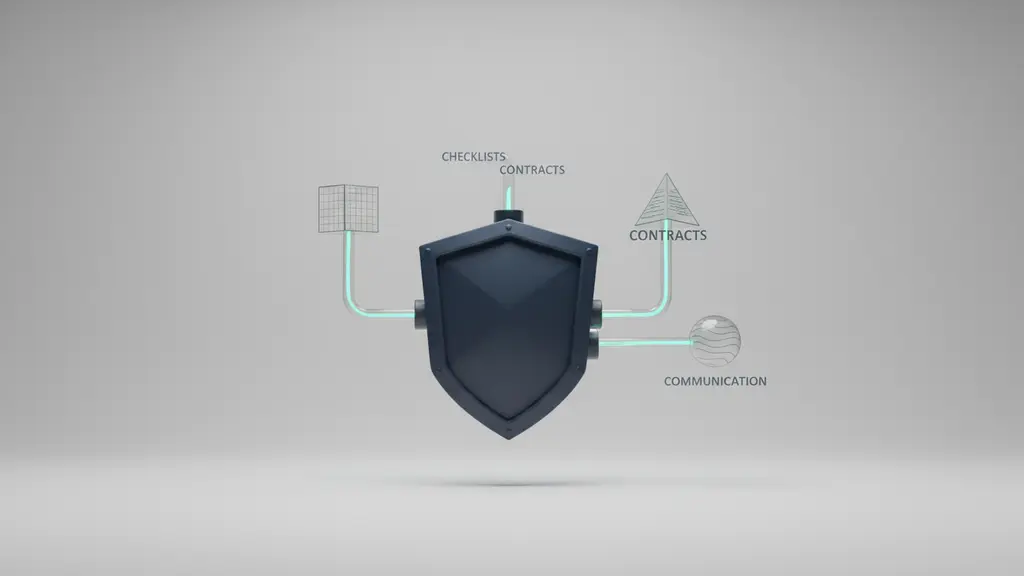
Choosing the wrong vendor can lead to miscommunication, compliance failures, security vulnerabilities, and project overruns. Proactive risk management is essential to avoid costly mistakes.
Common Risks and Mitigation Strategies
| Risk | Mitigation Action |
| Vague requirements | Use detailed scoping documents and checklists |
| Weak security/compliance | Require verifiable certifications/audits |
| Overpromising vendors | Insist on detailed, unpadded portfolios |
| Communication lapses | Establish clear communication protocols |
| Lack of post-launch support | Contractually define support SLAs/upgrades |
| Unclear contracts | Seek legal review, clarify all terms |
Vendor Red Flags
- Reluctance to provide references or documentation
- Unclear or opaque pricing
- Refusal to accept detailed SLAs or audit
- Minimal experience in regulated fintech sectors
Essential Questions to Ask Your Prospective Fintech Vendor

- Can you provide case studies and contactable client references in our fintech segment?
Reveals: Actual market experience—avoids unproven claims. - Which security and compliance certifications do you maintain (PCI DSS, SOC 2, ISO 27001, GDPR)?
Reveals: Security maturity and independent validation. - What is your incident response and issue escalation process?
Reveals: Readiness for real-world problems, including breaches. - What development methodologies do you use (Agile, DevOps), and how do you ensure code quality?
Reveals: Delivery reliability and best-practices alignment. - How will our teams collaborate and communicate throughout the project?
Reveals: Project transparency and cultural fit. - What is included in your support and maintenance agreement after launch?
Reveals: Commitment to long-term product stability. - Do you have experience with open banking or emerging tech (AI, Blockchain) integration?
Reveals: Innovativeness and capability on new platforms. - How do you handle contract changes, new requirements, or project pivots?
Reveals: Flexibility and transparency on scope changes. - What are your pricing model options, and what is excluded from typical quotes?
Reveals: Potential for cost overruns and hidden fees. - Can you share your most recent compliance audit reports?
Reveals: Up-to-date industry compliance.
Are You Ready to Choose? Fintech Vendor Self-Assessment Checklist
Before finalizing your decision, use this self-assessment to ensure thorough due diligence and internal buy-in.
Vendor Decision-Readiness Checklist
- Have we documented our business, technical, and compliance requirements?
- Did we evaluate at least 3 relevant vendor portfolios and references?
- Have we reviewed and verified security/compliance certifications?
- Did we assess the technical stack and development processes?
- Was project management and communication clarity established?
- Did we compare pricing models and review all contract terms?
- Are support and post-launch services contractually clarified?
- Have we identified and mitigated top vendor risks?
- Is there internal alignment among stakeholders on top vendor choice?
Sample Vendor Scorecard and Decision Matrix
A vendor scorecard brings objectivity to your shortlisting process, turning qualitative impressions into actionable scores.
Example Vendor Decision Matrix
| Criteria | Weight (%) | Vendor A | Vendor B | Vendor C |
| Relevant Portfolio | 20 | 8 | 7 | 9 |
| Compliance & Security | 20 | 9 | 7 | 8 |
| Technical Expertise | 15 | 7 | 8 | 8 |
| Team & PM Fit | 15 | 7 | 8 | 6 |
| Pricing & Contract | 15 | 6 | 8 | 7 |
| Post-Launch Support | 15 | 8 | 7 | 6 |
| Weighted Total | 100 |
In-house vs. Outsourced vs. Hybrid Fintech Development: Comparison Table
Evaluate which engagement model makes sense for your fintech project using this comparative table:
| Model | Cost | Control | Compliance Risk | Time-to-Market | Access to Expertise | Scalability |
| In-house | High (salaries, infra) | Full | Direct | Slow/medium | Limited (hiring lag) | Limited |
| Outsourced | Moderate/flexible | Lower | Must be verified | Fast | Broad/global | Easy |
| Hybrid | Medium | Shared | Shared | Fast | Best of both | Flexible |
When to Choose:
- In-house: Regulatory, IP, or cultural concerns demand tight control.
- Outsourced: Need to scale quickly, tap global expertise, or control costs.
- Hybrid: Require a core team in-house but want speed/expertise from partners.
Key Takeaways Table
| Decision Checkpoint | Action/Resource |
| Define Requirements | Use Requirements Worksheet (see above) |
| Portfolio & Reference Review | Portfolio Checklist, Client Calls |
| Security & Compliance Verification | Compliance Matrix, Audit Reports |
| Technical & Project Management Fit | Tech Stack Questions, PM Alignment Checklist |
| Pricing and Contract Clarity | Pricing Table, Contract Review Checklist |
| Post-Launch Support Confirmed | Support & SLAs, Ongoing Maintenance Plan |
| Decision Confidence | Self-Assessment & Scorecard |
Frequently Asked Questions about Choosing a Fintech Software Development Company
What are the most important criteria for choosing a fintech software development company?
The key criteria include relevant portfolio, verifiable security and regulatory compliance, technical expertise, transparent project management, robust support, and fair, clear contracts.
How can I verify a fintech vendor’s regulatory compliance?
Request up-to-date compliance audit reports (PCI DSS, ISO 27001, SOC 2, GDPR) and require proof such as certifications or SOC attestations; check references for real-world compliance experience.
What security standards should fintech developers follow?
Essential standards include PCI DSS (payment security), SOC 2 Type II (operation and data integrity), ISO 27001 (information security), and GDPR/CCPA data privacy as per your target geography.
How does outsourcing fintech software development compare to building in-house?
Outsourcing offers faster scaling, lower cost, and broader expertise access, while in-house teams provide greater control and potential ease in regulatory oversight; hybrid models combine both benefits.
What should be included in a fintech software vendor contract?
A solid contract should define the project scope, deliverables, SLAs, data/IP ownership, compliance requirements, milestones, pricing, and clear exit clauses to handle disputes or changes.
How do I manage ongoing support and maintenance after product launch?
Set expectations upfront by specifying post-launch support models, SLA timelines, issue escalation procedures, and provisions for upgrades or compliance updates in your contract.
Which programming languages and stacks are most used in fintech projects?
Fintech solutions often rely on Python, Java, .NET, Node.js, Go, and modern cloud platforms like AWS and Azure, with API-centric and secure architectures.
What are the typical risks when outsourcing fintech development?
Common risks include miscommunication, hidden costs, insufficient security or compliance, and lack of post-launch support; mitigate with strong contracts, references, and transparent vendor processes.
How do I assess a fintech software company’s portfolio?
Look for a proven track record in your segment, genuine client testimonials, relevant references, and tangible project examples similar to your needs.
What is the average cost of hiring a trusted fintech software development company?
Costs can range widely—from $50,000 to several million USD—depending on project complexity, compliance demands, chosen vendor location, and ongoing support needs. Always request detailed, itemized proposals.
Conclusion
Choosing a trusted fintech software development company isn’t just about ticking boxes—it’s about reducing risk, achieving compliance, and supporting your business vision with technical excellence. By following this guided framework—clarifying needs, vetting portfolios, verifying compliance, and insisting on transparency—you’ll make decisions with confidence.
Leverage the resources linked here for your next project, or reach out for personalized consultation on fintech development or vendor shortlisting. Ready to take the next step toward secure, scalable fintech innovation? Start with your requirements checklist and decision matrix today.
Key Takeaways
- A structured vendor evaluation process dramatically reduces delivery and compliance risks.
- Prioritize proven security, regulatory, and technical expertise in all candidates.
- Use checklists, scorecards, and self-assessments to make confident, transparent selections.
- Include robust contract terms and post-launch support for long-term success.
- Downloadable tools and expert resources are available for every stage of vendor selection.
This page was last edited on 9 July 2026, at 11:07 am

Start a conversation with our team to solve complex challenges and move forward with confidence.