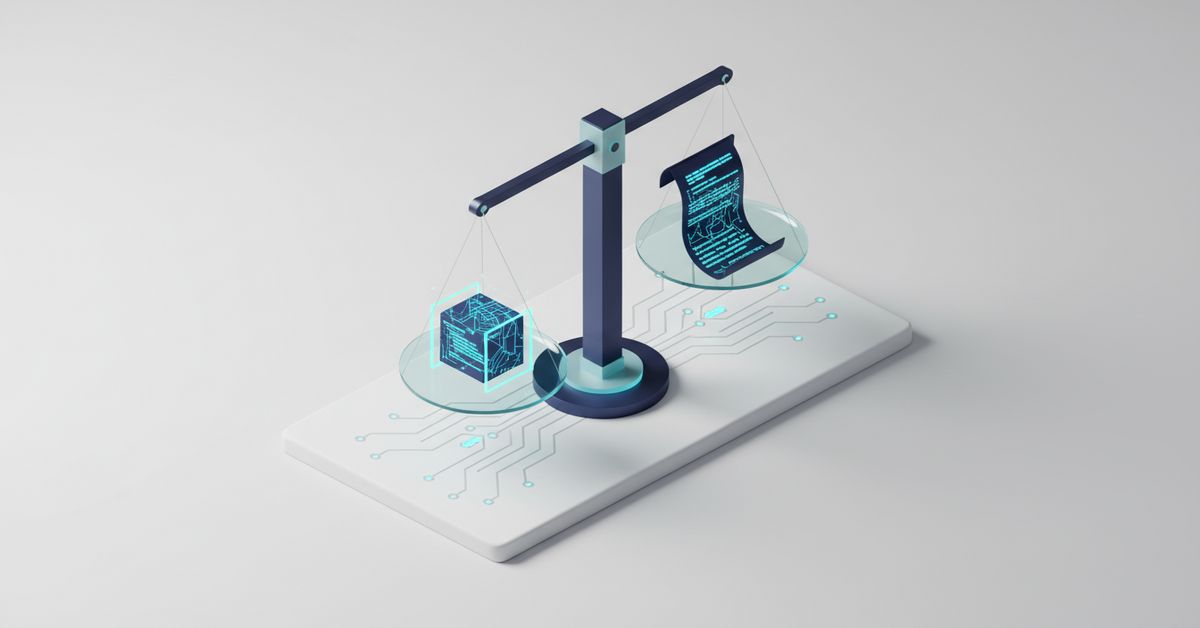
In 2026, global software outsourcing is booming, but so are the legal risks. As organizations push towards faster delivery and broader talent pools, the legal aspects of outsourced software development have never been more important. One overlooked contract clause, a misunderstanding of data laws, or a misclassified worker can cause massive financial and reputational damage.
This guide delivers a step-by-step legal risk playbook for business leaders, project managers, and legal advisors. You’ll find practical strategies, up-to-date compliance frameworks, and expert insights to help you avoid legal pitfalls and streamline even the most complex cross-border outsourcing projects. Master these fundamentals, and you’ll protect your company’s interests and build resilient, future-proof partnerships.
Top Legal Risks in Software Outsourcing 2026:
- Intellectual property (IP) loss or misuse
- Data privacy violations (GDPR, CCPA, new global laws)
- Enforceability of contracts across jurisdictions
- Worker misclassification and employment liabilities
What Are the Key Legal Aspects of Outsourced Software Development?
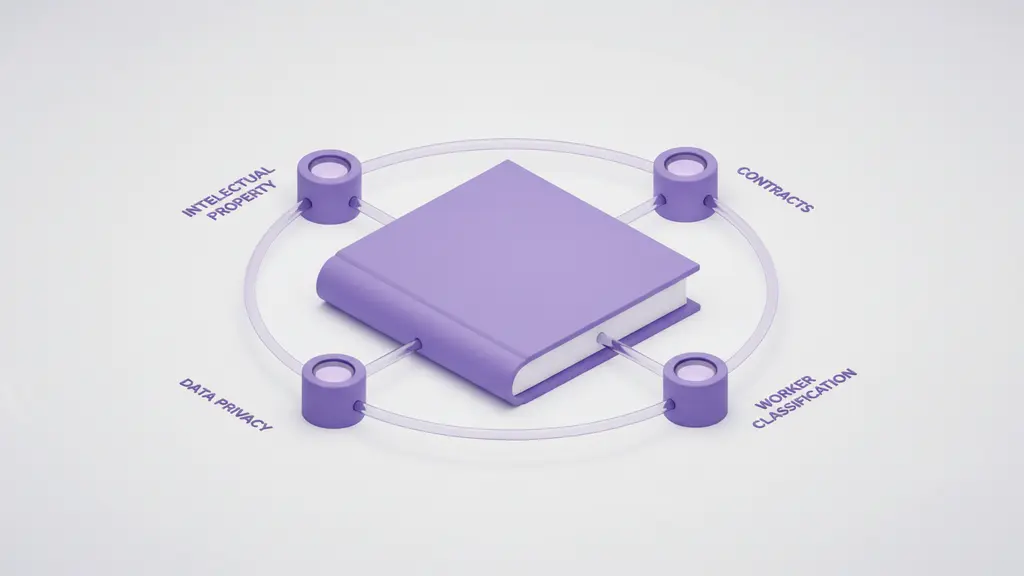
Safeguarding outsourced software projects requires a proactive focus on several core legal areas. Here are the top legal aspects you must address:
Key Legal Aspects Checklist:
- Intellectual Property (IP) Ownership: Clearly define who owns the code and creations.
- Data Protection & Privacy Compliance: Address GDPR, CCPA, and regional regulations.
- Confidentiality & NDAs: Protect sensitive information with robust agreements.
- Contractual Terms (SLAs, Liability): Set expectations, scope, and consequences for breaches.
- Jurisdiction & Dispute Resolution: Specify which laws apply and how conflicts will be resolved.
- Worker Classification: Accurately define workers’ roles (contractor vs. employee).
- Open Source & Code Contamination: Prevent unwanted dependencies or IP contamination.
- Vendor Due Diligence: Rigorously vet and monitor outsourcing partners.
Addressing these areas upfront can dramatically reduce your legal and operational risks.
How Do You Protect Intellectual Property (IP) in Outsourced Software Projects?
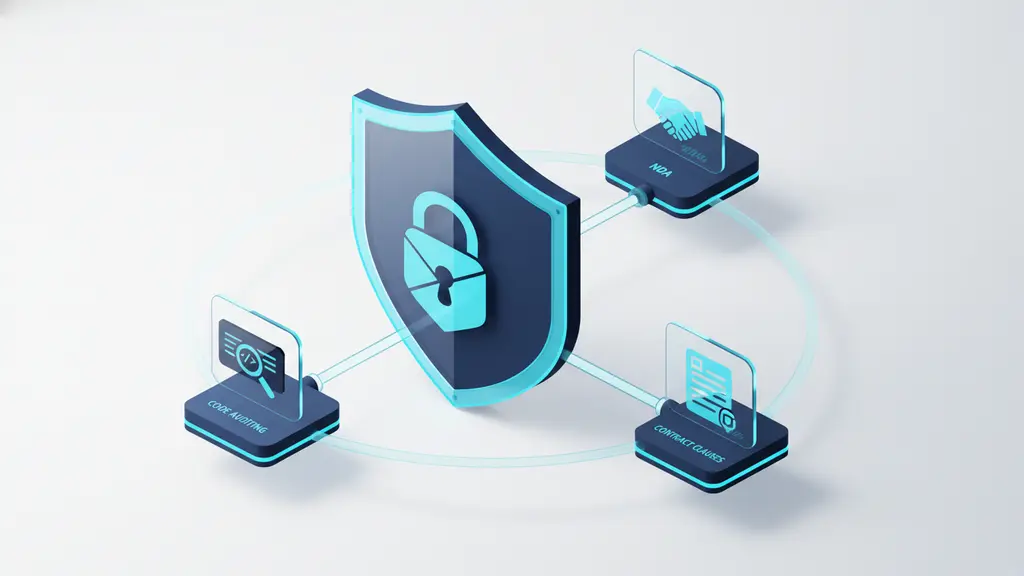
Intellectual property in software outsourcing should be your top legal priority. Here’s how to protect it:
Summary:
Define and secure IP rights with strong contract clauses, clear NDAs, and proactive risk controls to prevent disputes and unauthorized use.
Why IP Risks Skyrocket in Offshore Outsourcing
Outsourced projects often span multiple countries with differing IP laws, increasing the risk of loss, theft, or disputes. Ownership confusion can arise if contracts or statements of work are vague or silent about IP.
Types of IP Involved
- Copyright: Software code, documentation, designs
- Patents: Unique algorithms or processes (if applicable)
- Trade Secrets: Proprietary methods, source code, business logic
How to Secure Your Software IP
Essential IP Protections:
- IP Assignment Clauses: Explicitly state that all deliverables and code are assigned to your company upon payment.
- NDAs & Confidentiality: Enforce secrecy of methods, code, and client data.
- Audit Rights: Reserve the right to audit and verify IP compliance.
- Open Source Controls: Bar unauthorized use of open source components not cleared for commercial use.
Sample IP Clause Table:
| Clause Type | What It Protects | Sample Wording |
| IP Assignment | Ownership of all code/work | “All deliverables…are the exclusive property of Client.” |
| Work Made for Hire | Employer’s automatic ownership | “All work shall be deemed ‘work made for hire’…” |
| NDA | Trade secrets and confidential info | “Vendor shall not disclose or use any…except as required…” |
Preventing IP Disputes—Action Steps
- Specify IP ownership for all project outputs in the contract.
- Require contractors to sign NDAs before accessing assets.
- Verify vendor’s right to use all third-party tools/code.
Real-World Example:
In 2023, a European startup lost a critical software asset when their contract failed to state IP assignment after delivery; the developer refused to transfer rights, forcing a costly legal battle. A clear “work made for hire” clause would have averted this.
What Are the Data Privacy and Compliance Obligations When Outsourcing Software Development?
Meeting data privacy standards is non-negotiable in outsourced software development. Failing to comply with regulations like GDPR or CCPA can result in hefty fines and business restrictions.
Summary:
Ensure compliance with major data protection laws, include clear contract terms, and assess cross-border data risks before starting a project.
Core Privacy Laws That Apply
- GDPR (EU/EEA): Strict control over personal data, even if processed externally.
- CCPA (California): Expansive rights for California consumers.
- India DPDP and Brazil LGPD: Newer regulations with global impact.
Steps to Achieve Data Compliance
Data Compliance Steps Before Signing:
- Map all personal/data flows: Know what data will be processed and where.
- Define processor/sub-processor roles: Ensure the vendor’s role is clear under each law.
- Sign a Data Processing Agreement (DPA): Attach to your main contract.
- Incorporate Standard Contractual Clauses (SCCs): For transfers outside regulated regions.
- Assess vendor’s security measures: Request evidence of compliance frameworks (ISO, SOC 2, etc.).
- Plan for data breaches: Set clear notification timelines and responsibilities.
Checklist Table: Data Privacy Compliance
| Step | Description |
| Data Mapping | Document storage, access points, transfers |
| DPA Signed | Attach legal data processing terms |
| Security Standards Verified | Confirm vendor’s certifications |
| Regional Laws Reviewed | Consider all countries where data flows |
| Breach Protocols Set | Define reporting and remediation timelines |
Regional Compliance Nuances
Some regions (such as APAC, India) have data localization rules, meaning certain data must stay within the country.
Use privacy review tools and code scanners to detect accidental PI leakage during development.
Which Contract Clauses Are Critical in Outsourced Software Agreements?
Bespoke software outsourcing contracts define the rules of engagement. Certain clauses are non-negotiable to protect your legal and commercial interests.
Summary:
Prioritize scope, IP, confidentiality, SLAs, liability, and payment terms—each tailored to the project’s needs and risks.
Must-Have Contract Clauses (and What They Protect)
| Clause | What It Secures | Watchpoints/Red Flags |
| Scope of Work (SOW) | Deliverables, timelines, milestones | Vague or shifting requirements |
| IP Assignment | Code/product ownership | “Vendor retains rights” exceptions |
| Confidentiality (NDA) | Client information, code, trade secrets | Missing duration, vague definitions |
| Service Level Agreement (SLA) | Quality, uptime, support | No remedies for missed targets |
| Indemnity & Liability | Damages from breach or failure | Broad/uncapped liability |
| Termination | Project exit terms, handover | No notice period or handover clauses |
| Payment Terms | Milestones, holdbacks, dispute-linked | Loaded advance payments, unclear triggers |
Agile & Iterative Development:
If using agile, ensure contractual flexibility for changing deliverables but retain clarity around IP and payment tied to measurable outputs.
Contract Negotiation Tips
- Never rely on the vendor’s boilerplate contract.
- Thoroughly negotiate and document every main clause.
- Attach SOW, DPA, and NDA as appendices for completeness.
How Do You Manage Jurisdiction and Resolve Disputes in Cross-Border Outsourcing?
Deciding where legal disputes are resolved can be as important as the contract itself. Cross-border projects face complex jurisdictional questions.
Summary:
Choose governing law, dispute resolution method, and enforcement strategy before disputes occur—ideally with sample clauses for clarity.
Key Considerations for Jurisdiction
- Governing Law: Which country/state’s laws interpret the contract?
- Jurisdiction: Where are disputes heard?
- Enforcement: Can a judgment be enforced in both locations?
Dispute Resolution Methods
| Method | Pros | Cons |
| Litigation | Court oversight, public record | Slow, expensive, cross-border issues |
| Arbitration | Fast, private, sometimes internationally enforceable | Limited appeal, may cost more upfront |
| Mediation | Collaborative, non-binding, less costly | No guaranteed resolution |
Sample Clause:
“Any dispute…shall be settled by binding arbitration in London under ICC Rules…”
Regional Variation Table
| Region | Typical Law | Arbitration-Friendly? | Notes |
| US | State law | Yes | Well-defined contract law |
| EU/UK | English/EU law | Yes | GDPR impacts enforcement |
| India | Indian law | Yes | Enforceability variable |
Tip: Multi-jurisdictional contracts may reference a neutral venue (e.g., Singapore or London), or require mediation before litigation/arbitration.
What Are the Rules Around Worker Classification and Employment Law in IT Outsourcing?
Misclassifying workers in outsourced software projects can trigger fines, back-pay claims, or lawsuits. Always clarify employment status early.
Summary:
Paired contract language and country-specific guidance are essential to avoid unintended employment obligations.
Employee vs Contractor: Definitions and Differences
- Contractor: Independent, works via contract, few employer obligations.
- Employee: Subject to payroll tax, benefits, and labor law protections.
Example: Country-by-Country Worker Classification
| Country | Key Regulator | Main Triggers for “Employee” Status |
| US | IRS/DOL | Control over work, economic dependency |
| EU (DE/FR) | National Labor | Integration, subordination, regularity |
| India | Ministry of Labor | Control, provision of equipment, exclusivity |
| Philippines | DOLE | Exclusivity, instruction, remuneration |
Common Misclassification Risks
- Long-term, full-time “contractors”
- Restricted by company processes or tools
- Contractors paid hourly, not per-project
Contract Language
Use explicit wording: “Nothing in this Agreement creates an employment relationship… Vendor remains an independent contractor.”
Red Flags:
- Contractors requiring directive supervision
- Benefits/perks similar to employees
- Written or verbal instructions implying employer-employee status
Why Are Confidentiality, NDAs, and Vendor Due Diligence Essential?
Effective pre-engagement legal defense starts before the first signature—through confidentiality measures and deep vendor vetting.
Summary:
Use NDAs to protect secrets and due diligence to preemptively screen for vendor risk, reputation, and compliance posture.
What Makes an NDA Effective?
- Clear Definitions: Cover code, documentation, client data
- Duration of Confidentiality: How long must secrecy last?
- Enforcement Terms: Penalties or remedies for breach
Sample NDA Clause:
“Recipient agrees to hold all Confidential Information in trust and confidence and not to use except as expressly allowed…”
Steps for Vendor Due Diligence
Vendor Due Diligence Checklist:
- Review corporate registration and litigation history
- Request financial statements and insurance certificates
- Check references and prior project work
- Assess data security policies and compliance certifications (e.g., ISO 27001)
- Set up pre-engagement audits or “right to audit” terms
Ongoing Monitoring
- Schedule compliance check-ins and self-reporting
- Monitor for changes in vendor ownership or financial health
How Can You Prevent Open Source and Code Contamination in Outsourced Projects?
Unmanaged open source use can “contaminate” your IP, making future commercialization or acquisition impossible. Establish strict controls to prevent accidental or deliberate code contamination.
Summary:
Control and monitor all third-party code—open source or proprietary—used in your outsourced projects, using contract clauses and code review tools.
What Is Code Contamination?
“Code contamination” occurs when software developed for you includes external or open source code with restrictive licenses, unintentionally binding your product or exposing it to litigation.
How to Prevent IP Contamination
- Contractual Controls: State in the contract that all open source or third-party code must be disclosed and pre-approved.
- Automated Code Scanning: Use tools like Black Duck, Snyk, or similar to scan for non-compliant libraries in real-time.
- Developer Training: Ensure the vendor’s staff is aware of open source policies.
Mitigation for Ongoing Projects:
Regularly audit the codebase for unauthorized open source or license conflicts.
Recent Incident:
According to public legal filings from 2023, a SaaS company faced multi-million dollar damages when GPL-licensed code was included without consent, forcing a rewrite of critical modules.
What Are the Emerging Legal Trends and Regional Differences in Software Outsourcing?
New privacy laws, digital sovereignty, and regional changes are reshaping software outsourcing in 2026.
Summary:
Stay ahead by tracking emerging laws in India, Brazil, and the Asia-Pacific, strengthening AI use controls, and monitoring evolving enforcement trends.
Emerging Trends
- New Privacy Laws: India’s Digital Personal Data Protection Act (DPDP), Brazil’s LGPD updates, and expansion of APAC data controls.
- AI & Automated Tools: Rapid AI adoption prompts new IP/model training restrictions, especially in the EU.
- Digital Sovereignty: Countries increasing data localization or residency requirements.
Country/Region Comparison Table
| Country | IP Ownership Laws | Data Privacy Regime | Worker Status Issues |
| US | Contract-based | CCPA, HIPAA | IRS 20-factor test |
| UK/EU | Statutory + Contract | GDPR | IR35, national labor laws |
| India | Statutory limits | DPDP Act | Contract-based, but shifting |
| Brazil | Statutory + Contract | LGPD | Newer outsourcing restrictions |
| Philippines | Strong contract | Data Privacy Act | Favorable to employers (with limits) |
Ongoing Compliance
- Run quarterly legal reviews
- Subscribe to updates from legal advisors focused on your target regions
Practical Legal Risk Mitigation Checklist

Keep this stepwise checklist to mitigate legal risks in your next software outsourcing engagement.
| Step | Description |
| 1. Vendor Due Diligence | Assess legal, financial, and compliance health |
| 2. NDAs Signed | Confidentiality agreement before information exchange |
| 3. Contract Review | Include IP, data, and liability clauses |
| 4. Data Compliance | Map data flows, sign DPAs, verify regional laws |
| 5. Worker Classification | Confirm status by country and set clear language |
| 6. Code Auditing | Require code scanning for open source or IP risks |
| 7. Ongoing Monitoring | Schedule audits, track legal/regulatory changes |
| 8. Document Everything | Maintain a centralized, accessible paper trail |
Country & Region-Specific Legal Considerations
Comparing top outsourcing destinations helps you quickly identify unique requirements and red flags.
| Country/Region | Key Legal Risks | Notable Clauses/Requirements |
| US | Worker misclassification, state law variance | “Work made for hire,” IRS classification language |
| UK/EU | GDPR breaches, IP default rules | “Automatic assignment,” IR35 compliance |
| India | IP assignment, evolving privacy regs | Vendor registration, contract-based ownership |
| Brazil | New LGPD enforcement, labor-called contractors | Mandatory privacy DPAs, stricter outsourcing banners |
| Philippines | Labor retention, data export restrictions | Explicit acknowledgment of data export in contract |
Red Flag Clauses to Watch For:
- Language that limits your IP rights post-delivery
- Absence of data privacy undertakings
- Vague jurisdiction or dispute resolution terms
Stay updated by working with legal experts who monitor legislative change in your key regions.
Frequently Asked Legal Questions About Outsourced Software Development
What are the key legal risks in outsourced software development?
The main risks are unclear IP ownership, data privacy violations, unenforceable contracts, worker misclassification, and disputes arising from vague jurisdiction or payment terms.
How can companies protect their intellectual property when outsourcing?
Ensure your contract has explicit IP assignment, “work made for hire” language, and requires all contributors to sign NDAs. Conduct code audits for open source or external code usage.
Are NDAs necessary for outsourced software development?
Yes. NDAs prevent vendors from using, disclosing, or selling your confidential information, code, or customer data during and after the project.
What contract clauses are essential for IT outsourcing?
Critical clauses include precise scope, IP assignment, confidentiality/NDAs, SLAs, liability/indemnity, payment terms, and clear dispute resolution/jurisdiction language.
How does GDPR affect software projects outsourced abroad?
GDPR applies if any EU personal data is processed, regardless of vendor location. Contracts should include Data Processing Agreements (DPAs) and Standard Contractual Clauses for data transfers.
Who owns the code developed by an outsourcing partner?
Ownership depends on the contract. To ensure your company owns all code, include clear IP assignment and “work made for hire” clauses.
How should disputes be resolved in cross-border software agreements?
State governing law, venue, and preferred dispute resolution method (arbitration, mediation, or litigation) in the contract to avoid cross-border confusion and delays.
What is IP contamination, and how can it be prevented?
IP contamination occurs when third-party or open source code subject to restrictive licenses is included in your product. Use contract restrictions, code scanning tools, and regular codebase audits.
How do I ensure compliance with data protection laws when outsourcing?
Map all personal data flows, require signed Data Processing Agreements, and verify vendors’ security certifications and privacy practices before starting.
What steps should I take before selecting a software outsourcing partner?
Conduct vendor due diligence, request NDAs, check references, review legal/compliance history, and ensure all legal requirements are verified before engagement.
Conclusion
Outsourcing software development offers real competitive advantage—but only if legal risks are expertly managed. By proactively addressing intellectual property, data compliance, robust contract terms, and regional nuances, you can build secure, scalable outsourcing partnerships with confidence.
Download our comprehensive legal risk checklist, or consult with a qualified IT outsourcing legal advisor to tailor these steps to your specific project and jurisdiction. Secure your next software engagement by making legal readiness a core part of your outsourcing strategy.
Key Takeaways
- Always define IP ownership, scope, and data rights in every contract.
- Stay current with regional privacy laws and cross-border transfer requirements.
- Use NDAs, due diligence, and ongoing monitoring to protect against breaches and disputes.
- Prevent code contamination with contract controls and code auditing tools.
- Consult a legal expert specializing in global software projects for complex or cross-border engagements.
This page was last edited on 9 July 2026, at 11:09 am

Start a conversation with our team to solve complex challenges and move forward with confidence.