
Dedicated development teams (DDTs) have become a go-to IT outsourcing model for organizations seeking predictable results, flexible scaling, and durable expertise. As digital projects grow in scope and urgency, many technology leaders face rising costs, talent shortages, and ever-shifting project demands.
Choosing the right approach to hiring and collaborating with a dedicated development team can be daunting for CTOs, product owners, and project managers. But with the right playbook, you can streamline your vendor evaluation, avoid costly mistakes, and ensure your next software project is both efficient and secure.
This comprehensive 2026 guide gives you practical, step-by-step answers—plus comparison tables, checklists, fresh data, and real-world insights—to help you confidently select, onboard, and manage a dedicated software development team for your critical projects.
What Is a Dedicated Development Team? (Definition & Core Concept)
A dedicated development team (DDT) is a handpicked, full-time group of software professionals working exclusively on your project, but employed by a third-party vendor. DDTs act as an extension of your company, operating under your processes and collaborating closely with your in-house staff.
Key Features:
- Alternate terms: dedicated software team, dedicated project team
- Unlike staff augmentation or project-based outsourcing, DDTs provide long-term, committed resources with aligned priorities
- “Dedicated” means your team isn’t shared across other clients—they focus all their attention on your goals
What Sets DDTs Apart:
- Integrated with your workflow and culture
- Long-term focus on evolving project needs
- Vendors handle HR, admin, and scaling—your team drives delivery and innovation
How Does the Dedicated Development Team Model Work?

Dedicated development team models operate through a collaborative partnership between client and vendor, providing flexibility and shared accountability. Here’s how a typical DDT engagement works:
Step-by-Step Workflow:
- Needs Assessment: You define project goals, required skills, and desired team size with the vendor.
- Team Formation: The vendor assembles a tailored team with specific roles (e.g., developers, testers, PMs) based on your requirements.
- Onboarding: Both sides align on processes, tools, and communication protocols.
- Delivery Phase: The team works full-time on your project, holding regular standups, reporting progress, and adapting to evolving needs.
- Scaling & Adjustments: You can add or reduce specialists, reflecting changing priorities.
- Ongoing Collaboration: Continuous feedback and transparent reporting ensure alignment.
Communication & Project Management:
- DDTs adopt your preferred Agile or hybrid methodologies
- Tools like Jira, Slack, or Microsoft Teams maintain daily contact
- Typical cadence: daily/weekly standups, sprint reviews, regular demos
2026 Trends:
- Remote-first and hybrid DDTs are standard, with vendors offering on-site workshops or fully distributed teams as needed.
When Should (and Shouldn’t) You Use a Dedicated Development Team?
A dedicated development team is best for long-term projects with evolving requirements, rapid scaling needs, or when specialized skills aren’t available in-house.
Best-Fit Scenarios:
- Ongoing software product development or platform evolution
- Projects needing flexibility in scope and technology
- Organizations needing rapid team scaling without HR overhead
When Not to Use DDTs:
- Short-term, fixed-scope projects (consider fixed-price models)
- Teams are already at maximum outsourcing management capacity
- Projects with strict, unchanging requirements
Quick Decision Checklist:
- Do you need skills not easily hired in your market?
- Is project duration 6+ months?
- Is process flexibility required?
- Will the team need to grow/shrink dynamically?
If you answer “yes” to most, a DDT makes sense. For only one or two, consider alternatives.
Dedicated Development Team vs. Other Software Engagement Models (Comparison Table)
Choosing the right software engagement model is crucial for project success. Here’s a direct comparison between dedicated teams and other common models.
| Model | Commitment | Flexibility | Control | Cost Predictability | Best for | Drawbacks |
|---|---|---|---|---|---|---|
| Dedicated Development | Long-term | High | Very High | Moderate | Dynamic projects, new products, scaling | Vendor reliability, management |
| Staff Augmentation | Short/med | Med-High | High | Low (hour-based) | Temporary spikes, known process | Onboarding, skill consistency |
| Fixed Price | Short | Low | Low | High | Well-defined, small projects | Scope creep, limited adaptation |
| Time & Material | Med | High | Medium | Low | R&D, experimental work | Less control over spend |
| In-House | Long-term | Variable | Full | High (salary/HR) | Core business, critical IP | Costly, slow to scale |
What Roles and Skills Make Up a Dedicated Development Team?
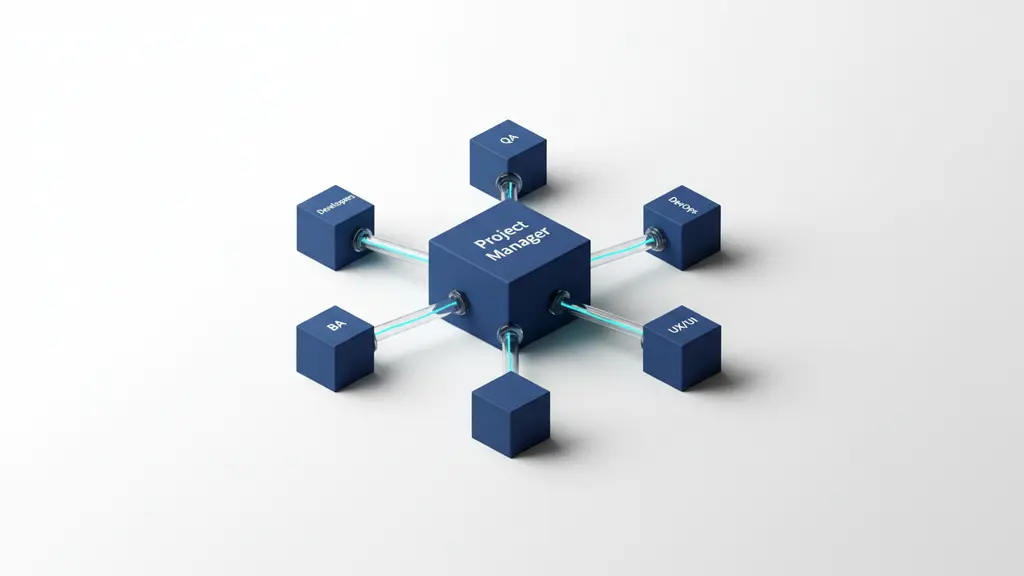
A dedicated development team typically includes a blend of technical and business roles working together to deliver end-to-end software solutions.
Common DDT Roles:
- Project Manager (PM): Coordinates project activities, ensures timelines, and serves as your main point of contact.
- Developers (Front-end, Back-end, Full Stack): Build and maintain application features and system logic.
- Quality Assurance (QA) Engineers/Testers: Validate software quality, run automated/manual tests.
- DevOps Engineers: Manage infrastructure, deployments, and performance monitoring.
- Business Analyst (BA): Translate business needs into technical requirements.
- UX/UI Designers: Shape user experiences and design interfaces.
- Solution Architect: Create high-level system and software structures.
Team Size & Variation:
- Small projects: 4–6 people (1 PM, 2–3 devs, 1 QA)
- Large/complex: 8–15+ (including specialized roles)
What Are the Benefits and Drawbacks of Dedicated Development Teams?
Dedicated development teams offer significant advantages, but also pose certain risks that decision-makers should evaluate.
Pros:
- Cost Efficiency: Lower overall spend vs. in-house hiring for long-term projects (source: Statista, global outsourcing trends 2024).
- Rapid Scaling: Quickly adjust team size as project demands shift.
- Specialized Expertise: Access hard-to-hire skills (AI, DevOps, security).
- Continuous Knowledge Retention: Core team maintains institutional memory.
- Faster Time-to-Market: Minimize onboarding, focus on delivery.
Cons:
- Over-Dependence on Vendor: Risk if vendor quality declines.
- Time Zone/Cultural Gaps: Potential for miscommunication on global teams.
- Management Overhead: Regular alignment and proactive coordination required.
| Benefits | Drawbacks |
|---|---|
| Cost efficiency | Vendor dependence |
| Scalability | Time zone/cultural barriers |
| Deep domain expertise | Increased management effort |
| Retained knowledge | Security/compliance vigilance |
| Quick onboarding |
Step-by-Step: How to Hire and Onboard a Dedicated Development Team

Hiring a dedicated development team is a strategic process requiring careful planning, vendor scrutiny, and effective onboarding.
Step 1: Internal Preparation
- Define project scope, goals, and required expertise.
- Gain internal alignment on budget, preferred engagement model, and desired outcomes.
Step 2: Vendor Research & Shortlisting
- Identify top vendors via directories (Clutch, G2), referrals, and targeted search.
- Review portfolios, case studies, client reviews, and industry standing.
Step 3: Evaluation & Assessment
- Use a standardized checklist to evaluate:
- Technical competence
- Communication standards
- Security and compliance practices
- Cultural fit and language skills
Step 4: Interview & Selection
- Conduct structured interviews with proposed team members.
- Test technical and problem-solving abilities (live coding, scenario tests).
- Assess project management approach and transparency.
Step 5: Contracting & Legal
- Negotiate contract terms: NDAs, IP ownership, SLAs, payment schedules.
- Include data protection/GDPR clauses and clear deliverable definitions.
Step 6: Onboarding & Integration
- Kick-off with joint workshops.
- Set up shared tools, reporting cadence, and escalation paths.
- Foster team connection through regular check-ins and feedback loops.
Workflow Diagram:
1. Preparation → 2. Vendor Search → 3. Assessment → 4. Interviews → 5. Contracting → 6. Onboarding
How Much Does a Dedicated Development Team Cost? (Pricing Models & Regional Data)
Cost for dedicated development teams varies by region, skill level, and team size. Understanding these factors enables accurate budgeting.
Pricing Models:
- Monthly Rate per Role: Most common; fixed monthly fee based on role/seniority.
- Team Size/Composition: Larger or highly skilled teams cost more.
- All-Inclusive vs. Transparent Billing: Some vendors include all overhead; others bill separately.
Key Cost Factors:
Region:
• Eastern Europe (Poland, Ukraine): ~$45–75/hour (2026 averages)
• LATAM (Brazil, Argentina): ~$40–65/hour
• Asia (India, Vietnam): ~$25–50/hour
Seniority: Senior engineers cost 30–50% more than mid-level.
Specialization: Rates higher for AI, blockchain, and cybersecurity roles.
Sample Monthly Cost Table (By Role and Region):
| Role/Seniority | Eastern Europe | LATAM | Asia |
|---|---|---|---|
| Senior Developer | $8,000–$13,000 | $7,000–$11,000 | $5,000–$8,000 |
| QA Engineer | $6,000–$9,000 | $5,000–$8,000 | $4,000–$7,000 |
| Project Manager | $8,500–$14,000 | $7,500–$12,000 | $6,000–$9,000 |
| DevOps Engineer | $8,000–$14,000 | $7,000–$12,000 | $6,000–$9,000 |
Trends for 2025–26:
- Rates are rising globally due to talent scarcity (Statista projects a 7–12% YoY increase in some regions).
- Blended teams with junior, mid, and senior talent optimize spend.
How to Effectively Manage a Dedicated Development Team (Best Practices & Tools)
Effective management of a dedicated development team relies on transparent communication, measurable objectives, and well-chosen collaboration tools.
Best Practices:
- Clear Communication Cadence: Daily standups, weekly demos, monthly retrospectives.
- Project Management Tools: Use platforms like Jira, Asana, or Trello for task tracking.
- Progress Tracking: Employ KPIs such as sprint velocity, bug rate, feature completion.
- Documentation: Maintain clear records—requirements, codebases, meeting minutes—for knowledge transfer and onboarding.
- Accountability: Establish SLAs and shared dashboards.
- Cultural Alignment: Arrange team-building sessions and onsite/offsite workshops when possible.
2026 Trends:
- Growing use of AI-driven project monitoring and predictive analytics.
- Hybrid models blending remote-first with regular in-person strategy sessions.
Tool Recommendations:
- Communication: Slack, Microsoft Teams
- Documentation: Confluence, Notion
- Code Repositories: GitHub, GitLab
What About IP Protection, Security, and Compliance in DDT Engagements?
Securing intellectual property (IP), ensuring legal compliance, and maintaining data security are foundational to successful DDT projects.
IP & Legal Safeguards:
- Non-Disclosure Agreements (NDAs): Mandatory for all third parties.
- IP Ownership Clauses: Contracts should clearly state all work belongs to the client.
- Service Level Agreements (SLAs): Define deliverables, response times, and liabilities.
Security & Compliance:
- GDPR/Data Privacy: Confirm vendor compliance if personal data is handled.
- Access Controls: Principle of least privilege for all sensitive environments.
- Regular Security Audits: Request auditor reports and vendor certifications.
2025–26 Emerging Issues:
- AI-generated code IP rights; keep contract terms up to date.
- Increased scrutiny of offshoring destinations due to geopolitical shifts.
Checklist:
- NDA signed by all team members
- IP ownership clarified in contract
- Data handled as per applicable regulations
- Security protocols reviewed and documented
Common Mistakes and Red Flags to Avoid When Choosing a Dedicated Team Vendor
Avoiding common pitfalls when hiring a dedicated development team can save your project from delays, overruns, or security incidents.
Top Red Flags:
- Unclear Contracts: Vague terms on deliverables, IP, or rates.
- Unrealistically Low Bids: Often signal inexperience or poor-quality talent.
- Poor Communication: Delays in replies, language barriers, lack of transparency.
- Pushy Sales Tactics: Vendors that rush signature without clear processes.
- No Previous Case Studies: Lack of relevant history or client references.
- Weak Security Policies: Failure to articulate compliance standards.
If You’ve Made a Mistake:
- Address concerns directly with the vendor and request remediation.
- Consult legal experts if contract terms are not upheld.
- Consider phased disengagement if issues persist.
Example Success Stories: Dedicated Development Team Case Studies
Seeing how dedicated teams work in practice helps illustrate their real impact. Here are two brief success stories from recent DDT engagements.
Case 1: Fintech SaaS Company (Europe)
Challenge: Legacy platform needed rapid modernization to support a 10x user growth forecast.
Solution: Hired a DDT from Eastern Europe with PM, full-stack, QA, and DevOps specialists.
Results:
- MVP launched in 5 months (40% faster than in-house estimate)
- 25% reduction in projected development costs
- Platform stability improved, enabling smooth scaling
“Working with our dedicated team felt like expanding our own office overnight—they adapted quickly, communicated transparently, and owned the outcomes.”
— CTO, Fintech SaaS Client
Case 2: E-Commerce Scale-Up (North America)
Challenge: Needed to roll out a multi-language web app and mobile platform before peak season.
Solution: Engaged a DDT in LATAM with bilingual engineers and embedded QA.
Results:
- Time-to-market cut by 30%
- Enhanced customer ratings due to better UX/UI and 24/7 bug support
- Ongoing capacity to scale features without rehiring
What We Learned:
DTTs excel when you align on culture, value regular feedback, and document everything from day one.
Frequently Asked Questions (FAQ)
What is a dedicated development team?
A dedicated development team is a long-term, outsourced software team working full-time on your project, but employed and managed by a third-party vendor.
How is a dedicated development team structured?
Typical DDTs include a project manager, software developers, QA specialists, DevOps, business analysts, and designers—assembled based on your project needs.
What are the benefits of hiring a dedicated development team?
DDTs offer cost effectiveness, access to specialized talent, rapid scaling, and knowledge retention compared to in-house or traditional outsourcing.
When should I choose a dedicated team model?
Opt for DDTs when you require ongoing, flexible development for complex or evolving products—not for small, strictly defined, or short-term projects.
How does a dedicated development team differ from staff augmentation?
A DDT integrates fully into your workflow and is managed as a team, while staff augmentation fills individual roles under your in-house management.
What roles are included in a typical dedicated team?
Core members include project managers, front-end/back-end/full-stack developers, QAs, DevOps, business analysts, UX/UI designers, and solution architects.
How much does it cost to hire a dedicated development team?
Costs vary by region and expertise—for example, in Eastern Europe, senior developer rates average $8,000–$13,000 per month as of 2026.
How do I select the right vendor for a DDT?
Evaluate vendors by their technical skills, project history, client reviews, security policies, communication standards, and legal compliance.
What are the risks of a dedicated team model?
Risks include over-dependence on a vendor, potential communication gaps, and the need for vigilant management and clear contracts.
How is intellectual property protected in a DDT engagement?
Ensure contracts include NDAs, IP ownership clauses, and that vendors follow up-to-date data security and privacy regulations.
Conclusion
Selecting, onboarding, and managing a dedicated development team is one of the smartest paths for modern businesses seeking cost-effective, scalable, and high-quality IT delivery. By following this 2026 playbook, you’ll be equipped to evaluate engagement models, compare vendors, forecast costs, and set up the right team structure for your goals.
Key Takeaways
- Dedicated development teams are ideal for long-term, evolving projects demanding flexibility and specialized talent.
- Cost efficiency, scalability, and knowledge retention are top advantages—especially versus in-house or ad-hoc outsourcing.
- Careful vendor evaluation and strong contracts are non-negotiable for success.
- Best-fit organizations include startups, SaaS companies, and businesses with fluctuating or complex development needs.
- Next Steps: Download the vendor assessment checklist or book a consultation to plan your dedicated team engagement.
This page was last edited on 9 July 2026, at 11:09 am

Start a conversation with our team to solve complex challenges and move forward with confidence.