The race to integrate artificial intelligence into business operations and companies is no longer optional-it’s existential. Companies that successfully embed AI into their core workflows will gain decisive advantages in speed, efficiency, and customer experience. But becoming “AI-first” requires far more than purchasing software licenses or hiring data scientists. It demands a fundamental cultural transformation that touches every aspect of how an organization operates.
What is AI-First Vision

The journey begins with crystal-clear definition and communication. An AI-first organization isn’t one that simply uses AI tools occasionally-it’s one where AI becomes woven into the fabric of daily operations. This means establishing concrete targets:
- Within two years, AI should be embedded in every core workflow, from customer support and operations to finance and HR
- Every knowledge worker should have at least one AI co-pilot they use daily
- Success must be measured in tangible business outcomes-revenue uplift, cost reduction, and employee productivity-not vanity metrics like “number of models deployed”
The transformation narrative needs to be simple and repeatable. Organizations should align everyone around three core messages:
- Why now: The market is shifting and competitors aren’t waiting
- What it means for people: AI augments human capabilities, though roles will evolve
- What success looks like: Faster decisions, better customer experiences, leaner operations
This story must be repeated consistently across all-hands meetings, leadership offsites, and internal communications until it becomes second nature.
Conducting a Brutal Reality Check
Before charging forward, organizations need a comprehensive 90-day diagnostic to understand their true starting position. This assessment should examine three critical dimensions.
Data and Infrastructure
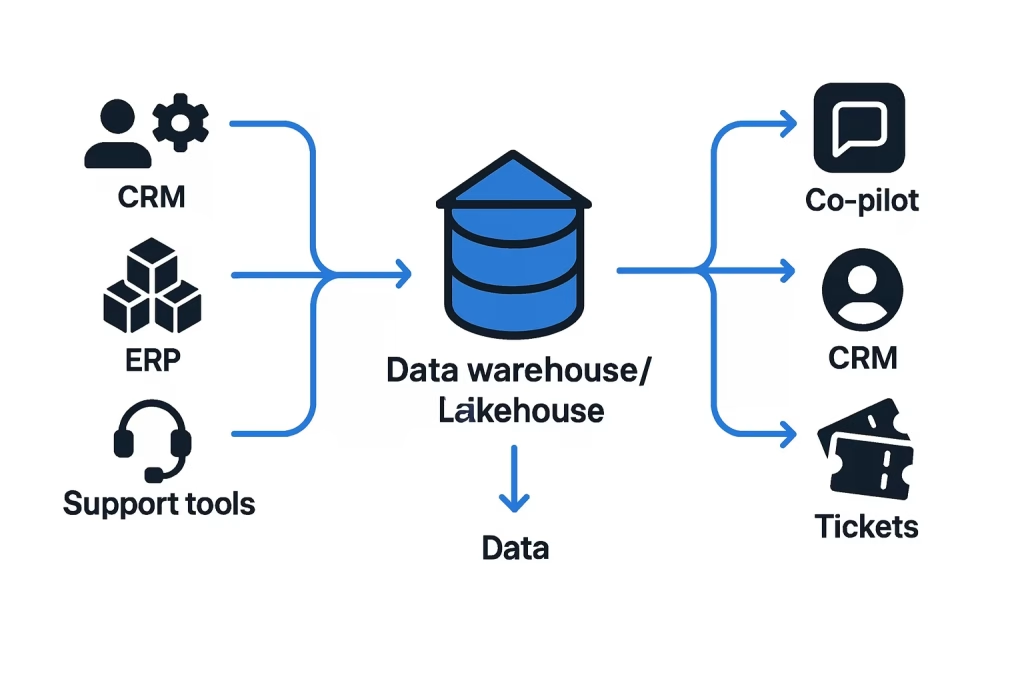
The technical landscape requires honest evaluation:
- Where does organizational data actually live-CRM systems, ERP platforms, support tools, scattered spreadsheets?
- How clean and connected is this data?
- Does the organization have a proper data platform, warehouse, or lakehouse?
- Are systems cloud-ready and compliant with security, privacy, and regulatory requirements?
Processes and Pain Points
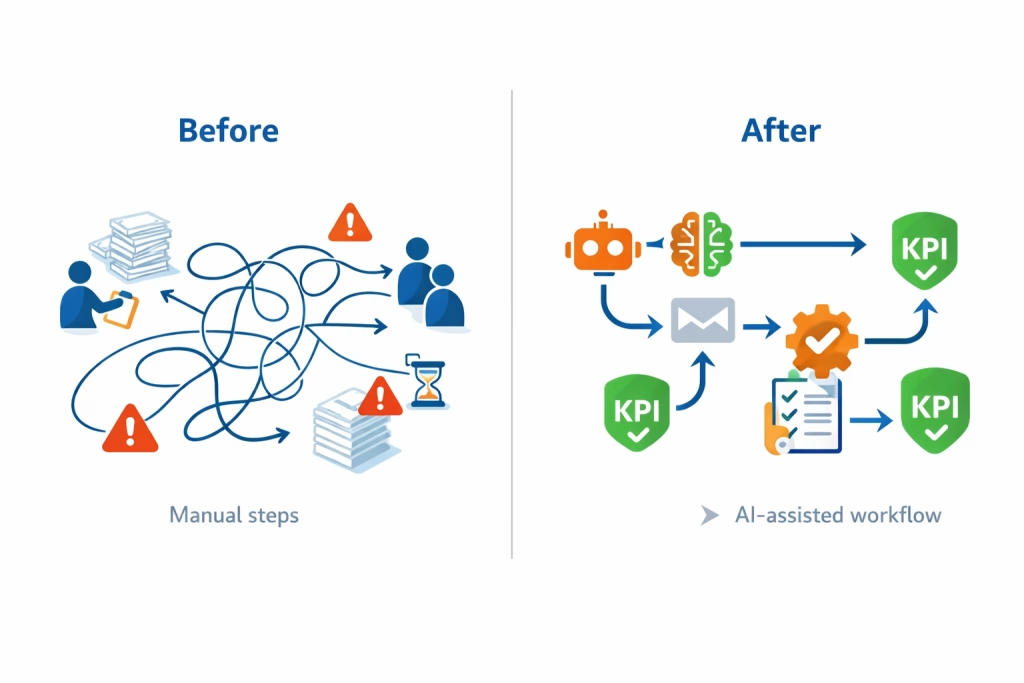
Teams should identify their operational challenges:
- Top repetitive tasks across all functions
- Biggest bottlenecks (approvals, manual reports, copy-paste work)
- Areas where customers and employees experience the most frustration
These insights create a valuable AI opportunity map.
Skills and Mindset

The human dimension matters critically:
- How many employees are already experimenting with AI tools?
- Who are the power users who can become internal champions?
- Where is resistance or fear strongest?
The outcome of this assessment should be a concise AI Readiness Report highlighting three to five critical gaps and the biggest quick-win opportunities.
Establishing Governance and Structure
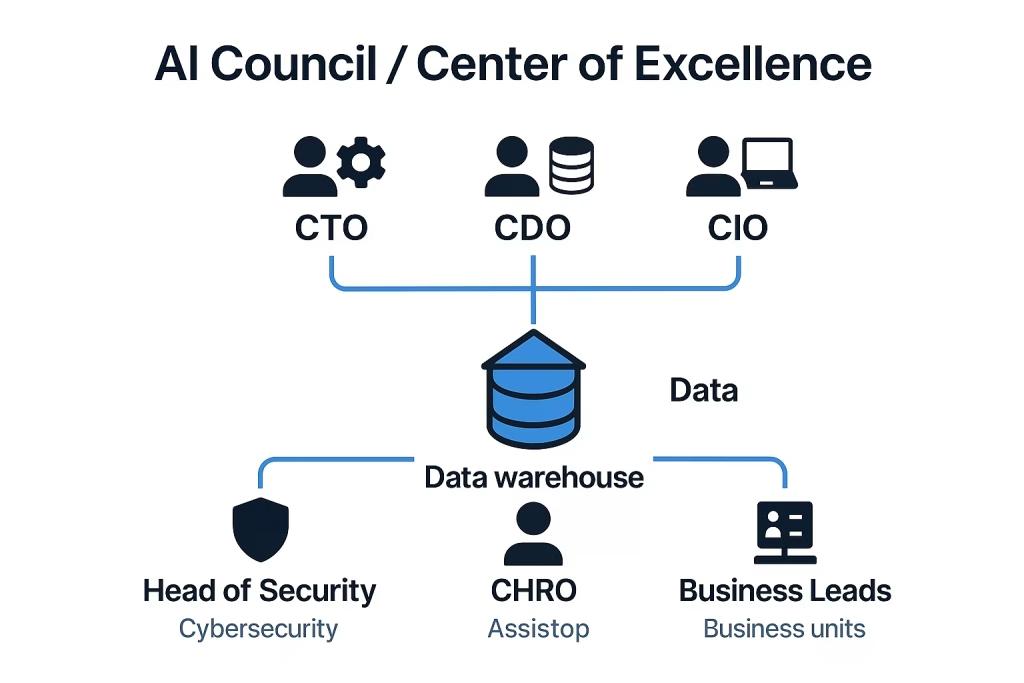
Uncoordinated AI experimentation can mess up company dynamics. Successful transformations require deliberate governance structures, starting with an AI Council or Center of Excellence. This body should include the CTO or VP of Engineering, CDO or data lead, CIO, head of security and compliance, CHRO, several business leaders, and strong individual contributors.
Their responsibilities encompass:
- Defining AI strategy and priorities
- Approving high-impact use cases
- Setting policies for data security and ethics
- Selecting standard tools and platforms
- Sharing wins and best practices across teams
Equally important are clear, practical AI policies that give teams safe boundaries for experimentation:
- What data can and cannot be fed into external AI tools
- Protocols for handling personally identifiable information and regulated data
- Ownership of AI system outputs and decisions
- Review processes before AI touches customers directly
Such guidelines reduce fear while enabling productive exploration.
Building the Technical Foundation
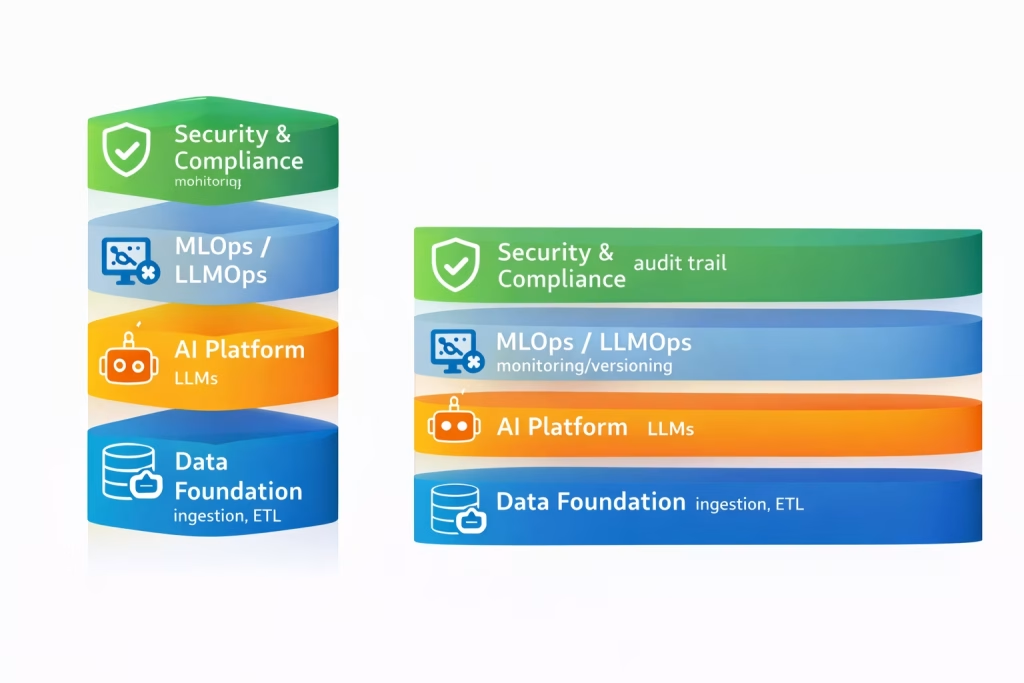
An AI-first culture cannot exist without a robust technical infrastructure.
Data Foundation
Organizations must prioritize consolidating key data into a single source of truth through a data warehouse or lakehouse. This requires investment in:
- Data ingestion and ETL/ELT processes from core systems
- Data quality checks and monitoring
- Standardized metrics and definitions
AI Platform and Tools
The AI platform itself demands standardization around:
- Chosen LLM providers and models
- Internal AI assistant or co-pilot integrated with email, documents, tickets, CRM, and knowledge bases
- Comprehensive MLOps or LLMOps stack covering versioning, evaluation, monitoring, logging, and fallback strategies
- Role-based permissions and audit trails for appropriate access control
Security and Compliance
Security must be designed into every AI project from the start:
- Security reviews are baked into project workflows
- Regular red-teaming and risk assessments for AI systems
- Clear escalation paths for issues like hallucinations affecting customers or biased outputs
Proving Value Through High-Leverage Pilots

Belief in AI transformation comes from demonstrated results. Organizations should launch three to five flagship pilots within six months that clearly impact revenue or cost, touch many employees or customers, and remain feasible with current technology and data.
Example Pilot Programs:
Customer Support Co-Pilot
- AI drafts responses, summarizes interaction history, and suggests next actions
- Measured by: first response time, resolution time, customer satisfaction, and tickets handled per agent
Sales and Account Management Assistant
- Summarizes opportunities, drafts outreach emails, and generates account briefs
- Tracked through: meetings booked, conversion rates, and administrative time saved
Internal Knowledge Assistant
- Answers questions from policies, product documentation, and past tickets
- Reduces time spent searching for information and accelerates new hire onboarding
Document Automation
- Extracts data from contracts and invoices
- Dramatically reduces turnaround time, error rates, and manual hours
Every pilot must have:
- A clear owner from both business and technical sides
- A simple before-versus-after baseline
- A time-boxed rollout plan of approximately 12 weeks
- A retrospective with documented playbook at completion
Embedding AI Into Daily Work
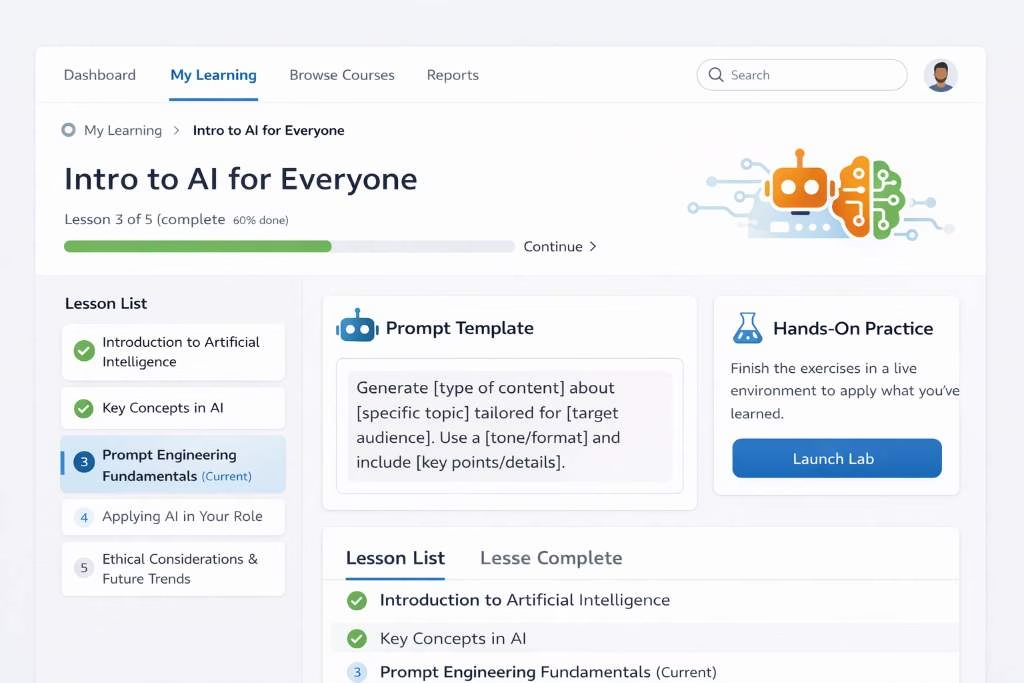
The real cultural shift happens when AI stops being a “project” and becomes how work gets done. This requires comprehensive company-wide enablement through structured programs.
Company-Wide Training
An “Intro to AI for Everyone” course should cover:
- LLM basics, capabilities and limitations
- Data privacy considerations
- Hands-on experience with internal AI assistants, prompt patterns, and practical examples
Role-Specific Tracks
Training for support, sales, marketing, finance, HR, engineering, and product teams should provide “10 use cases you can try this week” tailored to each function’s needs.
Encourage Experimentation Safely
Organizations should establish:
- AI sandboxes-safe environments where employees can test ideas using approved data
- Internal hackathons where cross-functional teams spend one to two days building AI prototypes around real business problems, with winners receiving funding to develop their ideas further
Transform Meeting Culture
Even meeting culture should evolve:
- Leaders should require pre-reads and data summaries generated with AI
- Ask “How did we use AI to analyze this?” during discussions
- Normalize questions like “What does our AI assistant recommend?” and “Can we automate this step?”
When leadership models this behavior, it signals that AI thinking is not optional.
Redesigning Incentives and Roles
Culture changes when reward systems change.
Performance and Goals
Every function should incorporate AI-related objectives and key results:
- Automating a specific percentage of manual steps in critical processes
- Achieving measurable productivity gains using AI tools
- Migrating key workflows to AI-assisted versions
Individual performance expectations for knowledge workers should include effective use of AI tools, and organizations should recognize people who drive AI adoption in their teams.
New Roles and Career Paths
New career paths must emerge around AI work:
- AI Product Owner / AI Program Manager
- Prompt Engineer / AI Experience Designer
- Data Stewards for specific domains
- AI Champions in each department (even as part-time, formally recognized positions)
These roles signal that AI work represents a legitimate and valued career trajectory.
Addressing Fear and Resistance
An AI-first culture withers if employees silently harbor fears about their future. Organizations must communicate explicitly that while some roles will change and certain work will be automated, people who learn to leverage AI will become more valuable, not less.
Concrete Actions:
- Offer upskilling and reskilling programs before pushing automation aggressively
- Provide transparent communication about where automation is being piloted and why
- Equip managers with talking points and training to handle team concerns constructively
Equally important is creating psychological safety for AI skepticism. Employees should feel comfortable saying “This AI result looks wrong” or “I don’t trust this output yet.” Critiquing AI should be recognized as good judgment rather than negativity.
Establishing Responsible AI Frameworks
Moving fast without responsibility creates reputational and regulatory time bombs.
Core Principles
Organizations need short, clear principles:
- Use AI to augment humans rather than hide them
- Protect customer and employee data rigorously
- Monitor for bias, fairness, and unintended consequences
- Be transparent when AI influences decisions affecting people
Practical Mechanisms
Bring these principles to life through:
- Regular model evaluations for bias and performance
- Human-in-the-loop requirements for high-risk decisions in areas like credit, hiring, and legal matters
- Human oversight of customer-facing content in sensitive areas
- Clear incident response processes defining who investigates problems, who implements fixes, and how issues are communicated
Making Success Visible and Contagious
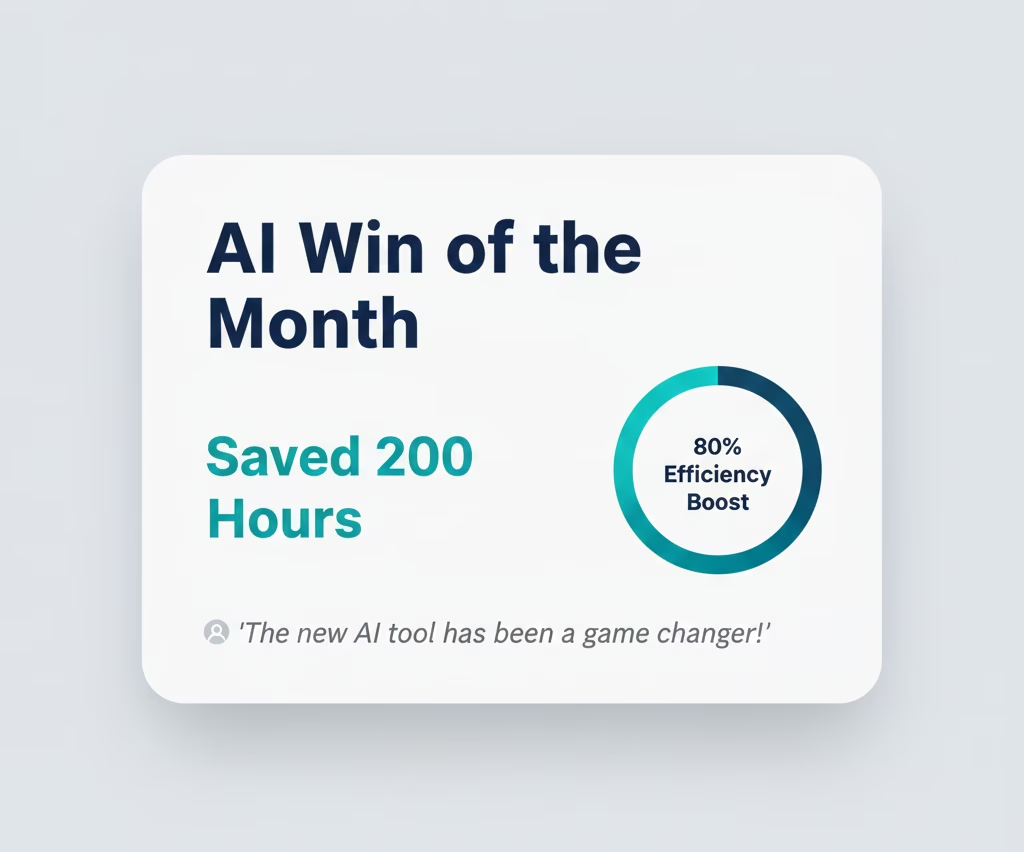
Cultural transformation requires celebrating both large wins and small victories.
Internal Spotlight
An “AI Win of the Month” can showcase:
- A team that saved 200 hours
- A support squad that reduced resolution time by 40 percent
- A salesperson who closed a deal using AI insights
Documentation and Knowledge Sharing
An internal AI Playbook or wiki should document:
- Use cases by function
- Prompt templates
- Best practices and lessons learned
Regular Metrics Sharing
Share at company meetings:
- Percentage of employees using AI weekly
- Number of workflows migrated
- Productivity improvements and cost savings attributed to AI
This demonstrates that the transformation is real, working, and benefiting everyone.
The Transformation Timeline
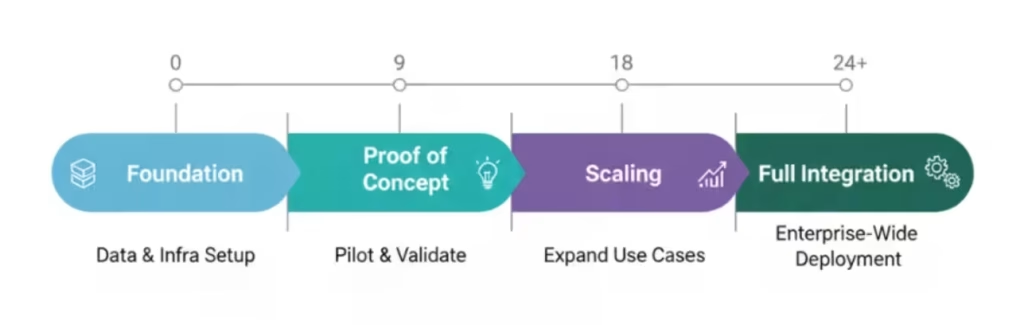
A realistic AI-first transformation unfolds over 12 to 24 months.
Months 0-3: Foundation
- Define vision and narrative
- Run AI readiness assessment
- Form AI Council or Center of Excellence
- Set policies and choose initial tools
- Identify top use cases while selecting initial pilots
Months 4-9: Proof of Concept
- Implement flagship pilots in key functions
- Roll out company-wide AI training
- Launch internal AI assistant for basic knowledge and productivity tasks
- Run first AI hackathon
- Begin sharing early wins and lessons learned
Months 10-18: Scaling
- Scale successful pilots across regions and teams
- Expand AI to more complex workflows
- Introduce role-specific co-pilots for support, sales, HR, and finance
- Formalize AI roles and career tracks
- Tighten governance, monitoring, and responsible AI practices
Months 18-24+: Full Integration
By this stage:
- AI becomes embedded in planning, budgeting, and strategy processes
- The majority of routine tasks are AI-assisted or automated
- A continuous improvement loop drives ongoing innovation: new ideas lead to small experiments, which scale based on results, get measured rigorously, and inform refinements
At this point, AI is no longer a program-it’s simply how the organization operates.
Conclusion
Building an AI-first culture represents one of the most significant organizational transformations of the modern era. It requires clear vision, honest assessment, deliberate governance, robust infrastructure, proof of value, widespread enablement, aligned incentives, addressed fears, responsible frameworks, and visible celebration of success. Organizations that commit to this comprehensive approach won’t just adopt AI-they’ll fundamentally reshape how work gets done, creating sustainable competitive advantages in an AI-powered future.
FAQ
What does an AI-first company culture look like?
An AI-first company culture is one where AI is embedded into everyday workflows and decisions, not treated as a side project. Employees use AI tools daily, leaders expect AI-informed insights, and success is measured by productivity, speed, and customer impact. Clear governance ensures AI augments people while remaining secure and responsible.
How do enterprises adopt AI responsibly at scale?
Enterprises adopt AI responsibly by combining fast experimentation with strong governance. This includes a clear AI operating model, secure data platforms, human-in-the-loop controls for high-risk decisions, and continuous monitoring through MLOps and LLMOps. Guardrails enable AI to scale safely without slowing innovation.
What are the biggest challenges in enterprise AI adoption?
The biggest challenges in enterprise AI adoption include fragmented data, legacy systems, unclear strategy, skills gaps, employee resistance, weak governance, and difficulty proving ROI. Most failures stem from organizational and operational issues rather than technology limitations.
This page was last edited on 29 December 2025, at 1:09 pm

Start a conversation with our team to solve complex challenges and move forward with confidence.