- What is Application Lifecycle Management (ALM)
- What Are the Phases of an Application Lifecycle Management
- What Are the Steps to Implement ALM in Your Organization
- What Are the Core Features of Application Lifecycle Management (ALM)
- What Are the Benefits of Application Lifecycle Management
- What Are the Types of ALM Tools
- How to Choose the Right Tools & Software to Achieve Successful ALM
- How Does ALM Compare With Other Lifecycle Management Methodologies
- What Are the Challenges of Application Lifecycle Management
- What Are the Best Practices for ALM Success
- How Much Does Application Lifecycle Management Cost
- How AI Is Transforming Application Lifecycle Management (ALM)
- What Are the Future Trends in Application Lifecycle Management (ALM)
- Conclusion
- Frequently Asked Questions (FAQ)
Ever wondered why so many software projects end up in complex situations?
The problem isn’t usually the code, it’s the lack of proper management. That’s where Application Lifecycle Management (ALM) steps in, bringing teams, tools, and processes together into one streamlined system for success.
Application Lifecycle Management (ALM) is the end-to-end process of planning, building, testing, deploying, and maintaining software applications. It unifies teams, tools, and workflows to improve collaboration, ensure quality, and deliver business value more efficiently.
Unlike the traditional software development lifecycle (SDLC), which primarily focuses on coding and testing, ALM takes a broader approach. It manages the entire application development process, from initial requirements and design to deployment, application modernization, governance, and eventual retirement.
Now that we understand why ALM is critical in today’s digital landscape, let’s break it down further and explore exactly what Application Lifecycle Management (ALM) means.
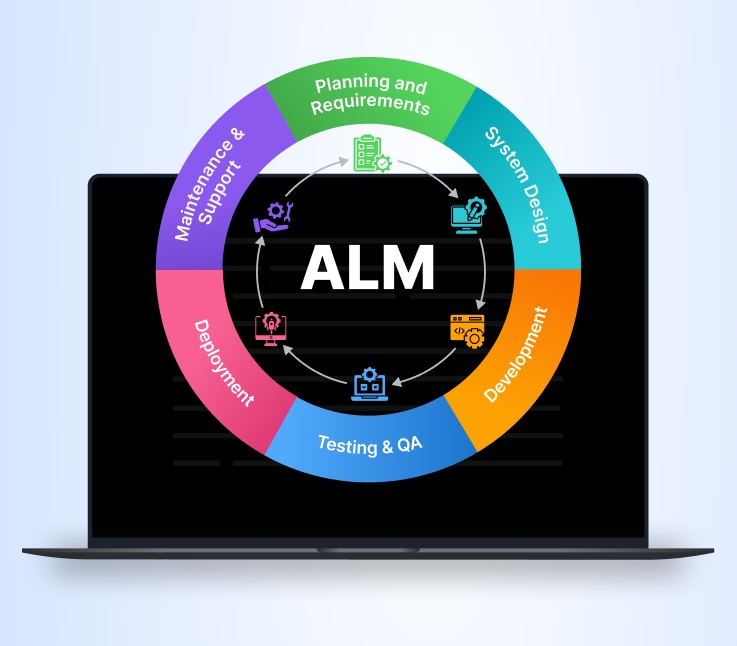
What is Application Lifecycle Management (ALM)
Application Lifecycle Management (ALM) is the integrated process of managing a software application from initial planning and design through development, testing, deployment, maintenance, and eventual retirement, ensuring alignment between business goals, technology, and governance at every stage.
By streamlining collaboration, improving traceability, and enabling continuous feedback, ALM helps organizations accelerate innovation, maintain quality, and reduce risks across the software development lifecycle.
To understand where ALM stands today, it’s essential to explore how it has evolved from traditional software management into a modern, integrated approach.
What Is the Evolution of Application Lifecycle Management (ALM)
The journey of Application Lifecycle Management (ALM) reflects how software development has matured over the years.
What started as an extension of the software development lifecycle (SDLC) has expanded into a comprehensive framework that supports the entire application development process, from ideation to end-of-life.
Let’s explore the key stages that highlight the evolution of Application Lifecycle Management (ALM):
- Early Stage – SDLC Roots: Initially tied to the software development lifecycle (SDLC), ALM focused mainly on coding, testing, and delivering projects on time and within budget.
- Expansion of Scope: Over time, ALM grew to include application modernization, application governance, and application portfolio management (APM), while also drawing on principles of product lifecycle management (PLM) to treat applications as long-term business assets.
- Modern ALM Practices: With the rise of Agile and DevOps, ALM now supports adaptive, automated delivery and stronger cross-team collaboration. Cloud-based ALM platforms provide scalability, cost efficiency, and global accessibility.
- AI-Driven Evolution: The integration of artificial intelligence (AI and GenAI) has introduced predictive analytics, anomaly detection, and workflow automation, boosting productivity, quality, and speed-to-market.
- Compliance and Governance: As regulatory standards like GDPR, HIPAA, and SOX tighten, modern ALM tools embed compliance tracking, audit trails, and governance policies to ensure both security and accountability.
ALM has evolved from a development-focused process into a holistic lifecycle strategy, powered by Agile, cloud, AI, and governance, to ensure applications deliver continuous business value.
To see ALM in action, let’s dive into its core phases that shape an application’s journey from idea to end-of-life.
What Are the Phases of an Application Lifecycle Management
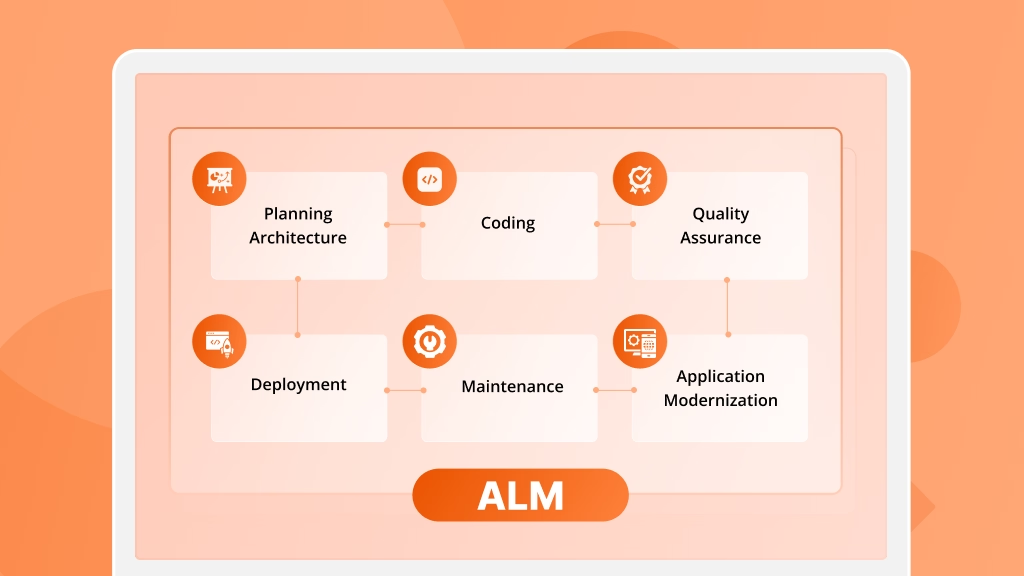
In Application Lifecycle Management (ALM), understanding the key phases is crucial for delivering reliable, secure, and future-ready applications. While the ALM process may vary based on the chosen framework, such as the software development lifecycle (SDLC), Agile practices, or DevOps integration, the core principles remain consistent. Here are the 6 Phases of Application Lifecycle Management at a Glance:
1: Planning & Assessment
2: Design & Build
3: Operate & Optimize
4: Transition & Replacement
5: Decommissioning & Closure
6: Support & Evolution
Here’s a breakdown of the core phases in a typical application development process:
Stage 1: Planning & Assessment
The evaluation stage marks the beginning of the application development process. It ensures that the proposed solution is viable, strategic, and aligned with organizational goals.
Key activities include:
- Business Case: Building a compelling business case to justify investment and link the application with long-term business objectives.
- Requirements Gathering: Defining functional and non-functional requirements that meet user needs and comply with regulatory standards.
- Technical Feasibility: Assessing infrastructure, technology stack, and risks to ensure the solution is technically sound.
- Vendor Selection: Choosing the right vendors or partners based on expertise, experience, and alignment with enterprise values.
- Application Governance: Establishing governance structures early to manage compliance, risk, and accountability.
Stage 2: Design & Build
Once the evaluation is complete, organizations move into building and deploying the application. This phase focuses on delivery through modern software delivery pipelines and continuous integration and deployment (CI/CD).
Key aspects include:
- Application Design & Architecture: Creating scalable and secure blueprints that guide development and ensure long-term sustainability.
- Development & Coding: Using Agile development practices, software version control, and DevOps integration to accelerate delivery.
- Testing & QA: Conducting rigorous quality assurance (QA) and testing to validate performance, security, and compliance.
- Deployment: Releasing the application into production, supported by strong release management strategies to ensure stability.
- Integration & Management: Managing dependencies and integrating with other enterprise systems, ensuring smooth interoperability.
Stage 3: Operate & Optimize
This is the operational phase where the application delivers value to the business and users. Effective end-to-end application management ensures stability, performance, and user satisfaction.
Key activities include:
- Monitoring: Tracking application performance, availability, and usage to detect and resolve issues proactively.
- Maintenance & Support: Performing regular updates, patching, and user support through IT service management (ITSM) frameworks.
- Optimization: Continuously improving performance, scalability, and cost-effectiveness.
- Application Register: Keeping lifecycle information accurate, with clear ownership from application managers and enterprise architects.
- Cloud-Native Lifecycle Practices: Leveraging cloud scalability and resilience for modern environments.
Stage 4: Transition & Replacement
Over time, applications may become obsolete or replaced by better solutions. The phasing-out stage manages the transition responsibly.
Key considerations include:
- Data Migration: Moving critical data to new systems or archiving it securely.
- Communication: Keeping stakeholders informed about timelines, impacts, and transition plans.
- Deprecation: Gradually reducing reliance on the old application while ensuring critical functions remain operational.
- Application Portfolio Management: Evaluating the business and technical fit of applications to decide what stays, migrates, or retires.
Stage 5: Decommissioning & Closure
The retired stage closes the lifecycle, ensuring minimal disruption and compliance with organizational policies. Activities include:
- Decommissioning: Safely shutting down infrastructure, software, and hardware tied to the application.
- Data Retention & Compliance: Archiving or destroying sensitive data according to regulatory standards.
- Roadmaps & Migration Plans: Ensuring replacement systems are in place to avoid operational risks.
- Lessons Learned: Conducting retrospectives to capture insights for future product lifecycle management (PLM) initiatives.
Stage 6: Support & Evolution
The lifecycle does not end at deployment. This stage focuses on keeping applications stable, secure, and aligned with evolving business needs. Key activities include:
- Application Maintenance & Support: Addressing bug fixes, applying updates, and ensuring regulatory compliance.
- IT Service Management (ITSM): Leveraging ITSM frameworks to manage incidents, problems, and changes effectively.
- Continuous Feedback Loops: Using user feedback and performance data to drive innovation and enhancements.
- Product Lifecycle Management (PLM): Ensuring the application remains aligned with organizational goals and adapts to changing business strategies.
Optimization: Improving efficiency, scalability, and cost-effectiveness through ongoing monitoring and fine-tuning.
Knowing the phases is just the first step, true success comes from optimizing your development process with ALM to unlock speed, quality, and agility.
How to Optimize Your Development Process With ALM
Let’s be honest; building and managing software isn’t just about writing code. It’s about keeping every moving part of the software development lifecycle (SDLC) connected and working in harmony.
That’s exactly where Application Lifecycle Management (ALM) shines. Think of it as the glue that ties together your application development process, from planning and design to deployment and ongoing support.
Here is a key ways ALM optimizes development:
- Streamlined Software Project Management
- Agile Development Practices
- Continuous Integration and Deployment (CI/CD)
- Quality Assurance (QA) and Testing
- Application Governance and Compliance
- Application Maintenance and Support
- Application Modernization and Cloud-Native Support
- Enterprise-Level Management
Knowing the benefits of ALM is one thing, but successfully implementing it in your organization is where the real transformation begins.
What Are the Steps to Implement ALM in Your Organization
Successfully adopting Application Lifecycle Management (ALM) requires more than just deploying a tool, it’s about building a structured framework that connects people, processes, and technology.
By aligning the software development lifecycle (SDLC) with strong governance and modern delivery practices, organizations can ensure faster releases, better quality, and long-term sustainability. Below are the key steps to guide your application development process with ALM:
1. Define Strategy and Governance
Start by establishing clear goals, policies, and an application governance model. This ensures that teams stay aligned with organizational objectives, compliance standards, and enterprise-wide priorities such as application portfolio management and product lifecycle management (PLM).
2. Design Application Architecture
Lay a strong foundation with well-defined application design and architecture. At this stage, factor in scalability, security, and flexibility, especially if you are building for a cloud-native application lifecycle.
3. Adopt Agile and DevOps Practices
To stay competitive, integrate Agile development practices with DevOps integration. This empowers teams to collaborate seamlessly across the software project management cycle and accelerate delivery.
4. Establish a Software Delivery Pipeline
Implement continuous integration and deployment (CI/CD) along with robust software version control systems. These help streamline the software delivery pipeline, minimize errors, and automate repetitive tasks, driving efficiency and reliability.
5. Prioritize Quality Assurance and Testing
Embed quality assurance (QA) and testing throughout the lifecycle rather than treating it as a final step. This proactive approach ensures stability, enhances user experience, and reduces rework later in the release management phase.
6. Enable IT Service Management and Support
Integrate IT service management (ITSM) practices and plan for application maintenance and support. This creates a feedback loop between users and developers, ensuring continuous improvement and effective incident management.
7. Focus on Modernization and Scalability
As technologies evolve, regularly assess opportunities for application modernization. This future-proofs your systems, supports enterprise software management, and enhances overall agility.
Pro Tip: Think of ALM as end-to-end application management, from design and development to deployment and support. By weaving in Agile, DevOps, and automation, your organization builds a sustainable model for growth and innovation.
Before ALM can drive results, you need to understand the essential features that make it the engine of modern application delivery.
What Are the Core Features of Application Lifecycle Management (ALM)
The strength of Application Lifecycle Management (ALM) lies in its ability to unify every aspect of the application development process into one structured framework. Its core features provide teams with the tools needed to plan, build, test, deploy, and manage applications efficiently, while also ensuring scalability and long-term value.
Here are the essential features that make ALM so powerful:
- Centralized Project Management:
ALM provides a single, unified platform for managing schedules, resources, and tasks, ensuring full visibility and alignment across the entire lifecycle. - Collaboration Tools:
Seamless communication between developers, testers, product owners, and business teams fosters faster decision-making and better teamwork. - Requirements Tracking:
Capturing, documenting, and managing requirements helps keep projects aligned with business objectives and lays the foundation for effective application governance. - Version Control:
With integrated versioning systems, teams can manage code changes, track history, and maintain consistency across multiple builds. - Continuous Integration (CI/CD):
ALM supports automated build and release pipelines, enabling quicker deployments, continuous delivery, and tighter integration with Agile and DevOps practices. - Test Management:
From unit testing to full-scale QA, ALM offers structured tools to validate functionality, performance, and compliance, ensuring higher reliability. - Application Monitoring:
After deployment, applications are tracked for performance, costs, and health. This often includes application portfolio management (APM) and product lifecycle management (PLM) to evaluate long-term value and plan modernization or end-of-life strategies.
While these core features define what ALM can do, the real value lies in the tangible benefits it delivers to organizations.
What Are the Benefits of Application Lifecycle Management
Application Lifecycle Management (ALM) goes far beyond the traditional software development lifecycle (SDLC).
Instead of focusing only on coding and testing, it delivers a holistic framework that manages the entire application development process, from capturing requirements to retirement.
By doing so, ALM not only improves the way applications are built but also how they evolve, adapt, and create value over time.
Here are the key benefits of adopting ALM across different business scenarios:
Efficiency & Speed
Faster Time-to-Market: Automation, Agile practices, and DevOps integration help teams deliver updates and new features more quickly.
Improved Operational Efficiency: Standardized processes reduce duplication, errors, and manual handoffs across teams.
Better Use of Resources: Automation minimizes repetitive work, allowing teams to focus on higher-value initiatives.Enterprise Scalability: ALM supports large and complex application portfolios, making it easier to scale systems during digital transformation.
Quality, Risk & Compliance
Higher Application Quality: Continuous testing and monitoring improve stability, security, and reliability.
Reduced Technology and Security Risks: Regular updates, modernization efforts, and structured retirement planning help prevent failures and vulnerabilities.
Stronger Governance: Built-in compliance controls and audit trails support regulatory requirements and reduce delivery risks.
Proactive Monitoring: Ongoing performance and security monitoring helps detect issues early and minimize downtime.
Visibility & Decision-Making
Greater Transparency: Dashboards and reports provide clear visibility into application performance, costs, and risks.
Portfolio-Level Insight: Application portfolio management (APM) helps organizations understand which applications deliver value and which need modernization or retirement.Informed Decisions: Data-driven insights support smarter investment, modernization, and lifecycle planning decisions.
Business Alignment & Growth
Alignment with Business Goals: ALM ensures application initiatives support broader organizational strategy and ROI objectives.
Support for Modernization: Structured lifecycle management enables smoother upgrades of legacy systems.
End-to-End Lifecycle View: Applications are managed from launch through retirement, not treated as one-time projects.
Continuous Improvement: Analytics and feedback loops highlight opportunities for optimization and long-term value creation.
Application Lifecycle Management (ALM) doesn’t just optimize the software development lifecycle (SDLC). It integrates governance, compliance, modernization, and lifecycle visibility into a single framework.
This means faster releases, higher-quality products, lower risks, smarter costs, and applications that truly deliver long-term value.
Unlocking these benefits starts with the right set of tools, let’s explore the different types of ALM tools that power the process.
What Are the Types of ALM Tools
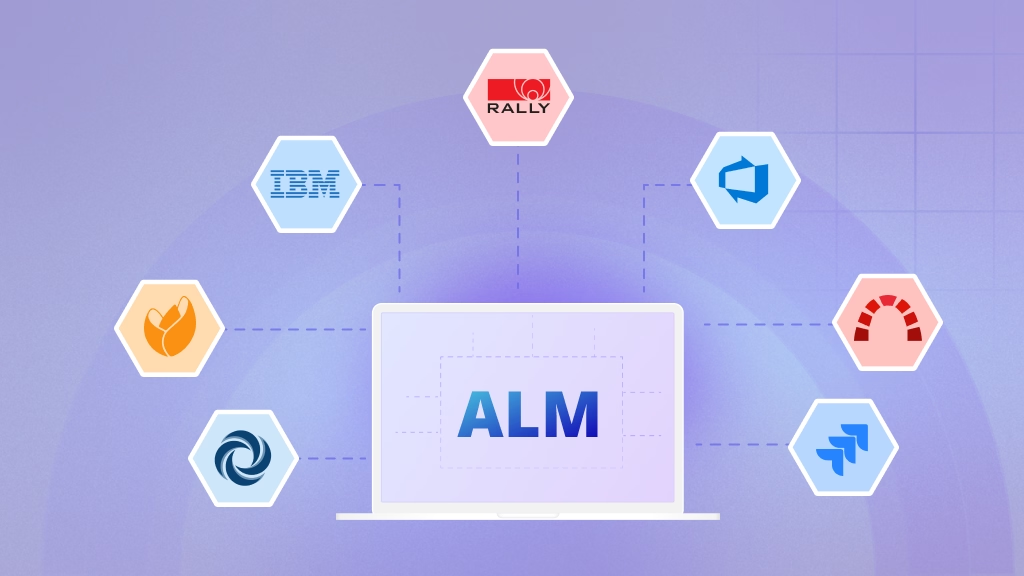
Not all Application Lifecycle Management (ALM) tools are the same. Depending on your organization’s size, security needs, and development approach, you’ll find three main categories that support the software development lifecycle (SDLC) and the broader application development process. Let’s break them down:
1. Cloud-Based ALM Tools
These tools are hosted on the cloud, making them flexible, scalable, and cost-efficient. They integrate easily with Agile development practices, DevOps integration, and continuous integration and deployment (CI/CD) pipelines.
Cloud-based platforms are ideal for distributed teams that need end-to-end application management without heavy infrastructure.
Examples: Jira, Azure DevOps, Rally.
2. On-Premises ALM Tools
Organizations in highly regulated industries often prefer on-premises solutions because they provide greater security, compliance, and customization.
These tools are closely tied to application governance, IT service management (ITSM), and release management, ensuring sensitive data remains under enterprise control.
Examples: IBM Engineering Lifecycle Management, Micro Focus ALM.
3. Open-Source ALM Tools
Open-source solutions are cost-effective and customizable, giving teams the freedom to adapt tools to their workflows.
They’re popular for organizations embracing application modernization, application portfolio management, or cloud-native application lifecycle strategies, since they allow deep integration into the software delivery pipeline.
Examples: Tuleap, Redmine.
Choosing the right ALM tools is critical, and selecting wisely can make the difference between a smooth, efficient software lifecycle and a fragmented, error-prone process.
How to Choose the Right Tools & Software to Achieve Successful ALM
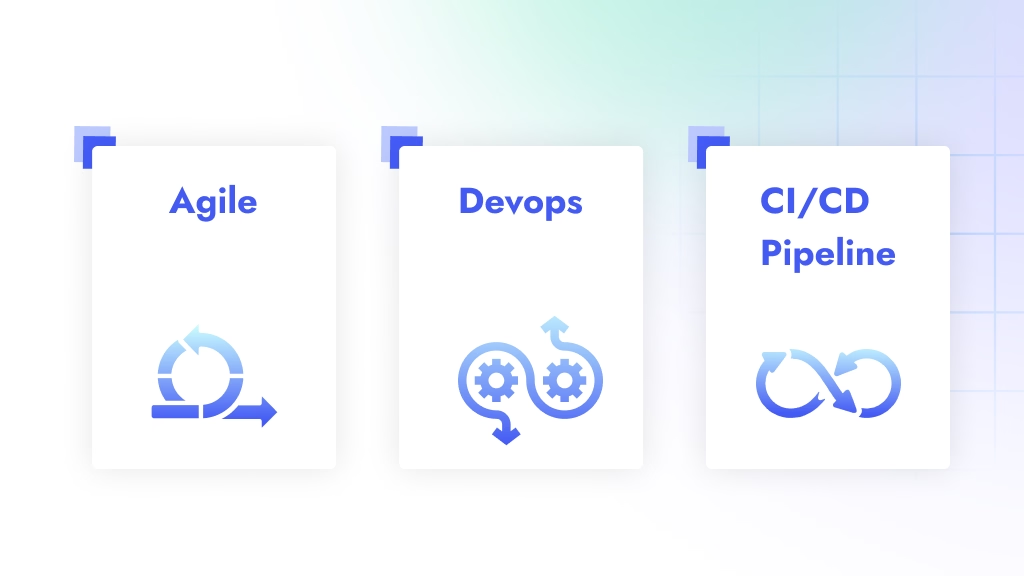
Selecting the right tools and software is critical for driving successful Application Lifecycle Management (ALM). Since ALM spans the entire software development lifecycle (SDLC), from ideation to deployment and beyond, the choice of tools directly impacts efficiency, collaboration, and long-term sustainability.
To make an informed decision, consider the following key factors:
- Support for the Full Application Development Process
- Strong Integration with Agile and DevOps Practices
- Governance, Versioning, and Release Management
- Flexibility for Modernization and Enterprise Scale
- Alignment with IT and Product Management Goals
Pro Tip: Instead of chasing feature-heavy platforms, focus on interoperability, scalability, and usability. The right ALM software doesn’t just manage applications, it empowers innovation, accelerates delivery, and reduces long-term risks.
To truly grasp ALM’s impact, it helps to see how it stacks up against other lifecycle management methodologies in driving efficiency, quality, and collaboration.
How Does ALM Compare With Other Lifecycle Management Methodologies
To fully understand the role of Application Lifecycle Management (ALM), it helps to compare it with other widely used lifecycle approaches. ALM takes a broader view by managing applications from initial planning through development, deployment, ongoing support, modernization, and retirement. In contrast, other methodologies concentrate on specific stages of the lifecycle.
The comparisons below highlight how ALM differs from these frameworks in scope, focus, and practical use.
ALM vs. SDLC
The Software Development Lifecycle (SDLC) focuses primarily on how software is built and delivered, covering phases such as planning, coding, testing, and deployment. ALM extends beyond this by managing the application throughout its entire lifespan.
The table below highlights how ALM extends beyond the development-focused scope of SDLC.
| Criteria | ALM (Application Lifecycle Management) | SDLC (Software Development Lifecycle) |
| Primary Focus | Full application lifecycle management | Software development process |
| Scope | Strategy, development, governance, operations, and modernization | Planning, coding, testing, deployment |
| Lifecycle Coverage | End-to-end and long-term | Development-focused |
| Governance & Compliance | Built-in governance and lifecycle oversight | Limited to development stages |
| Post-Deployment Support | Includes maintenance, monitoring, and ITSM | Typically ends after deployment |
| Best Used When | Long-term application oversight is required | Structuring and managing development work |
ALM vs. PLM
Product Lifecycle Management (PLM) is designed to manage physical products, while ALM focuses on software and digital applications.
This comparison shows the difference between managing software applications and physical products.
| Criteria | ALM | PLM (Product Lifecycle Management) |
| Primary Focus | Software and digital applications | Physical products |
| Lifecycle Type | Application lifecycle | Product lifecycle |
| Scope | Development, deployment, modernization, retirement | Design, manufacturing, maintenance |
| Governance | Software governance and compliance | Engineering and manufacturing governance |
| Portfolio Management | Application portfolio management (APM) | Product portfolio management |
| Best Used When | Managing complex software ecosystems | Managing physical or manufactured products |
ALM vs. Project Management vs. DevOps
Project Management and DevOps both play important roles in software delivery, but they address different needs. ALM acts as an overarching framework that connects and coordinates these practices across the full lifecycle.
The table below explains how ALM brings structure, speed, and governance together alongside Project Management and DevOps.
| Criteria | ALM | Project Management | DevOps |
| Primary Focus | End-to-end application lifecycle | Timelines, budgets, and resources | Speed, automation, and delivery |
| Scope | Strategy, governance, development, operations, support | Planning and execution | CI/CD, automation, collaboration |
| Lifecycle Coverage | Full lifecycle | Project duration only | Build-to-deploy phase |
| Governance & Compliance | Centralized lifecycle governance | Limited governance | Minimal governance focus |
| Automation | Integrated across lifecycle | Limited | Strong automation |
| Role | Lifecycle management framework | Execution discipline | Delivery accelerator |
| Best Used When | You need full lifecycle visibility and control | Managing short-term initiatives | Accelerating releases and operations |
Key Takeaways
- SDLC defines how software is built
- Project Management controls how work is executed
- DevOps improves how software is delivered
- PLM manages physical product lifecycles
- ALM brings everything together to manage applications from strategy to retirement
ALM stands out when organizations need a holistic, long-term approach that ensures visibility, governance, compliance, and continuous value across the entire software delivery pipeline.
While ALM offers significant benefits through end-to-end oversight, organizations often face challenges when implementing and maintaining it at scale. In the next section, we’ll explore the key challenges of Application Lifecycle Management and how to address them effectively.
What Are the Challenges of Application Lifecycle Management
While ALM offers a structured approach to application development, challenges emerge as it extends Application Lifecycle Management helps bring structure to how software is planned, built, and maintained. However, as ALM expands beyond the software development lifecycle (SDLC) to include governance, modernization, and portfolio oversight, it also introduces real-world challenges that many organizations struggle to manage.
These challenges are common, especially in growing or complex environments, and addressing them is key to making ALM effective.
Here are the key challenges that make ALM complex yet critical:
Keeping Requirements and Data Aligned
Business needs change quickly, and keeping requirements, documentation, and application records up to date across teams is not easy. When lifecycle data becomes inconsistent or outdated, planning and decision-making suffer.
Managing Governance and Compliance
Maintaining consistent governance across hybrid or multi-cloud environments can be difficult. Limited visibility and the use of unapproved tools often create compliance, security, and audit risks.
Balancing Collaboration with Agility
ALM depends on close collaboration between development, operations, security, and business teams. At the same time, organizations must stay agile and deliver updates quickly, which can be challenging when governance processes are too rigid.
Integrating with Existing Systems
Many organizations rely on legacy systems. Introducing ALM tools into these environments often requires time, effort, and careful change management to avoid disrupting existing workflows.
Modernizing Legacy Applications
Older applications may appear inexpensive to maintain, but they often carry hidden risks related to security, performance, and scalability. Identifying these risks is critical when deciding whether to modernize or retire an application.
Maintaining Quality and Security at Scale
As application environments grow, maintaining consistent quality and embedding security throughout the lifecycle becomes more difficult, especially across multiple teams and platforms.
Scaling ALM Without Losing Visibility
Applying ALM practices across many applications and teams can reduce visibility if not managed carefully. This challenge becomes more noticeable in distributed and multi-cloud setups.
Managing Application Portfolios and End-of-Life Decisions
Tracking costs, performance, and business value across an entire application portfolio is complex. Retiring applications requires balancing cost savings with operational stability and business continuity.
Overcoming ALM challenges requires a strategic approach, let’s explore the best practices that drive successful application lifecycle management.
What Are the Best Practices for ALM Success
Achieving success with Application Lifecycle Management (ALM) requires more than just tools, it’s about creating a structured yet agile approach to the entire software development lifecycle (SDLC).
By aligning the application development process with business goals, IT teams can deliver high-quality solutions faster, ensure compliance, and improve collaboration across departments.
Below are some proven best practices to elevate your software project management and streamline end-to-end application management:
- Align ALM with Agile and DevOps
- Strengthen Governance and Management
- Prioritize Design, Testing, and Quality
- Support Maintenance and Modernization
- Leverage Tools for Control and Visibility
Understanding the value of ALM starts with knowing the investment required to implement and sustain it effectively.
How Much Does Application Lifecycle Management Cost
When businesses consider investing in Application Lifecycle Management (ALM), one of the first questions that comes up is cost. The truth is, there isn’t a one-size-fits-all price tag.
The cost of ALM varies depending on the software development lifecycle (SDLC) stage, tools, and practices your organization adopts.
Factors like application design and architecture, software project management, and ongoing application maintenance and support all play a role in the total investment.
Main Cost Drivers
- Scale & Complexity: Larger systems or application modernization efforts cost more than simple apps.
- Methodologies: Advanced practices like continuous integration, software version control, and release management may raise setup costs but improve efficiency.
- Governance & Compliance: Strict application governance or ITSM requirements increase investment.
- Cloud vs. On-Premises: Cloud-native application lifecycle tools often run on subscriptions, while on-premises require more infrastructure.
Typical Cost Breakdown
- Initial Setup: Tool licensing, infrastructure, and application design and architecture setup.
- Ongoing Costs: Quality assurance (QA) and testing, application maintenance and support, and security monitoring.
- Scaling & Modernization: Costs rise as you expand features, integrate new technologies, or modernize legacy systems.
As technology and business needs evolve, ALM is poised to embrace new trends that will redefine how applications are built, managed, and optimized.
How AI Is Transforming Application Lifecycle Management (ALM)
Artificial Intelligence (AI) is rapidly reshaping how organizations manage the application lifecycle. As software ecosystems grow more complex, traditional ALM practices alone are no longer sufficient to maintain speed, quality, and control. AI enhances ALM by introducing intelligence, automation, and predictive capabilities across every phase of the lifecycle.
In modern ALM platforms, AI helps teams move from reactive management to proactive decision-making. By analyzing historical data, system behavior, and usage patterns, AI-driven ALM tools enable faster releases, improved quality, and reduced operational risk.
Key ways AI is transforming Application Lifecycle Management include:
Intelligent Planning & Forecasting: AI analyzes historical project data to improve effort estimation, resource planning, and delivery timelines.
Automated Testing & Quality Assurance: Machine learning models identify high-risk areas in code, optimize test coverage, and detect defects earlier in the lifecycle.
Predictive Risk & Issue Detection: AI monitors performance, dependencies, and anomalies to predict failures, security risks, and compliance issues before they escalate.
Smarter Application Monitoring: AI-driven observability tools detect performance bottlenecks, optimize costs, and improve system reliability in real time.
Application Portfolio Intelligence: AI supports application portfolio management (APM) by identifying redundant, underperforming, or high-risk applications, guiding modernization and retirement decisions.
AI-Enhanced DevOps & CI/CD Pipelines: AI improves release management by optimizing build pipelines, reducing deployment failures, and enabling faster recovery.
Rather than replacing ALM processes, AI strengthens them by adding intelligence and automation. Organizations that combine AI with ALM gain greater visibility, faster decision-making, and more resilient application ecosystems.
Future Trends in Application Lifecycle Management (ALM)
As Application Lifecycle Management continues to evolve, organizations are placing greater emphasis on automation, integration, and data-driven oversight across the application lifecycle. These trends reflect the growing need to manage complex systems efficiently while maintaining security, quality, and governance.
Key trends shaping ALM include:
- AI and Machine Learning: Increasing use of intelligent automation for testing, issue prediction, and lifecycle insights.
- DevSecOps and Shift-Left Security: Integrating security practices earlier to improve risk management and compliance.
- Cloud-Native ALM Platforms: Adoption of scalable, cloud-based tools that support CI/CD and modern application management.
- Low-Code and No-Code Development: Simplifying development workflows while maintaining control and governance.
- Data-Driven Decision Making: Leveraging analytics to support predictive maintenance and continuous optimization.
- Enhanced Collaboration and Traceability: Unified platforms that improve visibility, communication, and lifecycle accountability.
Together, these trends highlight a shift toward a more intelligent, secure, and continuously optimized approach to application lifecycle management.
Conclusion
From application design and architecture to release management and end-to-end application management, it provides the structure organizations need to stay competitive in a rapidly evolving digital landscape.
Key Takeaways
- ALM unifies strategy and execution, linking development, governance, and project management.
- Agile and DevOps practices accelerate delivery while maintaining quality.
- End-to-end control covers design, testing, deployment, and maintenance.
- Modernization and cloud-native approaches future-proof applications.
- Portfolio and enterprise management optimize resources and decision-making.
Frequently Asked Questions (FAQ) on Application Lifecycle Management
Got questions about Application Lifecycle Management (ALM)? Here are clear, straightforward answers to help you understand its purpose, stages, and role in modern software development.
What is Application Lifecycle Management (ALM)?
Ans: Application Lifecycle Management (ALM) is the end-to-end approach to managing software applications from initial concept and planning through development, deployment, ongoing maintenance, and eventual retirement. It brings people, processes, and tools together to improve quality, efficiency, and long-term business value throughout the application’s lifecycle.
What are the key stages of ALM?
Ans: The key stages of Application Lifecycle Management (ALM) span the full life of an application. They typically include planning and requirements, design, development, testing, deployment, and ongoing maintenance and support. Together, these stages create a structured path from initial idea to retirement, with governance built in to support collaboration, quality, and compliance throughout the lifecycle.
What is the purpose of ALM?
Ans: The purpose of Application Lifecycle Management (ALM) is to manage software applications throughout their entire lifecycle, from planning and development to deployment, maintenance, and retirement. It helps organizations improve quality, streamline processes, reduce risk, and ensure applications remain aligned with business goals over time.
How is ALM different from SDLC?
Ans: Application Lifecycle Management (ALM) is the overarching approach to managing an application from initial concept to retirement, covering governance, portfolio oversight, and operations. In contrast, the Software Development Lifecycle (SDLC) focuses specifically on how the software is built, outlining the technical stages such as planning, development, testing, and deployment within the broader ALM framework.
Is ALM only for large enterprises?
Ans: No. Although widely adopted by enterprises, ALM practices benefit organizations of all sizes. Small and mid-sized businesses can use ALM to bring structure, visibility, and efficiency to their application development process and scale operations more effectively.
Can ALM work with Agile or DevOps?
Ans: Absolutely, modern ALM frameworks are designed to integrate with Agile development practices and DevOps integration. Together, they enable rapid iterations, continuous delivery (CI/CD), and improved team collaboration.
How does ALM help improve collaboration?
Ans: ALM creates a centralized framework where stakeholders, developers, testers, and operations teams can work together. By aligning goals, automating workflows, and providing visibility into the software project management cycle, it reduces silos and strengthens teamwork.
How does ALM support modern development practices like DevOps?
Ans: ALM complements DevOps by providing governance, traceability, and structure around rapid delivery. With built-in release management, version control, and continuous integration and deployment, ALM helps organizations adopt a truly cloud-native application lifecycle.
What is application governance in ALM?
Ans: Application governance is the set of policies, standards, and compliance controls within ALM. It ensures that applications align with business goals, meet security requirements, and follow consistent best practices throughout their lifecycle, from design to application portfolio management.
This page was last edited on 9 July 2026, at 11:08 am

Start a conversation with our team to solve complex challenges and move forward with confidence.