
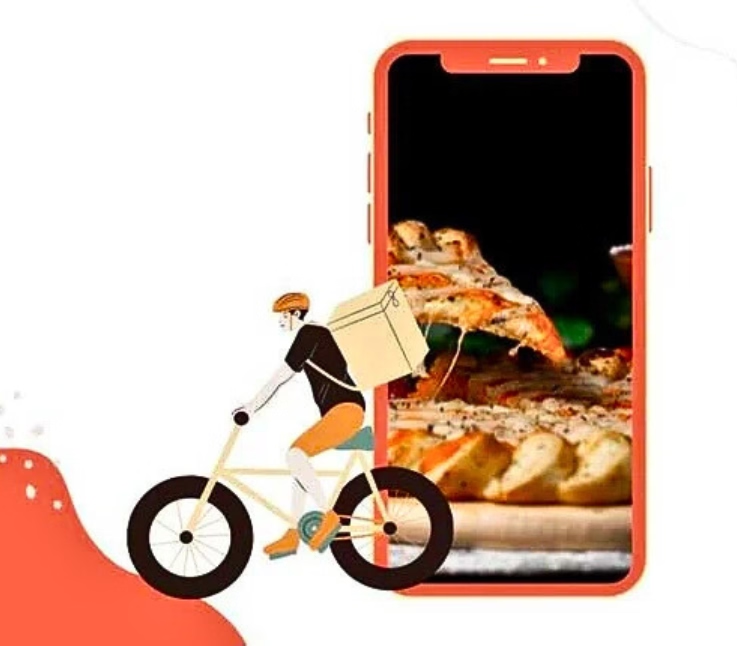

- Food Delivery App Development Summary
- What is App Development?
- What is Food Delivery App Development?
- Types of Food Delivery App Service
- How do Food Delivery Apps Make Money?
- How Does a Food Delivery App Work?
- Tips You Should Keep in Mind Before Creating Food Delivery App
- Features of Food Delivery App Development
- Food Delivery App Development Process
- Food Delivery App Development Cost
- Top Challenges in Food Delivery App Development and How to Solve Them
- Benefits of Food Delivery App Development
- Why do Companies Want a Robust Food Delivery Tracking System?
- Future of Food Delivery App
- Conclusion
- Food Delivery App Development FAQ
Food Delivery App Development starts with defining your core features, choosing a scalable tech stack, designing an intuitive user interface, and integrating secure payment systems. Most successful food delivery platforms are built around three key components: a customer ordering app, a restaurant management system, and real-time delivery tracking.
Food delivery apps like Uber Eats and DoorDash have become a part of everyday life, with growth that now outpaces traditional dine-in segments. In 2024, Uber Eats generated $10.9 billion in revenue, recording 25% year-over-year growth, which highlights how strongly consumers continue to adopt app-based food ordering.
For a modern MVP, development usually takes 3–6 months, depending on scope and team size. Costs typically range from $25,000 to $80,000+, based on factors like the number of apps involved (customer, driver, admin), real-time tracking, and third-party integrations.
This sustained demand creates clear opportunities for businesses looking to enter the food delivery space. In this guide, we’ll cover the market landscape, essential features, development process, and cost considerations for building a food delivery app that can compete in today’s market.

Food Delivery App Development Summary
Food delivery app development is gaining popularity. So, we wrote this post to help you start with food delivery app development. However, before we dive into the document, you might want to look at the food delivery app development summary. In this section, I’ve organized the key points into a chart to help you quickly grasp the fundamentals of Food Delivery App Development.
Let’s take a moment to summarize the most important aspects of food delivery app development:
| Service Type | Mobile App Development |
| Platform Type | iOS, Android, Web (PWA), Cross-platform |
| Devices | Mobile (primary), Tablet (optional) |
| App Modules | Customer App, Restaurant Panel, Delivery Partner App, Admin Dashboard |
| Business Model | Single Restaurant, Multi-Vendor Marketplace, Grocery / Quick Commerce |
| Tech Stack | Swift, Kotlin, React Native or Flutter, Node.js or Laravel, PostgreSQL or MySQL, Redis, AWS or Google Cloud, Nginx |
| Typical Timeline | 3–6 months (MVP), 6–9 months (Scalable Platform) |
What is App Development?
App development, often called AppDev, involves planning, building, testing, and launching software applications. A successful app development process relies on a multidisciplinary team that typically includes developers, software engineers, architects, UI/UX designers, quality assurance testers, and project managers working together to deliver a reliable product.
Application development produces software for smartphones and digital assistants, primarily for Android and iOS platforms. The need for mobile app development is continuously increasing; more and more businesses want to have their own app, but what are the requirements? Our Food Delivery App Development team will have the answers for you.
What is Food Delivery App Development?
Food delivery app development is the process of creating digital platforms (for iOS, Android, and web) that connect customers with restaurants for ordering and delivering food, involving three core parts: customer app, restaurant panel, and driver app, all working together for seamless browsing, ordering, payment, tracking, and delivery, often using AI for matching and routes.

A restaurant, store, or independent food-delivery company delivers food to a customer through food delivery. An order is usually placed via a restaurant’s or grocer’s website, mobile app, or a third-party meal delivery service. Delivered items can include entrees, sides, drinks, desserts, or grocery items, typically delivered in boxes or bags. The delivery person will drive a car in most cases, but in larger cities where homes and restaurants are closer, they may ride bikes or motorized scooters. In addition, autonomous vehicles have recently been used to make deliveries.
Customers can pay online or in person, using cash or a card, depending on the delivery business. For food delivery services, it is common practice to leave a tip. Contactless delivery is another possibility. Catering and wholesale food service deliveries to restaurants, cafeterias, health care institutions, and caterers via foodservice distributors are two other types of food delivery.
Types of Food Delivery App Service
Food delivery apps are not all the same. Some apps deliver restaurant meals, others focus on groceries, and some offer meal kits. Each type works differently and serves a different kind of customer. Because of this, the features and business models also vary.
Understanding these differences helps you decide what kind of food delivery app to build and where you can stand out in the market.

| Type of App | Description | Key Features | Examples |
|---|---|---|---|
| Restaurant Delivery Apps | Connect users with local restaurants | Real-time tracking, multiple payment options | Uber Eats, DoorDash, Grubhub |
| Grocery Delivery Apps | Deliver groceries from local stores or warehouses | Inventory tracking, flexible delivery windows | Instacart, Amazon Fresh |
| Meal Kit Delivery Apps | Deliver ready-to-cook meal kits | Pre-portioned ingredients, subscription models | Blue Apron, HelloFresh |
| Full-Stack Delivery Apps | Deliver food, groceries, and other essentials | All-in-one platform, multiple delivery categories | Deliveroo, Postmates |
Below, we break down the primary categories of food delivery apps, exploring their core functionalities, operating models, and the factors that contribute to their success.
Restaurant Delivery Apps
Restaurant delivery apps are among the most widely used platforms in the food delivery space. These apps connect users with nearby restaurants, allowing them to browse menus, place orders, and have meals delivered directly to their homes. Well-known platforms such as Uber Eats, DoorDash, and Grubhub work with a wide range of restaurants, from fast food outlets to premium dining establishments.
Success secret:
The success of restaurant delivery apps depends largely on strong partnerships with local restaurants and a broad selection of dining options. A smooth user experience also plays an important role. Features such as real-time order tracking, simple checkout, and secure digital payments improve customer satisfaction. In addition, data-driven insights help these platforms personalize recommendations, which encourages repeat usage and long-term loyalty.
Grocery Delivery Apps
Grocery delivery apps focus on convenience by allowing users to order groceries online and receive them at their doorstep, often within a short time frame. Platforms like Instacart and Amazon Fresh work with local grocery stores or operate through warehouses to fulfill orders efficiently. This model is particularly appealing to users who want to save time on routine shopping.
Success secret:
The success of grocery delivery apps comes from efficient order fulfillment and strong retail partnerships. Real-time inventory visibility, easy product substitutions, and flexible delivery scheduling make the ordering process simple for users. Personalized offers based on previous purchases and reliable delivery experiences further contribute to customer retention.
Meal Kit Delivery Apps
Meal kit delivery apps represent a slightly different segment of the food delivery ecosystem. These platforms provide pre-portioned ingredients or ready-to-cook meals along with clear recipes, allowing users to prepare meals at home without planning or grocery shopping. Meal kit apps appeal to users who want home-cooked meals while saving time.
Success secret:
Subscription-based pricing is the primary driver behind the success of meal kit delivery apps. Regular deliveries create predictable revenue, while a wide range of meal options tailored to different dietary needs helps keep users engaged. Consistency in quality and menu variety plays a key role in building long-term customer relationships.
Full-Stack Delivery Apps
Full-stack delivery apps offer a broader range of services beyond restaurant meals. Platforms such as Deliveroo and Postmates allow users to order groceries, prepared food, and other everyday items through a single app. This all-in-one approach enables users to meet multiple needs without switching platforms.
Success secret:
Flexibility is the main strength of full-stack delivery apps. By offering multiple delivery categories, these platforms increase user engagement and overall app usage. Efficient logistics management, real-time tracking, customizable delivery options, and loyalty programs help retain a diverse and active user base.
How do Food Delivery Apps Make Money?
There are various ways for online food delivery marketplace firms to earn or generate income from the food delivery marketplace platform.

Commission on Food Orders
One of the primary revenue sources for food delivery apps is a commission on food orders. As a platform owner, you can charge restaurants a fixed amount or a percentage for every order placed through your app. Commission rates may vary depending on the restaurant, order volume, or partnership terms. This model allows restaurants to list on the platform with minimal upfront cost while the platform earns per per-transaction.
Presenting a Restaurant on Your Platform
Restaurants spend heavily on advertising to increase visibility. Food delivery platforms can charge restaurants for featured listings, promoted placements, or highlighted menus within the app or website. This helps restaurants reach more customers while creating an additional revenue stream for the platform.
Delivery Charges
Many restaurants prefer not to maintain their own delivery staff. In such cases, the platform can provide delivery partners and charge delivery fees for each completed order. Delivery charges may be based on distance, order size, or delivery time, making this a flexible and scalable revenue model.
Convenience Charge
Food delivery apps often apply a small convenience fee to customers for using the platform. This charge covers operational costs such as platform maintenance and customer support. Since users benefit from ordering food without leaving their home or office, this fee is generally accepted without resistance.
Payment Gateway Charges
Food delivery platforms handle a high volume of online transactions, allowing them to negotiate lower fees with payment gateway providers. The platform can then pass these transaction fees on to restaurants as part of the overall service charge, creating another source of income.
Subscription Earning Opportunity
Subscription-based pricing is a growing revenue model in food delivery apps. Platform owners can offer subscription plans to restaurants with benefits such as:
- Featured listings and priority placement
- Access to advanced analytics
- Branding and promotional tools
- Higher order limits or expanded menus
Similarly, customers can be offered subscription plans that include discounts, free delivery, or reward points. These subscriptions can be billed monthly, quarterly, semi-annually, or annually.
Advertising Third-Party Services on the Platform
With a large and active user base, food delivery platforms can monetize traffic by allowing third-party businesses to advertise on the app or website. These advertisements may include banners, sponsored listings, or promotional content, often sold at premium rates due to high visibility.
Service-Based Pricing for Restaurants
Different restaurants have different operational needs. Some may prefer managing orders through a web dashboard, while others require mobile apps, thermal printers, or custom customer-facing apps. Food delivery platforms can charge restaurants based on the additional services or tools they choose to use.
Hardware Sales to Restaurants
Restaurants often require hardware to operate digitally. Food delivery platforms can partner with hardware vendors to supply essential equipment and earn revenue through hardware sales. Common items include:
- Android tablets for order management
- Point-of-sale (POS) systems
- Thermal receipt printers
- Inventory management tools
- Kitchen display systems
Marketing Campaigns
Many restaurant owners lack the time or expertise to run marketing campaigns. Food delivery platforms can offer paid marketing services such as email campaigns, in-app promotions, and social media marketing to help restaurants attract more customers and increase order volume.
Text / SMS Marketing
Food delivery apps can also generate revenue through SMS and text marketing services. By purchasing SMS credits in bulk from providers, platforms can resell them to restaurants at competitive prices, enabling restaurants to promote offers, discounts, and updates directly to customers.
How Does a Food Delivery App Work?
People who want to eat at the restaurant but don’t want to go might use online food ordering and delivery services to relieve their tension. Ordering food online is simple and convenient, allowing customers to place orders from their home or workplace with just a few taps.

Here’s how it works when you order food online:
- Customers search for meals and restaurants through the app.
- The customer selects their preferred restaurant and food and then places it in their food cart.
- Customers submit orders after choosing a payment option such as net banking, cash on delivery, or debit card.
- The customer is then notified of the status of their order.
- The delivery person is contacted once the customer’s order preparation is complete.
- The delivery boy now picks up the order and delivers the meal to the customer’s address with delivery tracking.
Tips You Should Keep in Mind Before Creating a Food Delivery App
Invest in your company’s future to guarantee that you can keep up with the latest online food delivery trends. Revel Systems has options to diversify your revenue sources, develop efficient procedures, and allow seamless transitions from a consumer making an order to receiving their meal.

Here are the tips that people should know before creating Food Delivery App-
Market Analysis
You must first identify your target audience and study your rivals before developing a Food Delivery App. By putting it another way, your rivals can target busy people interested in healthy eating for a younger audience by luring them to fast food.
Grow the User Base
You need to focus on your growing user base before building a food delivery app. It will help you to know the target customer. Here begins simply with:
- Operate your app in a local region to test your company concept and fast gain early adopters.
- Use various advertising channels, such as public relations technology, social media, inbound marketing, referral programs, etc.
- Collaborate: Because small and major merchants have already established a following, don’t hesitate to team up with them to promote your expanding brand.
Retain Clients
Customer service should be flawless. Make it a point to quickly, helpfully, and pleasantly answer your users’ issues. Launch special offers: people love discounts, gifts, and coupons.
Features of Food Delivery App Development
Creating a food delivery app isn’t enough. To make the platform function for all stakeholders, you must create a full ecosystem. We’ve compiled a comprehensive list of features that every modern meal delivery system or ordering platform should include. A typical Food Delivery Application is divided into four sections:
- Customer App Module
- Delivery Person App Module
- Restaurant App Module
- Admin App Module

1. Customer App Module
The most important part of the project is the client application. You need to establish a user-friendly UI/UX design to attract more people. Of course, the functionalities of various apps may differ. However, each application has MVP features for distribution on demand.
Registration and Login
The registration process should be quick and simple. Users should be able to sign up using email and password, phone number with OTP, or social login options such as Google or Apple. A “Forgot Password” option is also necessary for account recovery.
Nearby Restaurants
Based on the user’s location, the app should display nearby and popular restaurants. Users should be able to browse menus, view prices, check ratings, and place orders. Filters and search options help users find restaurants more easily.
Restaurant Menu
This feature allows users to view detailed menus for selected restaurants. Users should also be able to search for specific dishes and see which restaurants offer them.
Order Tracking
Real-time order tracking allows customers to monitor their food delivery on a live map. GPS and map services (such as Google Maps or similar providers) help display delivery progress and estimated arrival time, which builds trust and transparency.
Multiple Payment Options
Payment gateway integration allows users to pay using card payments, digital wallets, local payment gateways, or cash on delivery. Restaurants receive payments through secure and reliable payment processing systems.
Order History
Order history helps users review previous orders and quickly reorder their favorite meals, saving time and improving convenience.
AI-Powered Recommendations & Smart Search
AI can analyze user behavior such as past orders, search history, time of day, and location to recommend relevant restaurants and dishes. Smart search improves results by understanding user intent, dietary preferences, and popular trends, helping users discover food faster and increasing order frequency.
Reviews and Ratings
Customers should be able to rate restaurants and leave feedback. Reviews help improve service quality and assist other users in making informed decisions.
2. Delivery Person App Module
The Driver Person app should be fast and easy to use. Because drivers prefer to utilize applications on the move, it’s ideal to solely provide a mobile version. Therefore, you must include the following features:
Registration and Login
Delivery partners should be able to register and log in using phone numbers, email, or social login options. The process should be simple and quick for new users.
User Profile
Delivery partners can manage personal details such as name, contact information, and profile photo, making it easier for customers to identify them.
Alerts and Notifications
Delivery partners should receive instant notifications for new delivery requests, including sound alerts when the app is running in the background.
Manage Multiple Deliveries
The app should allow delivery partners to handle multiple nearby deliveries efficiently, helping optimize delivery time and earnings.
GPS Map Integration
GPS and map services guide delivery partners using optimized routes. Route suggestions help avoid traffic and ensure timely deliveries.
AI-Based Route Optimization
AI-driven routing analyzes traffic conditions, distance, and delivery priority to suggest the most efficient delivery routes. This helps reduce delivery time, fuel costs, and delays while improving overall delivery performance.
Call / Chat Option
Built-in call or chat features allow delivery partners to communicate with customers directly when needed.
Order and Earnings History
Delivery partners should be able to view completed deliveries, payment details, and earnings history within the app.
3. Restaurant App Module
This technology enables restaurants to manage incoming orders. Typically, an online solution rather than a mobile app is developed. It enables restaurant personnel to receive orders and tell couriers when they are ready.
On-demand application developers should provide the following features:
Registration and Login
Each restaurant staff member should have a secure account to access the system.
Manage Business Information
Restaurants can manage essential details such as operating hours, location, and contact information from a single dashboard.
Manage Menu
Restaurants should be able to update menu items, prices, and availability in real time to avoid out-of-stock issues.
Order Alerts
Restaurants receive instant notifications when new orders are placed, allowing them to start preparation without delay.
Manage Orders
Staff should be able to accept, reject, and update order status easily to keep the delivery process on schedule.
AI-Driven Demand Forecasting
AI can analyze historical order data, peak hours, and seasonal trends to help restaurants predict demand. This allows better inventory planning, reduced food waste, and faster order preparation during busy periods.
Payment Management
Restaurants can track completed and pending payments to manage settlements and financial records.
Reply to Reviews
Restaurants should be able to respond to customer reviews, helping build trust and improve customer relationships.
4. Admin App Module
An admin panel is a necessary tool for running a company. Here are a few characteristics that should be included:
Performance Analysis
Admins can monitor platform activity, including orders, deliveries, cancellations, and user performance through analytics dashboards.
AI Analytics & Fraud Detection
AI-powered analytics help identify ordering patterns, delivery delays, abnormal transactions, and potential fraud. Admins can use these insights to improve platform performance, pricing strategies, and operational efficiency.
Manage Order Requests
Admins oversee the full order lifecycle, from placement to delivery, ensuring smooth operations and timely fulfillment.
Real-Time Updates
The admin panel provides real-time visibility into restaurant availability, delivery partner status, and profile updates.
Payment and Commission Management
Admins can manage commissions, payouts, and transaction records for restaurants and delivery partners.
Offers and Discounts
Admins can create and manage promo codes, discounts, and special offers for customers and restaurants.
Restaurant Management
This feature allows admins to add, remove, or suspend restaurants from the platform.
Campaign Management
Admins can manage multi-channel campaigns, including email, SMS, push notifications, and in-app promotions, to drive engagement and growth.
Food Delivery App Development Process
Initially, developing a food delivery app is a good concept. A knockoff of a popular solution, on the other hand, won’t go very far. The key to developing a successful application is to design a one-of-a-kind solution that solves the concerns of the target consumers.

In this portion of the article, we’ll go through how to make a meal delivery app that has a better chance of succeeding.
Step 1: Understand the Market
Before building anything, you need to understand how the food delivery market works in your target area. Look at how people order food, what times they order most, and what problems they face with existing apps.
Study competitors carefully. Check their pricing, delivery speed, app reviews, and missing features. This helps you understand what users like and what frustrates them.
Market understanding helps you avoid building an app that already exists and instead create something users actually want.
Step 2: Identify Your Target Audience
Not all users want the same experience. Some care about price, some care about speed, and others care about healthy food options.
Common user groups include:
- Students looking for low-cost meals and discounts
- Working professionals who want fast or scheduled delivery
- Families who prefer group ordering and meal plans
- Health-conscious users who need dietary filters
Knowing your audience helps you design features that feel relevant instead of generic.
Step 3: Decide Your Service Area and Launch Region
Before choosing features or technology, decide where your app will operate first. Will it serve one city, multiple cities, or a specific neighborhood?
Starting small helps you:
- Test operations easily
- Control delivery quality
- Fix problems before expanding
This step also affects delivery logistics, pricing, and marketing strategy.
Step 4: Choose the Right Business Model
Your business model defines how orders are handled and how revenue is generated.
Aggregator Model
The app connects customers with restaurants. Restaurants handle food preparation and delivery themselves. The platform earns commission per order.
Best for: low operational effort and fast scaling.
Logistics-Supported Marketplace Model
Restaurants prepare food, while the platform manages delivery using its own or third-party delivery partners.
Best for: better delivery control and improved customer experience.
Full-Stack Model
The platform controls food preparation, delivery, and often operates cloud kitchens.
Best for: consistent food quality and higher margins, but higher operational effort.
Step 5: Define Core Features and App Modules
Now decide what features your app must have for each user.
Customer-side features
- Restaurant search and filters
- Real-time order tracking
- Multiple payment options
- Order history and reordering
Restaurant-side features
- Menu and price updates
- Order acceptance and status management
- Availability control
Delivery partner features
- Delivery alerts
- Route navigation
- Order status updates
Admin features
- User and restaurant management
- Payments and commissions
- Analytics and reports
Clear feature planning prevents scope confusion later.
Step 6: Plan the Technology Stack
Choosing the right technology helps your app stay fast and scalable.
- Cross-platform tools allow building Android and iOS apps together
- Backend systems should support real-time updates and high traffic
- Cloud hosting helps the app scale during peak hours
This step ensures the app can grow without breaking.
Tech Stack of Food Delivery App Development: The tech stack you choose for your food delivery app company will determine its success. The efficacy of development technologies aids in the creation of a scalable meal delivery app.
Backend Technologies:
| Function | Technology | Benefit |
| Server | Nginx | Nginx, a traffic expert, assists in effectively managing incoming traffic. |
| Backend Framework | Laravel, Node.js (NestJS) | People prefer Laravel because it is extremely secure, and the codebase is well-protected. |
| Database | PostgreSQL or MySQL, Redis | Relational databases store core data reliably, while Redis improves performance through fast caching and real-time data handling. |
| Hosting | AWS, Google Cloud, Azure | Enables on-demand scaling, high availability, security, and reliable performance during traffic spikes. |
Front-end Technologies:
| Function | Technology | Benefit |
| Cross-Platform | Platform React Native, Flutter | Enables faster development across iOS and Android using a single codebase, while maintaining near-native performance and consistent UI. |
| iOS | Swift, SwiftUI | Swift is the primary language for iOS development, offering high performance, safety, and strong ecosystem support. SwiftUI enables faster UI development with modern design patterns. |
| Android | Kotlin, Jetpack Compose | Kotlin is the recommended language for Android development, known for concise, safe, and maintainable code. Jetpack Compose simplifies UI development with a modern, declarative approach. |
Step 7: Design the User Experience (UX & UI)
Design is not just about looks — it’s about ease of use.
Start with wireframes to map:
- Navigation flow
- Ordering steps
- Checkout process
The interface should be clean, simple, and fast. Fewer steps mean fewer abandoned orders.
Good design improves trust and repeat usage.
Step 8: Develop, Test, and Fix Issues
Now the actual development begins.
The app is built in modules, tested continuously, and improved based on feedback. Testing should include:
- Functional testing
- Performance testing
- Usability testing
Fixing issues at this stage is much easier than after launch.
Step 9: Launch, Monitor, and Scale
Before launch, run beta testing with a limited audience. This helps identify bugs, slow screens, or confusing flows.
After launch:
- Monitor app performance
- Track user behavior
- Improve weak areas
When the app performs well in one region, expand gradually. Add advanced features like loyalty programs, subscriptions, and AI-based recommendations to increase engagement and revenue.
Food Delivery App Development Cost
The actual cost of establishing a food delivery app is determined by various criteria, including the type of app, the type and quantity of features and functionality, labor, etc.

The cost of building a food delivery app mainly depends on what you want the app to do. Features, platforms, design quality, and integrations all affect the final price. In general, food delivery app development can cost anywhere between $30,000 and $200,000.
Food Delivery App Development Cost Breakdown
| App Type | Features Included | Estimated Cost |
|---|---|---|
| Basic Food Delivery App | User login, restaurant listings, menu browsing, order placement, basic payments | $20,000 – $40,000 |
| Moderate Complexity App | Live order tracking, multiple payment options, admin panel, restaurant & driver modules | $50,000 – $100,000 |
| Advanced / High-End App | Real-time tracking, AI recommendations, analytics dashboards, scalability features | $150,000+ |
| Uber Eats–Level App | Complex delivery workflows, advanced analytics, large-scale infrastructure | $150,000 – $200,000+ |
- Basic Food Delivery App: A simple app with only essential features like browsing restaurants, placing orders, and basic payments. Best for startups testing the market with an MVP.
- Moderate Complexity App: Includes live order tracking, multiple payment options, and basic dashboards for restaurants and admins. Suitable for businesses planning steady growth.
- Advanced / High-End App: Built for performance and scale, with real-time tracking, analytics, and personalized recommendations. Ideal for businesses aiming to compete seriously.
- Uber Eats–Level App: Enterprise-grade platforms with complex delivery logic, advanced reporting, and large-scale infrastructure. Requires high investment and long-term commitment.
Several factors influence how much you’ll end up spending, including feature complexity, third-party integrations, platform choice (iOS, Android, or both), and design requirements.
The most common cost drivers include feature scope, third-party integrations, platform requirements, and long-term maintenance needs. Apps that include real-time tracking, advanced analytics, or AI-driven functionality typically require more development time and higher budgets.
Additional Cost Considerations:
| Cost Factor | Impact on Budget |
|---|---|
| UI/UX Design | Increases upfront cost but improves retention and usability |
| Third-Party Integrations | Adds cost for maps, payments, notifications, and analytics |
| Platform Choice | Building for both iOS and Android increases development time |
| AI & Machine Learning Features | Adds 20–50% cost depending on personalization, analytics, and automation level |
| Maintenance & Updates | 15–20% of initial development cost per year |
App development doesn’t end at launch. Ongoing maintenance, updates, and performance improvements typically cost around 15–20% of the initial development budget each year.
Top Challenges in Food Delivery App Development and How to Solve Them
Whether you’re a startup or an established restaurant, investing in food delivery app development is now a necessity. This section highlights common challenges in food ordering app development and how to solve them with the right approach and technology.
1. User-Friendly Interface
Users expect food delivery apps to be fast and simple. If an app feels slow, cluttered, or confusing, it’s likely to be uninstalled. That’s why UI/UX design plays a critical role in user retention.
How to solve it:
Use clean layouts, straightforward navigation, and smooth ordering flows. Testing clickable prototypes and collecting user feedback helps ensure the app feels intuitive for all users.
2. Real-Time Order & Delivery Tracking
Live tracking has become a must-have feature in food delivery apps. However, keeping order and location data updated in real time can be challenging.
How to solve it:
Integrate GPS-based services such as Google Maps and ensure backend systems refresh data frequently so users receive accurate delivery updates.
3. Managing Multiple User Roles
Food delivery apps serve different users at the same time, including customers, restaurant staff, and delivery partners. Each group requires its own set of features, which adds complexity.
How to solve it:
Build separate modules for each user role to keep workflows clear, improve performance, and support future scalability.
4. Secure Payment Integration
Users must feel confident when entering payment details. Even minor payment issues can lead to a loss of trust.
How to solve it:
Use secure, PCI-compliant payment gateways and follow established security best practices, supported by regular audits and monitoring.
5. Scalability During High Traffic
As the user base grows, the app should handle traffic spikes without slowing down or crashing.
How to solve it:
Adopt a cloud-based infrastructure that can scale automatically during peak usage, ensuring consistent performance under heavy load.
6. Real-Time Menu & Inventory Updates
Ordering items that are out of stock frustrates users and damages credibility.
How to solve it:
Provide restaurant dashboards that allow instant updates to menus and availability, with changes reflected in real time across the app.
7. Route Optimization for Deliveries
Inefficient delivery routes increase delivery time and operational costs.
How to solve it:
Use route optimization algorithms that factor in traffic conditions, distance, and location data to improve delivery efficiency.
8. Ratings, Reviews & Feedback
Fake or misleading reviews can harm both restaurants and user trust.
How to solve it:
Implement verified review systems and moderation tools to filter spam and ensure feedback remains fair and reliable.
9. Third-Party System Integrations
Food delivery apps often need to connect with POS systems, CRM tools, or marketing platforms. Poor integrations can disrupt operations.
How to solve it:
Use secure APIs and standard integration protocols to ensure smooth and reliable data exchange between systems.
10. Maintenance & Updates
Launching the app is only the beginning. Regular updates are necessary to fix bugs, improve features, and stay compatible with new OS versions.
How to solve it:
Plan for ongoing maintenance, performance monitoring, and updates to keep the app stable, secure, and competitive over time.
Benefits of Food Delivery App Development
Recent industry data shows that online food delivery continues to grow steadily worldwide. According to Statista, the global online food delivery market is expected to maintain strong momentum, with revenues projected to reach US$2.03 trillion by 2030, growing at an annual rate of 7.75% between 2025 and 2030. Reference: Online Food Delivery Income Statistics
This consistent growth highlights that food delivery has moved beyond short-term trends and is now a long-term, scalable digital industry.

So, not only for financial benefit, but also, there are many benefits of developing a Food Delivery App are given below:
- White Label Solution: A white-label food delivery app allows businesses to apply their own branding, including logos and visual identity, making the platform more recognizable and professional for the target audience.
- Easy to Use: The entire system is designed to be user-friendly, from the customer-facing ordering app to the restaurant and admin panels, ensuring smooth operations for all stakeholders.
- One-Time Cost: Food ordering mobile app development is typically a one-time investment that can deliver long-term value. Successful platforms can also be extended or commercialized in the future for additional revenue opportunities.
- Time & Cost Efficient: Using a ready foundation or core solution reduces development time and lowers overall costs, allowing faster market entry without compromising essential functionality.
- Take Charge of Code: Complete access to the source code is provided after project completion, giving businesses full control over future updates, customizations, and ownership. This also ensures flexibility without vendor lock-in.
- Technical Assistance: Post-launch technical support is often included for a defined period, covering bug fixes and essential updates to ensure platform stability during the early stages.
- Customizable and Expandable: The platform can be customized based on business needs and easily expanded with new features, integrations, or service areas as demand grows.
- On-Demand Expertise: The development approach incorporates industry best practices and insights gained from building on-demand platforms, resulting in reliable and scalable solutions.
- Third-Party Integrations: The app can integrate with external services such as logistics providers, analytics tools, and payment gateways, or work with an existing delivery network.
- The Global Solution: Food delivery apps can be launched across multiple regions with built-in support for different languages, currencies, and local requirements.
- Accept Payments Anywhere: The platform supports multiple payment gateways, allowing customers to pay using preferred local or international payment methods..
Why do Companies Want a Robust Food Delivery Tracking System?
While the food delivery company is growing in popularity, its success and equity will be primarily determined by its tracking system’s effectiveness since much will depend on last-mile delivery. Therefore, we have expanded the characteristics to demonstrate why such a strong system is required at this time.

Ensured Delivery Security
When all the food delivery firms are busy wooing consumers, a tiny blunder such as missing or misplacing a shipment may harm the company’s image, leading the irritated customer to badmouth. However, real-time tracking might be useful in ensuring the safety and traceability of the item that leaves the kitchen. Customers will also understand the cause of the delay depending on the product’s location by expanding the options for tracking the carriers giving a warranty for safe delivery. Having a local warehouse at each distribution location is critical to ensuring the safety of the items while they are in storage.
Route Optimization
It is critical to optimize the delivery location since it ensures a seamless procedure. Route management software assists in analyzing specified routes and provides the assigned driver with an optimal solution. To some extent, this reduces delivery time and costs. Drivers are calmer when delivering food boxes with the help of this technology, and the operation is completed faster than planned. To ensure quicker processing, special algorithms assign the best driver for the route.
Activating Automatic Dispatching
Products may be automatically shipped with little operator involvement using real-time tracking software. The computer assigns the driver and delivery people for each package using a precise algorithm. The entire procedure is run via these algorithms, from dispatch to delivery, to preserve speed. During the current epidemic, this strategy assisted in the practice of social distancing. Customers can also get advance notice of the delivery date and time and further information on any delays.
Gain Better Control via Tracking
Thanks to online tracking technologies, consumers can receive their items on time and connect with the delivery employee if necessary. Last-mile delivery services must include tracking and tracing. It also aids in route management and automatically generates batch delivery systems with no operator involvement. This, in turn, accelerates the process, and they are especially effective when there is a shortage of staff in specific scenarios.
Quick Customer Responses
Customer input is crucial; hence, some real-time tracking software includes this feature. This feedback data is then examined and used to improve company services to gain traction. The voice of the client can genuinely bring out weaknesses in the system.
Future of Food Delivery App
Over the past few years, the food delivery industry has moved from rapid expansion to long-term maturity. Understanding where the food delivery market is heading can help restaurants and businesses position themselves to capture future demand. By adopting emerging trends early, businesses can stay competitive and present themselves as modern, tech-forward brands.

Recent industry data shows that the global online food delivery market is entering a phase of steady, long-term growth rather than short-term spikes. According to Statista, the sector is expected to grow at an annual rate of 7.75% between 2025 and 2030, reaching a projected market volume of US$2.03 trillion by 2030. This indicates that food delivery apps are becoming a permanent part of the global food economy, not just a temporary trend.
The continued growth of food delivery is driven by widespread adoption of platforms like Uber Eats, DoorDash, and Grubhub, along with faster logistics, improved routing, and real-time tracking that make app-based ordering more convenient and reliable than traditional phone orders.
One of the key drivers of this next phase is the deeper use of AI and data-driven systems across food delivery platforms. AI is increasingly being used to personalize food recommendations, improve search relevance, and predict customer demand more accurately. These capabilities help platforms increase order frequency while reducing operational inefficiencies.
Another major shift is how restaurants operate. Many now function like retail businesses, optimizing delivery menus, working with cloud kitchens, and using in-house or hybrid fleets to meet growing expectations for faster, often same-hour delivery.
Finally, consumer behavior continues to evolve. Smartphone-first habits have normalized app-based ordering and digital payments across age groups, supported by changing lifestyles, strong restaurant adoption, and ongoing technology improvements that make food delivery more scalable.
Conclusion
If you want to establish an on-demand food delivery app as a company owner, you must conduct extensive market research, get industry knowledge, and set a reasonable budget. As a result, we’ve included:
- On-demand food delivery features.
- Business models.
- Revenue methods.
- Technologies in this guide help you create the best meal delivery app possible.
So, before designing a feature-rich food delivery app, it’s vital to understand which food delivery market you want to target, the difficulties you’ll face, the hurdles you’ll face, and your ultimate goal.
Food Delivery App Development FAQ
Discover the most frequently asked questions regarding Food Delivery App Development.
Is it a good idea to provide tipping services through the app?
It is entirely dependent on your target audience and how they interpret tipping. You can include the functionality if the demography is liberal with tipping. The logical approach, though, is to tailor the app. Users who do not wish to proceed with tips can turn it off in this manner.
Who created the first food delivery app?
In 1995, World Wide Waiter launched the first restaurant food delivery platform in the world in the United States.
What factors contribute to the success of a food delivery app?
Your consumers will be using your food delivery app regularly, so it should be intuitive and simple to use. Your consumer app should help them discover the proper restaurant or cuisine to order. After ordering, the payment procedure should be easy.
What is the significance of a food delivery app?
On-demand food delivery apps assist restaurants in providing a simple and seamless client experience, resulting in increased sales and reduced wait times. Given the simplicity of having meals delivered to your door, early table booking using restaurant apps appears to be obsolete.
How essential is delivery speed?
Sixty-two percent of buyers believe delivery times affect their buying decisions. They anticipate receiving their products in a few days. Currently, 90 percent of consumers consider 2- to 3-day shipping to be the standard. Anything slower than that falls short of customer expectations.
What exactly is same-day delivery?
The term “same-day shipping” refers to when a customer’s order is processed and shipped the same day. Compared to shops that wait to send items, this can save a day or two on delivery time.
Is same-day delivery beneficial to the business?
Growth is boosted by same-day delivery. Same-day delivery boosts productivity and gives an online business an 85 percent competitive advantage.
Is it worth it to have food delivered?
And, given that most individuals travel to the market 1.5 times each week, if you round up the time spent on each shopping trip to 60 minutes, you’ll save 78 hours per year by using a food delivery service.
How much does it cost to build a food delivery app?
The cost depends on features, platforms, and complexity. A basic app may cost $20,000–$40,000, while advanced platforms with live tracking and admin dashboards can exceed $100,000.
How long does it take to develop a food delivery app?
Most food delivery apps take between 4 to 6 months to build. Complex apps with multiple user roles and integrations may take longer.
What features are essential in a food delivery app?
What features are essential in a food delivery app?
Core features include user registration, restaurant listings, menu browsing, order placement, payment integration, real-time tracking, and admin management tools.
Can I build a food delivery app like Uber Eats?
Yes, but apps like Uber Eats require significant investment, advanced logistics management, scalable infrastructure, and ongoing optimization.
Which business model is best for a food delivery app?
Common models include aggregator, logistics-supported marketplace, and full-stack models. The best option depends on your budget, control needs, and growth plans.
Do food delivery apps need real-time tracking?
Yes. Real-time tracking improves user trust, reduces support queries, and is now considered a standard feature in food delivery apps.
Can AI be used in food delivery apps?
Yes. AI is commonly used for personalized recommendations, smart search, delivery time estimation, route optimization, and demand forecasting.
Is it possible to launch a food delivery app as an MVP?
Yes. Many startups begin with an MVP that includes only essential features, then scale based on user feedback and demand.
How do food delivery apps handle payments securely?
They use secure payment gateways, encryption, and compliance standards like PCI-DSS to protect transactions and user data.
Do restaurants need a separate app or dashboard?
Yes. Restaurants typically use a web dashboard or app to manage menus, orders, availability, and payments.
This page was last edited on 9 July 2026, at 11:07 am

Start a conversation with our team to solve complex challenges and move forward with confidence.











A really organized article about Food Delivery App Development. Thanks for sharing so much information in one single article. I have found many ideas and those are going to help me in my food vlog.
Many many thank for reading the article. Please stay with us to read more!
Best food delivery article I have ever read on web. Keep up the good work!
Thank you so much for sharing your experience!
Congratulations on the content. Interesting.
Thank you so much. Stay with us for our upcoming content.
I really enjoyed your article. Congrats on the content.
Thank you so much for your nice feedback!
It is such a good reference for Food delivery services applications.
I greatly appreciate your comments. Thank you so much. For additional updates, kindly remain in touch with me.
It seems like you know a lot about food delivery apps. It’s really helpful.
Appreciate your feedback. Thanks for the support. Please get in touch for more.
Regarding the real world, you very well-presented the entire concept and thoughts.
Thank you for sharing your thoughts. Please stay connected for more updates.
A unique blog I have ever read about meal delivery. It looks like you have an idea about it.
Thank you for your comment. We try to give a whole idea about any topic in our blog. Please stay connected with us for more.
Such a helpful and educational essay this is. I finally understand this topic, thanks to your straightforward writing.
Thank you for your feedback. Please share it with your community who want to know about it. Stay connected with us.
You are really a good blog writer. It seems that you know the trick that how to keep your reader. Also, The contents are masterpieces. You have done an excellent job on this topic!
Thank you so much, Brody. It is really appreciated. Please stay connected for my next blog.
Hiya! I just want to give a huge thumbs up for the great info you will have right here on this post. I can be coming again to your blog for extra soon.
Hello Vasilica. Thank you so much. I’m really grateful that I can help you. Please stay connected with us for more update.
Thank you Robert. I am really happy to help you. You will get here so many informative ideas. So please stay tune.
The guide is a fantastic starting point, but it would be excellent to see a section dedicated to troubleshooting common issues developers might face during the app development process.
Thank you Karen for your suggestion. We will keep it in mind and update our guide. Please stay connected with us for more update.
I found this guide immensely helpful. It offers a holistic view of food delivery app development, addressing challenges and providing innovative solutions. A valuable asset for anyone in the tech or food industry.
Thank you Stephen. It means a lot that it helps you with your study.
I found this guide immensely helpful. It offers a holistic view of food delivery app development, addressing challenges and providing innovative solutions. A valuable asset for anyone in the tech or food industry.
Thank You Christian. Feel free to share this information with others!
Incredibly helpful! It is not just informative but also engaging. It kept me hooked from start to finish, and I feel much more confident about embarking on my app development journey.
Thank you Jason. We are happy to help you with your app developing journey.
Hello, I read this blog and and it makes me feel like so easy to make an app. Thank you for this informative guide.
Hello Selena, you are welcome. We try to give authentic information about technology. If you like it you should read our others article too. Stay connected.
Engaging and informative! I feel much more confident about embarking on my app development journey after reading it.
Thank you Rose. Keep an eye on our other technology blog for more information.
This guide strikes the perfect balance between theory and application. It’s packed with actionable tips and best practices, making it an indispensable tool for turning app ideas into reality. I will suggest it to my other classmate also.
Thank you Ethan for your support. I hope they will like it too.
It is a comprehensive resource that seamlessly blends technical know-how with practical advice. A must-read for developers and entrepreneurs looking to thrive in the food delivery industry.
Thank you Robert. Glad you like it!
Its real-world examples and step-by-step approach make complex concepts easy to grasp. A fantastic resource!
Hello Michael. Thank you for your feedback.